
Every car is assigned a unique Vehicle Identification Number (VIN) before it leaves the factory, but what do these numbers mean for you and your Mustang?
Contents
- History of VIN Numbers
- What Do All Those Numbers Making Up My Mustang's VIN Mean?
- Where are the Engine Identification Tags?
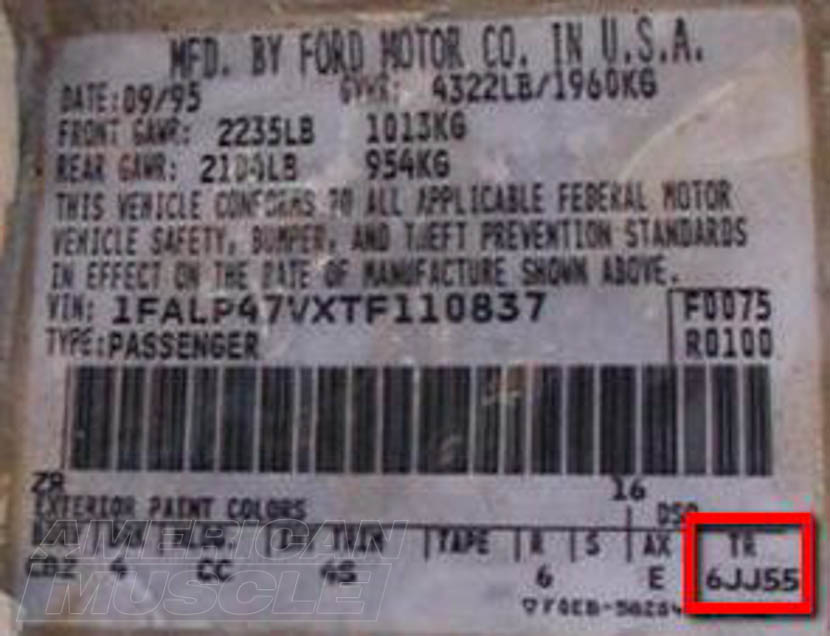
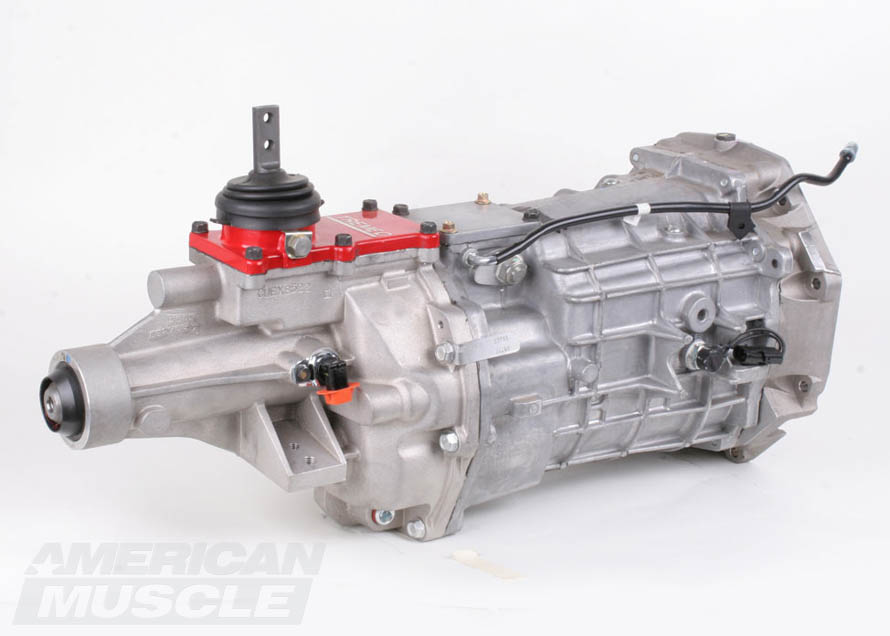
- Mustang Transmission Identifier
- Mustang Transmission Tags
- How to Decode Your Mustang's Transmission Tag Numbers
- The 1980-1995 Borg Warner & Tremec T5 Manual Transmission
- The 1996 to Mid-2001 T45 Manual Transmission
- The 2003-2004 Cobra T-56 Manual Transmission
- The Mid 2001-2004 TR-3650 Manual Transmission
- The 2005-2010 TR-3650 Manual Transmissions
- 2011+ Getrag-Ford MT-82 Transmission
- The 2007 - 2014 GT500 TR-6060 Manual Transmission
- Tremec TKO 500 / 600 Manual Transmissions
- 1987-1998 Mustangs: T5 & T45 Transmission Speed Sensors
Shop Mustang Parts
AmericanMuscle has the largest selection of aftermarket perfromance parts for your Mustang, regardless of the trim level or model.