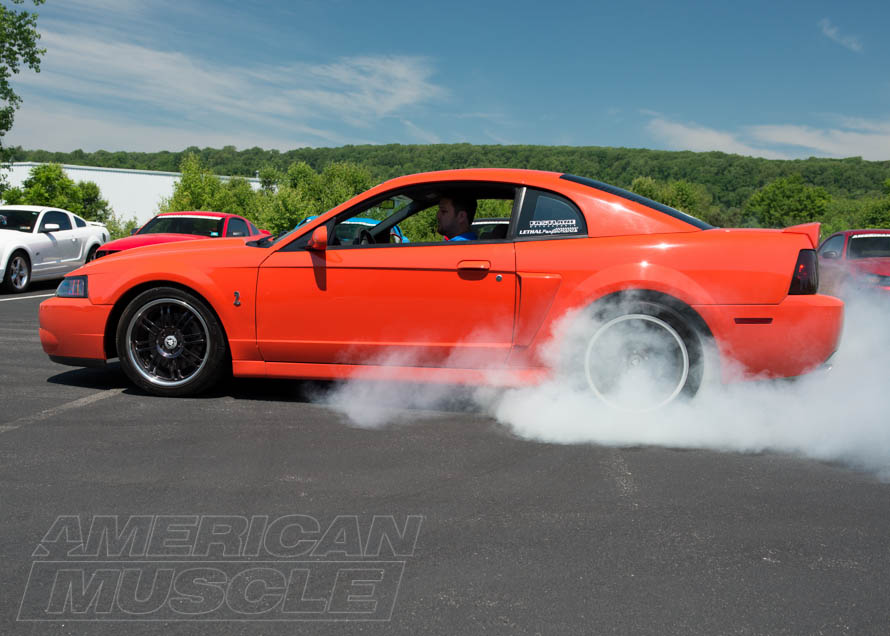
Ever notice your Mustang's rear end shifting to one side mid-corner, or feel a subtle pull during hard launches? Does your lowered S197 or New Edge look like the rear axle is sitting off-center? Those are classic signs that your rear lateral locating device — either the stock panhard bar or a lack of one entirely — needs attention.
In this guide, you will learn exactly how panhard bars and Watts links work on solid-rear-axle Mustangs, where each design shines, and which upgrade makes the most sense for your build — whether you are daily driving, hitting the drag strip, or chasing lap times on a road course.
What Does a Panhard Bar Do on a Mustang?
![]() A panhard bar (also called a track bar) is a single lateral link that bolts between the rear axle housing and the chassis to control side-to-side axle movement. Without it, your solid rear axle has nothing stopping it from shifting left or right under cornering loads, acceleration, or uneven road surfaces.
A panhard bar (also called a track bar) is a single lateral link that bolts between the rear axle housing and the chassis to control side-to-side axle movement. Without it, your solid rear axle has nothing stopping it from shifting left or right under cornering loads, acceleration, or uneven road surfaces.
On 1999-2004 New Edge Mustangs that lack a factory panhard bar, the rear axle can move up to two inches side-to-side. That kind of lateral play causes rear steer — a condition where the rear end drifts out of alignment with the front wheels, making the car feel unpredictable in corners and during lane changes. A panhard bar eliminates the vast majority of that lateral movement, keeping the axle centered under the car.
The bar also plays a role in defining the roll center — the theoretical point around which the car's body rolls during cornering. By anchoring the axle laterally, a panhard bar lowers and stabilizes the roll center, which reduces chassis flex and gives you more consistent handling. The bar mounts at a slight angle, with one end fixed to the axle and the other to the chassis, and the axle traces a small arc as the suspension compresses and extends.
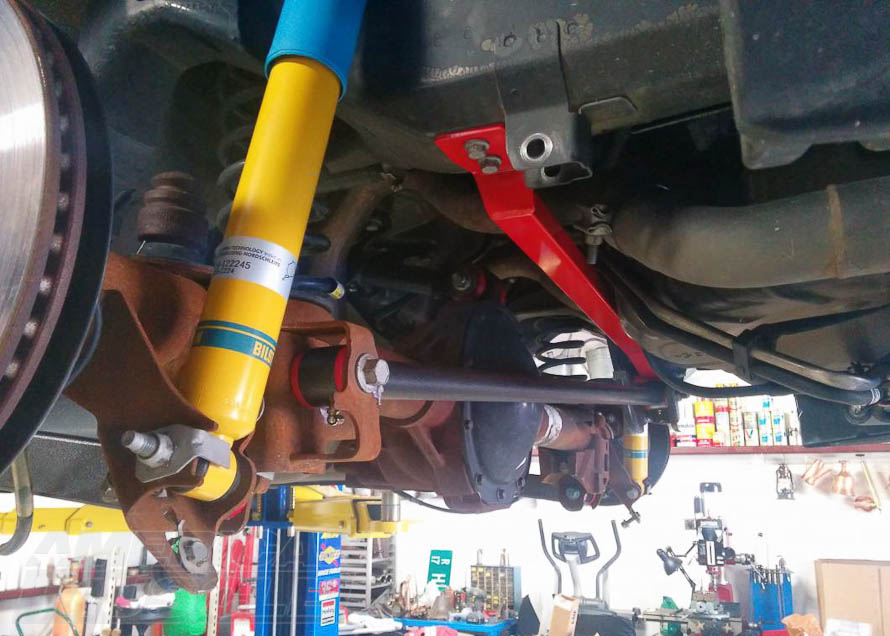
That arc is the panhard bar's one inherent compromise: as the suspension moves through its travel, the axle shifts slightly left or right — typically 0.05 to 0.17 inches on a Mustang, depending on bar length and mounting height. For street driving and drag racing, that tiny movement is negligible. For high-grip road-course work, it becomes more noticeable, which is exactly where a Watts link enters the conversation.
If you are shopping for a direct replacement or a performance upgrade, check out the full selection of panhard bars available for your Mustang.
What Is a Watts Link?
![]() A Watts link is a three-piece lateral locating system that uses a central bell crank (pivot) mounted to the rear axle and two equal-length arms connecting the bell crank to the chassis on each side. This geometry forces the axle to travel in a near-perfectly vertical path as the suspension compresses and extends, virtually eliminating the lateral shift that a panhard bar allows.
A Watts link is a three-piece lateral locating system that uses a central bell crank (pivot) mounted to the rear axle and two equal-length arms connecting the bell crank to the chassis on each side. This geometry forces the axle to travel in a near-perfectly vertical path as the suspension compresses and extends, virtually eliminating the lateral shift that a panhard bar allows.
Where a panhard bar traces an arc, a Watts link traces a straight line. The result is a rear axle that stays dead-center under the car regardless of how much the suspension moves. For handling, the difference is significant: your left and right cornering response becomes symmetrical because the axle is not shifting even a fraction of an inch to one side. Many Mustang owners who switch from a panhard bar to a Watts link describe the improvement as making their solid rear axle (SRA) feel closer to an independent rear suspension (IRS) setup.
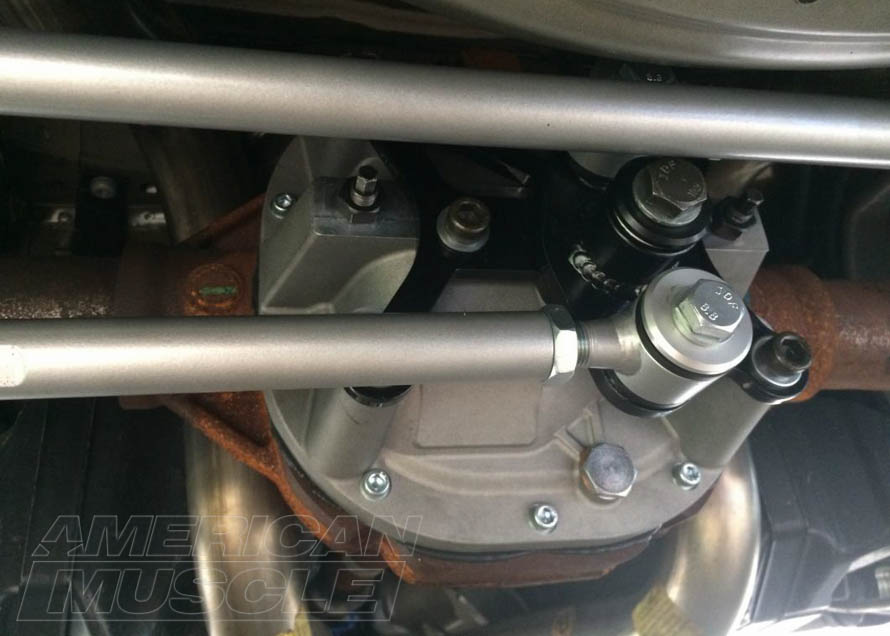
A Watts link also reduces wheel hop in high-grip cornering situations. Because the axle path is vertical instead of arced, the rear tires maintain more consistent contact with the pavement through suspension travel. That consistency translates to better traction and more predictable behavior when you are pushing hard through sweeping turns or quick transitions.
The tradeoff is complexity and cost. A Watts link has more components — the bell crank, two arms, additional mounting hardware — and typically weighs a few pounds more than a single panhard bar. It also sits closer to the center of the axle, which can create clearance issues with factory exhaust routing on some Mustang applications. For a deeper look at how the system works and who benefits most, read the full Watts link guide.
Watts Link vs Panhard Bar: Key Differences
![]() The core difference comes down to axle path: a panhard bar allows a small lateral arc during suspension travel, while a Watts link keeps the axle on a nearly perfect vertical line. That distinction drives every other difference between the two systems — cost, weight, complexity, and ideal use case.
The core difference comes down to axle path: a panhard bar allows a small lateral arc during suspension travel, while a Watts link keeps the axle on a nearly perfect vertical line. That distinction drives every other difference between the two systems — cost, weight, complexity, and ideal use case.
| Feature |
Panhard Bar |
Watts Link |
| Lateral Axle Movement |
Slight arc (0.05–0.17" on Mustang) |
Near-zero (vertical path) |
| Roll Center Behavior |
Moves with suspension travel |
More consistent |
| Weight |
Lighter (single bar) |
Heavier (bell crank + 2 arms) |
| Complexity |
Simple, fewer parts |
More complex assembly |
| Cost |
$100–$300 |
$400–$800+ |
| Exhaust Clearance |
Good clearance for stock routing |
May require custom exhaust |
| Best For |
Street, drag, budget builds |
Road course, autocross |
For most Mustang owners who drive on the street, hit the drag strip, or do occasional spirited backroad runs, a quality aftermarket panhard bar delivers a huge improvement over stock at a fraction of the cost. The lateral movement a panhard bar allows is measured in hundredths of an inch — imperceptible on the street and barely relevant at the drag strip, where straight-line stability and traction matter more than cornering symmetry.
A Watts link earns its premium on road courses and autocross, where you are loading the rear suspension aggressively through left-right transitions. The symmetrical handling it provides means you can set up the car identically for left and right turns without the slight bias a panhard bar introduces. If you are chasing tenths on a timed course, that consistency is worth every dollar.
Stock vs Aftermarket Panhard Bars
![]() Your factory panhard bar was designed to meet a price point and a comfort target, not to handle 400-plus horsepower launches or aggressive cornering loads. Stock Mustang panhard bars are made from relatively thin stamped steel with soft rubber bushings — the rubber isolators between the bar and its mounting points. Those rubber bushings absorb vibration and noise, which is great for ride comfort, but they also flex under load, allowing the axle to move more than the bar's geometry alone would permit.
Your factory panhard bar was designed to meet a price point and a comfort target, not to handle 400-plus horsepower launches or aggressive cornering loads. Stock Mustang panhard bars are made from relatively thin stamped steel with soft rubber bushings — the rubber isolators between the bar and its mounting points. Those rubber bushings absorb vibration and noise, which is great for ride comfort, but they also flex under load, allowing the axle to move more than the bar's geometry alone would permit.
Aftermarket panhard bars address every weakness in the factory part. Most quality replacements are made from DOM steel (drawn over mandrel — a seamless tube with a consistent wall thickness) or aluminum, giving you a stiffer, lighter bar that resists bending under hard cornering and launch loads. They replace the factory rubber bushings with polyurethane bushings or spherical rod ends, which eliminate deflection and provide a more direct connection between the axle and the chassis.
The result is noticeably sharper turn-in response, reduced rear-end float during transitions, and more consistent handling lap after lap. If you are adding power, lowering the car, or doing any kind of performance driving, an aftermarket panhard bar is one of the highest-value suspension upgrades you can make. Browse the full range of 2005-2009 panhard bars to see what is available for your specific Mustang.
Adjustable vs Non-Adjustable Panhard Bars
![]() Non-adjustable panhard bars are a direct replacement for the factory bar — same length, same mounting height, same axle position. They are a great choice for stock-height Mustangs that need a stiffer, more responsive bar without any changes to ride height. You bolt them on, torque them down, and the rear axle sits exactly where the factory intended. They are also the most budget-friendly aftermarket option, typically running $100 to $175.
Non-adjustable panhard bars are a direct replacement for the factory bar — same length, same mounting height, same axle position. They are a great choice for stock-height Mustangs that need a stiffer, more responsive bar without any changes to ride height. You bolt them on, torque them down, and the rear axle sits exactly where the factory intended. They are also the most budget-friendly aftermarket option, typically running $100 to $175.
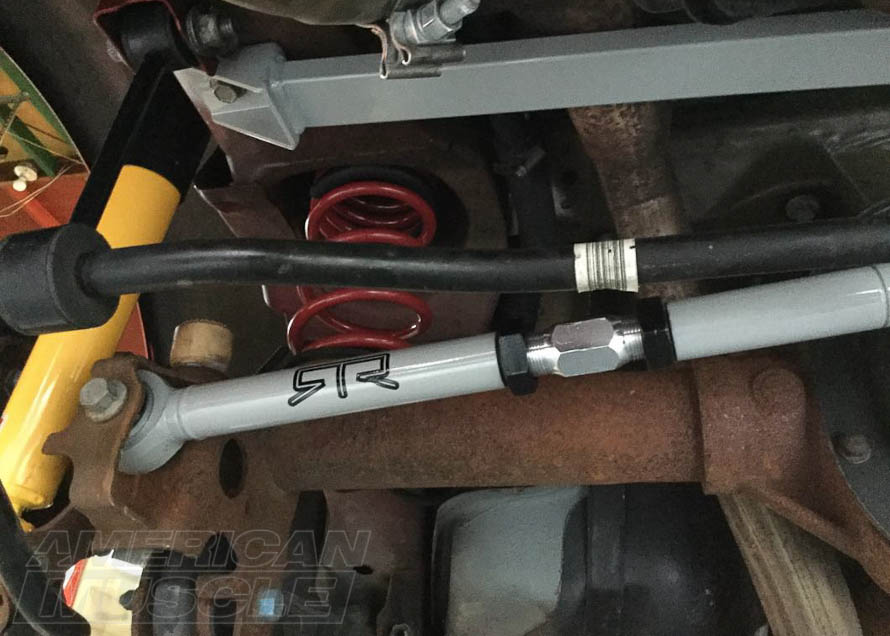
Adjustable panhard bars add a threaded body or sliding mount that lets you change the effective length of the bar. That adjustability is essential when you have lowered your Mustang, because dropping ride height changes the geometry of the panhard bar mounting points. A bar that was the correct length at stock height is now too long or too short for the new ride height, which shifts the rear axle off-center. An adjustable bar lets you dial the axle back to center and fine-tune the roll center height — the point around which the body rolls in corners — to match your new suspension geometry.
If you are running lowering springs or coilovers and your Mustang has dropped more than about three-quarters of an inch, an adjustable panhard bar is not optional — it is a requirement for proper rear-end geometry.
Why Lowered Mustangs Need an Upgraded Panhard Bar
![]() If you have lowered your Mustang, you need an aftermarket panhard bar — period. Lowering the car changes the angle and effective length of the factory panhard bar, which pushes the rear axle off-center. On many S197 and New Edge builds, owners report the axle sitting visibly offset to one side after installing lowering springs, which causes uneven tire wear, inconsistent handling, and a rear end that looks wrong from behind the car.
If you have lowered your Mustang, you need an aftermarket panhard bar — period. Lowering the car changes the angle and effective length of the factory panhard bar, which pushes the rear axle off-center. On many S197 and New Edge builds, owners report the axle sitting visibly offset to one side after installing lowering springs, which causes uneven tire wear, inconsistent handling, and a rear end that looks wrong from behind the car.
Here is what happens mechanically: when you lower the body, the chassis-side mounting point of the panhard bar drops while the axle-side mount stays roughly the same height. That changes the bar's angle, which changes where the axle sits laterally. On a one-inch drop, the offset might be small enough to live with. On a 1.5- to 2-inch drop, the axle can shift noticeably — sometimes a quarter inch or more — enough to throw off handling balance and rear tire alignment.
An adjustable aftermarket panhard bar solves this by letting you shorten or lengthen the bar to re-center the axle at the new ride height. You adjust, measure, adjust again, and lock it down once the axle sits dead-center under the car. The upgrade also restores proper roll center height, which improves cornering balance and reduces body roll.
For a complete walkthrough on how to lower your Mustang without introducing geometry problems, take a look at the lowering best practices guide.
Panhard Bar Installation and Fitment
![]() One of the biggest advantages of a panhard bar over a Watts link is installation simplicity. A panhard bar is a true bolt-on upgrade — you remove the factory bar (two bolts, one on each end), slide the new bar into place, and torque the bolts to spec. The entire job takes 30 to 60 minutes with basic hand tools: a socket set, a torque wrench, and a floor jack to support the rear axle while you work underneath.
One of the biggest advantages of a panhard bar over a Watts link is installation simplicity. A panhard bar is a true bolt-on upgrade — you remove the factory bar (two bolts, one on each end), slide the new bar into place, and torque the bolts to spec. The entire job takes 30 to 60 minutes with basic hand tools: a socket set, a torque wrench, and a floor jack to support the rear axle while you work underneath.
No cutting, no welding, no permanent modifications to the car. That means you can go back to stock if you ever need to, which matters if you are building a car that might see a concours show or if you want to preserve the option to return to factory specs for resale.
Fitment is straightforward on most Mustang applications because the panhard bar mounts outboard, between the axle housing and the frame rail. That keeps it well clear of the exhaust system, the driveshaft, and the rear differential. By contrast, a Watts link mounts its bell crank at the center of the axle, which can interfere with factory exhaust routing — especially on dual-exhaust cars. Some Watts link installations require shortened or custom exhaust work to clear the bell crank, adding time and cost to the project.
If you are looking for a high-impact suspension upgrade with minimal installation complexity and zero exhaust interference, a panhard bar is hard to beat.
When to Choose a Watts Link Over a Panhard Bar
![]() Choosing between a Watts link and a panhard bar comes down to how you drive, how much you want to spend, and whether symmetrical left-right handling is a priority for your build. Both systems locate the rear axle laterally — they just do it with different levels of geometric precision.
Choosing between a Watts link and a panhard bar comes down to how you drive, how much you want to spend, and whether symmetrical left-right handling is a priority for your build. Both systems locate the rear axle laterally — they just do it with different levels of geometric precision.
Choose a Watts link if:
- You run dedicated road-course events or autocross and want identical left and right cornering response.
- You are building a high-grip, competition-focused SRA setup and want your rear suspension to behave as close to IRS as possible.
- Your budget allows $400 to $800-plus for the kit, and you are prepared for potential exhaust modifications.
- You value handling precision over installation simplicity and are comfortable with a more involved install.
Choose a panhard bar if:
- Your Mustang is primarily a street car, daily driver, or drag car.
- You have lowered the car and need an adjustable solution to re-center the rear axle.
- You want the best performance-per-dollar upgrade with a simple, bolt-on installation.
- You want to keep your factory exhaust routing untouched.
- Budget is a factor — a quality adjustable panhard bar costs a fraction of a Watts link kit.
For most Mustang builds, a quality aftermarket panhard bar is the smart move. It solves the biggest rear-suspension weakness — lateral axle movement — at a reasonable cost with easy installation. A Watts link is the better engineering solution on paper, but its advantages only show up at the limit, in high-grip cornering situations where hundredths of an inch of lateral movement actually affect lap times. If that describes your driving, a Watts link is worth every penny. If it does not, save the budget for other upgrades that will make a bigger difference on the street or at the strip.
For more details on how a Watts link works and who benefits most, check out the Watts link overview.
Complementary Suspension Upgrades
A panhard bar or Watts link addresses lateral axle control, but your Mustang's rear suspension is a system — and upgrading one component exposes weaknesses in others. Here are the most impactful companion upgrades to pair with your new lateral locating device:
- Control arms — Aftermarket upper and lower control arms replace the factory stamped-steel arms with stiffer, lighter units that improve axle wrap control and reduce wheel hop under hard acceleration.
- Subframe connectors — These tie the front and rear subframes together to reduce chassis flex, which is especially important on convertibles and cars making serious power. A stiffer chassis lets your suspension work more effectively.
- Sway bars — Upgrading your sway bars reduces body roll and tightens up transitions. Pair a larger rear sway bar with your new panhard bar or Watts link for a noticeable improvement in corner entry and mid-corner stability.
- Chassis bracing — Strut tower braces, K-member braces, and other chassis bracing components stiffen the unibody and give your suspension a more solid foundation to work against.
For a complete picture of how these upgrades work together, check out the full Mustang suspension overview.
2005 and Newer Mustang Suspension Changes
When Ford redesigned the Mustang for the 2005 model year (the S197 platform), they made a significant change to the rear suspension architecture. The 1999-2004 New Edge cars used a four-link rear suspension without a factory panhard bar — the four control arms were supposed to handle both fore-aft and lateral axle location, but they allowed up to two inches of lateral play under hard use. Many owners added aftermarket panhard bars to solve the problem.
Starting in 2005, Ford moved to a three-link rear suspension design with a factory panhard bar. The three-link uses upper and lower control arms for fore-aft location and relies on the panhard bar for lateral control. This was a major improvement over the previous design, but the factory panhard bar is still a thin stamped-steel piece with rubber bushings — adequate for stock power and stock ride height, but a weak link once you start modifying.
For 2005 and newer SRA Mustangs, an adjustable aftermarket panhard bar is one of the most essential upgrades if you have lowered the car. The factory bar's fixed length means it cannot compensate for the geometry changes that come with a lowered ride height. The result is an off-center rear axle and a compromised roll center — two problems that a simple adjustable panhard bar eliminates.
If you are deciding between keeping the solid rear axle and swapping to an independent rear suspension, the IRS vs SRA comparison breaks down the advantages and tradeoffs of each layout.
Practical Takeaways
Here is a quick decision framework to help you choose the right lateral locating upgrade for your Mustang:
- Street and daily driving: An aftermarket panhard bar is all you need. Go adjustable if your car is lowered, non-adjustable if it is at stock height.
- Drag racing: A panhard bar keeps the axle centered without adding complexity or weight behind the differential. Pair it with upgraded control arms for maximum traction off the line.
- Road course and autocross: A Watts link gives you symmetrical left-right handling that a panhard bar cannot match. Budget $400 to $800-plus and plan for possible exhaust modifications.
- Lowered builds (any use case): An adjustable panhard bar is the minimum requirement to re-center the axle and restore proper roll center height after a suspension drop.
- Budget-conscious builds: Start with an adjustable panhard bar ($150 to $300). It delivers the biggest handling improvement per dollar of any rear suspension upgrade on a solid-axle Mustang.
No matter which system you choose, pair it with complementary upgrades — control arms, subframe connectors, and sway bars — to get the most out of your rear suspension setup.
Conclusion
![]() For most Mustang owners, a quality aftermarket panhard bar is the highest-value rear suspension upgrade you can make. It eliminates lateral axle play, sharpens handling, and bolts on in under an hour. If you are chasing lap times on a road course or autocross, a Watts link takes axle control a step further with symmetrical handling that justifies its higher cost. Whichever path you choose, getting lateral axle location right transforms how your Mustang corners, launches, and feels on the road.
For most Mustang owners, a quality aftermarket panhard bar is the highest-value rear suspension upgrade you can make. It eliminates lateral axle play, sharpens handling, and bolts on in under an hour. If you are chasing lap times on a road course or autocross, a Watts link takes axle control a step further with symmetrical handling that justifies its higher cost. Whichever path you choose, getting lateral axle location right transforms how your Mustang corners, launches, and feels on the road.
Frequently Asked Questions About Watts Links and Panhard Bars
Mustang owners commonly ask these questions when deciding between a Watts link and a panhard bar for their solid rear axle suspension upgrade.
What Is the Difference Between a Watts Link and a Panhard Bar?
A panhard bar is a single rod that controls lateral axle movement by sweeping in an arc, causing slight side-to-side chassis shift during suspension travel. A Watts link uses two equal-length arms and a central pivot (bell crank) to keep the axle centered in a near-vertical path, virtually eliminating lateral movement during cornering and over bumps.
Is a Watts Link Better Than a Panhard Bar for a Mustang?
It depends on your build goals. A Watts link provides more consistent handling in both left and right turns, making it ideal for road course and autocross Mustangs. A panhard bar is simpler, lighter, less expensive, and offers better exhaust clearance on 1979–2014 Mustangs — making it the practical choice for street-driven and drag-focused builds.
What Are the Benefits of a Watts Link Suspension?
A Watts link keeps the rear axle precisely centered under the chassis regardless of suspension travel, delivering symmetrical handling in left and right corners. It reduces rear steer, improves cornering predictability at high speeds, and makes a solid rear axle Mustang feel closer to an independent rear suspension setup during aggressive road course driving.
What Is Another Name for a Panhard Bar?
A panhard bar is also called a track bar or track rod. Named after the early French automaker Panhard et Levassor, it serves as a lateral locating link that prevents the rear axle from shifting side to side. On oval track race cars, it is commonly referred to as a track bar because teams adjust it to tune left-turn grip.
Does a 4-Link Suspension Need a Panhard Bar?
Yes. A 4-link system uses upper and lower control arms to control fore-and-aft axle movement, but it does not restrict lateral movement on its own. A panhard bar or Watts link must be added to prevent the rear axle from shifting side to side. The 2005–2014 Mustang uses a 3-link setup with a factory panhard bar for this exact reason.
Do You Need to Upgrade Your Panhard Bar if You Lower Your Mustang?
Yes. Lowering your Mustang changes the angle of the stock panhard bar, which shifts the rear axle off-center and raises the rear roll center. An adjustable aftermarket panhard bar lets you re-center the axle and restore proper suspension geometry, which is critical for maintaining predictable handling and even tire wear after a suspension drop.
What Are the Disadvantages of a Watts Link?
Watts links are more complex, heavier, and significantly more expensive than panhard bars. On 1979–2004 Mustangs, installation may require modifications to the spare tire well and custom exhaust routing. The bell crank adds unsprung weight, and ground clearance can be reduced — especially with chassis-mounted pivot designs that hang below the differential.
Can You Replace a Panhard Bar With a Watts Link on a Mustang?
Yes. Watts link kits for 1979–2014 Mustangs bolt in as a direct replacement for the factory panhard bar. The kit includes the bell crank assembly, two lateral arms, and mounting hardware. Installation is more involved than a panhard bar swap and may require exhaust modifications, but no cutting or welding of the chassis is typically needed.