So you have a 1999-2004 Mustang GT and you want real horsepower — but where do you start, and how far can the factory 4.6L actually go? Whether you are planning a street/strip build that can embarrass newer cars on the weekends or an all-out drag car chasing four-digit power, the answer starts with understanding what the stock engine can handle and what it takes to push beyond those limits. This guide walks you through every component in a high horsepower 1999-2004 Mustang GT build — from the block and rotating assembly to forced induction, fuel delivery, and the supporting mods that tie it all together.
The High Horsepower Build List in a Nutshell
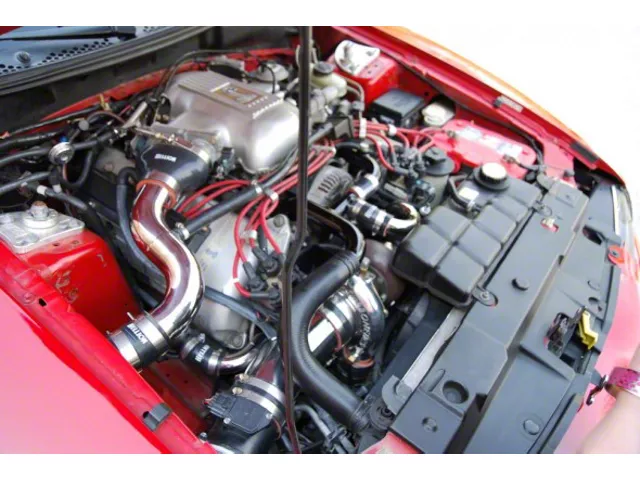
![]() What parts do you actually need to build a high horsepower 1999-2004 Mustang GT? Whether you are chasing 400 rwhp with bolt-ons and a blower or pushing toward 600-plus with a fully built bottom end, the shopping list follows the same pattern. Here is everything you need at a glance — scroll down for the details on each component.
What parts do you actually need to build a high horsepower 1999-2004 Mustang GT? Whether you are chasing 400 rwhp with bolt-ons and a blower or pushing toward 600-plus with a fully built bottom end, the shopping list follows the same pattern. Here is everything you need at a glance — scroll down for the details on each component.
- Bottom-end internals — forged connecting rods, forged pistons, ARP main studs, and coated bearings once you plan to exceed 400 rwhp
- Forced induction — a supercharger kit or turbocharger kit for the fastest path to big power
- Fuel system — higher-flow injectors (typically 39 lb/hr or larger), an upgraded fuel pump, and adjustable fuel pressure regulator
- Ignition — performance spark plugs with the correct heat range and upgraded coil packs for reliable spark under boost
- Camshafts — performance camshafts matched to your power adder and intended use (street, strip, or both)
- Exhaust — long-tube headers, an off-road or high-flow mid-pipe, and a cat-back for maximum exhaust flow
- Tuner — a handheld programmer or custom dyno tune to dial in air-fuel ratios, timing, and boost parameters
- Supporting mods — upgraded clutch and upgraded flywheel, aluminum driveshaft, improved cooling, and better brakes
The key takeaway for any high horsepower 1999-2004 Mustang GT build is that these systems are interdependent. Bolting on a supercharger without upgrading your fuel delivery and getting a tune is a recipe for a lean condition and catastrophic engine failure. Plan the whole build from the start, budget accordingly, and upgrade the supporting systems alongside the power adders.
Understanding the 4.6L 2V Engine Platform
So you have a New Edge Mustang GT sitting in the driveway and you want more power — but how much can you realistically get out of the factory 4.6L, and where do you start? Before you order a single part, it pays to understand what Ford gave you to work with.
The 1999-2004 Mustang GT runs Ford's 4.6L SOHC Modular V8 — a single-overhead-cam, two-valve-per-cylinder engine that produces 260 horsepower and 302 lb-ft of torque at the flywheel from the factory. That puts roughly 220-225 rwhp on a chassis dyno after drivetrain losses. Respectable for the era, but a long way from the 400-600+ rwhp that modern bolt-on and forced-induction combinations can deliver.
What makes the 1999-2004 GT special compared to the earlier 1996-1998 cars is the PI (Performance Improved) cylinder heads. Ford redesigned the intake ports, combustion chambers, and camshaft profiles for the 1999 model year, resulting in a roughly 45-horsepower jump over the older NPI (Non-Performance Improved) heads. The PI heads flow significantly more air, which means the 1999-2004 engine responds much better to bolt-on modifications and forced induction.
The 4.6L Modular platform is also a strong foundation for forced-induction builds because the cast-iron block is robust, the oiling system is well-designed, and the aftermarket has had over two decades to develop proven combinations. If you are shopping for 1999-2004 Mustang engine parts, you are tapping into one of the deepest catalogs in the Mustang world. To learn more about what separates the GT from the Bullitt, Mach 1, and Cobra during this era, check out the guide on New Edge Mustang submodels.
4.6L Mustang Engine Power Limits by Variant
How much horsepower can a stock 4.6 2V handle? The answer depends on which variant you are working with, but across the board, the powdered-metal connecting rods are the first component to fail. For the 1999-2004 GT specifically, plan on roughly 400 rwhp as the ceiling on factory internals — push beyond that and you are gambling with the rods.
Here is how the different 4.6L variants compare:
|
Variant
|
Years
|
Stock HP
|
Safe HP Limit (Stock Internals)
|
Weak Link
|
|
4.6L 2V GT (NPI)
|
1996-1998
|
215
|
~400 rwhp
|
Connecting rods
|
|
4.6L 2V GT (PI)
|
1999-2004
|
260
|
~400 rwhp
|
Connecting rods
|
|
4.6L 3V
|
2005-2010
|
300
|
~450 rwhp
|
Connecting rods
|
|
4.6L 4V Cobra
|
1996-2001
|
320
|
~450 rwhp
|
Connecting rods
|
|
4.6L 4V Terminator
|
2003-2004
|
390
|
~700 rwhp
|
Block
|
Notice that the 2V GT engines, whether NPI or PI, share the same roughly 400 rwhp ceiling. The PI heads flow better and make more power per pound of boost, but the rods are the same powdered-metal units in both engines. If you are building past 400 rwhp, you need forged internals — period.
The Mustang GT's Cast-Iron Block — Romeo vs. Windsor
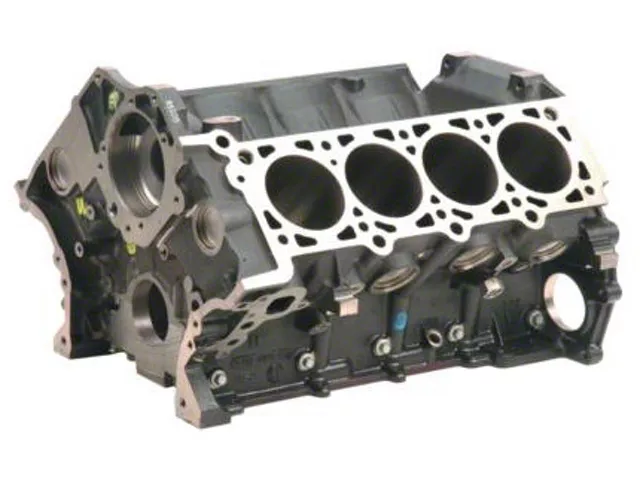
![]() What is the difference between Romeo and Windsor 4.6L blocks? Ford produced the 4.6L Modular engine at two different casting plants — the Romeo plant in Michigan and the Windsor plant in Ontario, Canada. While both blocks are cast iron and share the same bore spacing, they are not completely interchangeable at the bottom end, and knowing which one you have matters when sourcing internal parts.
What is the difference between Romeo and Windsor 4.6L blocks? Ford produced the 4.6L Modular engine at two different casting plants — the Romeo plant in Michigan and the Windsor plant in Ontario, Canada. While both blocks are cast iron and share the same bore spacing, they are not completely interchangeable at the bottom end, and knowing which one you have matters when sourcing internal parts.
The easiest way to identify your block is by the cast letter on the block itself: look for an "R" for Romeo or a "W" for Windsor. You can also check the 8th digit of your VIN — "W" indicates a Romeo-built engine and "X" indicates Windsor.
|
Feature
|
Romeo
|
Windsor
|
|
Cast letter on block
|
"R"
|
"W"
|
|
VIN 8th digit
|
"W"
|
"X"
|
|
Main cap locating
|
Dowels
|
Side bolts
|
|
Main bearings
|
Romeo-specific
|
Windsor-specific
|
The critical difference for builders is in the main cap locating method. Romeo blocks use dowel pins to locate the main caps, while Windsor blocks use side bolts. This means the main bearings are not interchangeable between the two, so when you order bearings, ARP main studs, or a girdle, you need to specify whether you have a Romeo or Windsor block. The crankshaft, connecting rods, pistons, heads, and most other components are the same between the two.
When to Upgrade the Block — Aluminum and Teskid Options
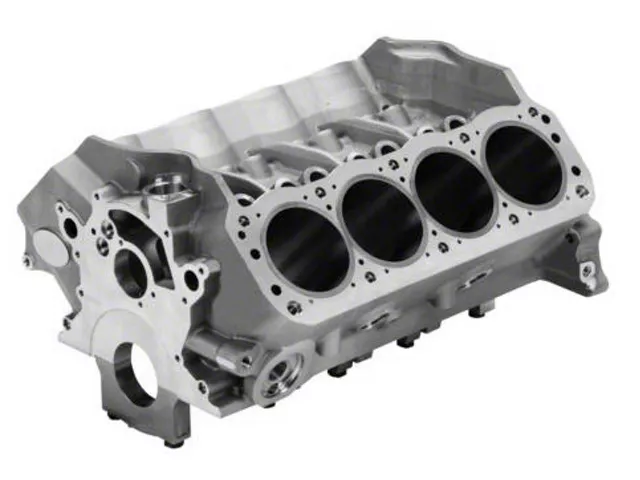
![]() What is a Teskid block, and when do you actually need one? For most builds in the 400-600 horsepower range, the factory cast-iron block is perfectly adequate. The stock block can handle up to roughly 600 flywheel horsepower with proper preparation — ARP main studs, a good machine shop, and careful assembly. Once you are aiming beyond 600 HP, you need to start thinking about a stronger foundation.
What is a Teskid block, and when do you actually need one? For most builds in the 400-600 horsepower range, the factory cast-iron block is perfectly adequate. The stock block can handle up to roughly 600 flywheel horsepower with proper preparation — ARP main studs, a good machine shop, and careful assembly. Once you are aiming beyond 600 HP, you need to start thinking about a stronger foundation.
The Teskid block (sometimes misspelled "Teksid") is a lightweight aluminum 4.6L block originally produced by the Italian foundry Teksid, which also cast blocks for Ferrari. Ford used the Teskid block in the 1996-1998 Cobra and the 1993-1998 Lincoln Mark VIII. At roughly 75 pounds lighter than the standard cast-iron block, the Teskid is a popular swap for weight-conscious racers. However, Teskid blocks are increasingly rare and expensive on the used market.
For builds targeting 600 horsepower and beyond, the more practical route is an aftermarket aluminum block. Ford Performance and several aftermarket manufacturers offer WAP (Windsor Aluminum Performance) blocks and purpose-built racing blocks with thicker cylinder walls, stronger main caps, and provisions for larger bore sizes. These blocks are designed from the ground up for high-boost, high-RPM applications and can support well over 1,000 horsepower.
Weak Points of the Stock 4.6L Engine
![]() What are the weak points of the stock 4.6L Mustang GT engine? If you are planning a high-power build, you need to know exactly where the factory components will fail so you can address them proactively rather than reactively — after a rod exits the side of your block at the drag strip.
What are the weak points of the stock 4.6L Mustang GT engine? If you are planning a high-power build, you need to know exactly where the factory components will fail so you can address them proactively rather than reactively — after a rod exits the side of your block at the drag strip.
Connecting rods are the number-one failure point. The stock rods are powdered-metal (PM) units, meaning they are sintered from metal powder rather than forged from a solid billet. PM rods are cost-effective for factory production but become brittle under repeated high-stress loading. Most builders and engine shops agree that the stock rods become a serious liability above 425-450 flywheel horsepower. Under boost, the combination of increased cylinder pressure and higher RPM creates bending loads that PM rods simply were not designed to handle.
Pistons are the second concern. The factory pistons are hypereutectic cast aluminum — a silicon-rich alloy that is harder than standard cast pistons but more brittle than forged alternatives. Hypereutectic pistons are generally reliable to around 450 flywheel horsepower. Above that, the increased heat and cylinder pressure from forced induction can cause the ring lands to crack or the piston skirts to collapse. Forged pistons, typically made from 2618 aluminum alloy, are the standard upgrade for any serious build.
Main cap bolts are a frequently overlooked weak point. The factory main cap bolts are torque-to-yield (TTY) fasteners, meaning they are designed to stretch permanently when torqued during assembly. They are single-use — you cannot reuse them after removal. For any build that involves removing the main caps, you should replace the factory bolts with ARP main studs, which are reusable, provide more consistent clamping force, and are rated for significantly higher loads.
Building the Bottom End — Crankshaft, Rods, and Pistons
![]() Once you have decided to go past 400 rwhp, you are committing to a bottom-end build. This is where the real money goes, but it is also where you build the foundation for reliable, repeatable power. A properly built bottom end with quality forged components can handle anything from a mild street blower to a full-on turbo setup making four-digit horsepower.
Once you have decided to go past 400 rwhp, you are committing to a bottom-end build. This is where the real money goes, but it is also where you build the foundation for reliable, repeatable power. A properly built bottom end with quality forged components can handle anything from a mild street blower to a full-on turbo setup making four-digit horsepower.
Crankshaft
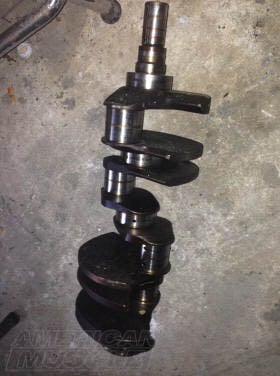
The stock crankshaft in the 4.6L 2V is a cast-iron unit that is surprisingly strong for a factory part. Most engine builders consider the stock crank reliable to around 500 flywheel horsepower with proper balancing. Beyond 500 HP, you should step up to a forged-steel crankshaft. The 4.6L 4V Cobra engines came with a forged crank from the factory, and these are a popular swap for 2V builds. Aftermarket forged cranks are rated to handle upward of 1,500 horsepower, so once you make the investment, the crank is essentially never the limiting factor again.
Main Caps and Bearings
As mentioned, the factory main cap bolts are single-use TTY fasteners. The first upgrade here is a set of ARP main studs, which provide more even clamping force and can be reused during teardowns. If your machine shop offers it, a main cap girdle adds additional rigidity to the bottom of the block and helps prevent cap walk under high loads.
For bearings, the standard upgrade path is a set of coated performance bearings (such as Clevite or King) designed for your specific block — remember, Romeo and Windsor use different bearings. Coated bearings feature a polymer overlay that provides additional protection during cold starts and in low-oil-pressure situations, which is valuable on high-boost applications where oil viscosity and pressure can fluctuate.
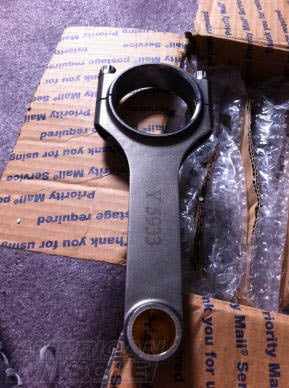
Connecting Rods — H-Beam vs. I-Beam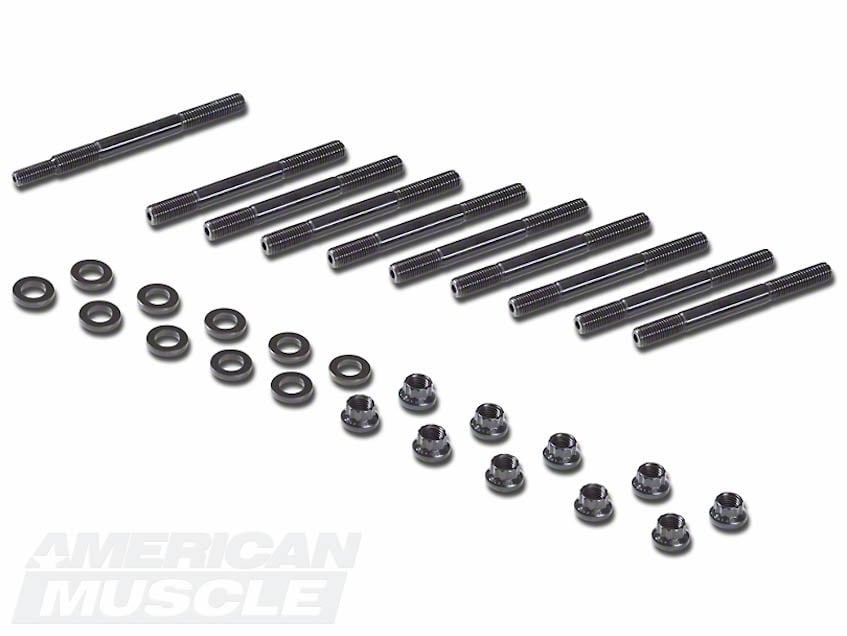
Replacing the factory powdered-metal rods is the single most important upgrade in a bottom-end build. The two main aftermarket options are H-beam and I-beam connecting rods, both of which are a massive improvement over stock.
I-beam rods feature a cross-section shaped like a capital "I" and are stronger per unit of weight. They handle bending loads efficiently and are the go-to choice for many high-RPM applications. H-beam rods have a wider cross-section shaped like an "H," which makes them heavier but gives them excellent resistance to the compressive loads generated by high-boost forced-induction setups. Both styles are typically forged from 4340 chromoly steel and are rated to handle 1,000 horsepower or more with quality ARP rod bolts.
For most street/strip 4.6L builds in the 500-800 HP range, either style works well. If you are building a dedicated race engine pushing 1,000-plus HP under high boost, consult with your engine builder on the rod design that best matches your RPM range and power-adder combination.
Pistons
The jump from hypereutectic factory pistons to forged units is what lets you run serious boost reliably. Forged 2618 aluminum pistons are the standard for boosted applications — this alloy is softer than 4032 (the alloy used in many naturally aspirated forged pistons), which means it expands more when hot but is far more resistant to cracking under detonation. For builds running 15 or more PSI of boost, 2618 is the only alloy you should consider.
Quality forged pistons come with 4130 chromoly wrist pins rated for the kind of cylinder pressures generated by 35 PSI or more of boost. When paired with properly sized rings and a good machine shop's honing job, a quality forged piston set can last tens of thousands of miles on a well-tuned street/strip car.
|
Component
|
Stock
|
Forged Upgrade
|
|
Connecting rods
|
Powdered metal, ~425-450 fwhp limit
|
4340 chromoly forged, 1,000+ HP rated
|
|
Pistons
|
Hypereutectic cast, ~450 fwhp limit
|
2618 forged aluminum, 35+ PSI boost capable
|
|
Main cap bolts
|
Torque-to-yield, single-use
|
ARP studs, reusable, higher clamp load
|
|
Crankshaft
|
Cast iron, ~500 fwhp limit
|
Forged steel, 1,500+ HP rated
|
Electronics and Fuel System Upgrades
![]() You can build the strongest bottom end in the world, but if your ignition system cannot fire reliably or your fuel system cannot deliver enough fuel, you are leaving power on the table — or worse, running dangerously lean. Here is what you need to address on the electronics and fuel side.
You can build the strongest bottom end in the world, but if your ignition system cannot fire reliably or your fuel system cannot deliver enough fuel, you are leaving power on the table — or worse, running dangerously lean. Here is what you need to address on the electronics and fuel side.
Spark Plugs and Heat Range
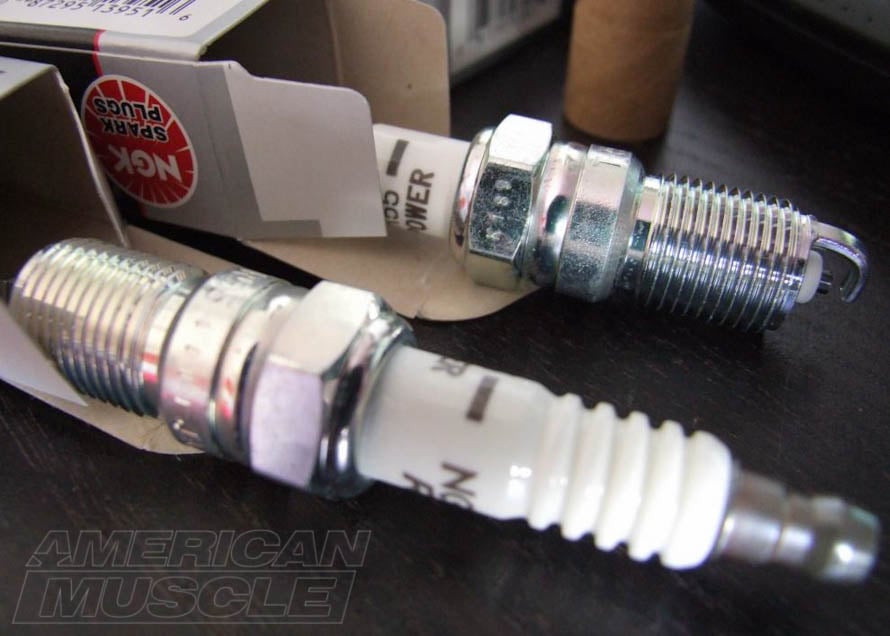
The factory spark plugs in the 4.6L 2V are a fine choice for a stock engine, but once you add a power adder, you need to pay attention to heat range. Heat range refers to a spark plug's ability to dissipate heat from the combustion chamber. A plug that is too hot under boost will cause pre-ignition (detonation), which can destroy pistons. A plug that is too cold on a mild build will foul and misfire.
For most supercharged or turbocharged 4.6L builds, stepping one or two heat ranges colder than stock is standard practice. NGK and Autolite both offer colder plugs in the correct thread size and reach for the Modular engine. Gap your plugs tighter than stock — typically 0.028-0.032 inches for boosted applications, compared to the factory 0.054-inch gap — to ensure reliable spark under increased cylinder pressure.
Coil Packs
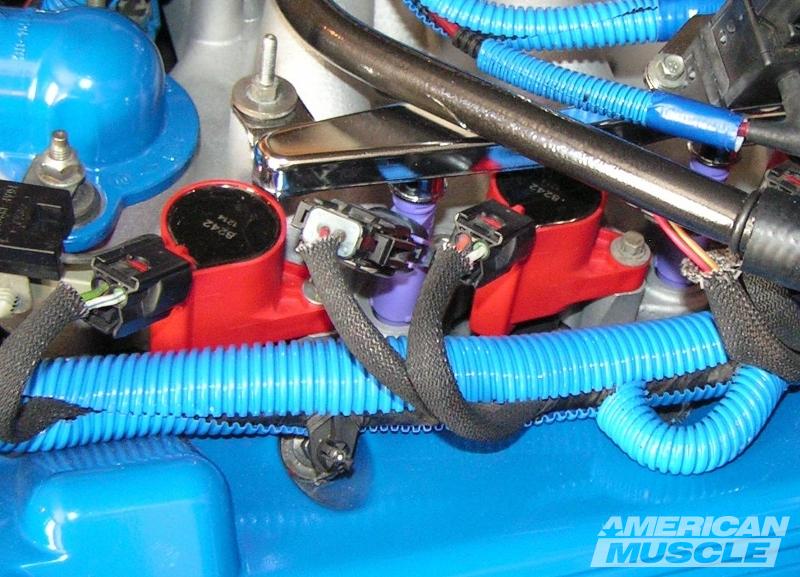
The factory coil-on-plug (COP) ignition system on the 4.6L is a solid design, but the stock coils can struggle to maintain consistent spark energy at high RPM under boost. As cylinder pressures increase, the spark needs more voltage to jump the gap and ignite the air-fuel mixture. Upgraded coil packs deliver higher energy output — typically measured in millijoules (mJ) — which translates to more complete combustion and fewer misfires under load.
If you are running a mild blower setup at 6-8 PSI, the stock coils may be adequate. But for any build making more than 400 rwhp, upgraded coils are cheap insurance against misfires that can cause lean spots and detonation.
Fuel Injectors
Fuel injector sizing is one of the most common areas where builders get tripped up. The stock injectors on the 1999-2004 GT are rated at 19 lb/hr, which is adequate for the factory 260 HP but runs out of capacity quickly once you add boost. Here is a rough guide to injector sizing based on your horsepower target:
- 300-350 rwhp: 24 lb/hr injectors
- 350-425 rwhp: 30 lb/hr injectors
- 425-500 rwhp: 39 lb/hr injectors
- 500-650 rwhp: 47-60 lb/hr injectors
- 650+ rwhp: 80+ lb/hr injectors or a dual-fuel-rail setup
Always size your injectors to run at no more than 80-85% duty cycle at your target horsepower. Running injectors at 100% duty cycle — meaning they are held open continuously — means you have zero headroom and the engine will go lean if conditions change even slightly. Your tuner will thank you for leaving margin.
Fuel Pumps and Supporting Fuel System
Larger injectors need more fuel volume and pressure to function properly. The stock in-tank fuel pump on the 1999-2004 GT flows around 90 liters per hour at operating pressure, which supports roughly 300 rwhp. Beyond that, you need an upgraded pump.
For builds up to about 500 rwhp, a high-flow drop-in replacement pump — typically rated at 155-190 liters per hour — is sufficient. For builds above 500 rwhp, many builders switch to a return-style fuel system with an external fuel pump, braided fuel lines, an adjustable fuel pressure regulator, and upgraded fuel rails. This setup provides consistent fuel pressure regardless of demand, which is critical for maintaining safe air-fuel ratios during hard pulls on the dyno or at the track.
Forced Induction — Superchargers vs. Turbochargers
![]() Want the fastest path to serious horsepower on your New Edge Mustang GT? Forced induction is the answer. Nothing else on the modification list delivers as much power per dollar as bolting on a supercharger or turbo kit. The question is which one is right for your build goals.
Want the fastest path to serious horsepower on your New Edge Mustang GT? Forced induction is the answer. Nothing else on the modification list delivers as much power per dollar as bolting on a supercharger or turbo kit. The question is which one is right for your build goals.
Supercharger Types
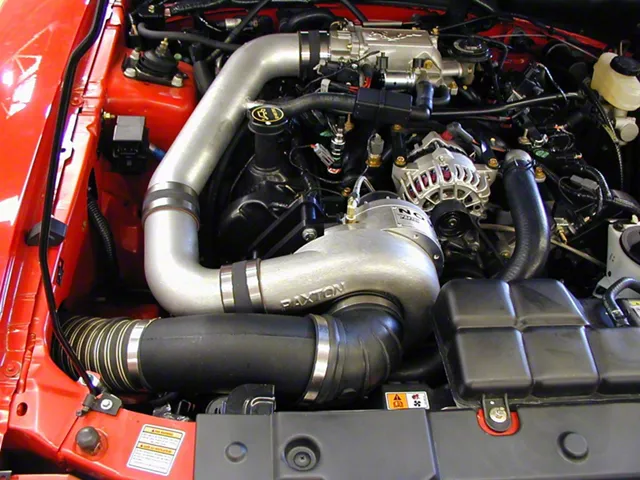
There are two main categories of superchargers for the 4.6L platform: positive-displacement and centrifugal.
Positive-displacement superchargers include roots-style and twin-screw designs. These sit on top of the intake manifold and deliver boost immediately — the moment you open the throttle, you feel the power. Roots blowers use meshing lobes to push air, while twin-screw units compress air internally before delivering it to the manifold, making them more thermally efficient. Both styles deliver a wide, flat torque curve that transforms the driving experience on the street and provides instant throttle response at the drag strip.
Centrifugal superchargers are belt-driven compressors that mount to the front of the engine, similar to an alternator or power steering pump. They deliver boost progressively — more RPM means more boost — so the power builds toward the top of the rev range. Centrifugal kits tend to be more affordable and generate less heat soak than positive-displacement units, but the progressive power delivery is less dramatic on the street.
You can browse the full range of Mustang supercharger kits to compare options across both categories.
Turbocharger Kits
Turbochargers use exhaust energy to spin a turbine that compresses intake air, rather than relying on a belt connected to the crankshaft. This means turbo kits do not create parasitic drag on the engine — all of the boost is essentially "free" energy recovered from the exhaust stream. The result is greater top-end horsepower potential compared to a supercharger of similar size.
The trade-off is complexity. A turbo kit for the 4.6L typically includes exhaust manifolds (or headers with turbo flanges), the turbo itself, an intercooler, oil and coolant lines, a wastegate, a blow-off valve, and all the associated piping. Installation is more involved, and the system needs careful tuning to manage boost onset, fuel delivery, and exhaust backpressure. For builders willing to invest the time and money, turbocharger kits for your New Edge Mustang offer the highest horsepower ceiling on the platform.
Choosing Between a Supercharger and Turbo
|
Factor
|
Supercharger
|
Turbocharger
|
|
Power delivery
|
Instant, linear
|
Progressive, top-end focused
|
|
Install complexity
|
Moderate
|
Higher
|
|
Typical cost range
|
$3,000-$9,000
|
$2,500-$10,000
|
|
Best suited for
|
Street/strip, daily driver builds
|
High HP racing, dedicated track cars
|
|
Heat management
|
Intercooler recommended above 8 PSI
|
Intercooler included in most kits
|
|
HP ceiling (4.6L 2V platform)
|
500-700 rwhp typical
|
600-1,000+ rwhp possible
|
How Much Boost Can Stock Internals Handle?
This is one of the most common questions in the New Edge community, and the answer depends on your tune and your tolerance for risk. As a general guideline, most 4.6L 2V engines with PI heads can safely run 5-10 PSI of boost on stock internals with a proper tune and supporting fuel mods, putting you in the 350-400 rwhp range.
Above 10 PSI, you are stressing the powdered-metal rods and hypereutectic pistons beyond their intended limits. At 15 PSI and above, forged internals are a requirement, not a suggestion. Some builders have survived brief stints at higher boost on stock internals, but "survived" is not the same as "reliable." If you are building a car you want to drive regularly and beat on at the track, invest in forged rods and pistons before pushing past 10 PSI.
Unlocking Power With Camshafts
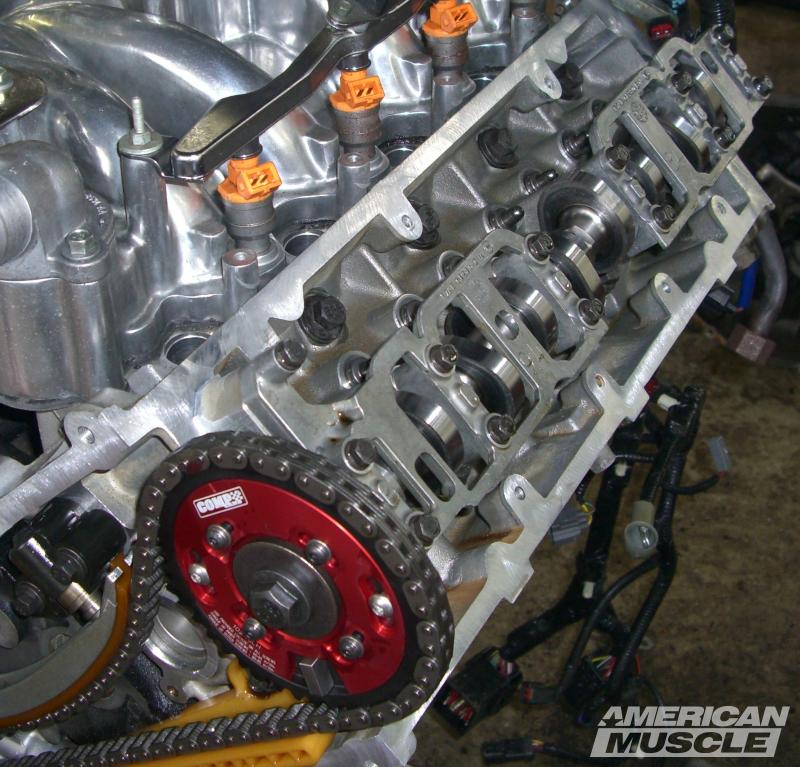
![]() A camshaft swap is one of the most rewarding modifications you can make to a 4.6L 2V — it changes the entire character of the engine. The cam controls how long and how far the intake and exhaust valves open, which directly affects where the engine makes its power. Swap in a more aggressive cam and you unlock additional airflow at higher RPM, which translates to more horsepower.
A camshaft swap is one of the most rewarding modifications you can make to a 4.6L 2V — it changes the entire character of the engine. The cam controls how long and how far the intake and exhaust valves open, which directly affects where the engine makes its power. Swap in a more aggressive cam and you unlock additional airflow at higher RPM, which translates to more horsepower.
Camshaft specifications are described by three key numbers: duration (how long the valve stays open, measured in degrees of crankshaft rotation), lift (how far the valve opens, measured in inches), and lobe separation angle (LSA) (the spread between the intake and exhaust lobes, affecting idle quality and powerband width).
Most aftermarket cam manufacturers offer staged grinds for the 4.6L 2V:
- Stage 1: Mild upgrade over stock. Adds 15-25 HP with a smooth idle. Ideal for daily drivers with bolt-ons and no forced induction.
- Stage 2: Moderate increase in duration and lift. Adds 25-40 HP with a slightly loping idle. Good match for cars with a supercharger or turbo kit.
- Stage 3: Aggressive grind with significantly increased duration. Adds 40-60 HP but sacrifices some low-end torque and idle quality. Best suited for track-focused builds or cars with a dedicated race tune.
The key trade-off with camshafts is daily drivability. A Stage 3 cam sounds incredible and makes serious top-end power, but it moves the powerband higher in the RPM range and can make the car feel lazy around town. For a street/strip car, a Stage 2 cam paired with a power adder is the sweet spot for most builders — you get meaningful gains without giving up the fun of driving the car every day.
Intakes and Exhausts to Complete the Build
Every horsepower you make with forced induction and cams depends on getting air in and exhaust out as efficiently as possible. Intake and exhaust modifications are the bolt-ons that complete the airflow picture and allow your power adder and tune to reach their full potential.
On the intake side, a cold air intake (CAI) replaces the restrictive factory airbox and intake tube with a larger-diameter tube and a high-flow filter positioned to draw cooler air from outside the engine bay. Cooler air is denser, which means more oxygen molecules per cubic foot — and more oxygen means more fuel can be burned, which means more power. A quality CAI is worth 8-15 HP on a naturally aspirated 4.6L and provides even larger gains when paired with a supercharger or turbo, because the power adder amplifies any improvement in intake airflow.
On the exhaust side, the factory manifolds, catalytic converters, and mufflers are designed for emissions compliance and noise control, not maximum flow. A complete exhaust upgrade typically involves three stages:
- Long-tube headers: Replace the factory cast-iron exhaust manifolds with tubular steel headers that feature larger, smoother primary tubes. Long-tube headers move the merge point farther from the engine, which improves exhaust scavenging and adds 15-25 HP.
- Mid-pipe: An off-road mid-pipe (for track-only cars) or a high-flow catted mid-pipe (for street-legal builds) replaces the restrictive factory catalytic converter section.
- Cat-back: A performance cat-back exhaust system replaces everything from the mid-pipe back to the tips with larger-diameter mandrel-bent tubing and less restrictive mufflers.
For any boosted build, upgrading the full exhaust path is not optional — it is a necessity. Backpressure robs horsepower and increases exhaust gas temperatures, which can push a turbocharged engine into dangerous territory. Budget for the full intake-to-tailpipe path when planning your build.
Use a Tuner to Tie Everything Together
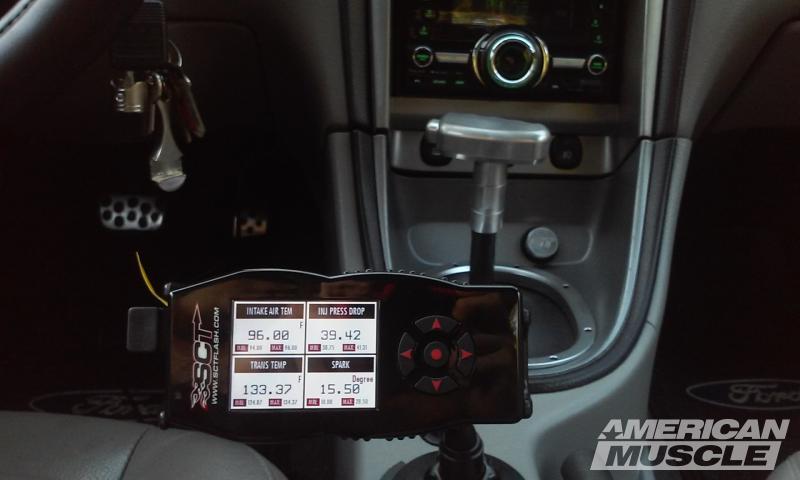
Do you need a tune for a supercharged Mustang? Absolutely — and this applies to any forced-induction or heavily modified naturally aspirated build. A tune recalibrates your engine's computer (the PCM — Powertrain Control Module) to adjust air-fuel ratios, ignition timing, boost targets, transmission shift points, and rev limiters to match your specific combination of parts. Without a tune, you are relying on the factory calibration that was designed for a stock 260 HP engine, which means you are leaving power on the table at best and risking engine damage at worst.
There are two approaches to tuning:
Canned tunes are pre-built calibrations loaded onto a handheld programmer. You select your modifications from a menu (cold air intake, exhaust, supercharger kit, injector size, etc.), and the tuner loads a calibration matched to that combination. Canned tunes are a great starting point and provide immediate, noticeable improvements in throttle response and power delivery. Most Mustang tuners include multiple canned tune options for common modification packages.
Custom dyno tunes are created by a professional tuner while your car runs on a dynamometer. The tuner makes real-time adjustments to the calibration while monitoring air-fuel ratios, knock sensors, exhaust gas temperatures, and power output. A custom tune extracts every last horsepower from your specific combination and provides the tightest possible safety margins. For any build making more than 400 rwhp, a custom dyno tune is a non-negotiable investment.
Crate Engines — The Shortcut to Big Power
![]() Not everyone wants to spend weekends sourcing individual parts, coordinating with a machine shop, and assembling a rotating assembly on the kitchen table. If you want big power without the build hassle, a crate engine is the shortcut that gets you to the finish line faster.
Not everyone wants to spend weekends sourcing individual parts, coordinating with a machine shop, and assembling a rotating assembly on the kitchen table. If you want big power without the build hassle, a crate engine is the shortcut that gets you to the finish line faster.
Ford Performance and several aftermarket builders offer complete crate engines for the 1999-2004 Mustang GT that drop into the engine bay with minimal modification. These engines arrive fully assembled with forged internals, upgraded heads, performance camshafts, and in some cases a factory warranty — Ford Performance crate engines typically include a 2-year/24,000-mile warranty, which is peace of mind you will never get from a garage-built motor.
Crate engines make the most sense for builders who value their time, want a turnkey solution, or are building a car that needs to be reliable from day one. The upfront cost is higher than sourcing individual parts, but when you factor in machine shop labor, balancing, assembly time, and the risk of getting a combination wrong on your first build, a crate engine is often closer in total cost than it initially appears.
Supporting Mods You Can't Ignore
Building a 500-plus-horsepower engine is only half the equation. If your cooling system cannot keep up, your clutch slips on every hard launch, or your brakes fade after one lap, you have built a car that is fast in theory but unreliable in practice. Here are the supporting modifications that separate a well-sorted build from a project that never leaves the garage.
Cooling: More horsepower means more heat. An upgraded aluminum radiator with higher cooling capacity is essential for any boosted application. For cars seeing regular track use, add an engine oil cooler and consider a transmission cooler if you are running an automatic. Heat soak is the enemy of consistent performance — the best-tuned engine in the world will pull timing and lose power when coolant and intake temperatures climb.
Drivetrain: The stock clutch in the 1999-2004 GT is rated for roughly 300 lb-ft of torque at the flywheel. A supercharged 4.6L making 400+ rwhp will overwhelm it immediately. Upgrade to a performance clutch rated for your torque target and pair it with an upgraded flywheel — either a lightened steel unit for faster revs or a billet aluminum unit for dedicated track use. The factory driveshaft is another weak link at higher power levels; an aluminum one-piece driveshaft reduces rotational mass and eliminates the risk of the stock two-piece unit failing at high RPM.
Brakes: Do not overlook stopping power. A 3,400-pound car making 500 HP is going to arrive at the end of the straightaway much faster than a stock GT, and the factory brakes were designed for 260 HP. At minimum, upgrade to high-performance brake pads and slotted or drilled rotors. For regular track use, a big brake kit with larger calipers and rotors is worth the investment — it reduces brake fade and provides consistent pedal feel lap after lap.
Build Planning Checklist
Before you start ordering parts, use this checklist to plan your high horsepower 1999-2004 Mustang GT build from the top down:
Set a realistic horsepower target first. Your target determines whether you need forged internals (400+ rwhp), a block upgrade (600+ fwhp), and the size of your fuel system and injectors.
Budget for the full system, not just the power adder. A supercharger or turbo kit is only as reliable as the fuel delivery, tune, cooling, and drivetrain upgrades that support it.
Identify your block before ordering bottom-end parts. Romeo and Windsor blocks use different main bearings and cap-locating methods — verify yours before purchasing ARP studs, bearings, or a girdle.
Get the tune before you push the car hard. A professional dyno tune should be the last step after all parts are installed. Running a boosted engine on a stock tune risks lean conditions and detonation.
Plan for cooling and braking early. A 500+ HP car generates significantly more heat and arrives at corners faster — upgraded radiator, oil cooler, and brake pads are not optional at that level.
Buy quality internals once. A set of forged rods, pistons, and ARP fasteners costs less than rebuilding a grenaded engine. Invest upfront and your bottom end will support future upgrades without a second teardown.
Don't Skimp — Build It Right the First Time
The 4.6L Modular V8 in the 1999-2004 Mustang GT is one of the best small blocks Ford ever produced. With the right parts, a solid plan, and a quality tune, this engine platform can reliably deliver 400, 500, 600, or even 1,000-plus rear-wheel horsepower depending on how deep you want to go. The key word is "plan." Every dollar you spend on quality internals, proper fuel delivery, and a professional tune is a dollar you will not spend rebuilding a grenaded engine six months from now.
Whether you are starting with bolt-ons and a blower to hit 400 rwhp or going straight to a fully forged bottom end with a turbo kit chasing four-digit power, the 1999-2004 Mustang GT is a proven platform with a deep aftermarket and a community of builders who have paved the road ahead of you. Explore the full catalog of parts, build your shopping list, and start turning wrenches — your dream Mustang is waiting.