

The American muscle car represents a specific, high-octane era of automotive history defined by raw power, aggressive styling, and a singular focus on straight-line performance. These vehicles were never intended to be subtle; they were cultural icons that mirrored the ambition, excess, and rebellious spirit of the 1960s and early 1970s. While the precise definition of a "muscle car" has shifted over the decades, the core formula remains immutable: a relatively lightweight, intermediate-sized body paired with a high-displacement, high-output V8 engine.
For many enthusiasts, the muscle car is the ultimate expression of the American dream on wheels. It provided the average working-class individual with the kind of performance that was previously reserved for exotic European imports or dedicated professional race cars. By bringing this power to the masses, American manufacturers created a legacy that continues to influence automotive design and engineering to this day.
What is a Muscle Car?
To truly appreciate a muscle car, one must distinguish it from the broader category of sports cars. While sports cars like Porsche or Ferrari are generally designed for handling, agility, and technical precision on winding roads, muscle cars prioritize torque and quarter-mile acceleration. Traditionally, a classic muscle car is defined as an intermediate-sized American coupe or sedan equipped with a powerful V8 engine.
During the peak of the movement, these cars were designed primarily for the drag strip and the open highway. They were "no-frills" machines. It was common for buyers to forgo luxuries like air conditioning, power steering, or heavy soundproofing to keep the vehicle's weight down and its price point accessible to young drivers. The goal was simple: provide the most horsepower per dollar possible.
The History of the American Muscle Car
The roots of the muscle car movement can be traced back to the post-World War II era, when returning GIs began "hot rodding" older vehicles to go faster. However, the commercial trend truly exploded in the early 1960s as the "Big Three" in Detroit realized there was a massive market for performance-oriented youth.
The Birth of an Icon
Most automotive historians agree that the 1964 Pontiac GTO was the spark that ignited the muscle car fire. The story goes that Pontiac engineers, led by John DeLorean, defied corporate policy by taking a massive 389-cubic-inch V8 from a full-sized car and dropping it into the mid-sized Tempest chassis.
The result was the GTO, short for Gran Turismo Omologato, named in reference to Italian certification for tourers that are capable of racing. This car was faster, louder, and more intimidating than anything else in its class. It was an instant sensation, selling far beyond Pontiac's expectations and forcing every other manufacturer to respond.
The Golden Era: 1965-1970
The late 1960s saw the release of some of the most legendary nameplates in automotive history. This was a period of intense rivalry, with every year bringing larger engines, bolder racing stripes, and functional hood scoops. In 1966, Chevrolet responded with the Chevelle SS, while Dodge and Plymouth leveraged their legendary HEMI engines to dominate both the streets and the NASCAR circuit.
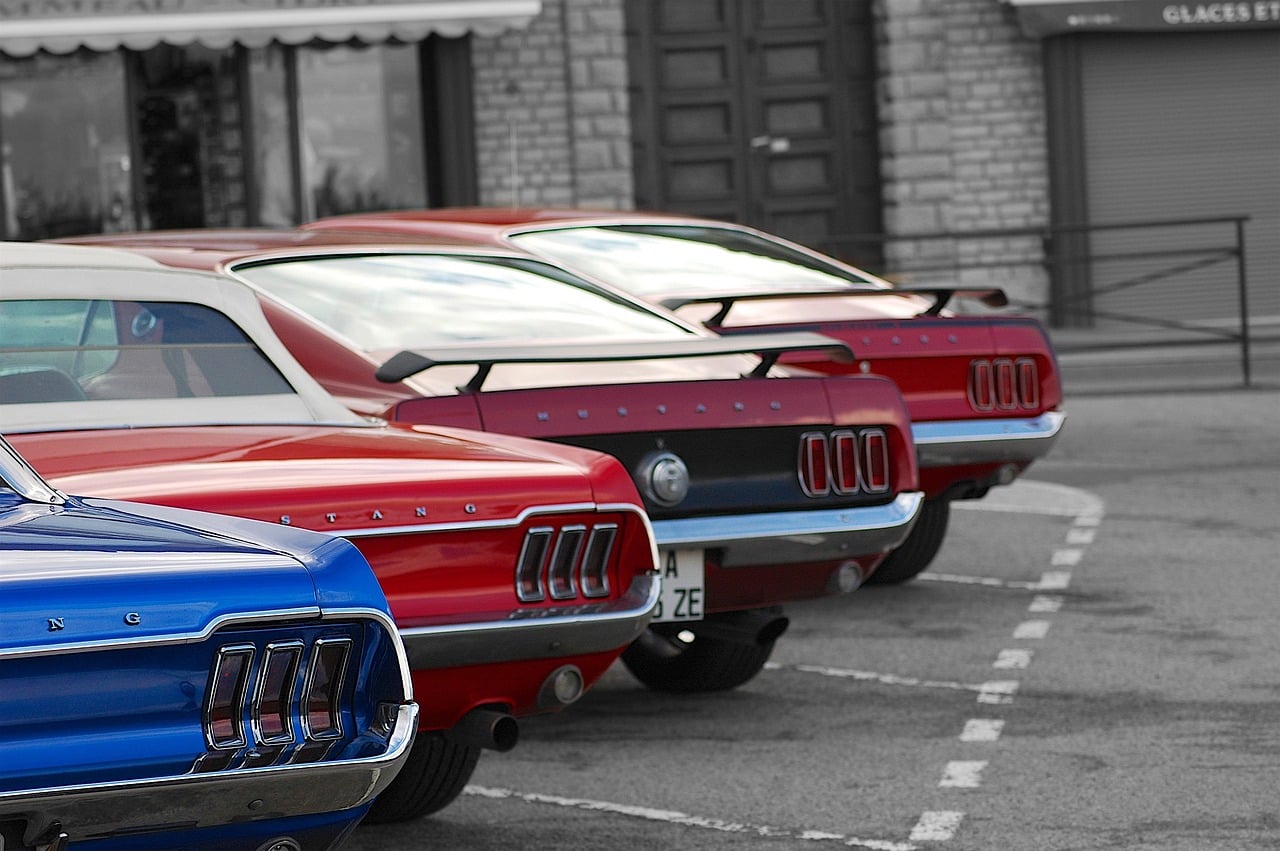
This era also gave birth to the pony car, led by the Ford Mustang. While initially smaller and less powerful than true muscle cars, the Mustang eventually evolved into high-performance variants like the Boss 429 and Mach 1, blurring the lines between the two categories.
By 1970, the muscle car had reached its zenith, with engines like the Chevrolet 454 LS6 producing a staggering 450 horsepower. For comparison, the classic wartime Jeep was a workhorse of only 60 horsepower.
The Decline and Modern Resurgence
By the early 1970s, the golden era began to fade due to factors beyond the manufacturers' control. A combination of skyrocketing insurance premiums for young drivers, strict new federal emissions regulations, and the 1973 oil crisis made high-consumption V8 engines socially and economically impractical.
For nearly three decades, muscle cars became shadows of their former selves, often featuring flashy stickers but very little actual performance. However, the spirit never truly died.
In the mid-2000s, a retro-future movement brought back models like the Ford Mustang in 2005, the Dodge Challenger in 2008, and the Chevrolet Camaro in 2010. These modern versions utilize advanced technology to produce power figures that would have been unthinkable in the 1960s, all while maintaining the classic, aggressive silhouettes of their ancestors.
Famous Muscle Car Brands and Models
Ford
While the Mustang is Ford's most famous muscle car, the company's performance pedigree extends much further. The Ford Fairlane Thunderbolt was a stripped-down drag racer built in limited numbers, while the Ford Torino offered a more refined, aerodynamic approach to high speed.
Ford's partnership with Carroll Shelby also resulted in the GT350 and GT500, cars that combined American V8 muscle with refined performance tuning.
General Motors
General Motors had a diverse stable of performance divisions. Chevrolet was the volume leader, with the Camaro and Chevelle SS serving as the backbone of the hobby. Pontiac remained the rebel brand with the GTO and Firebird Trans Am.
Oldsmobile offered the 4-4-2, named for its four-barrel carburetor, four-speed manual transmission, and dual exhaust. Buick produced the GSX, a car that proved luxury brands could still be serious drag-strip competitors.
Mopar: Dodge and Plymouth
Mopar fans are among the most dedicated in the automotive world, largely due to the radical nature of Chrysler's performance divisions. Dodge and Plymouth were known for loud styling, bold engineering, and High-Impact colors like Plum Crazy Purple and Top Banana Yellow.
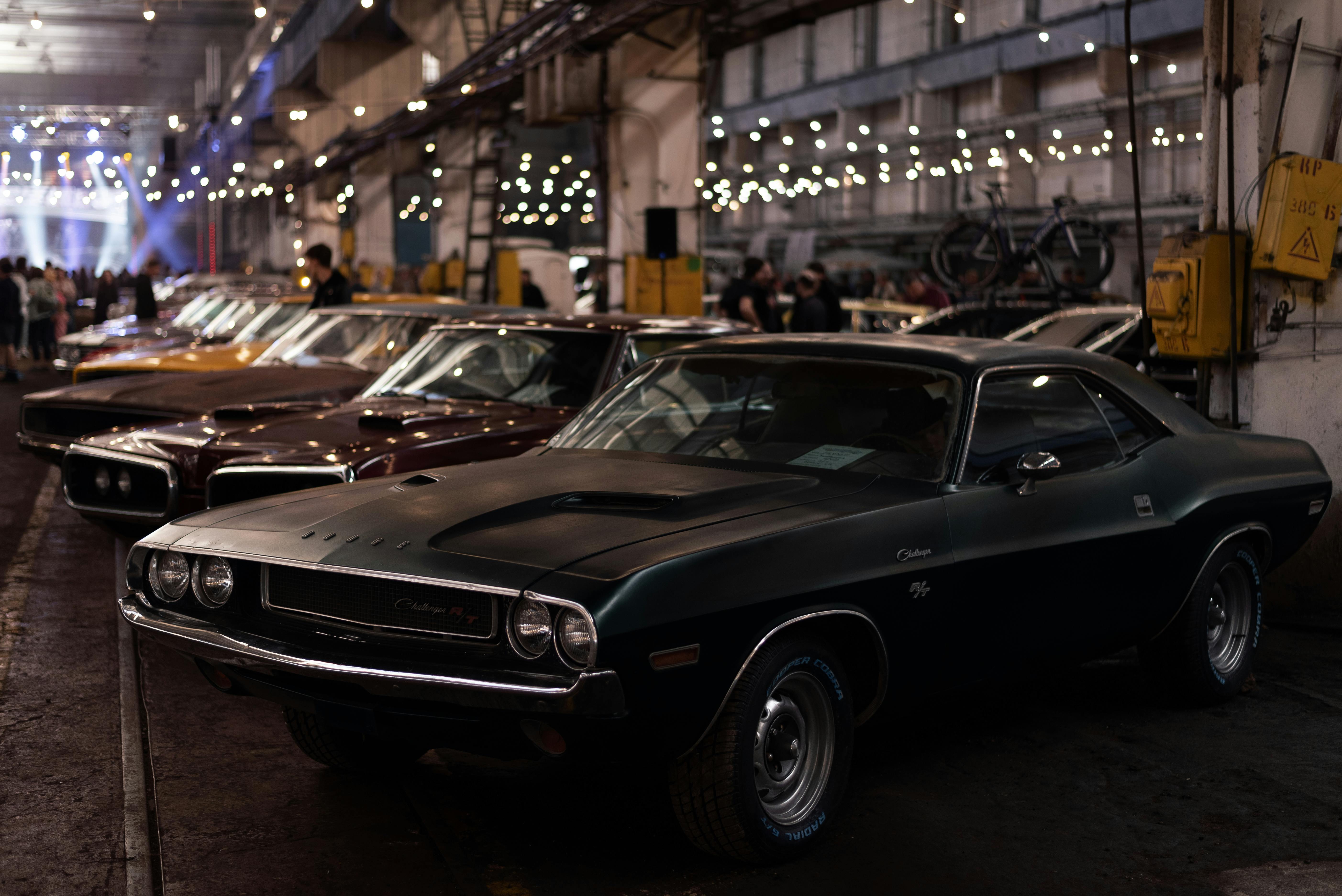
Models like the Dodge Charger, Dodge Challenger, and Plymouth Road Runner were famous for their 440 Six Pack and 426 HEMI engines. The Plymouth Superbird, with its massive rear wing and aerodynamic nose cone, remains one of the most recognizable cars ever built.
Modern Day Muscle: The Second Golden Age
Many enthusiasts consider the modern era a second golden age of muscle cars. Modern engineering, including supercharging and advanced fuel injection, has allowed cars like the Dodge Challenger Hellcat to produce more than 700 horsepower straight from the showroom floor.
Unlike the classics, modern muscle cars feature sophisticated independent suspension, massive Brembo brakes, and launch control, making them more capable on a track while still retaining their straight-line performance roots.
While the industry continues to shift toward electrification, the heart of the muscle car remains tied to the American-made V8 and the visceral, earth-shaking experience it delivers.
Additional Resources
- The Henry Ford Museum: American Muscle Cars
- American Muscle Car Museum
- Evolution of the Muscle Car
- MotorTrend: Top 10 Fastest Muscle Cars Ever Built
- Hemmings: A Guide to Muscle Car Eras through Magazines
- Introduction to Engine Testing and Development
- Arashi Dynamics: Muscle Car Culture: The Power, Spirit, and Legacy of American Performance
- Native Customs: The History of the Muscle Car
- HOT ROD: Muscle Car Review's 30th Anniversary
- Archive: The Evolution of the American Muscle Car
- Classic Muscle Car Maintenance
- Muscle Car Review: The 1960s & 1970s
- MotorWeek: Muscle Car Safety Test
- Muscle Car Safety Statistics
- EPA: 50 Years of Automotive Trends Report