What Makes an Exhaust Tip Sound Deep?
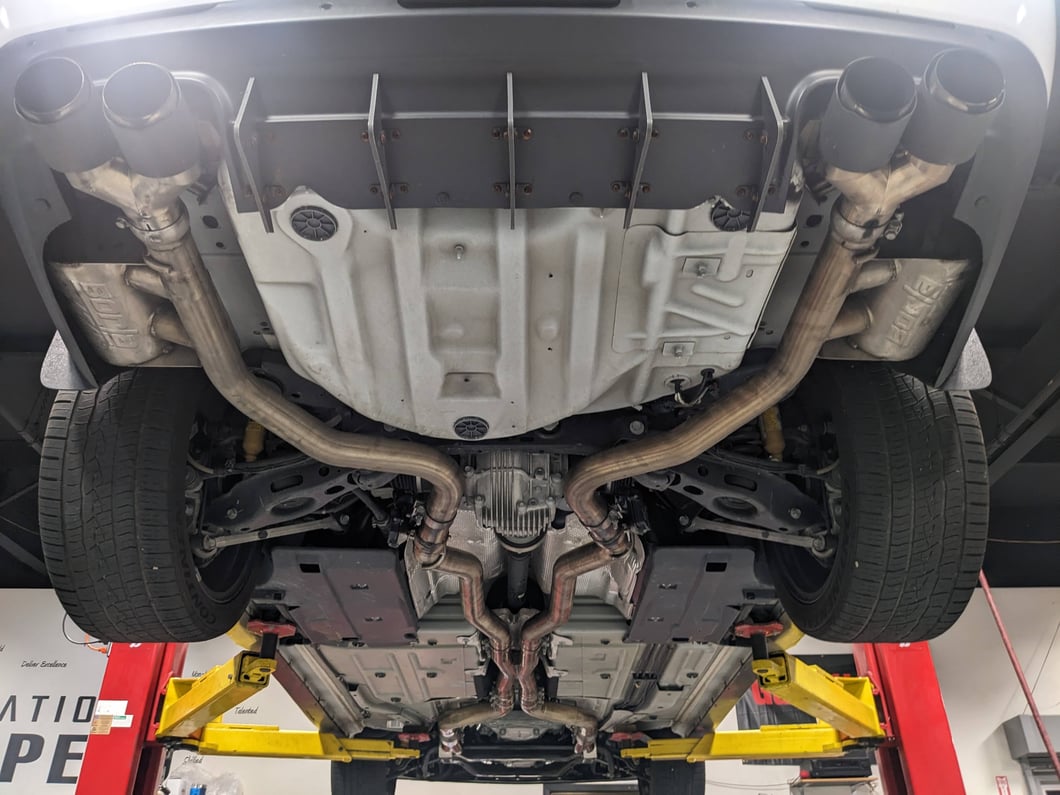
Do exhaust tips actually change your exhaust sound? Yes, but the effect depends on the type of tip you install. A basic, straight-cut exhaust tip on its own will have minimal impact on tone. However, a resonated exhaust tip — a tip with a built-in resonator chamber — can noticeably deepen your exhaust note by canceling out harsh, high-frequency sound waves before they exit the tailpipe.
Want your Mustang, Charger, or Camaro to rumble instead of rasp? You've come to the right place. In this guide, we'll break down exactly how exhaust tip design, diameter, material, and internal chambers affect the sound coming out of your tailpipe — and which upgrades deliver the deepest tone for your build.
The sound your exhaust produces comes down to how exhaust gases — the hot gases expelled from your engine's combustion process — interact with the components they pass through. Every part of the system, from the headers down to the tip, shapes those sound waves. Here is what matters most at the tip level:
- Internal chamber design: Resonated tips contain a small resonator chamber — an enclosed cavity that uses sound-wave cancellation (called destructive interference) to dampen high-pitched frequencies. The result is a lower, mellower tone.
- Outlet diameter: A larger outlet opening allows exhaust gases to expand more gradually, which lowers the pitch. Going from a 2.5-inch to a 4-inch outlet creates an audible difference in depth.
- Tip length: Longer tips give sound waves more distance to travel and resonate before exiting, which can mellow the tone slightly compared to a short, stubby tip.
- Wall construction: Dual-wall tips — tips built with two layers of steel separated by an air gap — add a small amount of insulation that absorbs higher frequencies and produces a slightly deeper note than single-wall designs.
- Material density: Heavier materials like thick-gauge 304 stainless steel transmit sound differently than thin chrome-plated mild steel, affecting the clarity and warmth of the exhaust note.
Here is the honest take: an exhaust tip alone will not turn a quiet stock exhaust into a full-throated V8 roar. Tips fine-tune the final tone. If you want a dramatic transformation, you will get the best results by pairing your tip upgrade with changes further upstream — a performance muffler, a cat-back exhaust system, or headers. We will cover all of those options later in this guide.
Best Types of Exhaust Tips for Deep Sound
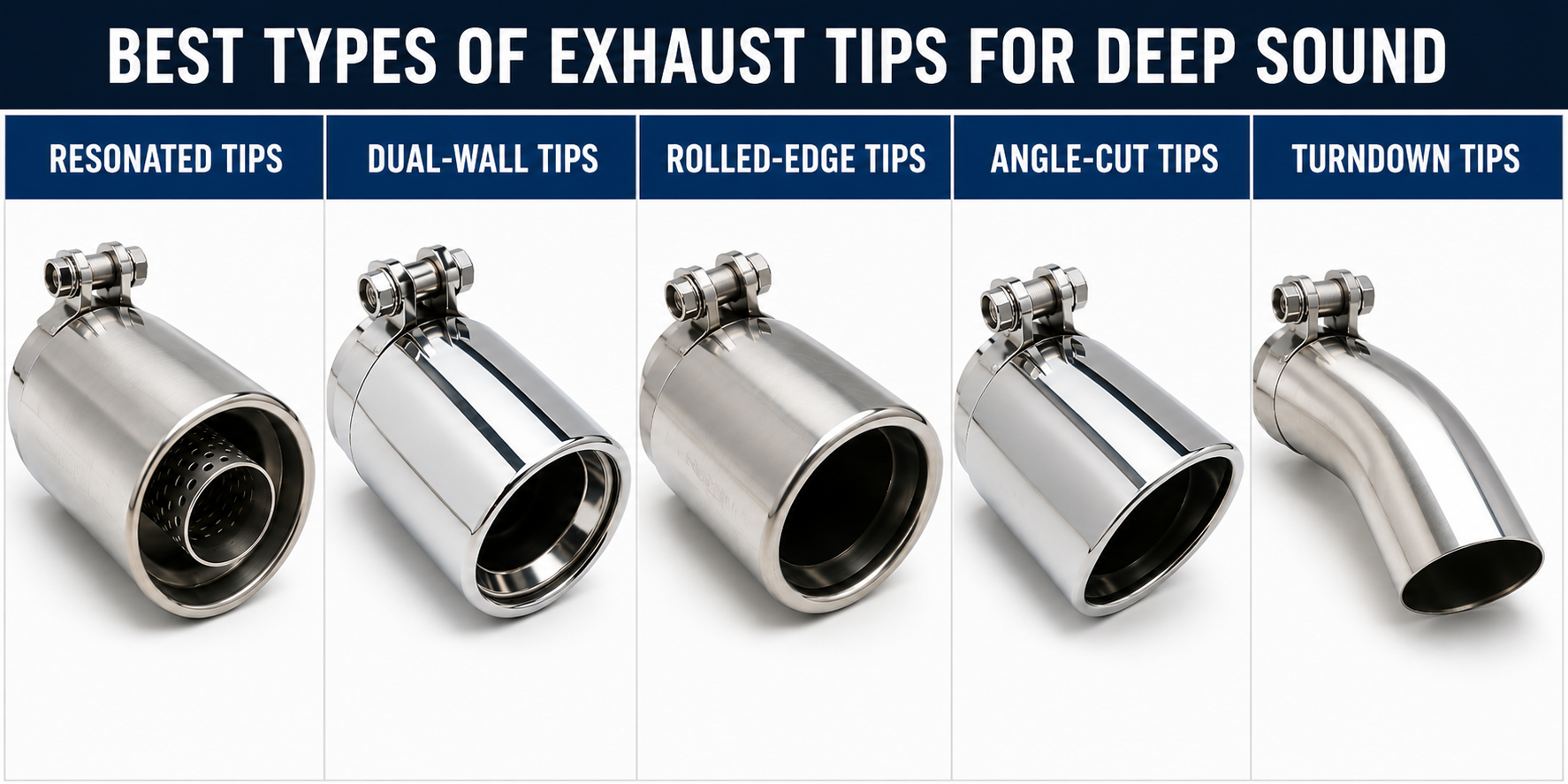
What exhaust tip makes the deepest sound? A resonated exhaust tip with a dual-wall construction delivers the deepest tone of any bolt-on tip because its internal resonator chamber cancels high-frequency sound waves while the dual-wall insulation absorbs remaining harshness. For maximum depth without replacing your muffler, a resonated dual-wall tip in a 4-inch or larger outlet size is your best option.
Not all exhaust tips are created equal when it comes to sound. Here is a breakdown of the most common styles and how each one affects what you hear at the tailpipe:
Resonated Tips
Resonated tips are the top choice for anyone chasing a deeper exhaust note. Inside the tip body, a small resonator chamber creates destructive interference — opposing sound waves that cancel out the high-pitched frequencies responsible for tinny or raspy tones. What you are left with is a lower, smoother rumble. These tips are the only style that produces a meaningful change in exhaust sound without modifying anything else in the system.
Dual-Wall Tips
Dual-wall tips feature two concentric steel tubes separated by a thin air gap. That air pocket acts as a natural insulator, absorbing some of the sharper frequencies before they reach your ears. The sound change is subtle — not as dramatic as a resonated tip — but dual-wall construction does round off the tone and add a touch of depth compared to a single-wall design. Dual-wall tips also run cooler to the touch, which is a bonus if you are regularly near the tailpipe area.
Rolled-Edge Tips
Rolled-edge tips have a smooth, curved lip at the outlet. This design is primarily an aesthetic choice — the curved edge gives a polished, OEM-plus look that works well on muscle cars. In terms of sound, a rolled edge has minimal impact. You are buying this style for the appearance, not the tone.
Angle-Cut Tips
Angle-cut tips are sliced at a diagonal, usually between 15 and 30 degrees. The angled opening can create a slight variation in how exhaust gases disperse, but the sound difference compared to a straight-cut tip is negligible. Like rolled-edge tips, angle-cuts are chosen for styling. They give a more aggressive, sporty look, especially on vehicles with rear diffusers or tight bumper cutouts.
Turndown Tips
Turndown tips curve the exhaust outlet downward, directing gases and sound toward the ground rather than straight back. This design is common on trucks and off-road builds. Turndown tips can make the exhaust sound slightly muffled from behind the vehicle since the sound waves are redirected, but they do not deepen the tone in any meaningful way.
Exhaust Tip Type Comparison
|
Tip Type
|
Sound Impact
|
Best For
|
Price Range
|
|
Resonated
|
Significant — deeper, mellower tone
|
Drivers who want a noticeable sound change from the tip alone
|
$50 - $150
|
|
Dual-Wall
|
Moderate — rounds off harshness
|
Clean look with a subtle tone improvement
|
$30 - $100
|
|
Rolled-Edge
|
Minimal — primarily aesthetic
|
OEM-plus appearance on muscle cars
|
$20 - $80
|
|
Angle-Cut
|
Minimal — slight dispersion change
|
Aggressive styling on sport builds
|
$20 - $70
|
|
Turndown
|
Redirects sound — slightly muffled from rear
|
Trucks, off-road, and under-bumper setups
|
$15 - $50
|
Exhaust Tip Size Guide: How Diameter Affects Sound
Does exhaust tip diameter affect sound? Yes. A larger outlet diameter allows exhaust gases to expand more freely as they exit, which lowers the frequency of the sound waves and produces a deeper tone. Increasing from a stock 2.5-inch outlet to a 4-inch outlet creates a clear, audible deepening of the exhaust note, especially on V6 and V8 engines.
Choosing the right size is not as simple as picking the biggest tip you can find. You need to match two measurements: the inlet diameter (the size that clamps or welds onto your existing tailpipe) and the outlet diameter (the visible opening that shapes the sound and the look).
Inlet Sizing
Your inlet size must match your exhaust pipe's outer diameter. Most muscle cars run one of these common pipe sizes:
- 2.25 inches — Some stock four-cylinder and V6 applications
- 2.5 inches — Standard on many stock V6 and some V8 setups (common on base Mustangs, V6 Camaros)
- 3.0 inches — Common on V8 muscle cars with performance exhaust (GT Mustangs, Charger R/T, Camaro SS)
- 3.5 inches — Found on some high-performance and aftermarket systems
If you are unsure, measure the outside diameter of your tailpipe with a tape measure or caliper before ordering.
Outlet Sizing and Sound Impact
The outlet diameter is where the sound shaping happens. Here is how different outlet sizes compare:
|
Outlet Size
|
Sound Profile
|
Best For
|
Notes
|
|
2.5 inches
|
Minimal change — close to stock
|
Stock replacement, factory look
|
Maintains OEM appearance and sound
|
|
3.0 inches
|
Slight deepening — subtle but noticeable
|
Daily drivers who want a mild upgrade
|
Fits most factory bumper cutouts without trimming
|
|
4.0 inches
|
Noticeable deepening — fuller bass
|
Performance builds, muscle car owners
|
Sweet spot for sound-to-fit ratio on most muscle cars
|
|
5.0 inches
|
Maximum depth — pronounced low rumble
|
Show cars, aggressive builds
|
May require bumper trimming or custom fabrication
|
|
6.0+ inches
|
Very deep — diminishing returns above 5 inches
|
Diesel trucks, extreme show builds
|
Rarely used on muscle cars; large visual presence
|
For most Mustang, Camaro, and Charger owners looking for a deeper tone, a 4-inch outlet with a 2.5- or 3-inch inlet is the sweet spot. It delivers a clear improvement in depth without requiring bodywork modifications. If you are running an aftermarket cat-back system with 3-inch piping, a 4-inch to 5-inch outlet will complement the increased flow and give you maximum bass.
Exhaust Tip Materials: Stainless Steel vs. Chrome vs. Black
What is the best exhaust tip material for sound and durability? 304 stainless steel is the top all-around choice. It resists corrosion better than chrome-plated mild steel, handles heat without discoloration, and its density transmits sound cleanly without adding unwanted rattle or resonance. Chrome looks sharp initially but can flake and pit over time, while black powder-coated tips offer a modern aesthetic at a mid-range price point.
The material your exhaust tip is made from affects three things: how it sounds, how long it lasts, and how it looks over the years. Here is a straight comparison of the four most common options:
|
Material
|
Sound Transmission
|
Durability
|
Corrosion Resistance
|
Appearance Over Time
|
Price
|
|
304 Stainless Steel
|
Clean, resonant — best for accurate tone
|
Excellent — handles 1,000+ degrees F
|
Excellent — marine-grade alloy
|
Stays bright with occasional polishing
|
$$-$$$
|
|
409 Stainless Steel
|
Slightly warmer, less bright than 304
|
Good — lower heat tolerance than 304
|
Good — can develop surface rust in harsh climates
|
May dull or patina over several years
|
$-$$
|
|
Chrome-Plated Steel
|
Bright, sometimes tinny on thin gauges
|
Fair — chrome layer can crack under thermal cycling
|
Fair — once chrome chips, base steel corrodes quickly
|
Mirror finish initially; pitting and flaking common after 2-3 years
|
$
|
|
Black Powder-Coated
|
Slightly dampened — coating absorbs minor vibrations
|
Good — heat-resistant coatings rated to 1,200+ degrees F
|
Good — coating protects base metal until scratched
|
Stealth look; can discolor under extreme heat if coating quality is low
|
$$
|
|
Titanium
|
Crisp and clear with a metallic ring
|
Excellent — extremely heat-resistant
|
Excellent — naturally corrosion-proof
|
Develops a blue/purple heat patina (desired by many enthusiasts)
|
$$$$
|
For a deep, clean exhaust note that lasts, 304 stainless steel is the recommended pick. The alloy's density and heat tolerance mean the tip will transmit the true sound of your exhaust system without adding any of its own rattles, buzzes, or tinny overtones. If you are on a tighter budget, 409 stainless delivers solid performance at a lower cost — just know it may develop a light surface patina in snowy or coastal climates over time.
Black powder-coated tips have surged in popularity, especially on newer Mustangs and Camaros with blacked-out trim packages. They look aggressive and hold up well as long as the coating is rated for exhaust temperatures (look for coatings rated above 1,000 degrees Fahrenheit). Just keep in mind that the coating can slightly dampen vibrations compared to bare polished steel, which may marginally soften the tone.
How to Make Your Exhaust Sound Deeper: Beyond the Tip
How do you make your exhaust sound deeper without a full system replacement? Start with the easiest bolt-on upgrades and work your way up. A resonated exhaust tip is the simplest first step, but combining it with a cold air intake, a performance muffler, or a cat-back system will give you dramatically more depth and volume than any single modification alone.
If you are serious about getting a deep, rumbling exhaust note, here is the upgrade path from least invasive to most involved. Each step builds on the last, so you can stop wherever you hit the sound level and budget you are comfortable with:
1. Install a Resonated Exhaust Tip
This is the easiest entry point. A resonated tip bolts or clamps onto your existing tailpipe in minutes with no cutting or welding required. It will not transform the sound on its own, but it will take the edge off high-pitched tones and add a touch of depth. Think of it as the finishing touch that polishes whatever is happening upstream.
2. Upgrade Your Cold Air Intake
A cold air intake replaces your factory airbox with a higher-flow filter and wider intake tube. More air in means more air out, and that increased volume of exhaust gas deepens the note — especially under acceleration. You will also pick up a few horsepower. If you want to learn more about how intakes change your exhaust tone, check out our guide on whether cold air intakes affect the sound of your car.
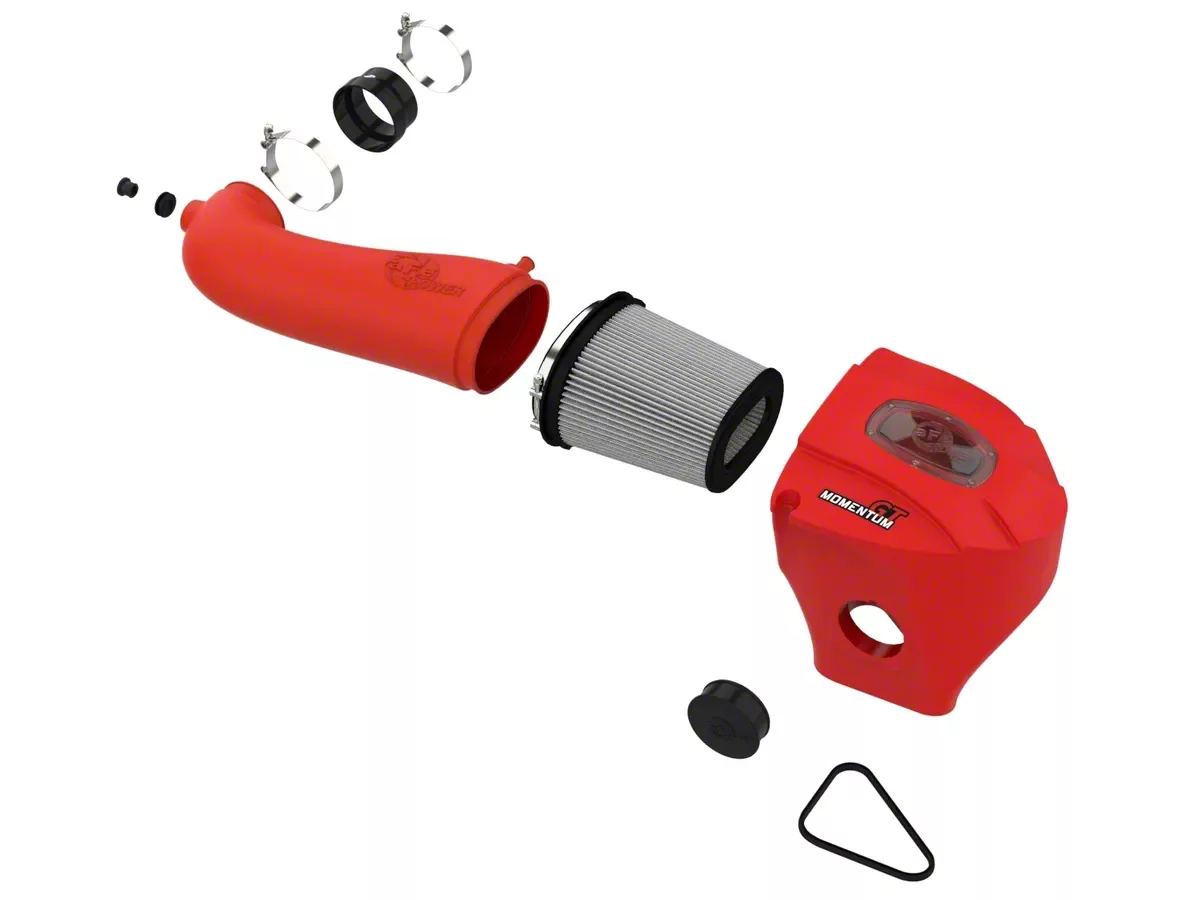 The AFE Momentum GT is a popular pick because it delivers noticeable airflow improvements, a deeper intake growl, and a clean look in the engine bay — all in one bolt-on package. You can also explore the full range of cold air intake benefits beyond just sound.
3. Resonator Delete or Swap
Your factory resonator — a secondary muffler-like device welded into the exhaust pipe — is specifically designed to quiet the exhaust. Removing it (a resonator delete) or replacing it with a straight pipe section opens up the exhaust note, adding volume and rawness. Be aware that a resonator delete can introduce a higher-pitched drone at highway speeds on some vehicles, which is why many enthusiasts pair it with a deeper aftermarket muffler. For a detailed breakdown, read our comparison of resonators vs. mufflers.
4. Replace the Muffler
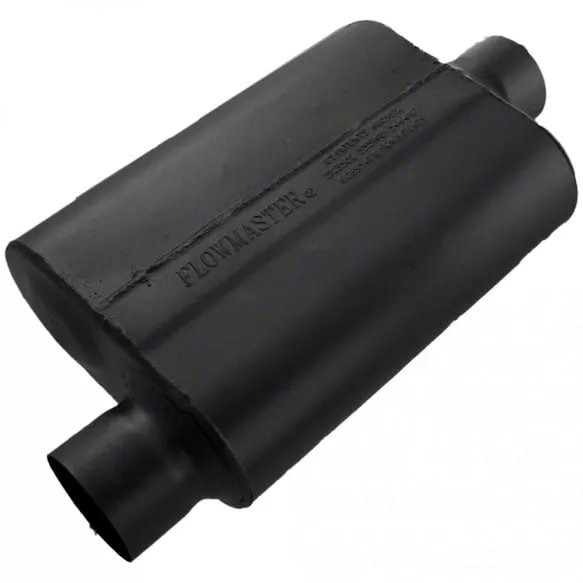
Swapping your stock muffler for a performance unit is the single most effective way to change your exhaust sound. The Flowmaster 40 Series is one of the best-known options for achieving a deep, aggressive tone. It uses a two-chamber design that produces a rich, low rumble at idle and a throaty roar under throttle. Other popular choices include chambered mufflers from Borla and MagnaFlow, each with their own signature tone.
Before you buy, make sure the muffler's inlet and outlet sizes match your exhaust piping, and always check your local noise and emissions regulations before removing or replacing exhaust components.
5. Install a Cat-Back Exhaust System
A cat-back exhaust system replaces everything from the catalytic converter back to the tailpipe — piping, muffler, resonator, and tips all in one kit. This is the most popular performance exhaust upgrade because it delivers the biggest sound and performance improvement in a single bolt-on installation. Cat-back systems are designed to work as a matched set, so the pipe diameter, muffler type, and tip size are all engineered together for the best balance of tone, flow, and power.
6. Upgrade to Long Tube Headers
Long tube headers replace the short factory exhaust manifolds with longer, individually tuned runners that improve exhaust gas scavenging and flow. The result is more horsepower, more torque, and a deeper, more aggressive exhaust note across the entire RPM range. This is a more involved installation — typically requiring a lift and several hours of labor — but the performance and sound gains are significant. 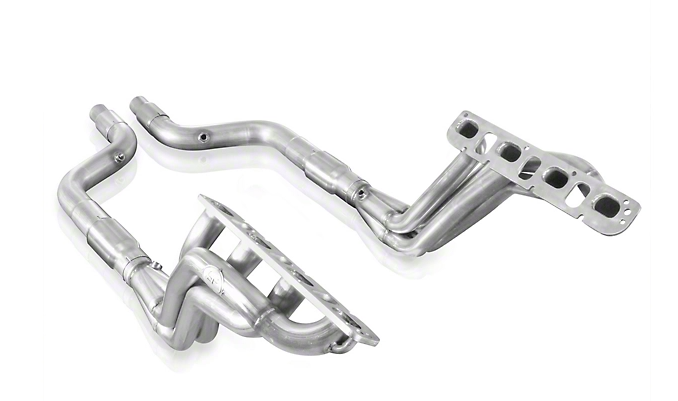 The Stainless Power 1-7/8-inch long tube headers with a catted mid-pipe are a top choice for enthusiasts who want maximum exhaust depth without sacrificing street legality. The included catalytic converters keep emissions in check while the long runners deliver a deep, full-bodied tone that stock manifolds simply cannot match.
Sound Profile Comparison: Deep vs. Aggressive vs. Raspy
Before you start buying parts, it helps to know exactly what kind of exhaust sound you are going for. Enthusiasts typically describe exhaust tones using three main profiles: deep, aggressive, and raspy. Each one comes from a different combination of components, and knowing the difference will keep you from ending up with a setup that does not match your expectations.
|
Sound Profile
|
Character
|
Achieved By
|
Volume Level
|
Best For
|
|
Deep
|
Low-pitched, smooth rumble with strong bass undertones
|
Resonated tip + chambered muffler (e.g., Flowmaster 40) + larger diameter piping
|
Moderate — noticeable but not obnoxious
|
Daily drivers, cruisers, muscle car purists
|
|
Aggressive
|
Loud, commanding bark with a sharp edge under acceleration
|
Muffler delete or straight-through muffler + long tube headers + high-flow cats
|
High — will turn heads and may draw attention from law enforcement
|
Weekend warriors, track days, show cars
|
|
Raspy
|
Buzzy, high-frequency crackle often described as "metallic" or "tinny"
|
Small-diameter piping + resonator delete + thin-wall tips + no muffler damping
|
Moderate to high — but perceived as louder due to frequency
|
Some sport compact builds (generally undesirable on V8 muscle cars)
|
Most muscle car owners are chasing the deep profile. That low, smooth rumble at idle that builds into a full roar when you step on it — without sounding buzzy or strained at high RPM. If that describes what you want, focus your build around a chambered muffler, resonated tips, and larger-diameter piping (3 inches for V8s is the sweet spot). Avoid removing the resonator without a muffler swap, because that combination tends to push the sound toward raspy territory, especially on V6 engines.
If you want something between deep and aggressive, a cat-back system with a performance muffler (not a muffler delete) paired with a straight-through design rather than a straight pipe will give you more volume and bite without crossing into rasp. It is all about balancing flow and damping.
Model-Specific Exhaust Tip Recommendations
Exhaust tip fitment varies by vehicle. Here are the key measurements and recommendations for the most popular muscle cars in the AmericanMuscle catalog:
Ford Mustang
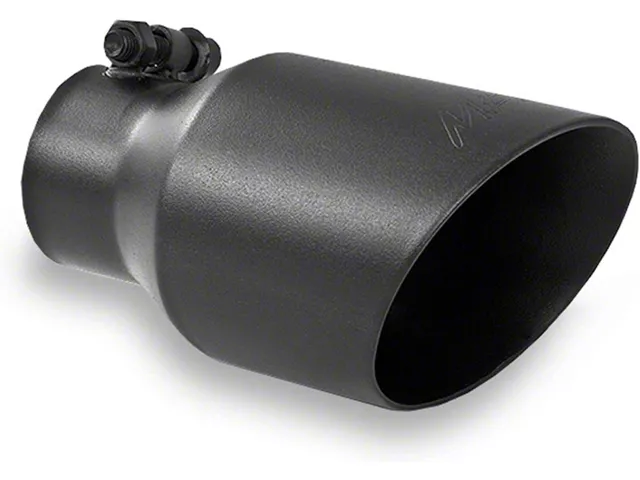
The Mustang is one of the most popular platforms for exhaust modifications, and Mustang exhaust tips come in a huge range of styles. Most 2015-2023 Mustang GT models run a 2.5-inch factory exhaust pipe, making 2.5-inch inlet tips the standard fit. If you have upgraded to an aftermarket cat-back system, you are likely running 3-inch piping. For a deep V8 rumble, pair a 4-inch resonated outlet tip with a Flowmaster Super 44 or similar chambered muffler.
Dodge Charger and Challenger
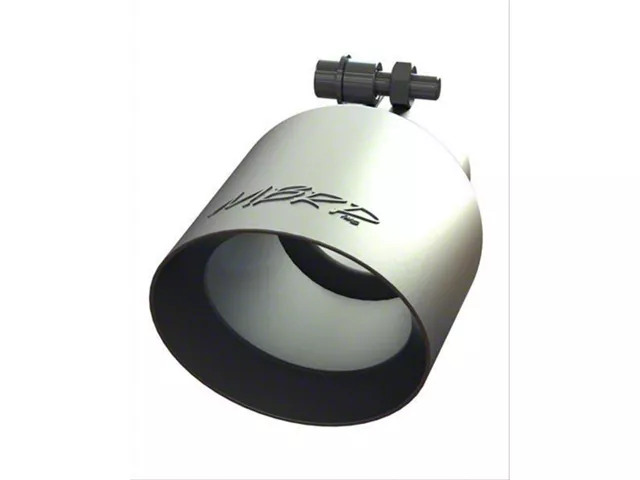
The 5.7L and 6.4L HEMI engines in the Charger and Challenger already produce a naturally deep tone thanks to the engine's displacement and firing order. Most factory R/T and Scat Pack models come with 2.75-inch to 3-inch exhaust piping. A resonated dual-wall tip with a 4-inch outlet works well for adding a subtle bass boost. For a more dramatic change, a cat-back system designed for HEMI applications will completely transform the sound while keeping the deep character of the engine.
Chevrolet Camaro
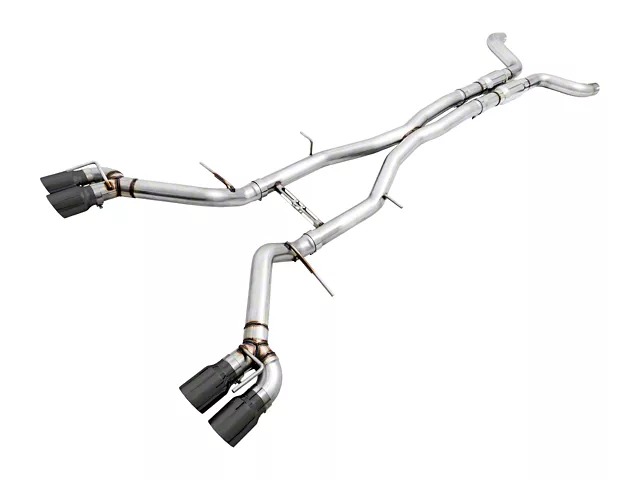
The Camaro SS and ZL1 feature an exhaust system with quad exhaust tips from the factory. The stock pipe diameter varies from 2.5 inches on V6 models to 3 inches on V8 setups. When shopping for tips, make sure you match the quad-tip configuration — running dual tips per side with a 3.5-inch or 4-inch outlet per tip will deepen the note and give the rear end a more aggressive appearance. The LT1 and LT4 engines respond especially well to resonated tips because the factory NPP (dual-mode) exhaust already provides a deep baseline tone that tips can refine further.
Exhaust Tips with Resonators: What You Need to Know
A resonated exhaust tip is an exhaust tip with a small resonator chamber built into the tip body. This chamber uses a principle called destructive interference — where two opposing sound waves meet and cancel each other out — to reduce high-frequency exhaust noise. The result is a noticeably deeper, smoother exhaust note without modifying any other part of your exhaust system.
Resonated tips are the most effective type of exhaust tip for changing sound because they are the only style that actively alters the acoustic properties of the exhaust gases passing through them. Here is what you need to know before buying one:
How Resonated Tips Work
Inside a resonated tip, the exhaust gases pass through a perforated inner tube surrounded by a sealed outer chamber. As sound waves travel through the perforations into the chamber, they bounce off the outer wall and re-enter the main flow traveling in the opposite phase. When these out-of-phase waves meet the original sound waves, they cancel out — particularly in the 2,000 Hz to 5,000 Hz range where the tinny, high-pitched tones live. The lower-frequency bass notes (below 500 Hz) pass through largely unaffected, giving you that deeper tone.
When to Use a Resonated Tip
- You want a quick sound change without major modifications. A resonated tip bolts on in 10-15 minutes and requires no cutting, welding, or tuning.
- Your exhaust is too raspy or tinny. If your current setup produces an unpleasant buzz at certain RPM ranges, a resonated tip can smooth it out.
- You have already upgraded your muffler or cat-back. A resonated tip is the finishing touch that refines the sound of a performance exhaust system. It pairs especially well with straight-through mufflers that can be harsh on their own.
When a Resonated Tip Will Not Be Enough
- Your exhaust system is fully stock. If you have not changed the muffler, resonator, or piping, a resonated tip will produce only a subtle improvement. The stock muffler is already doing most of the sound shaping, leaving the tip little room to make a noticeable difference.
- You want a dramatic volume increase. Resonated tips shift the tone, not the volume. They make the sound deeper but not louder. For more volume, you need to address the muffler or remove restrictive components upstream.
Installation Tips
Most resonated tips use either a clamp-on or weld-on connection. Clamp-on tips slide over your existing tailpipe and are secured with a band clamp — no tools beyond a socket wrench required. Weld-on tips provide a permanent, rattle-free connection but require access to a MIG or TIG welder. If you go the clamp-on route, measure your tailpipe's outside diameter carefully and make sure the tip's inlet diameter matches within a quarter inch for a snug fit.
Start Building Your Deeper Exhaust Sound
![]() Whether you are looking for a subtle refinement or a full exhaust overhaul, the upgrade path starts with understanding what each component contributes to the sound. A resonated exhaust tip is the easiest first step, a performance muffler delivers the biggest single improvement, and a complete cat-back system ties everything together for maximum depth and performance. Explore performance exhaust systems and exhaust tips at AmericanMuscle to find the right setup for your Mustang, Charger, Camaro, or Challenger — and start enjoying the sound your muscle car was meant to make.
Whether you are looking for a subtle refinement or a full exhaust overhaul, the upgrade path starts with understanding what each component contributes to the sound. A resonated exhaust tip is the easiest first step, a performance muffler delivers the biggest single improvement, and a complete cat-back system ties everything together for maximum depth and performance. Explore performance exhaust systems and exhaust tips at AmericanMuscle to find the right setup for your Mustang, Charger, Camaro, or Challenger — and start enjoying the sound your muscle car was meant to make.