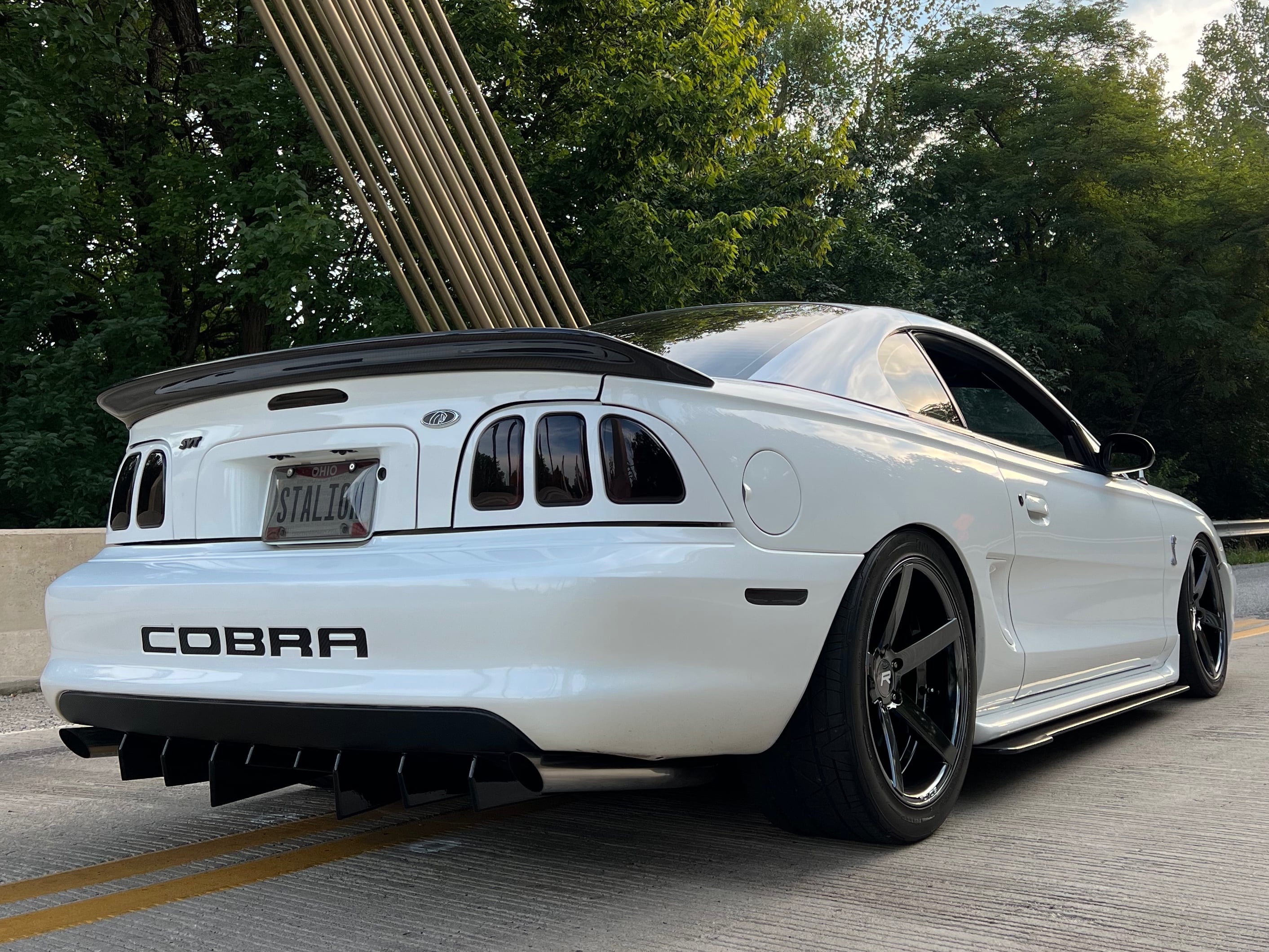
The Mustang Cobra Legacy: From Fox Body to Terminator

Ever found yourself comparing SVT Cobra specs across a dozen different forum threads, trying to figure out which generation made what power and which one is actually worth building? Maybe you have been eyeing a Terminator at a car show and wondering how its supercharged numbers stack up against a Cobra R or the modern GT500.
You are not alone. The Mustang Cobra family tree is one of the most celebrated and most confusing lineups in American performance car history. Between the SVT Cobra, the Cobra R, and the Shelby GT500 that followed, there is a lot to untangle.
This guide breaks down every Mustang Cobra variant ever built, from the 235 hp Fox Body original in 1993 to the 390 hp supercharged Terminator that closed out the nameplate in 2004. You will get complete specs tables, production numbers, and the real-world performance data you need, whether you are shopping for a project car, comparing platforms for a build, or just settling a debate at your next cruise night.
Ford produced Mustang Cobras from 1993 through 2004, spanning three Mustang platforms and more than a decade of SVT engineering. The Cobra lineup included the Fox Body (1993), SN95 (1994-1998), and New Edge (1999-2004) generations, plus three limited-production Cobra R track models built in 1993, 1995, and 2000.
1993 SVT Cobra Specs: The Fox Body Original
The 1993 SVT Cobra was the car that launched Ford's Special Vehicle Team (SVT) into the Mustang world, and it did it on the proven Fox Body platform that enthusiasts already knew and loved. Debuting at the 1992 Chicago Auto Show, it was Ford's answer to a simple question: what happens when you hand the Mustang over to a dedicated performance division with a mandate to build something special?
Under the hood sat a heavily reworked version of the familiar 5.0L OHV V8. SVT swapped in GT-40 iron intake manifold and cylinder heads, which featured larger ports and improved flow characteristics over the standard 5.0L GT heads. The result was 235 hp at 4,600 rpm and 280 lb-ft of torque at 4,000 rpm. Those numbers might look modest by today's standards, but in 1993 they made the Cobra the most powerful factory Mustang you could buy. Backing that engine was a Borg-Warner T-5 five-speed manual transmission, and out back sat a standard 8.8-inch solid rear axle with 3.08 gears.
What really separated the 1993 Cobra from a dressed-up GT was the complete suspension overhaul. SVT fitted specific-rate springs, Tokico struts and shocks, larger front and rear sway bars, and 17-inch alloy wheels, a first for the Mustang. The braking system got 13-inch front rotors with PBR twin-piston calipers, giving the Cobra legitimate stopping power to match its straight-line speed.
On the street, the 1993 Cobra ran 0-60 mph in approximately 5.9 seconds and cleared the quarter mile in 14.5 seconds at 98 mph. Those were strong numbers for a naturally aspirated pony car in the early 1990s, putting it right in the mix with Camaros and Firebirds of the era.
Ford built just 4,993 Cobra coupes and convertibles for 1993, plus a handful of Cobra R track specials. That low production number has made clean, unmodified examples increasingly collectible. If you are maintaining or restoring one, you can find dedicated 1993 SVT Cobra parts to keep it factory correct or push it further.
1993 SVT Cobra Specs
| Specification |
Details |
| Engine |
5.0L OHV V8 (GT-40 heads and intake) |
| Displacement |
302 ci (5.0L) |
| Horsepower |
235 hp @ 4,600 rpm |
| Torque |
280 lb-ft @ 4,000 rpm |
| 0-60 mph |
5.9 seconds |
| 1/4 Mile |
14.5 sec @ 98 mph |
| Transmission |
Borg-Warner T-5 5-speed manual |
| Rear Axle |
8.8-inch solid, 3.08 gears |
| Brakes |
13" front rotors, PBR twin-piston calipers |
| Wheels |
17-inch alloy (first Mustang with 17s) |
| Production |
4,993 units |
1994-1998 SN95 SVT Cobra Specs: The DOHC Era Begins
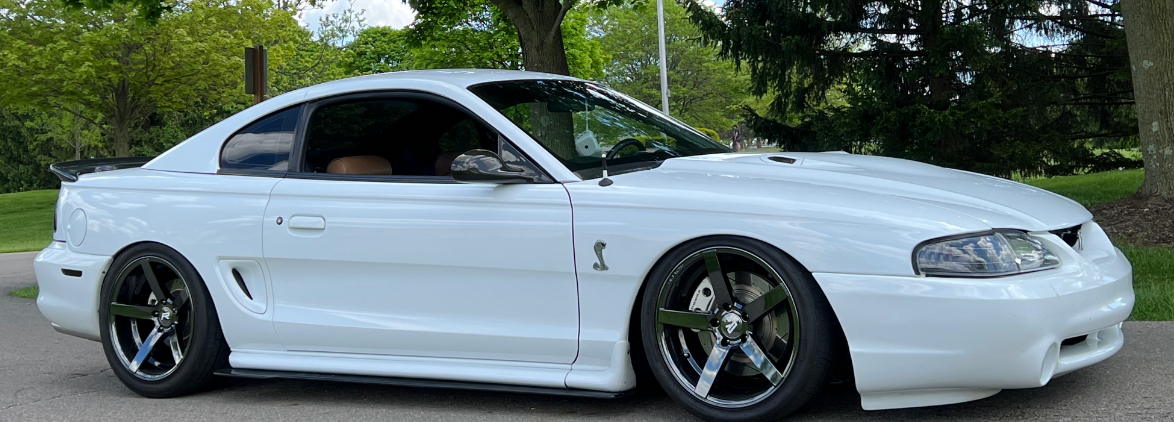
When the Mustang moved to the SN95 platform for 1994, the SVT Cobra came along for the ride, and over the next five model years it underwent one of the most significant powertrain transformations in Mustang history. The SN95 Cobra era splits neatly into two halves: the final years of the pushrod 5.0L and the arrival of the all-new DOHC modular V8.
1994-1995: The Last Pushrod Cobras
The 1994 and 1995 SVT Cobras carried over the 5.0L OHV pushrod V8 from the Fox Body, but SVT kept refining it. By 1995, the engine was rated at 240 hp at 4,800 rpm and 285 lb-ft of torque at 4,000 rpm, modest gains over the 1993 car but still enough to keep it at the top of the Mustang lineup. The chassis benefited from the SN95 platform's improved rigidity, and the suspension was recalibrated to take advantage of the stiffer structure.
Ford produced 5,009 Cobras for 1994 and 6,009 for 1995, including both coupes and convertibles. If you own one of these final pushrod Cobras, you can find specific 1994-1995 SVT Cobra parts for everything from engine internals to suspension components.
1996-1998: The Modular V8 Revolution
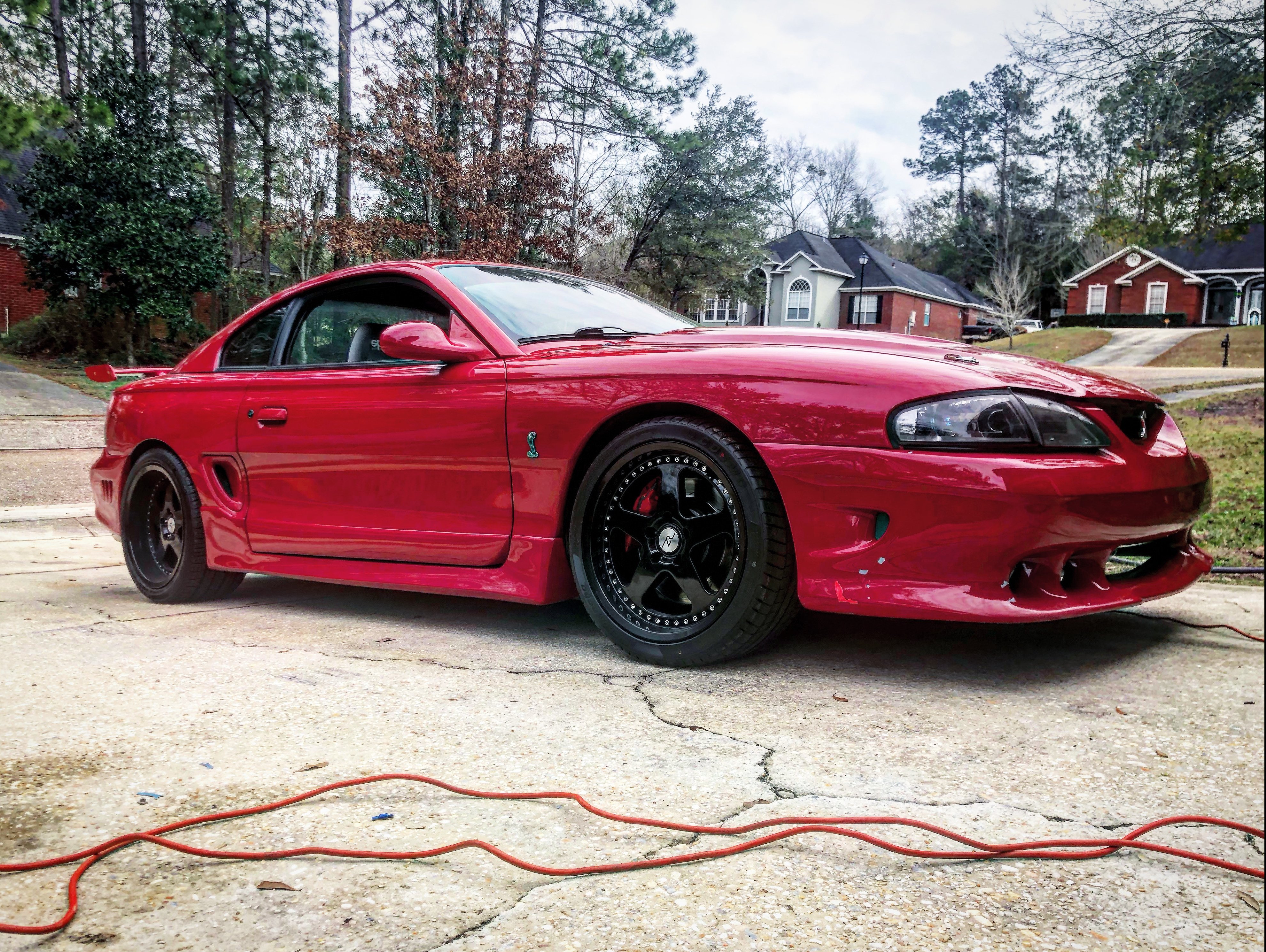
The 1996 model year marked a turning point that reshaped the SVT Cobra and every high-performance Mustang that followed. Out went the legendary 5.0L pushrod engine. In came an all-new 4.6L DOHC 32-valve modular V8, built at Ford's Romeo Engine Plant in Michigan.
This was not just a displacement change. The DOHC (dual overhead cam) design used four camshafts driving 32 valves, a massive architectural leap from the two-valve pushrod setup. The result was 305 hp at 5,800 rpm and 300 lb-ft of torque at 4,800 rpm. The power delivery was completely different from the old 5.0L. Where the pushrod engine made its torque low and tapered off up top, the DOHC modular V8 rewarded high-rpm driving with a free-revving character that felt closer to a European sport sedan than a traditional muscle car.
The 1996 Cobra also served as the pace car for the Indianapolis 500, and Ford offered a limited run of Mystic paint Cobras that changed color depending on the viewing angle, a ChromaFlair finish that remains one of the most sought-after Mustang colors ever offered.
Handling took a step forward as well. The SN95 Cobra got revised spring rates, larger sway bars, and Tokico adjustable shocks on some models. Braking came from 13-inch rotors up front with PBR twin-piston calipers, the same basic setup as the 1993 car but recalibrated for the heavier SN95 platform.
On the strip, the 1996-1998 Cobra managed approximately 5.5 seconds to 60 mph and ran the quarter mile in about 13.9 seconds, noticeable improvements over the pushrod cars despite the new engine making its power higher in the rev range.
If you are building or restoring a DOHC-era SN95 Cobra, 1996-1998 SVT Cobra parts cover everything from the modular engine internals to the upgraded braking components.
SN95 SVT Cobra Specs: Pushrod vs DOHC
| Specification |
1995 SVT Cobra (Pushrod) |
1996-1998 SVT Cobra (DOHC) |
| Engine |
5.0L OHV V8 |
4.6L DOHC 32-valve V8 |
| Horsepower |
240 hp @ 4,800 rpm |
305 hp @ 5,800 rpm |
| Torque |
285 lb-ft @ 4,000 rpm |
300 lb-ft @ 4,800 rpm |
| 0-60 mph |
~6.3 seconds |
~5.5 seconds |
| 1/4 Mile |
14.1 sec @ 101 mph |
~13.9 seconds |
| Transmission |
T-45 5-speed manual |
T-45 5-speed manual |
| Key Feature |
Final pushrod SVT Cobra |
First DOHC modular Mustang, Indy 500 pace car |
| Production (1995 / 1996) |
6,009 |
10,006 (1996) |
1999-2001 New Edge SVT Cobra Specs: IRS and the Recall
The 1999 SVT Cobra arrived on the New Edge platform with two firsts that changed the Mustang formula in fundamental ways: an independent rear suspension (IRS) and a power bump to 320 hp. It also came with one of the most infamous controversies in Mustang history.
Ford's SVT division carried the 4.6L DOHC 32-valve V8 forward from the SN95, but with significant updates. New intake runners, revised camshaft profiles, and improved exhaust flow pushed output to 320 hp at 6,000 rpm and 317 lb-ft of torque at 4,750 rpm. The engine also received a tumble-port intake manifold designed to improve both power and emissions.
The Independent Rear Suspension
The biggest chassis news was the switch from a solid rear axle to an independent rear suspension (IRS). This was a major departure for the Mustang. The IRS used unequal-length upper and lower control arms with toe-control links, giving each rear wheel the ability to react independently to bumps and cornering loads. On smooth roads and road courses, the IRS gave the New Edge Cobra a level of rear-end composure that no solid-axle Mustang could match. The tradeoff was added weight and complexity, and drag racers quickly learned that the IRS did not hook as hard on launch as the old 8.8-inch solid axle.
Braking was upgraded to massive 13-inch Brembo rotors with twin-piston front calipers, a substantial improvement over previous Cobra brake packages. You can dive deeper into all the New Edge platform variants in this guide to New Edge Mustang submodels.
The 1999 Cobra Recall
The 1999 SVT Cobra was recalled because independent testing revealed the 4.6L DOHC V8 was producing significantly less than its advertised 320 hp, with some cars dynoing closer to 285 hp at the crank. Ford traced the shortfall to intake and exhaust restrictions and offered owners either a factory fix or a buyback.
The recall shook consumer confidence badly enough that Ford skipped the standard Cobra entirely for the 2000 model year, producing only the track-focused Cobra R that year. When the SVT Cobra returned for 2001, Ford had corrected the intake and exhaust issues, and the engine genuinely delivered on its 320 hp rating. The 2001 model also got revised engine calibration, and independent tests confirmed the power was real this time.
Ford produced 8,095 SVT Cobras for 1999 before the recall fallout. The 2001 return run was smaller, and today the 2001 Cobra is considered the more desirable of the two New Edge years because of its verified performance.
1999-2001 New Edge SVT Cobra Specs
| Specification |
Details |
| Engine |
4.6L DOHC 32-valve V8 |
| Horsepower |
320 hp @ 6,000 rpm |
| Torque |
317 lb-ft @ 4,750 rpm |
| 0-60 mph |
5.4 seconds |
| 1/4 Mile |
13.8 sec @ 102 mph |
| Transmission |
T-45 5-speed manual (1999) / Tremec 3650 (2001) |
| Rear Suspension |
Independent rear suspension (IRS) |
| Brakes |
13" Brembo rotors, twin-piston calipers |
| Key Feature |
First Mustang with IRS; 1999 recall and 2001 correction |
| Production (1999) |
8,095 units |
2003-2004 Terminator SVT Cobra Specs: The Supercharged Legend
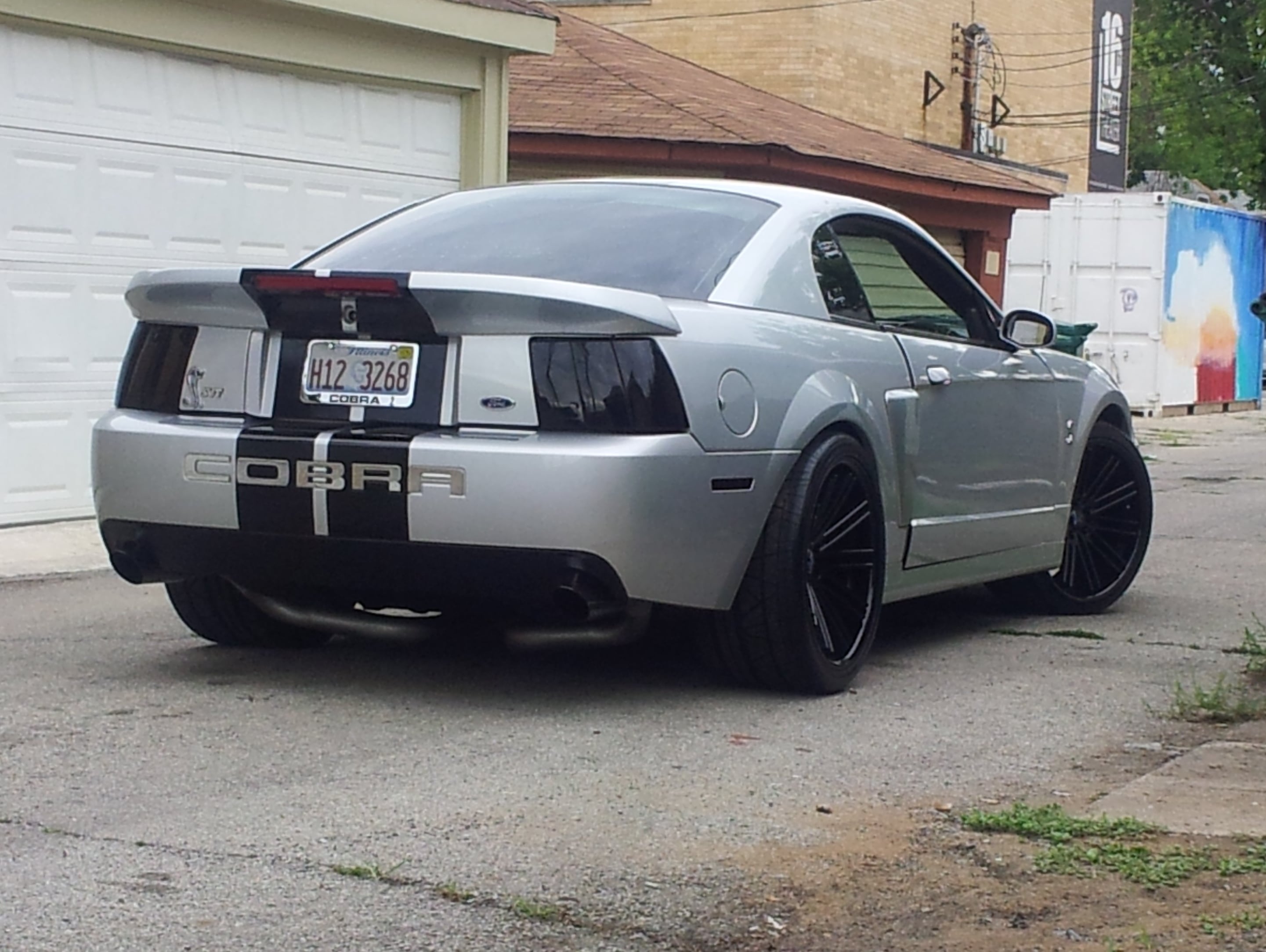
The 2003 Terminator SVT Cobra ran 0-60 mph in 4.8 seconds and covered the quarter mile in 13.01 seconds at 110.7 mph, making it the fastest factory Mustang ever produced at the time. It earned the "Terminator" nickname from its internal Ford project code, and among enthusiasts, the name stuck because the car simply terminated everything in its path.
This was the car that proved Ford's SVT division could build a world-class supercar killer using a Mustang as the starting point. When it launched for the 2003 model year, nothing in its price range could touch it on the street or the strip.
The Iron Block Supercharged Powerplant
At the heart of the Terminator sat a 4.6L DOHC 32-valve V8 fitted with an Eaton M112 Roots-type supercharger running 8 psi of boost. But the story behind the specs is what made this engine legendary. SVT switched from the aluminum block used in previous DOHC Cobras to a cast-iron block, giving the bottom end the strength to handle forced induction and, as enthusiasts quickly discovered, significantly more boost than stock.
The factory rating was 390 hp at 6,000 rpm and 390 lb-ft of torque at 3,500 rpm. However, independent dyno testing consistently showed the Terminator making closer to 425 hp at the crank, a practice insiders attributed to Ford intentionally underrating the engine to avoid insurance complications and internal politics with the Corvette-building GM. That conservative rating became part of the Terminator's legend: you were getting more car than the window sticker promised.
The compression ratio was dropped to 8.5:1 to accommodate the supercharger, and the engine breathed through a water-to-air intercooler integrated into the intake manifold. If you want to understand more about how forced induction works in these applications, check out this Mustang supercharger tech guide.
Drivetrain and Chassis
Backing the supercharged V8 was a Tremec T-56 six-speed manual transmission, the first six-speed gearbox ever fitted to a Mustang. The T-56 gave the Terminator a true overdrive sixth gear for highway cruising and closer ratios in the lower gears for aggressive driving. The rear axle was an 8.8-inch unit with 3.55 gears, and the IRS returned from the New Edge Cobra with revised bushings and geometry to better handle the additional power.
Braking was handled by Brembo four-piston front calipers gripping 13-inch two-piece rotors, the most serious brake package Ford had ever fitted to a Mustang. The Terminator rolled on staggered 17-inch wheels, 17x9 up front and 17x10.5 out back, wrapped in performance tires that gave it a planted, aggressive stance.
2004 Mystichrome and the Final Year
For the 2004 model year, Ford offered the Terminator with the Mystichrome paint option, a color-shifting finish that evolved through shades of blue, green, gold, and purple depending on the angle and lighting. Only a limited number of Mystichrome Cobras were produced, making them among the most collectible modern Mustangs.
The 2004 model year was the last for both the SVT Cobra nameplate and the Mustang's New Edge platform. Ford built 13,476 Terminator Cobras for the 2003 model year and continued into 2004, closing out the Cobra era with what many enthusiasts still consider the greatest factory Mustang ever built.
Whether you are maintaining a stock Terminator or building one to make serious power, you can find everything you need through 2003-2004 SVT Cobra parts and the broader SVT Cobra Mustang parts catalog.
2003-2004 Terminator SVT Cobra Specs
| Specification |
Details |
| Engine |
4.6L DOHC 32-valve Supercharged V8 (iron block) |
| Supercharger |
Eaton M112 Roots-type, 8 psi boost |
| Horsepower |
390 hp @ 6,000 rpm (actual dyno ~425 hp) |
| Torque |
390 lb-ft @ 3,500 rpm |
| Compression Ratio |
8.5:1 |
| 0-60 mph |
4.8 seconds |
| 1/4 Mile |
13.01 sec @ 110.7 mph |
| Transmission |
Tremec T-56 6-speed manual |
| Rear Axle |
8.8-inch IRS, 3.55 gears |
| Brakes |
Brembo 4-piston front, 13" two-piece rotors |
| Wheels |
17x9 front / 17x10.5 rear |
| Intercooler |
Water-to-air, intake manifold integrated |
| Key Feature |
First supercharged and first 6-speed Mustang; Mystichrome (2004) |
| Production (2003) |
13,476 units |
Cobra R Specs: The Track-Only Mustangs
The Cobra R was Ford's limited-production, race-ready Mustang variant built with no air conditioning, no radio, no back seat, and no apologies. Ford produced three Cobra R models across 1993, 1995, and 2000, each designed to homologate the Mustang for SCCA and IMSA competition. Total production across all three years was just 657 cars.
1993 Cobra R
The first Cobra R was based on the 1993 SVT Cobra and used the same 5.0L OHV V8 rated at 235 hp. What made it a track car was weight reduction: SVT stripped out the air conditioning, power windows, rear seat, stereo, and fog lamps. A larger radiator and engine oil cooler were added for sustained high-speed running, and the suspension was stiffened with Koni adjustable shocks.
Ford built only 107 units, originally requiring buyers to hold a valid competition license. Despite the racing intent, many of the 107 cars were immediately snapped up by collectors and speculators who never turned a wheel in anger. Today, a clean 1993 Cobra R commands a serious premium over standard 1993 Cobras.
1995 Cobra R
The 1995 Cobra R was a far more aggressive machine than its predecessor. SVT ditched the 5.0L entirely and dropped in a 5.8L Windsor V8 (351W) producing 300 hp, making the 1995 R the most powerful factory Mustang of its era. The engine was paired with a Tremec 3550 five-speed manual and a 3.27-geared 8.8-inch solid rear axle, bypassing the IRS that would later appear on the New Edge Cobra.
Like the 1993 R, the 1995 version came stripped of comfort features and fitted with a larger fuel cell, upgraded cooling, and stiffer suspension. Ford raised the production number to 250 units but again required buyers to hold a racing license, though enforcement varied by dealership.
2000 Cobra R
The 2000 Cobra R was the ultimate expression of the race-only concept. It packed a naturally aspirated 5.4L DOHC V8 (based on the Triton truck engine but with DOHC heads) producing 385 hp at 6,250 rpm. This made it the most powerful naturally aspirated Mustang Ford had ever built up to that point. The engine breathed through an aluminum intake manifold, long-tube headers, and a side-exit exhaust that gave it one of the most distinctive sounds of any factory Mustang.
Critically, the 2000 Cobra R was the first Mustang to receive a Tremec T-56 six-speed manual transmission, the same unit that would later find its way into the Terminator. The suspension was fully adjustable, featuring Eibach springs, Bilstein shocks, and massive 18-inch wheels wearing Goodyear Eagle F1 tires. Ford deleted the IRS in favor of a solid 8.8-inch rear axle with 3.55 gears and a Torsen differential, a deliberate choice for drag strip traction and race reliability.
Only 300 units were produced. At the time of its release, the 2000 Cobra R carried a sticker price around $55,000, but values have climbed dramatically since. A well-documented example can command over $100,000 today.
Cobra R Specs Comparison: All Three Generations
| Specification |
1993 Cobra R |
1995 Cobra R |
2000 Cobra R |
| Engine |
5.0L OHV V8 |
5.8L Windsor OHV V8 (351W) |
5.4L DOHC V8 |
| Horsepower |
235 hp |
300 hp |
385 hp @ 6,250 rpm |
| Transmission |
T-5 5-speed manual |
Tremec 3550 5-speed manual |
Tremec T-56 6-speed manual |
| Rear Axle |
8.8" solid |
8.8" solid, 3.27 gears |
8.8" solid, 3.55 gears, Torsen diff |
| Key Deletions |
A/C, stereo, rear seat, fog lamps |
A/C, stereo, rear seat, power windows |
A/C, stereo, rear seat, power windows, cruise |
| Key Additions |
Koni shocks, oil cooler |
Larger fuel cell, upgraded cooling |
18" wheels, Eibach/Bilstein suspension |
| Production |
107 units |
250 units |
300 units |
SVT Cobra vs Shelby GT500: The Evolution of Ford's Top Mustang
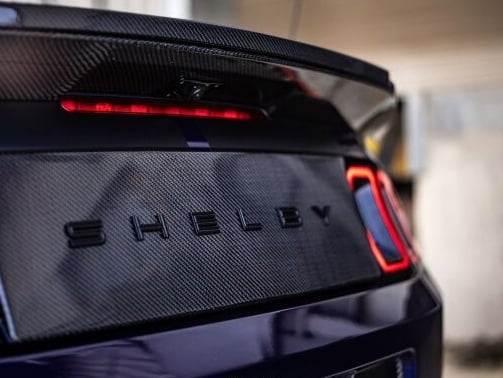
The SVT Cobra and the Shelby GT500 are two different nameplates for Ford's highest-performance Mustang, separated by a three-year production gap. The SVT Cobra ran from 1993 to 2004 under Ford's Special Vehicle Team division, while the Shelby GT500 returned in 2007 as a collaboration with Shelby American and has served as the range-topping Mustang ever since.
When the Terminator SVT Cobra ended production after the 2004 model year, Ford was already developing the S197 Mustang platform. Rather than continuing the SVT Cobra name, Ford chose to revive the legendary Shelby GT500 nameplate, a name that carried weight dating back to Carroll Shelby's original 1967 GT500. The decision was partly strategic branding and partly a reflection of Ford's renewed relationship with Shelby American.
The 2007-2014 GT500 Era
The 2007 Shelby GT500 launched with a supercharged 5.4L SOHC V8 producing 500 hp, a massive step up from the Terminator's 390 hp rating. Ford used an Eaton supercharger similar in concept to the Terminator's setup but significantly larger. By 2013, the GT500 had grown to a supercharged 5.8L V8 making an astonishing 662 hp, making it the most powerful production Mustang in history at that point.
The Modern Predator-Powered GT50
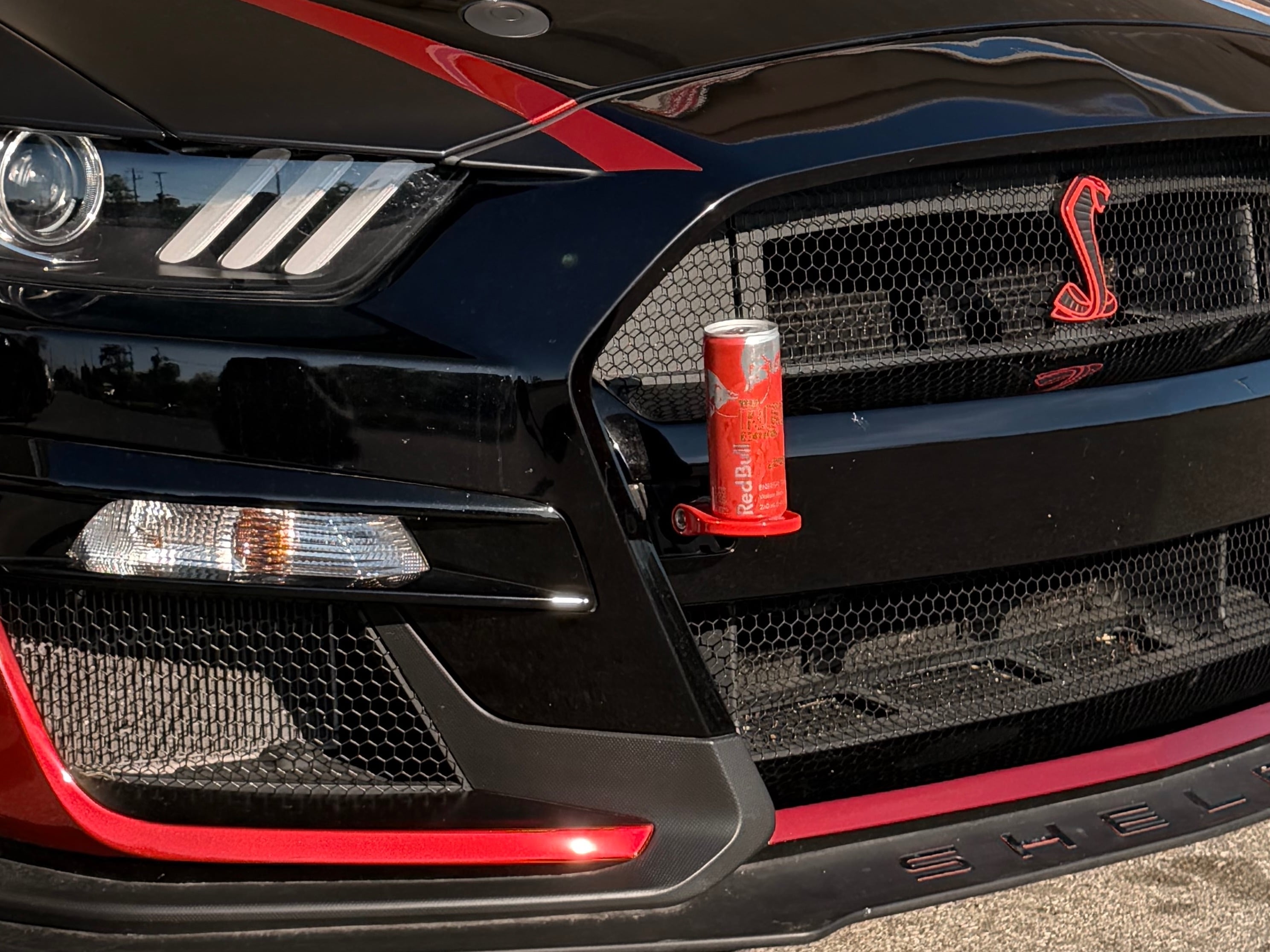
Ford raised the bar again with the 2020 Shelby GT500, powered by a 5.2L cross-plane crank V8 with a 2.65L Eaton supercharger making 760 hp and 625 lb-ft of torque. Unlike every SVT Cobra before it, the modern GT500 uses a dual-clutch seven-speed automatic transmission (no manual option), a controversial choice but one that delivers sub-3.5-second 0-60 times.
The throughline connecting the SVT Cobra to the GT500 is clear: each generation pushed the power ceiling higher while refining the chassis to handle it. The Terminator proved that a supercharged Mustang could be a daily driver. The GT500 took that concept and turned it into a genuine supercar competitor. If you are looking at parts for any GT500 generation, you can browse Shelby GT500 parts to find what you need.
Complete Mustang Cobra Specs Comparison Table
Mustang Cobra horsepower ranged from 235 hp in the original 1993 Fox Body to 390 hp in the supercharged 2003-2004 Terminator, while the track-only Cobra R models topped out at 385 hp from the 2000 model's naturally aspirated 5.4L DOHC V8. The table below puts every major Cobra variant side by side so you can compare specs at a glance.
Complete Mustang Cobra Specs: Every Variant Compared
| Year |
Engine |
HP |
Torque |
0-60 |
1/4 Mile |
Transmission |
Key Feature |
Production |
| 1993 SVT Cobra |
5.0L OHV V8 |
235 hp |
280 lb-ft |
5.9 sec |
14.5 sec @ 98 mph |
T-5 5-speed |
First SVT Cobra; GT-40 heads |
4,993 |
| 1993 Cobra R |
5.0L OHV V8 |
235 hp |
280 lb-ft |
N/A |
N/A |
T-5 5-speed |
Track-only; 107 built |
107 |
| 1995 SVT Cobra |
5.0L OHV V8 |
240 hp |
285 lb-ft |
6.3 sec |
14.1 sec @ 101 mph |
T-45 5-speed |
Final pushrod Cobra |
6,009 |
| 1995 Cobra R |
5.8L Windsor V8 |
300 hp |
N/A |
N/A |
N/A |
Tremec 3550 5-speed |
351W power; 250 built |
250 |
| 1996-98 SVT Cobra |
4.6L DOHC 32V V8 |
305 hp |
300 lb-ft |
~5.5 sec |
~13.9 sec |
T-45 5-speed |
First DOHC modular Mustang |
10,006 (1996) |
| 1999-2001 SVT Cobra |
4.6L DOHC 32V V8 |
320 hp |
317 lb-ft |
5.4 sec |
13.8 sec @ 102 mph |
T-45 / 3650 5-speed |
First Mustang IRS; 1999 recall |
8,095 (1999) |
| 2000 Cobra R |
5.4L DOHC V8 |
385 hp |
385 lb-ft |
N/A |
N/A |
T-56 6-speed |
Most powerful NA Mustang; 300 built |
300 |
| 2003-04 Terminator |
4.6L DOHC SC V8 |
390 hp |
390 lb-ft |
4.8 sec |
13.01 sec @ 110.7 mph |
T-56 6-speed |
Eaton supercharged; iron block |
13,476 (2003) |
What Mustang Cobra Specs Mean for Your Build
Knowing the factory specs is only half the story. Each Cobra generation responds to modifications differently, and understanding those differences helps you pick the right platform for your goals.
The Fox Body and early SN95 pushrod Cobras (1993-1995) are the simplest cars to work on and the least expensive to modify. The 5.0L is one of the most supported engines in the aftermarket, and you can build a 400+ hp naturally aspirated combination with off-the-shelf parts. The lightweight Fox Body chassis especially rewards power additions with strong trap speed gains.
The 1996-2001 DOHC Cobras offer a more modern platform with strong head flow from the factory. The DOHC 4.6L responds well to camshaft upgrades, ported intake manifolds, and long-tube headers. If you are looking for performance exhaust systems, these cars benefit noticeably from freer-flowing exhaust on the DOHC modular engine.
The 2003-2004 Terminator is the undisputed king of the forced induction build. That iron block bottom end can handle well over 600 hp with nothing more than a supercharger pulley swap, cold air intake, and tune. With supporting fuel system and drivetrain modifications, Terminators routinely make 700-800+ hp on the stock block. The combination of the iron block, forged internals, and a factory supercharger system that is easy to upgrade makes the Terminator one of the best power-per-dollar platforms in the modern muscle car world.
The Cobra R models occupy a different space entirely. Their rarity and collectibility mean most owners are not modifying them. If you own a Cobra R, the specs matter more for documentation and provenance than for build planning. These cars are worth more stock than modified, and their value continues to climb.
The Mustang Cobra Legacy Lives On
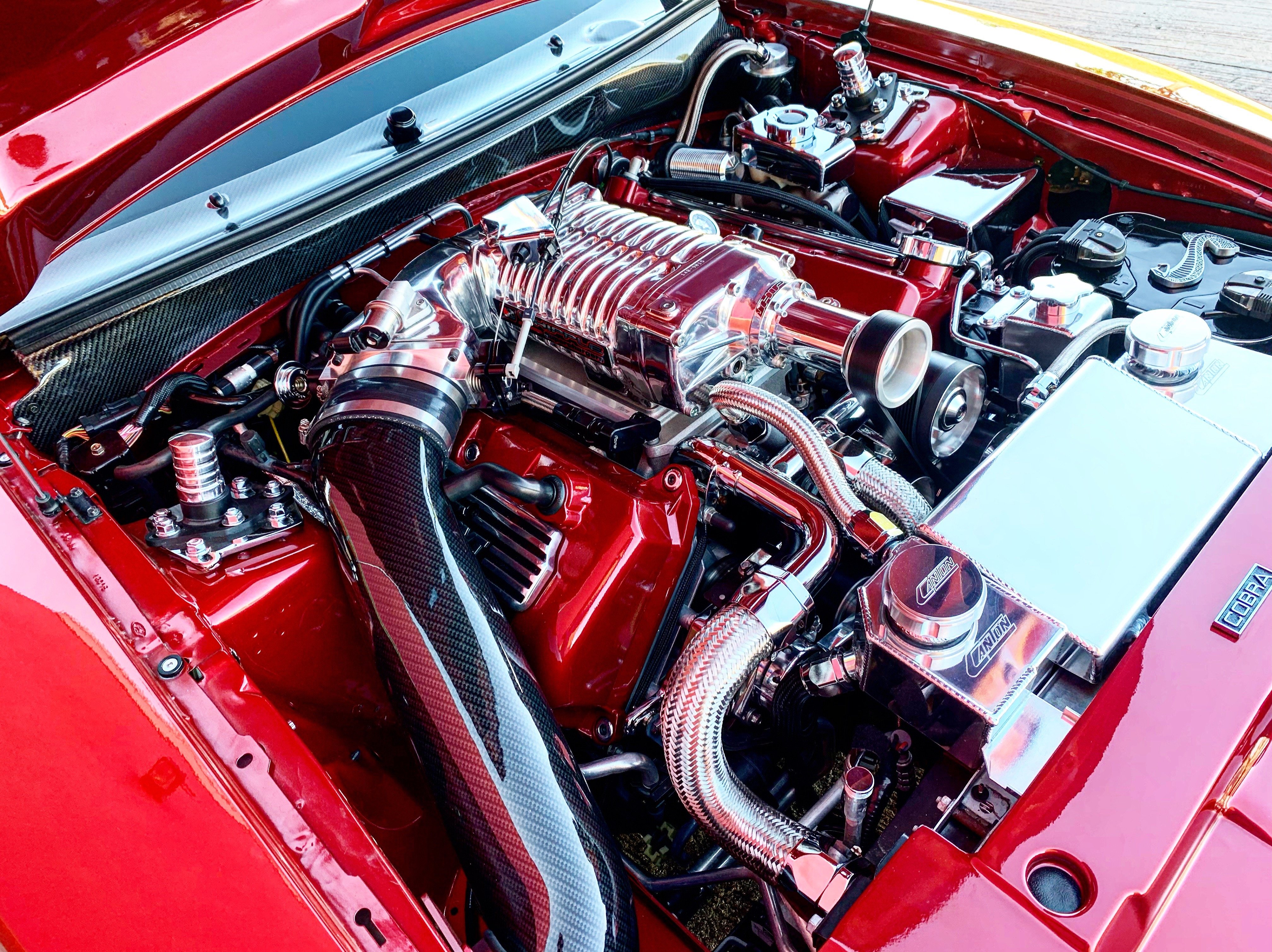
The Mustang Cobra family represents over a decade of Ford pushing the boundaries of what a factory Mustang could do. From the 235 hp Fox Body that started the SVT legacy to the 390 hp Terminator that ended it with a supercharged exclamation point, every Cobra generation brought something new to the table. Whether you are hunting for a project car, planning your next round of modifications, or just want to know exactly what these cars made from the factory, the specs in this guide give you the complete picture. Explore SVT Cobra Mustang parts at AmericanMuscle to find everything you need for your Cobra, from bolt-on upgrades to full build components.