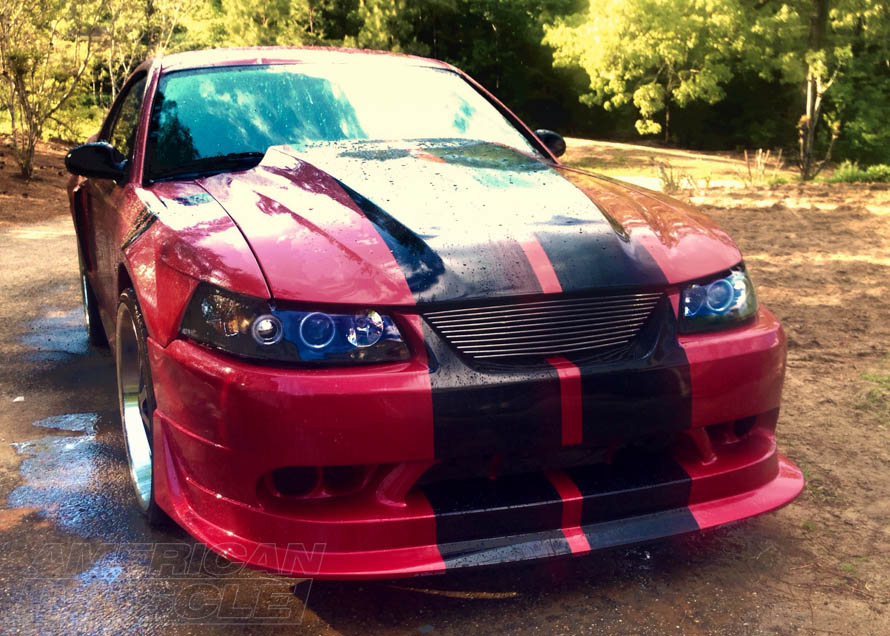
What Is a New Edge Mustang?
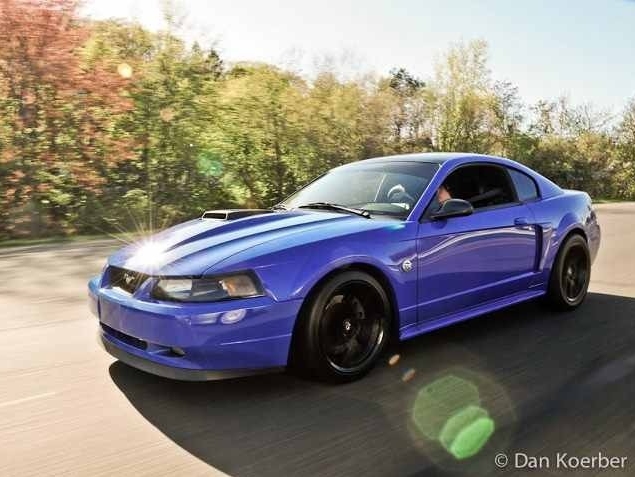
![]() The New Edge Mustang refers to the 1999-2004 Ford Mustang, which is the facelifted second half of the fourth-generation SN-95 platform. Ford's design team adopted the company's "New Edge" styling language — characterized by crisp, angular body lines — giving the Mustang a more aggressive, modern look compared to the rounded contours of the 1994-1998 models.
The New Edge Mustang refers to the 1999-2004 Ford Mustang, which is the facelifted second half of the fourth-generation SN-95 platform. Ford's design team adopted the company's "New Edge" styling language — characterized by crisp, angular body lines — giving the Mustang a more aggressive, modern look compared to the rounded contours of the 1994-1998 models.
While the New Edge shares its core Fox-4 (SN-95) platform and much of its underpinnings with the earlier cars, the visual transformation was dramatic enough that enthusiasts treat it as its own generation. The name stuck because Ford's broader design philosophy at the time — also seen on cars like the Ford Cougar and Ford Focus — was literally called "New Edge Design." For Mustang fans, the term became shorthand for the sharper, more muscular look that arrived for the 1999 model year and ran through the end of the SN-95 era in 2004.
SN-95 vs. New Edge: What Changed?
![]() If you park a 1998 SN-95 next to a 1999 New Edge, the differences jump out immediately. Ford replaced the soft, rounded body lines with sharper creases and more aggressive fender flares, giving the car a wider, more planted stance. The front end received one-piece headlight assemblies — a major visual departure from the two-piece units on the earlier cars — along with a reshaped grille and hood.
If you park a 1998 SN-95 next to a 1999 New Edge, the differences jump out immediately. Ford replaced the soft, rounded body lines with sharper creases and more aggressive fender flares, giving the car a wider, more planted stance. The front end received one-piece headlight assemblies — a major visual departure from the two-piece units on the earlier cars — along with a reshaped grille and hood.
Out back, the taillights swapped to a boxier three-row vertical design that became one of the New Edge's signature styling cues. Side scoops were refined, and the overall profile looked tighter and more intentional.
Inside, the New Edge kept the SN-95's dual-cockpit dashboard layout but updated the center stack to accommodate newer audio systems and climate controls. The gauge cluster and steering wheel also received minor refreshes. Importantly, most interior trim pieces remain interchangeable between 1994-1998 and 1999-2004 models, which is great news if you are restoring or upgrading your cabin.
Mechanically, the changes were more evolutionary than revolutionary. The 3.8L V6 gained a split-port induction system for 1999-2000, then picked up Intake Manifold Runner Control (IMRC) for 2001 and later. The 4.6L V8 in the GT received redesigned heads, camshafts, and intake manifolds that bumped output to 260 HP. And of course, the special editions — Cobra, Mach 1, Bullitt — brought their own significant powertrain upgrades that we will cover in detail below.
For a deeper look at the earlier platform, check out the SN-95 Mustang (1994-1998) guide.
New Edge Mustang Engine Specs by Model
![]() One of the most common questions about this generation is: how much power does each model actually make? The New Edge lineup spans everything from a practical V6 commuter to a supercharged V8 monster. Here is a complete breakdown of every engine offered from 1999 to 2004.
One of the most common questions about this generation is: how much power does each model actually make? The New Edge lineup spans everything from a practical V6 commuter to a supercharged V8 monster. Here is a complete breakdown of every engine offered from 1999 to 2004.
| Engine |
Years |
Horsepower |
Torque (lb-ft) |
Notable Features |
| 3.8L OHV V6 |
1999-2000 |
190 HP |
220 lb-ft |
Split-port induction system, aluminum heads |
| 3.8L OHV V6 |
2001-2004 |
193 HP |
225 lb-ft |
Intake Manifold Runner Control (IMRC) added |
| 3.9L OHV V6 |
Late 2004 |
193 HP |
225 lb-ft |
Longer stroke (88.0 mm), same bore as 3.8L |
| 4.6L 2V SOHC V8 (GT) |
1999-2004 |
260 HP |
302 lb-ft |
Redesigned heads, cams, and intake manifolds |
| 4.6L 4V DOHC V8 (Cobra) |
1999, 2001 |
320 HP |
317 lb-ft |
Tumble port cylinder heads, coil-on-plug ignition |
| 5.4L DOHC V8 (Cobra R) |
2000 |
385 HP |
385 lb-ft |
Naturally aspirated race engine, only 300 built |
| 4.6L SOHC V8 (Bullitt) |
2001 |
265 HP |
305 lb-ft |
Revised cast-aluminum intake, twin 57mm throttle bodies |
| 4.6L 4V DOHC V8 (Mach 1) |
2003-2004 |
305 HP |
320 lb-ft |
High-flow four-valve heads, 57mm throttle bodies |
| 4.6L 4V DOHC Supercharged V8 (Terminator) |
2003-2004 |
390 HP |
390 lb-ft |
Eaton M-112 supercharger, iron block, forged internals |
How much horsepower does a New Edge Mustang GT have? The 4.6L 2V SOHC V8 in the New Edge GT produces 260 horsepower and 302 lb-ft of torque. Ford achieved this through redesigned cylinder heads, camshafts, and intake manifolds compared to the earlier SN-95 GT. While 260 HP was competitive for its era, the GT's real appeal for modders is how well it responds to bolt-on upgrades — a cold air intake, tune, and exhaust can push you well past 280 HP at the rear wheels.
Browse 1999-2004 Mustang engine parts to find everything from intake manifolds to long-block assemblies for your New Edge build.
New Edge Mustang GT (1999-2004)
![]()
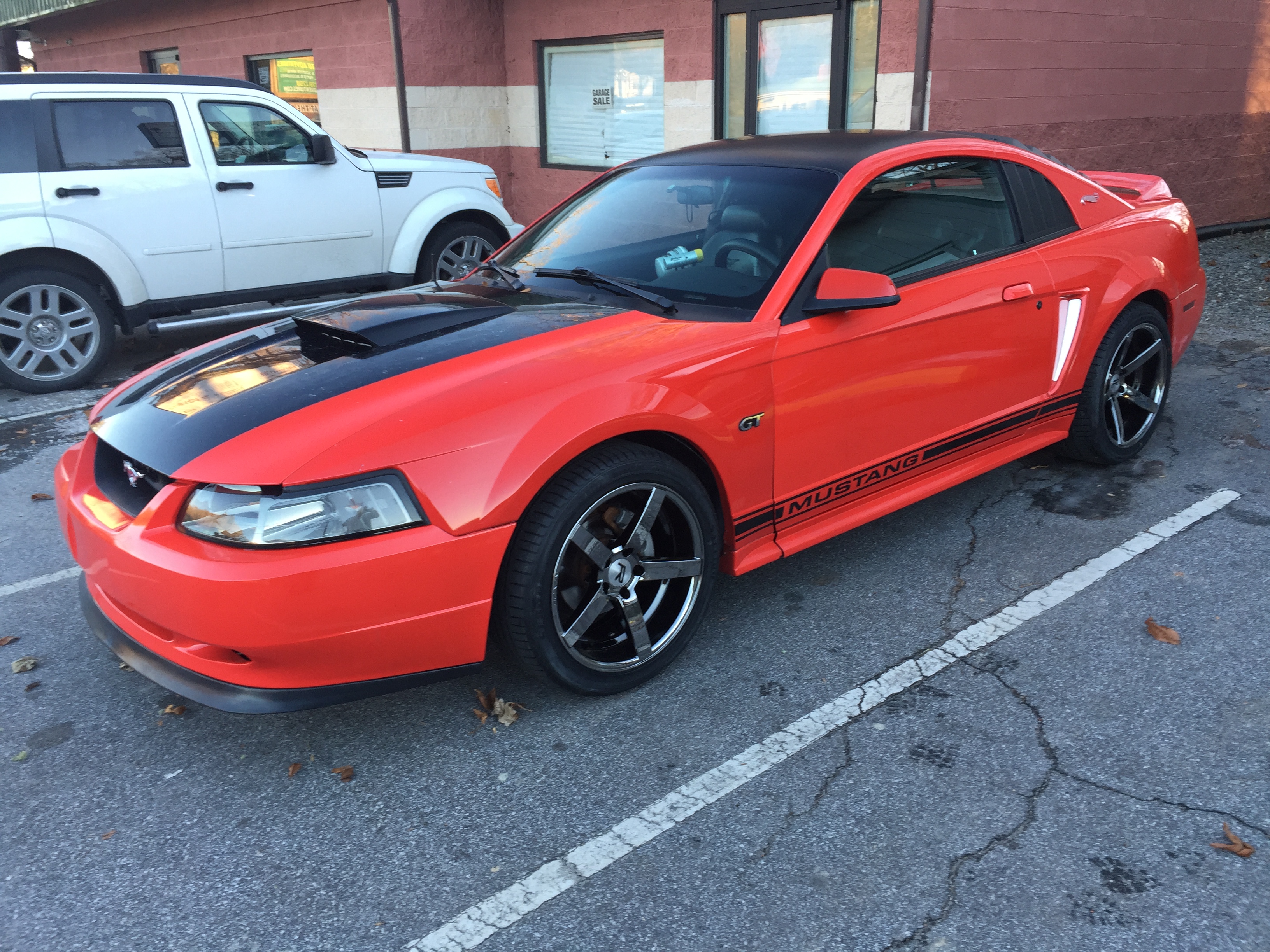
The GT is the backbone of the New Edge lineup and the model you will see most often at car shows, in driveways, and at the drag strip. Powered by Ford's 4.6L 2V SOHC V8 making 260 HP and 302 lb-ft of torque, the GT offered a genuine V8 experience at a price point that made muscle car ownership accessible.
Visually, the GT distinguished itself from the V6 base model with a functional hood scoop, GT badging on the fenders, a rear spoiler, and dual exhaust tips exiting from the rear valance. Seventeen-inch five-spoke wheels were standard on later models, and the GT got firmer suspension tuning compared to the base car.
But the real reason the GT dominates the New Edge scene is its mod-friendliness. The 4.6L 2V is a well-understood platform with a massive catalog of bolt-on performance parts. A basic combination of a cold air intake, a performance tune, and a cat-back exhaust can net you noticeable seat-of-the-pants gains. Step up to headers, cams, and an intake manifold swap, and you are looking at a serious street car. And because the GT was produced in high volume, parts availability and pricing remain excellent.
Whether you are keeping yours as a clean stock-plus cruiser or building a weekend warrior, the GT is the most popular starting point — and for good reason. Check out exterior styling upgrades to give your GT a look that matches the power under the hood.
1999 and 2001 Mustang SVT Cobra
![]()
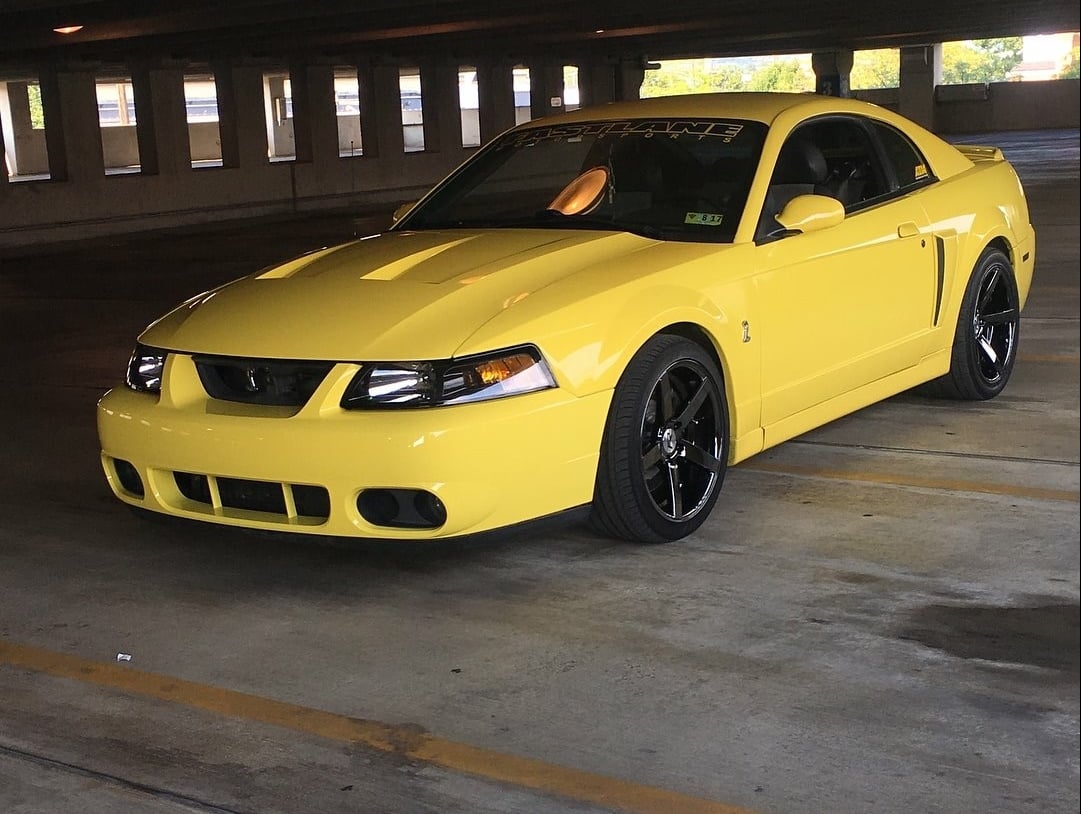
The SVT Cobra took the New Edge formula and turned everything up a notch. Under the hood sat a 4.6L 32-valve DOHC V8 rated at 320 horsepower and 317 lb-ft of torque. This engine used tumble port cylinder heads — so named because their intake port geometry tumbled the incoming air/fuel charge for better combustion — along with a coil-on-plug ignition system for more precise spark control.
Underneath, the Cobra got something no other production Mustang of the era offered: a fully independent rear suspension (IRS) in place of the GT's live axle. Paired with Brembo disc brakes, ABS, and all-speed traction control, the Cobra was engineered to handle as well as it accelerated.
How much horsepower does a New Edge Cobra have? The 1999 and 2001 SVT Cobra produced 320 horsepower and 317 lb-ft of torque from a naturally aspirated 4.6L DOHC V8 with tumble port heads and a coil-on-plug ignition system.
But the Cobra story has a famous wrinkle. In August 1999, Ford halted sales of the 1999 Cobra after independent dyno tests revealed the engine was producing closer to 285 HP instead of the advertised 320 HP. Ford issued a recall and replaced the intake manifold, engine computer components, and exhaust system on every affected car. The fix brought power output in line with the original specification. Ford skipped the 2000 model year for the Cobra entirely — there is no 2000 SVT Cobra — and the car returned for 2001 with the issues resolved.
The 2001 Cobra received subtle refinements. Exterior updates included a unique front chin spoiler and new wheel designs. The engine itself remained the same 320 HP DOHC unit, but Ford had better quality control throughout the production run. If you are shopping for a naturally aspirated New Edge Cobra, the 2001 is generally considered the more sorted car, though clean 1999 examples with the recall work completed are equally capable. Browse SVT Cobra parts and accessories to find upgrades specific to your Cobra build.
2000 SVT Mustang Cobra R
![]() The 2000 Cobra R is where the New Edge Mustang crosses the line from street car into purpose-built race machine. Only 300 units were produced, each finished in Performance Red Clearcoat — and Ford required buyers to hold a competition license before taking delivery.
The 2000 Cobra R is where the New Edge Mustang crosses the line from street car into purpose-built race machine. Only 300 units were produced, each finished in Performance Red Clearcoat — and Ford required buyers to hold a competition license before taking delivery.
Under the hood sat a 5.4L DOHC V8 producing 385 horsepower and 385 lb-ft of torque — all naturally aspirated. This was not a detuned truck engine; it was a hand-assembled race motor with unique heads, cams, and intake manifolding designed purely for high-RPM output. Power went through a Tremec T-56 six-speed manual transmission and out to a 3.55:1 rear gear.
Ford stripped the Cobra R to save weight. There was no back seat, no radio, no air conditioning, and no fog lights. In their place, you got Recaro racing seats, a 20-gallon fuel cell, Bilstein racing shocks, and Brembo four-piston calipers clamping 13-inch discs. The result was a 0-60 time of 4.7 seconds and a top speed of 170 mph — figures that were legitimately fast for a production car in 2000.
Today, the Cobra R is a serious collector car. Values have climbed steadily, and low-mileage examples regularly cross the six-figure mark at auction. If you are lucky enough to find one, you are looking at one of the most focused factory Mustangs ever built.
2001 and 2003 Bullitt Mustang
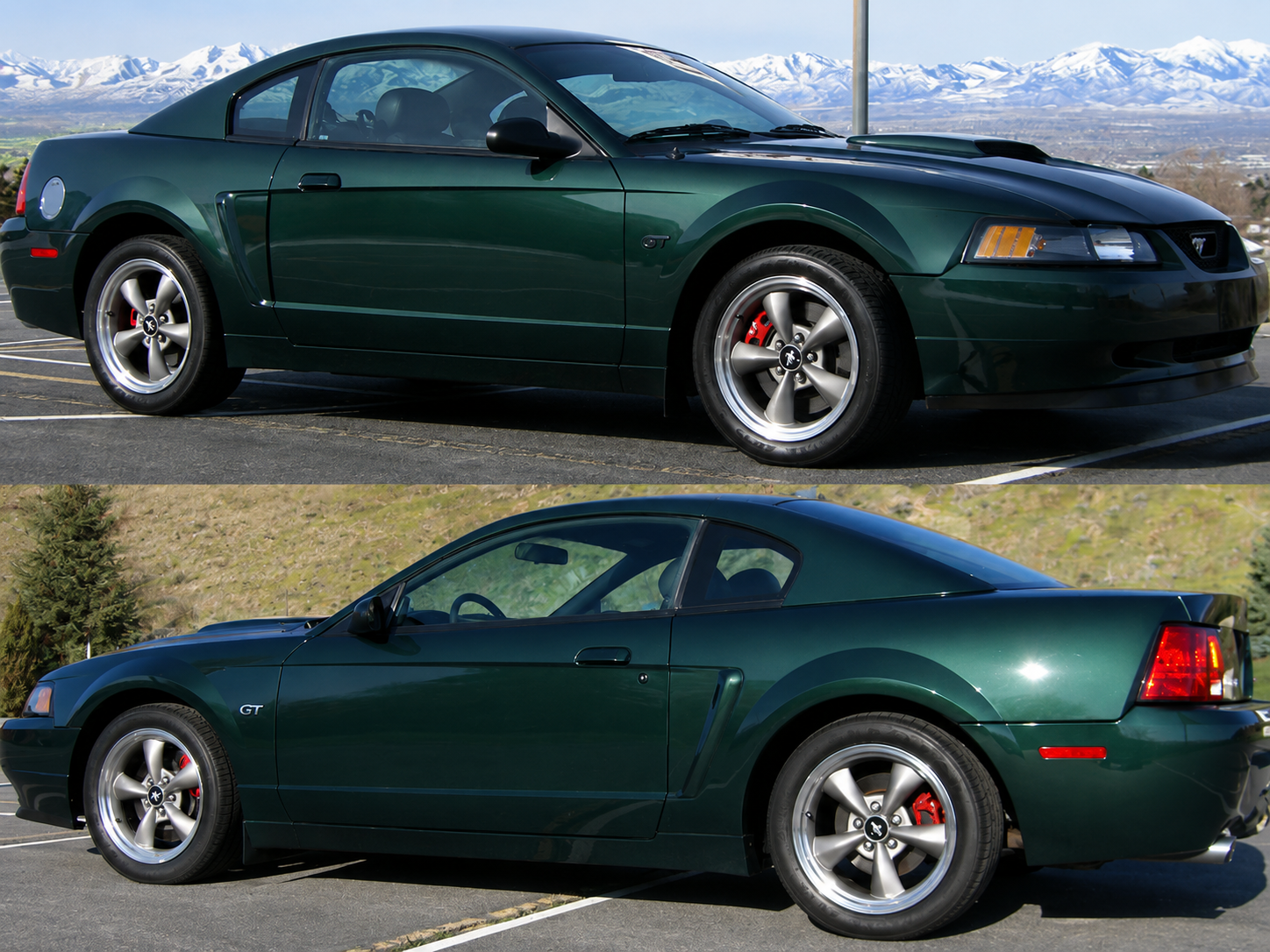
![]() Inspired by the legendary 1968 Highland Green Mustang GT that Steve McQueen drove in the film Bullitt, the 2001 Bullitt was Ford's tribute to one of the most iconic movie cars ever filmed. It was built on the GT platform but received meaningful mechanical and cosmetic upgrades that elevated it beyond a simple appearance package.
Inspired by the legendary 1968 Highland Green Mustang GT that Steve McQueen drove in the film Bullitt, the 2001 Bullitt was Ford's tribute to one of the most iconic movie cars ever filmed. It was built on the GT platform but received meaningful mechanical and cosmetic upgrades that elevated it beyond a simple appearance package.
The Bullitt's 4.6L SOHC V8 was massaged with a revised cast-aluminum intake manifold, twin 57mm throttle bodies, and high-flow mufflers, bringing output to 265 horsepower and 305 lb-ft of torque — a 5 HP bump over the standard GT. The suspension was lowered on Tokico struts and shocks for a more aggressive stance and sharper handling.
Exterior details were deliberately understated. Ford removed the GT's rear spoiler, side scoops, and fog lights, giving the Bullitt a cleaner, more menacing profile. Unique brushed-aluminum 17-inch wheels and subtle Bullitt fender badges completed the look. It was available in three colors: Dark Highland Green (the one everyone wanted), Black, and True Blue.
Ford brought the Bullitt back for a second run in 2003, retaining the same 265 HP engine and understated styling philosophy. The 2003 edition added a few minor refinements but stayed true to the original tribute formula. Both the 2001 and 2003 Bullitts have seen rising collectibility, especially Dark Highland Green examples with low miles. If you are maintaining or upgrading a Bullitt, check out Bullitt Mustang parts for model-specific components.
2003-2004 Mustang Mach 1
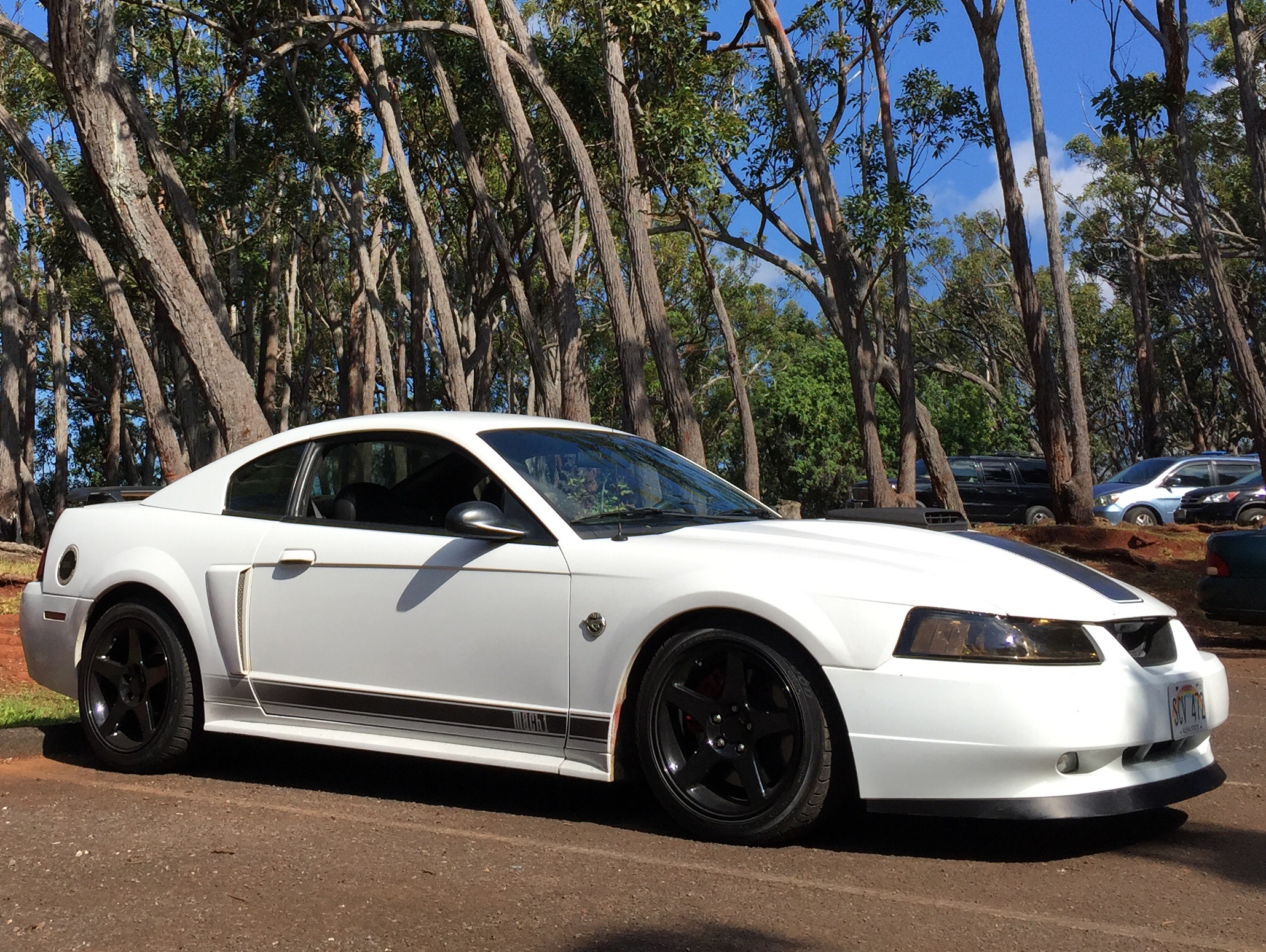
![]() The Mach 1 brought 1960s muscle car attitude back to the New Edge platform. Its design cues — a functional "shaker" hood scoop that vibrated with the engine, a matte-black hood stripe, retro-styled five-spoke wheels, and a black decklid spoiler — were direct callbacks to the original 1969-1970 Mach 1.
The Mach 1 brought 1960s muscle car attitude back to the New Edge platform. Its design cues — a functional "shaker" hood scoop that vibrated with the engine, a matte-black hood stripe, retro-styled five-spoke wheels, and a black decklid spoiler — were direct callbacks to the original 1969-1970 Mach 1.
Under the shaker scoop sat a 4.6L DOHC V8 producing 305 horsepower and 320 lb-ft of torque. This was the same basic engine architecture from the naturally aspirated Cobra, fitted with high-flow four-valve cylinder heads and 57mm throttle bodies. The result was a car that outperformed the GT significantly and approached Cobra territory without the Cobra price tag.
Ford offered the Mach 1 in a range of standout colors: Azure Blue, Oxford White, Torch Red, Zinc Yellow, Dark Shadow Gray, and Black. The Zinc Yellow and Azure Blue examples are the most sought-after today. If you are building up a Mach 1, browse Mach 1 parts and accessories for everything from shaker scoop components to performance upgrades.
2003-2004 SVT Mustang Cobra "Terminator"
![]()
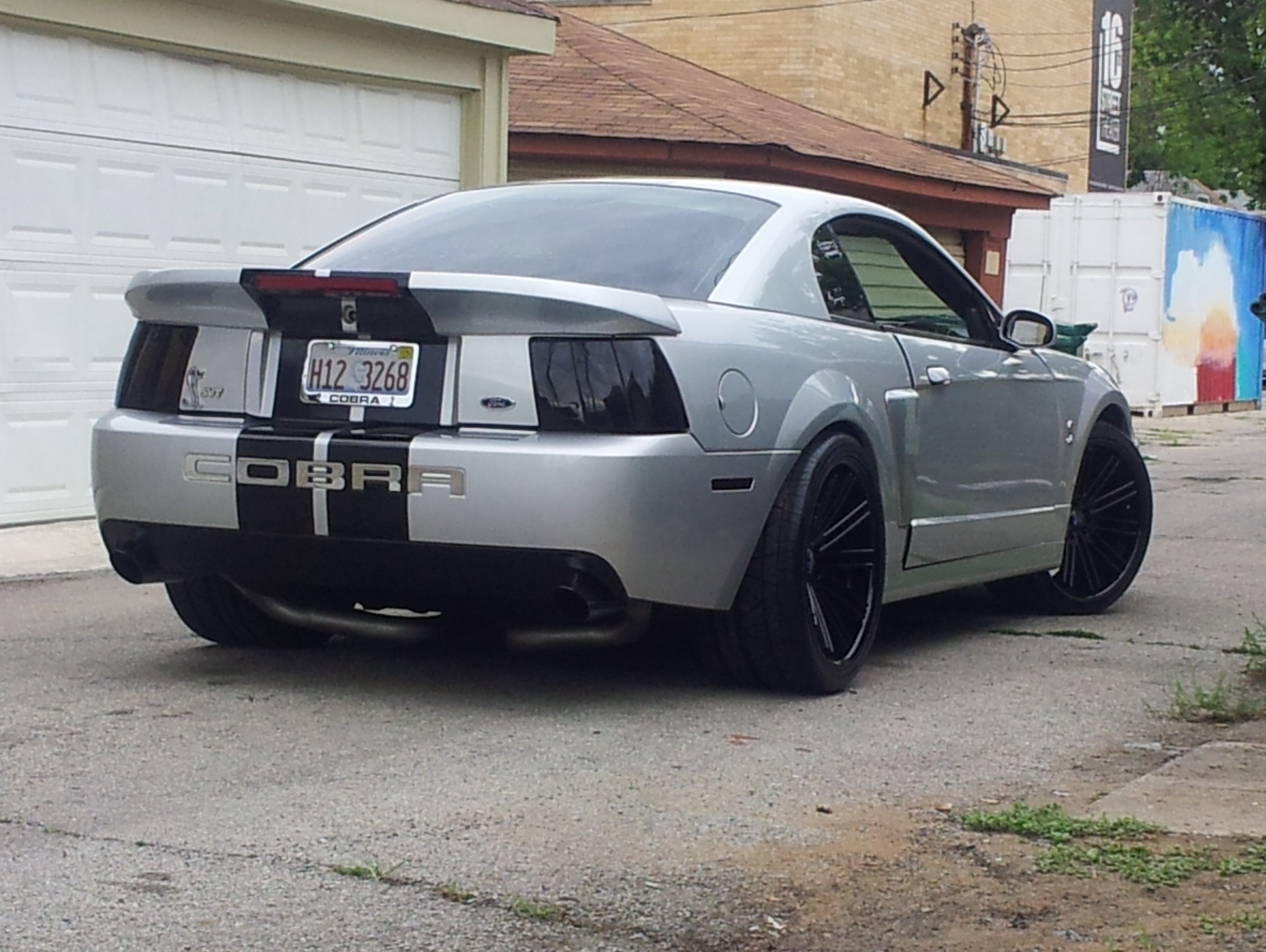
Ask any Mustang enthusiast to name the most important New Edge submodel, and the answer will almost always be the 2003-2004 SVT Cobra — universally known as the "Terminator." The nickname came from its internal Ford development code, and it stuck because the car earned a reputation for destroying everything in its path, both on the street and at the strip.
What is a Terminator Mustang? The Terminator is the 2003-2004 SVT Mustang Cobra, a factory supercharged version of the New Edge Mustang. It produces 390 horsepower and 390 lb-ft of torque from a supercharged 4.6L DOHC V8, though real-world dyno testing consistently showed the car making more power than Ford advertised.
The engine was built to handle boost from the factory. Ford used a cast iron block (instead of the aluminum block in the naturally aspirated Cobra) paired with forged connecting rods and a forged crankshaft. The Eaton M-112 Roots-type supercharger sat between the valve covers, force-feeding the DOHC heads with 8 psi of boost. The result was an engine that was conservatively rated and absurdly overbuilt — a combination that made the Terminator one of the most tunable factory cars ever produced.
Many enthusiasts consider the factory 390 HP rating to be sandbagged. Independent dyno tests frequently showed the Terminator putting down 380-390 HP at the wheels, suggesting true crank horsepower was closer to 425-440 HP. With nothing more than a smaller supercharger pulley and a tune, owners routinely push past 450 wheel horsepower. Full-build Terminators running aftermarket superchargers and supporting mods regularly exceed 600, 700, and even 800+ HP.
The rest of the car was built to match the engine. A Tremec T-56 six-speed manual transmission handled shifting duties, an independent rear suspension (IRS) kept the rear planted, and Brembo four-piston brakes provided the stopping power to match the acceleration. The Terminator also received unique 17-inch wheels, a more aggressive front fascia, and functional side scoops. The Terminator cemented the New Edge generation's legacy and remains one of the most desirable modern Mustangs. If you are planning a power build, explore supercharger kits designed for the 2003-2004 Cobra platform.
Common Upgrade Paths for the New Edge Mustang
![]() One of the biggest advantages of owning a New Edge Mustang is the sheer volume of aftermarket support. The platform shares its architecture with the 1994-1998 SN-95, which means decades of parts development and a massive selection of bolt-on upgrades. Whether you are chasing more power, better handling, or a meaner look, here are the most popular places to start.
One of the biggest advantages of owning a New Edge Mustang is the sheer volume of aftermarket support. The platform shares its architecture with the 1994-1998 SN-95, which means decades of parts development and a massive selection of bolt-on upgrades. Whether you are chasing more power, better handling, or a meaner look, here are the most popular places to start.
Cold Air Intakes and Tuners
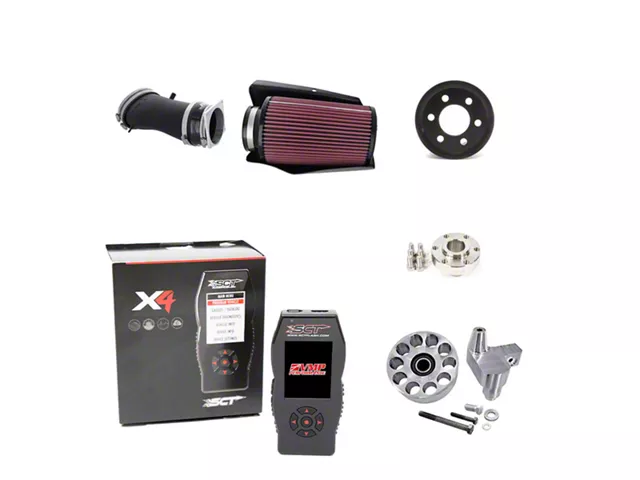
A cold air intake (CAI) replaces the factory airbox with a high-flow filter and a heat-shielded intake tube that pulls cooler air from outside the engine bay. Cooler, denser air means more efficient combustion and a noticeable bump in throttle response. Pair it with a handheld tuner — a device that reprograms your engine's computer for optimized fuel and spark maps — and you are looking at one of the best bang-for-your-buck combinations on any Mustang. On a GT, expect 10-15 HP gains from a quality intake and tune combo.
Browse cold air intakes or grab an intake and tuner kit to get both in one package.
Exhaust Systems
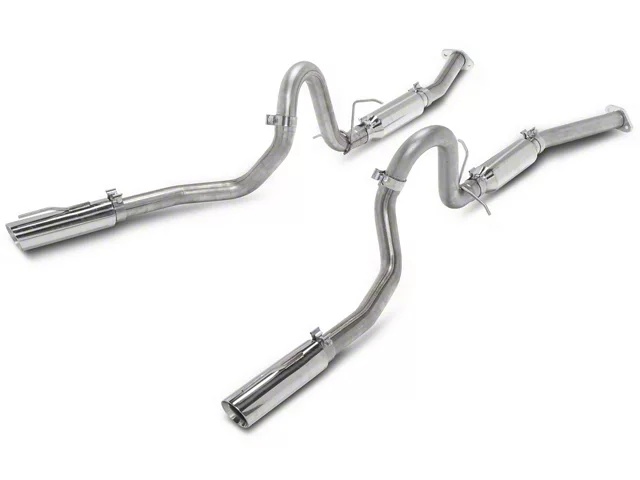
If there is one mod that transforms the New Edge driving experience, it is the exhaust. A cat-back exhaust system replaces everything from the catalytic converters back — mid-pipe, mufflers, and tips — with mandrel-bent (shaped without collapsing the tube diameter, ensuring consistent airflow), larger-diameter tubing that reduces backpressure and lets the 4.6L V8 breathe and sound the way it should. For even more flow, pair it with long-tube headers that replace the factory exhaust manifolds for improved scavenging (the process by which exiting exhaust gases help pull fresh air into the cylinders) from the cylinder heads.
Shop cat-back exhaust systems and headers to find the right combination for your goals — whether that is a deep, aggressive rumble or maximum top-end flow.
Suspension Upgrades
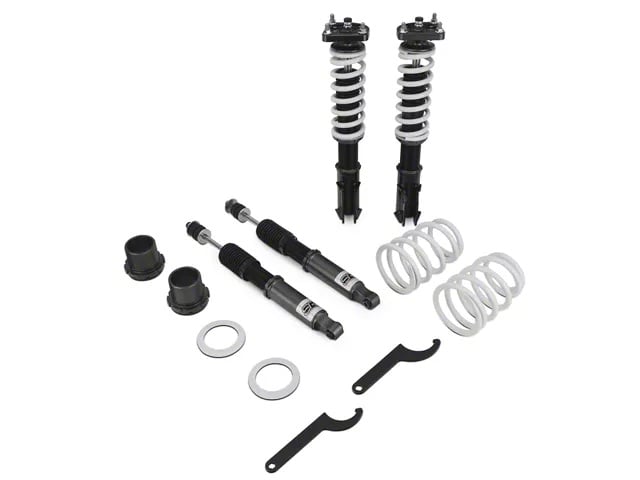
The New Edge's factory suspension is adequate for daily driving but leaves room for improvement if you are pushing the car on twisty roads or at the track. Coilover kits replace the factory struts and springs with adjustable, threaded-body dampers that let you dial in ride height, damping firmness, and corner balance. The result is a dramatic improvement in body control, turn-in response, and overall confidence behind the wheel.
Explore coilover kits to find options that match your driving style, from street comfort to full race setups.
Wheels and Tires
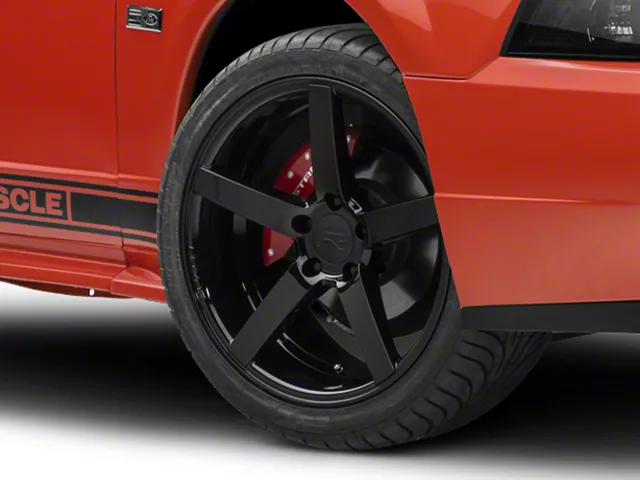
Upgrading your wheels and tires is one of the fastest ways to change both the look and the grip of your New Edge. Moving to a wider wheel — 18x9 or 18x10 on the rear, for example — lets you run a wider tire footprint for better traction during hard launches and cornering. A lighter wheel also reduces unsprung weight (the mass not supported by the suspension — a forged aluminum wheel can save 5-8 lbs per corner versus a cast unit), which improves ride quality, braking, and acceleration responsiveness.
Browse the full selection of wheels to find the right fitment and style for your build.
Forced Induction
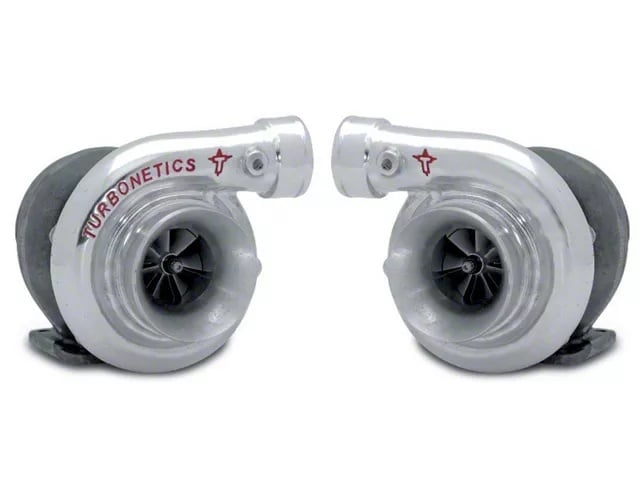
When bolt-ons are not enough, forced induction — superchargers and turbochargers — is the path to serious power. A centrifugal supercharger mounts to the front of the engine and uses a belt-driven compressor to force more air into the cylinders, making power that increases with RPM. A turbocharger does the same job using exhaust gas energy to spin a turbine, offering excellent efficiency and top-end power. On a 4.6L GT, a quality supercharger kit can push you past 400 HP at the wheels with supporting mods and a professional tune.
Check out supercharger kits and turbocharger kits to compare options for your power goals.
Rear Gears
Changing your rear gear ratio is one of the most underrated modifications you can make. The factory gear in most New Edge GTs is a 3.27:1 ratio, which prioritizes fuel economy and highway cruising speed. Swapping to a 3.73:1 or 4.10:1 gear set changes the mechanical advantage at the rear axle, multiplying the engine's torque and improving acceleration off the line and through each gear. The tradeoff is slightly higher highway RPM, but most enthusiasts find the improved throttle response and quicker acceleration well worth it. If you are drag racing, 4.10s are a popular choice. For a balanced street and strip setup, 3.73s hit the sweet spot.
Practical Takeaways
![]() With so many options on the table, here is a quick-reference ranking of the best modifications for a New Edge Mustang — whether you are starting your first build or planning your next round of upgrades.
With so many options on the table, here is a quick-reference ranking of the best modifications for a New Edge Mustang — whether you are starting your first build or planning your next round of upgrades.
Best mods for a New Edge Mustang:
- Cold air intake and tuner combo — the best starting point for noticeable gains with minimal effort and cost.
- Cat-back exhaust with headers — unlocks flow, adds power, and gives your Mustang the sound it deserves.
- Rear gear swap (3.73 or 4.10) — transforms acceleration feel for a relatively low investment.
- Suspension upgrade (coilovers or lowering springs) — improves handling, stance, and driving confidence.
- Wheels and tires — wider rubber means more grip, and a good set of wheels changes the entire personality of the car.
New Edge Mustang Buying Guide
Thinking about picking up a New Edge Mustang? Whether you are after a cheap GT project or a pristine Terminator, here is what you should know before you hand over your money.
What to look for: Start with the basics — check for rust along the rocker panels, lower fenders, and trunk floor. These cars are now 20+ years old, and rust is the biggest enemy, especially on cars from the Rust Belt. Pull the interior trim in the trunk area and look for signs of water intrusion. On V8 models, listen for ticking at startup (a common 4.6L trait that usually comes from the hydraulic valve lash adjusters and is generally harmless) and check for oil leaks around the valve covers and timing chain covers.
Model-specific concerns:
- GT: Generally reliable and affordable to maintain. Watch for worn intake manifold gaskets and spark plug blowouts on 2-valve heads — a known issue that is preventable with insert kits.
- Cobra (1999/2001): Verify the IRS bushings and differential for wear. Check whether the 1999 recall work was completed. The DOHC engine is more complex to service than the GT's 2-valve.
- Terminator (2003-2004): These tend to be well cared for, but check the supercharger for bearing noise and ensure the intercooler system is intact. Many have been modified, so verify the quality of any aftermarket work. A bone-stock Terminator commands a premium.
- Bullitt and Mach 1: These were produced in limited numbers and values are climbing. Verify originality — matching paint, correct wheels, and intact heritage badging all matter to collectors.
Is the New Edge Mustang reliable? Yes, the New Edge Mustang is generally a reliable platform, especially the GT with its time-tested 4.6L 2V engine. Common maintenance items include intake manifold gaskets, spark plugs (use the correct Motorcraft plugs to avoid blowout issues on 2-valve heads), and suspension bushings that wear out after 100,000+ miles. The DOHC engines in the Cobra and Mach 1 are more complex but well-engineered. The biggest reliability factors on any 20+ year-old Mustang are maintenance history and how previous owners treated the car — always ask for service records.
General pricing: As of recent years, clean New Edge GTs typically range from $8,000 to $18,000 depending on mileage, condition, and modifications. Naturally aspirated Cobras sit in the $15,000-$25,000 range. Bullitts and Mach 1s fall between $18,000 and $30,000 for nice examples. Terminators have seen the biggest price increases, with clean, low-mileage examples now regularly exceeding $35,000-$50,000. The Cobra R occupies its own stratosphere, with values well into six figures.
Conclusion
![]() The New Edge Mustang remains one of the best values in the modern muscle car world. From the accessible GT to the legendary Terminator, every submodel offers a unique blend of performance, style, and modding potential. Whether you are building a daily driver, a weekend strip car, or adding a collectible to the garage, the 1999-2004 platform gives you a proven foundation with massive aftermarket support and a community that is still growing two decades later. Ready to start your build or keep your New Edge running strong? Browse the full lineup of 1999-2004 Mustang parts and accessories — from bolt-on performance upgrades to restoration parts that bring tired components back to factory spec. Whatever your New Edge needs, you will find it here.
The New Edge Mustang remains one of the best values in the modern muscle car world. From the accessible GT to the legendary Terminator, every submodel offers a unique blend of performance, style, and modding potential. Whether you are building a daily driver, a weekend strip car, or adding a collectible to the garage, the 1999-2004 platform gives you a proven foundation with massive aftermarket support and a community that is still growing two decades later. Ready to start your build or keep your New Edge running strong? Browse the full lineup of 1999-2004 Mustang parts and accessories — from bolt-on performance upgrades to restoration parts that bring tired components back to factory spec. Whatever your New Edge needs, you will find it here.
Frequently Asked Questions About the New Edge Mustang
The New Edge Mustang (1999-2004) is one of the most discussed and collected generations in the Mustang lineage. Here are answers to the most common questions enthusiasts and buyers ask.
What Is a New Edge Mustang?
The New Edge Mustang is the 1999-2004 Ford Mustang, a restyled version of the fourth-generation SN-95 platform. Ford replaced the soft body lines of the 1994-1998 models with sharper, more angular styling — including one-piece headlights and boxier taillights — while retaining the same basic chassis and drivetrain architecture.
What Years Are Considered New Edge Mustang?
The New Edge Mustang spans the 1999 through 2004 model years. These cars share the SN-95 platform with the 1994-1998 Mustang but received significant exterior redesigns, updated interiors, and engine refinements. The fifth-generation S197 Mustang replaced the New Edge for the 2005 model year.
Why Do They Call It a New Edge Mustang?
The name comes from Ford's "New Edge" design language used in the late 1990s, characterized by sharp, angular body lines and creased surfaces. This styling philosophy replaced the rounded shapes of the earlier SN-95 and gave the 1999-2004 Mustang its distinctively aggressive, chiseled appearance.
How Much Horsepower Does a New Edge Mustang GT Have?
The New Edge Mustang GT produces 260 horsepower and 302 lb-ft of torque from its 4.6L single overhead cam (SOHC) V8 engine. This two-valve engine was consistent across all GT models from 1999 through 2004, featuring redesigned cylinder heads and an improved intake manifold over the previous generation.
How Much Horsepower Does a New Edge Cobra Have?
The 1999 and 2001 SVT Cobra produced 320 horsepower from a naturally aspirated 4.6L DOHC V8. The 2003-2004 SVT Cobra "Terminator" jumped to 390 horsepower thanks to an Eaton M-112 supercharger, making it the most powerful factory New Edge Mustang available to the public.
What Is a Terminator Mustang?
The Terminator is the nickname for the 2003-2004 SVT Mustang Cobra. It earned this name because its supercharged 4.6L DOHC V8, iron block, and forged internals made it devastatingly fast — producing 390 horsepower from the factory with massive headroom for aftermarket tuning well beyond 500 HP.
What Is the Difference Between an SN-95 and a New Edge Mustang?
Both share the same fourth-generation platform, but the SN-95 refers to the 1994-1998 models with rounded styling, while the New Edge covers 1999-2004 with sharper, angular body lines. Mechanically, the New Edge received updated engines, revised intake manifolds, and improved interior components, though most parts interchange between the two.
What Are the Best Mods for a New Edge Mustang?
The most popular first upgrades are a cold air intake and handheld tuner combo for an easy 15-25 horsepower gain. From there, a cat-back exhaust system improves flow and sound, while coilover suspension kits sharpen handling. For serious power, supercharger and turbocharger kits can push output well beyond factory levels.
Is the New Edge Mustang Reliable?
The New Edge Mustang is generally considered reliable, especially the GT and V6 models with their proven 4.6L and 3.8L engines. Common issues to watch for include intake manifold cracking on early V6 models, spark plug blowouts on two-valve V8s, and typical rust in rocker panels and trunk areas on higher-mileage cars.
How Much Is a New Edge Mustang Worth?
Base V6 New Edge Mustangs typically sell for $5,000-$10,000 depending on condition, while clean GTs command $8,000-$18,000. Special models carry significant premiums — Bullitts and Mach 1s range from $15,000-$30,000, and clean Terminators regularly sell for $30,000-$50,000 or more in today's market.