You have heard the name thrown around at meets, seen it on build sheets, and maybe you are staring at a used Mustang GT wondering whether the Coyote under the hood is worth building -- or which generation to drop into your next swap. How much power can the stock bottom end really handle? What separates the Gen 1 from the Gen 4, and where should your mod budget go first? This coyote engine guide answers all of it. Below, you will find a generation-by-generation spec breakdown, the real-world power limits of the stock internals, the best bolt-on and forced induction upgrades, and everything you need to know before starting a Coyote swap -- all in one place.
What Is the Ford Coyote Engine?
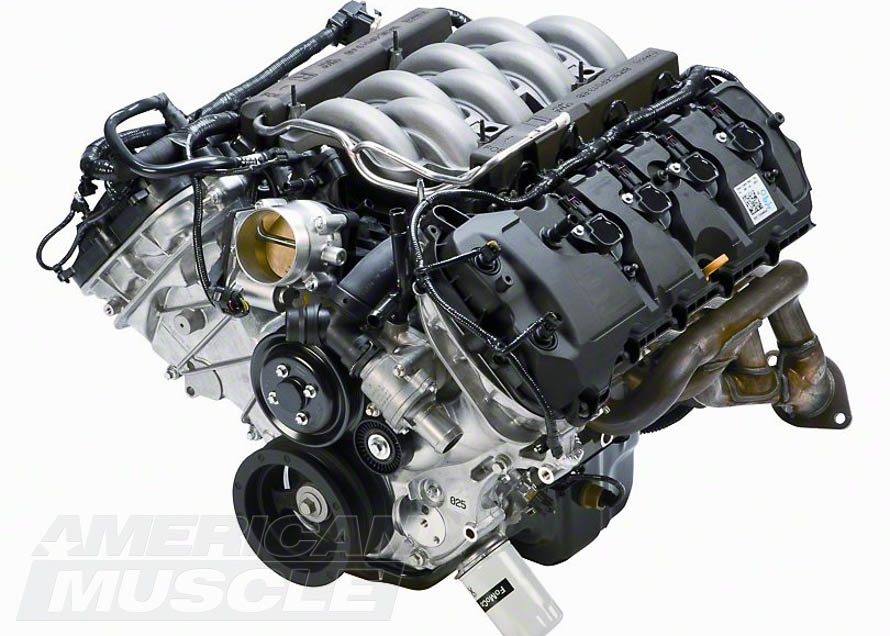
The Ford Coyote engine is a 5.0-liter, dual-overhead-cam (DOHC), 4-valve-per-cylinder V8 that has powered the Ford Mustang GT since 2011. It replaced the single-cam 4.6L Modular V8 with an all-aluminum design featuring variable valve timing, producing between 412 and 480 horsepower depending on generation. The Coyote shares its 5.0L displacement with the classic pushrod 302 but is an entirely different, modern architecture built for high-RPM power and forced induction headroom.
If you have been around Mustangs long enough, you remember the original 5.0 -- that pushrod 302 Windsor V8 that defined Fox Body culture in the late 1980s and early 1990s. It made 225 horsepower on a good day. So when Ford announced a new 5.0L for 2011, the natural question was: is this just a marketing callback, or a genuinely new engine? The answer is emphatically the latter.
The name "Coyote" itself has roots in Ford racing history. Engineer John Norcott named the program after A.J. Foyt's legendary Coyote chassis that dominated Indianapolis in the late 1960s and 1970s -- a fitting nod for an engine designed from the outset to be a modern performance platform. Understanding every generation of the Coyote, its power limits, and the best upgrade paths is what this coyote engine guide is built to deliver.
Where the old 302 used a single camshaft buried in the block (a pushrod design with two valves per cylinder), the Coyote runs dual overhead cams (DOHC) -- four camshafts total, two per bank -- actuating four valves per cylinder (32 valves total). This architecture breathes far more efficiently at high RPM and gives Ford room to implement variable valve timing (VVT), which adjusts cam phasing on the fly for better power across the entire rev range. The result is an engine that makes real horsepower above 6,000 RPM while still driving civilly in traffic. If you want a deeper dive into how this differs from the old Windsor, check out our breakdown of pushrod and modular motors.
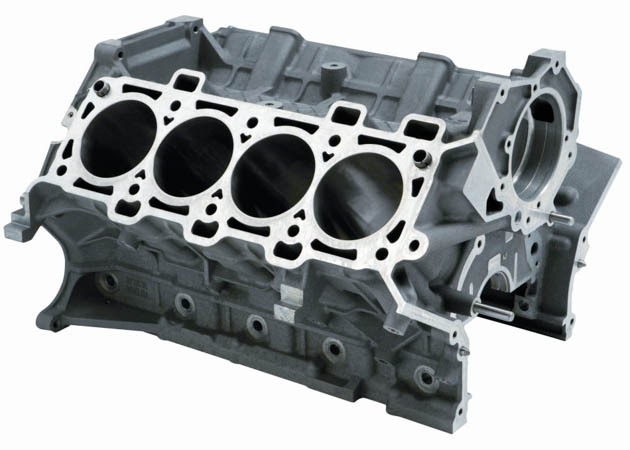
The block itself is cast from 319-T5 aluminum -- lighter than the old iron 302 by a significant margin and strong enough to handle double its factory output with the right supporting mods. Pressed-in iron cylinder sleeves give the bores the wear resistance that aluminum alone cannot provide, and 100mm bore spacing leaves enough meat between cylinders for overboring or power adder abuse. From day one, Ford designed this platform with forced induction in mind, and the aftermarket has proven that vision correct many times over.
Coyote Engine Specs by Generation
The four generations of the Ford Coyote engine differ primarily in horsepower, fuel delivery, compression ratio, and displacement. Gen 1 (2011-2014) started at 412 HP with port injection. Gen 2 (2015-2017) bumped output to 435 HP with revised cams and larger valves. Gen 3 (2018-2023) jumped to 460 HP by adding direct injection alongside port injection and raising compression to 12:1. Gen 4 (2024+) pushes 480 HP with a dual throttle body intake, and the Dark Horse variant reaches an estimated 500 HP with Predator-derived internals.
Each Coyote generation brought measurable improvements to the platform. Understanding the differences helps you pick the right donor engine for a swap, target the correct parts for your build, and set realistic power expectations before you start bolting things on.
Gen 1 Coyote (2011-2014 Mustang GT)
The first-generation Coyote arrived in the 2011 Mustang GT producing 412 horsepower and 390 lb-ft of torque. For 2013, Ford revised the camshafts and cam phasers, bumping output to 420 horsepower -- a meaningful jump that also improved drivability around town.
Under the skin, the Gen 1 runs a 4.951-liter actual displacement (not a true 5.0L, but close enough for marketing), an 11:1 compression ratio, and a 92.2mm bore. The forged steel crankshaft is shared across all Coyote generations. Early 2011-2012 engines used powdered-metal connecting rods, which are adequate for naturally aspirated power but become a weak link under boost. Starting in 2013, Ford switched to sinter-forged rods -- the same spec used in the Boss 302 -- giving the later Gen 1 engines a stronger rotating assembly out of the box.
The Gen 1 also introduced the Ti-VCT (Twin Independent Variable Cam Timing) system that became a defining feature of the platform. By independently adjusting intake and exhaust cam phasing, the ECU optimizes valve overlap for the current RPM and load -- giving you a broad, usable powerband instead of a peaky cam-only power hit. Port fuel injection handles fueling duties, with eight injectors firing into the intake ports.
Gen 2 Coyote (2015-2017 Mustang GT)
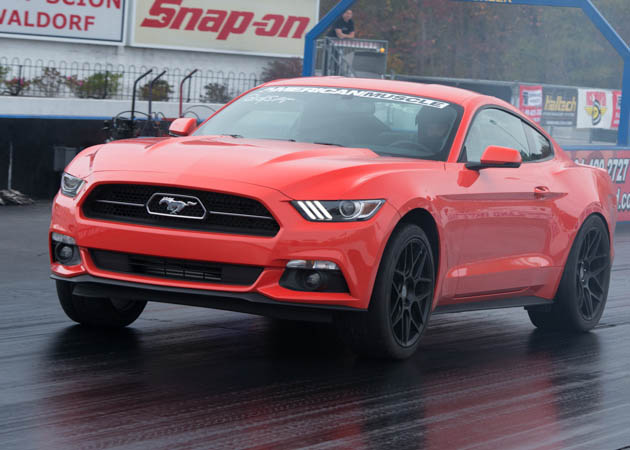
When the S550 Mustang launched for 2015, the Gen 2 Coyote came along with 435 horsepower and 400 lb-ft of torque. The extra power came from a combination of larger intake and exhaust valves, stiffer valve springs, more aggressive camshaft profiles, and a revised Charge Motion Control Valve (CMCV) intake manifold that improved low-RPM torque without sacrificing top-end flow.
The Gen 2 also standardized the sinter-forged connecting rods from the Boss 302 across the entire lineup, eliminating the powdered-metal rod weakness of the early Gen 1. Bore, stroke, displacement, and compression ratio remained unchanged from Gen 1 at 92.2mm bore, 4.951L, and 11:1 compression. The redline stayed at 7,000 RPM.
For many builders, the Gen 2 remains a sweet spot. It has mature aftermarket support, the rotating assembly is stronger than early Gen 1 engines, and S550 GT donor cars are now priced well into the accessible range on the used market. If you are curious how the S550 platform compares to the S197, our S197 vs. S550 5.0L comparison breaks down the chassis-level differences that complement these engine upgrades.
Gen 3 Coyote (2018-2023 Mustang GT)
The Gen 3 Coyote produces 460 horsepower and 420 lb-ft of torque</strong> from a slightly larger 5.035-liter displacement (up from 4.951L) thanks to a wider 93mm bore. It features a dual fuel injection system combining port and direct injection, a higher 12:1 compression ratio, and a raised 7,500 RPM redline. The cylinder walls use Plasma Transfer Wire Arc (PTWA) coating instead of pressed-in iron sleeves, reducing weight and improving heat transfer.
The dual injection system is the headline change. Port injection handles low-load cruising and cold starts, while direct injection (DI) takes over under high load, spraying fuel directly into the combustion chamber at extreme pressures for better atomization and knock resistance. This combination allowed Ford to raise the compression ratio without requiring premium fuel under normal driving -- though you will absolutely want 93 octane if you are tuning for performance.
The Gen 3 also moved to a 10-speed 10R80 automatic transmission co-developed with General Motors, replacing the 6R80. The 10R80 shifts faster, holds more power, and keeps the engine in its powerband more effectively -- a genuine performance improvement, not just a fuel economy play. Manual transmission buyers got a revised MT-82 paired with a twin-disc clutch and dual-mass flywheel, which handles the Gen 3's increased torque output more gracefully than the single-disc setup it replaced.
Gen 4 Coyote (2024+ Mustang GT and Dark Horse)
The latest Coyote generation arrives in the S650 Mustang with 480 horsepower and 415 lb-ft of torque in standard GT trim. The Dark Horse variant pushes that to an estimated 500 horsepower -- the highest output of any naturally aspirated Mustang ever sold.
Key changes include a revised exhaust manifold for better scavenging, a dual throttle body intake manifold that improves high-RPM airflow, and a steel oil pan replacing the previous aluminum unit for better durability. Bore, stroke, displacement, and compression ratio carry over from the Gen 3.
The Dark Horse gets the real hardware upgrades: Predator-derived forged connecting rods (the same design philosophy from the GT500's supercharged 5.2L), revised camshaft profiles, and a Tremec TR-3160 six-speed manual replacing the MT-82. The Tremec is the same transmission family used in the Camaro ZL1 and Cadillac CT5-V Blackwing -- it is built to handle serious power without the durability concerns that have followed the MT-82 for years.
Master Spec Comparison Table
|
Spec
|
Gen 1 (2011-2014)
|
Gen 2 (2015-2017)
|
Gen 3 (2018-2023)
|
Gen 4 (2024+)
|
|
Horsepower
|
412 / 420
|
435
|
460
|
480
|
|
Torque (lb-ft)
|
390
|
400
|
420
|
415
|
|
Displacement
|
4.951L
|
4.951L
|
5.035L
|
5.035L
|
|
Compression Ratio
|
11:1
|
11:1
|
12:1
|
12:1
|
|
Bore
|
92.2mm
|
92.2mm
|
93mm
|
93mm
|
|
Redline
|
7,000 RPM
|
7,000 RPM
|
7,500 RPM
|
7,500 RPM
|
|
Fuel System
|
Port Injection
|
Port Injection
|
Port + Direct Injection
|
Port + Direct Injection
|
|
Key Upgrade
|
Ti-VCT Variable Cam Timing
|
Larger Valves, CMCV Intake
|
Dual Injection, PTWA Walls
|
Dual Throttle Body, Predator Rods (DH)
|
Special Coyote-Derived Engines
Ford did not stop at the standard Coyote. Three special variants share the platform's DNA but push the architecture in distinctly different directions -- each one purpose-built for a specific kind of performance.
Boss 302 Road Runner (2012-2013)
The Boss 302 was Ford's answer to the track-day enthusiast who wanted a naturally aspirated weapon. Its engine -- sometimes called the "Road Runner" -- started with the Gen 1 Coyote block and added CNC-ported cylinder heads with significantly improved flow, a short-runner intake manifold tuned for high-RPM breathing, and forged internals throughout the rotating assembly. The result was 444 horsepower with a 7,500 RPM redline -- well above the standard Gen 1's 7,000 RPM limit. The Boss 302 Laguna Seca variant added even more track-focused chassis hardware, but the engine remained the same high-revving naturally aspirated screamer.
VooDoo 5.2L Flat-Plane Crank (2015-2020 GT350)
The VooDoo engine in the Shelby GT350 is arguably the most exotic production Ford engine ever built. It displaces 5.2 liters and swaps the Coyote's conventional cross-plane crankshaft for a flat-plane crank -- a design more commonly found in Ferrari and McLaren engines. The flat-plane crank allows more even exhaust pulse spacing, eliminates the need for a balance shaft, and enables the engine to scream to an 8,250 RPM redline. Peak output is 526 horsepower, all naturally aspirated. The tradeoff is more vibration at low RPM and a raspy, exotic exhaust note that sounds nothing like a traditional American V8.
Predator 5.2L Supercharged (2020-2022 GT500)
Where the VooDoo went high-revving and naturally aspirated, the Predator in the Shelby GT500 went the opposite direction: a 5.2-liter cross-plane crank V8 topped with an Eaton TVS R2650 supercharger running 12 PSI of boost. The result is a staggering 760 horsepower and 625 lb-ft of torque, making it the most powerful street-legal Ford ever produced at the time. The Predator uses its own unique block casting, forged connecting rods, and a lower compression ratio to accommodate the boost. Its forged rod design later influenced the Dark Horse Gen 4 Coyote internals.
Coyote Engine Power Limits and Reliability
A stock Coyote engine can reliably handle approximately 750 horsepower at the crankshaft (roughly 600 wheel horsepower) with a proper tune and supporting modifications. The 319 aluminum block remains intact well past 800 crank horsepower. The primary failure points are the factory hypereutectic pistons, which should be upgraded to forged units above 600 whp, and the powdered-metal oil pump gear, which can shatter under sustained high-RPM boost.
The original 5.0L pushrod 302 had a well-known ceiling -- around 500 horsepower before the stock iron block started splitting. The Coyote rewrote that script entirely. Ford engineered this platform from the factory floor with forced induction headroom, and the aftermarket has validated that engineering with builds routinely making 800, 1,000, and even 1,500+ horsepower on modified Coyote platforms. But understanding exactly where the stock components tap out helps you plan your build and budget smartly.
The Block
The Coyote block is cast from 319-T5 aluminum with a bore spacing of 100mm, a deck height of 227mm, and a deck thickness of 13mm. The cylinder walls use thin, pressed-in iron sleeves (Gen 1 and Gen 2) or PTWA coating (Gen 3+), giving the bores the wear resistance that aluminum alone cannot provide. The bore diameter is 92.2mm on Gen 1/2 and 93mm on Gen 3/4 -- 2mm larger than the previous 4.6L engine in both cases.
Despite the aluminum construction and relatively thin walls, the aftermarket has proven these blocks hold together well past 800 crankshaft horsepower with proper tuning and supporting modifications. Ford designed the block to accommodate a power adder from the outset, and that forward-thinking engineering shows in the real-world data. Blocks have survived well north of 1,000 horsepower in drag applications with appropriate fuel system and cooling upgrades. The block itself is rarely the failure point.
Rotating Assembly
Every Coyote generation shares a forged steel, counterweighted crankshaft -- the strongest single component in the bottom end. The connecting rods vary by year: 2011-2012 Gen 1 engines use powdered-metal I-beam rods, while 2013+ engines (including all Gen 2, Gen 3, and Gen 4 models) use sinter-forged rods originally developed for the Boss 302. The sinter-forged rods are meaningfully stronger and the reason most builders prefer 2013+ donor engines for boost projects.
The pistons are the weak link. Ford uses hypereutectic pistons with oil cooling jets that spray the underside of each piston at all times -- a feature that significantly improves thermal management. These pistons are comfortable at stock power levels and handle moderate bolt-on builds without complaint. The realistic limit of the stock rotating assembly is around 600 horsepower to the wheels (approximately 750 crank horsepower). Beyond that, you should plan on upgrading to forged pistons and potentially forged rods (if you are on a 2011-2012 engine) before pushing further. For sustained high-power track use, adding an upgraded oil cooler also helps keep piston temperatures in the safe zone under repeated hard pulls.
Cylinder Heads
The Coyote's aluminum, 4-valve-per-cylinder heads are a major reason the engine produces over 400 horsepower from only 5.0 liters of displacement. These heads flow an estimated 300 CFM out of the factory -- efficient enough that the heads are rarely the bottleneck in a power build. Compare that to the old E7TE heads on the pushrod 302, which flowed around 160 CFM and were the first thing every Fox Body builder replaced.
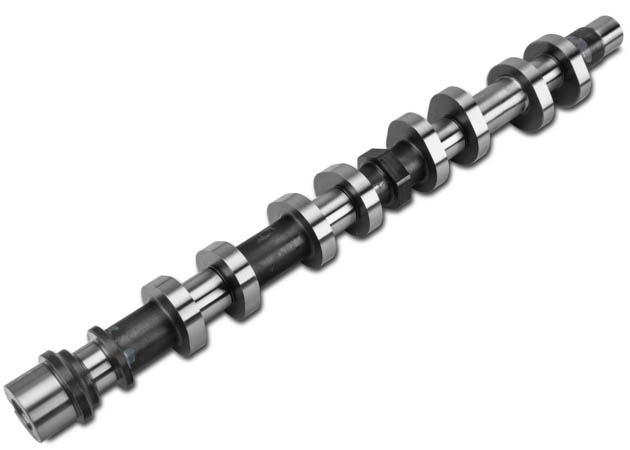
With the Coyote, the heads support significant power gains without porting. Aftermarket camshafts -- like the Comp Cams units popular in Coyote builds -- are a more effective path to additional power than head porting for most street and street/strip applications. CNC-ported heads become relevant primarily in full-race builds targeting 900+ horsepower where every CFM matters.
Oil Pump Gear
This is the one component that catches builders by surprise. The factory powdered-metal oil pump gear works fine under stock conditions, but at higher RPM and power levels -- particularly with a supercharger or turbo kit -- it can fail catastrophically. High power loads at high RPM cause the crankshaft harmonics to change, and those harmonics fatigue and eventually shatter the stock powdered gear.
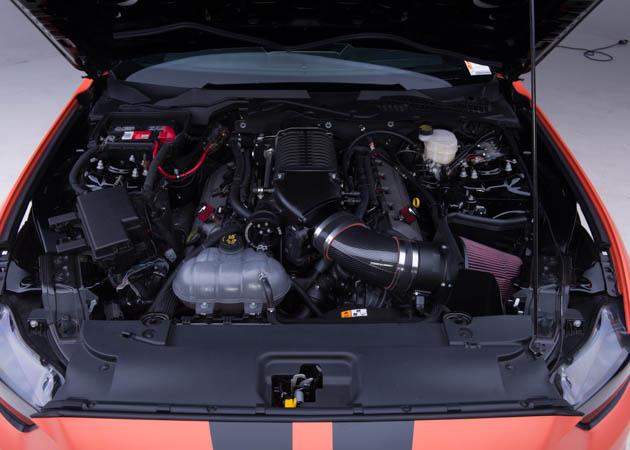
If you are adding a power adder or plan to see sustained RPM above 7,000, replacing the stock oil pump gear with a billet steel unit is a mandatory upgrade. It is inexpensive insurance against a failure that can take out the entire engine. Treat it the same way you would treat a clutch upgrade -- it is a supporting mod that protects your investment in the bigger parts.
Transmission Limit
Your engine is only as strong as the drivetrain behind it, and the Coyote's transmission options span a wide range of capability.
The MT-82 six-speed manual is the weakest link in the chain. Factory-rated for 383 lb-ft of torque, it handles stock Gen 1 and Gen 2 power levels adequately but starts showing its limits with aggressive bolt-on builds or any forced induction setup. Ford did beef up the S550 version compared to the S197 unit, but if you plan on tracking your car frequently or running a supercharger, you will want to address the MT-82's internals or swap to a Tremec T-56 Magnum or similar aftermarket unit.
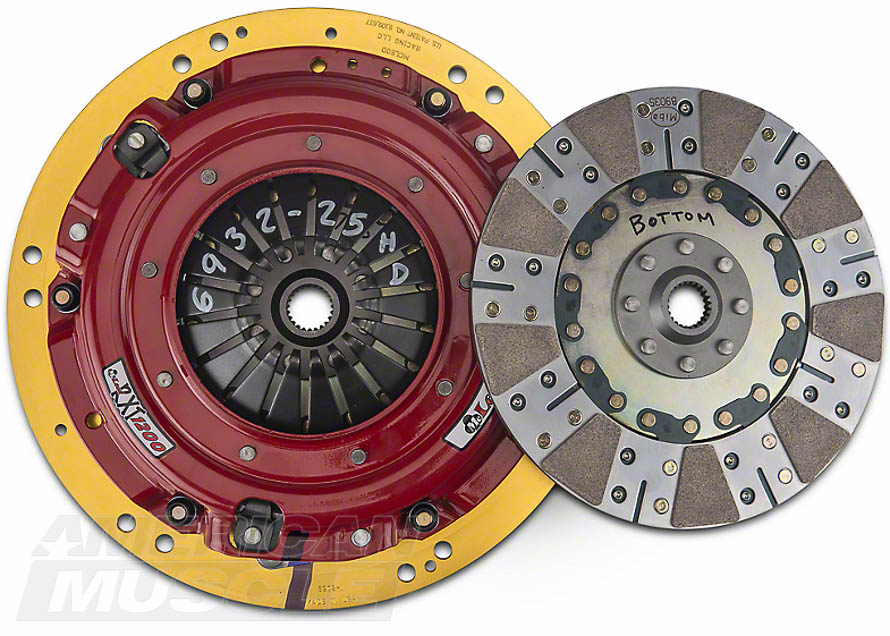
The 10R80 ten-speed automatic (Gen 3+) is significantly more robust than the 6R80 it replaced. It handles more power, shifts faster, and keeps the engine in the meat of the powerband more effectively -- a real advantage on the street and strip. For the Dark Horse, the Tremec TR-3160 six-speed manual finally gives manual-transmission Coyote owners a gearbox that matches the engine's capability without compromise. If you are building a high-power manual car on an older platform, an upgraded clutch kit is one of the first mods to address after your power adder.
Best Coyote Engine Mods
The best mods for a Coyote engine follow a proven sequence: start with a cold air intake (10-20 HP), add long-tube headers and a cat-back exhaust (30-50 HP combined), then lock in the gains with a performance tune (20-40 HP on stock hardware). For serious power, a supercharger or turbo kit can add 150-300+ horsepower while staying within the stock internals' safe range of approximately 750 crank horsepower.
The Coyote responds well to modifications at every level, from simple bolt-ons to full forced induction builds. The key is following the right sequence. Each mod builds on the last, and a performance tune ties everything together. Here is how to approach your Coyote build from mild to wild.
Cold Air Intake
A cold air intake is typically the first mod any Coyote owner installs, and for good reason. By replacing the restrictive factory airbox and paper filter with a high-flow intake system that draws cooler, denser air from outside the engine bay, you can pick up 10 to 20 horsepower with improved throttle response across the RPM range. Installation takes under an hour, requires no tune (though tuning maximizes the benefit), and gives you a more aggressive induction sound under wide-open throttle. For the Coyote's high-revving DOHC architecture, every bit of additional airflow translates directly to power.
Exhaust and Headers
The factory exhaust manifolds and catalytic converters are designed for emissions compliance, not maximum flow. Replacing them with long-tube headers paired with a cat-back exhaust system unlocks 30 to 50 horsepower by reducing backpressure and improving exhaust scavenging. Long-tube headers make the biggest single impact because they replace the most restrictive factory components -- the cast-iron exhaust manifolds and the primary catalytic converters.
Pair the headers with a well-designed cat-back system (or an off-road mid-pipe for track-only use), and you get both the power gains and the exhaust note that makes a Coyote sound like a proper V8. A professional tune is essential after header installation to recalibrate fuel trims and ignition timing for the improved exhaust flow.
Performance Tune
A performance tuner is the single most important modifier in any Coyote build -- not because of the horsepower number itself (typically 20 to 40 horsepower on stock hardware), but because it optimizes every other mod you install. A tune recalibrates air-fuel ratios, ignition timing, cam phasing, and shift points (on automatics) to extract the maximum safe power from your combination. Without a tune, you are leaving gains on the table from every bolt-on part.
More importantly, a tune is mandatory after any significant airflow modification -- headers, intake manifold swaps, or forced induction. Running an untuned Coyote with headers and a blower is not just leaving power on the table; it is risking engine damage from lean air-fuel ratios and detonation.
Forced Induction
This is where the Coyote platform truly shines. A supercharger kit or turbo setup can add 150 to 300+ horsepower depending on boost levels and supporting modifications, pushing a stock-internals Coyote to the 600-750 crank horsepower range reliably. Centrifugal and positive-displacement (roots/twin-screw) superchargers are both popular choices, each with their own power delivery characteristics.
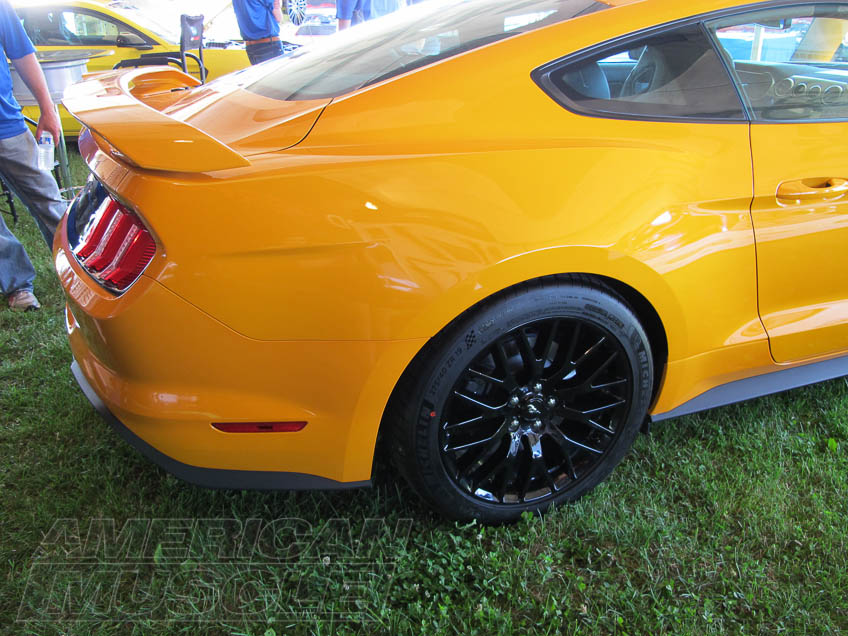
Positive-displacement blowers deliver instant, linear boost from idle and are generally preferred for street cars that want strong low-RPM response. Centrifugal units build boost progressively with RPM and tend to make more peak power per PSI of boost, making them popular for drag and roll-race applications. Either route requires supporting mods: upgraded fuel injectors, a larger fuel pump, a proper tune, and that billet oil pump gear we discussed earlier. For a deeper look at supercharger selection and installation, our Supercharger Tech Guide covers the decision-making process in detail.
For builds targeting beyond 750 crank horsepower, plan on upgrading to forged pistons, forged rods (if on a 2011-2012 engine), and a robust fuel system. At that point, you are building a race engine that happens to share a factory block -- and the Coyote block is up to the task well into four-digit territory.
Coyote Engine Swap Basics
The Coyote's combination of compact dimensions (for a DOHC V8), huge power potential, and strong aftermarket support has made it one of the most popular swap candidates in the Ford world. Whether you are dropping a Coyote into a Fox Body, an SN95, or a classic truck, the fundamentals are the same.
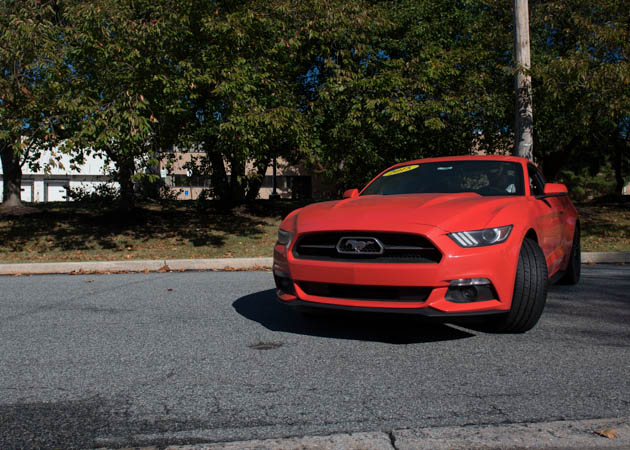
The most popular swap donor is the Gen 2 Coyote (2015-2017), and for good reason. It offers 435 horsepower with mature aftermarket support, the rotating assembly is strong from the factory (sinter-forged rods), and used S550 GT engines have reached accessible price points on the secondary market. The Gen 3 is the better choice if you want the most power and do not mind paying a premium for the dual-injection system and higher compression.
Regardless of which generation you choose, you will need more than just the engine. A proper Coyote swap requires the engine, transmission, wiring harness, PCM (engine computer), pedal assembly, and all associated sensors and connectors. Ford Performance control packs are the cleanest solution -- they bundle the engine, wiring, PCM, and pedal assembly into a single package designed for out-of-chassis installation. Control packs are available for Gen 1, Gen 2, and Gen 3 Coyotes, and they eliminate the headache of reverse-engineering factory wiring from a donor car.
Beyond the powertrain itself, plan for custom motor mounts, a transmission crossmember, a driveshaft, modified oil pan (for front-sump applications), header selection that fits your chassis, and fuel system plumbing for the return-style fuel system. If you are swapping into a Fox Body, our Coyote swap into a Fox Body guide covers the platform-specific challenges and solutions in detail.
Practical Takeaways
Whether you are buying, building, or swapping a Coyote, these are the key decisions and action items to keep in mind:
- Choose your generation wisely. The Gen 2 (2015-2017) is the best value for swaps and budget builds -- strong internals, mature aftermarket, and accessible pricing. The Gen 3 (2018-2023) is the best all-around performer with dual injection and 460 horsepower. The Gen 4 Dark Horse is the top choice if you want the strongest factory internals and a Tremec gearbox.
- Follow the mod sequence. Start with a cold air intake and exhaust (headers + cat-back), then tune. This bolt-on trio nets 50-70 wheel horsepower for around $2,000-3,000 total. Only move to forced induction after the basics are dialed in.
- Know your limits -- literally. The stock rotating assembly is safe to approximately 600 wheel horsepower (750 crank). Plan on forged pistons and a billet oil pump gear before pushing into boost territory beyond that threshold.
- Always tune after modifications. A performance tune is not optional -- it is the mod that makes every other mod work correctly and safely. Running untuned with headers or a blower risks engine damage.
- Budget for supporting mods. Forced induction builds need upgraded fuel injectors, a higher-capacity fuel pump, an oil cooler, and that billet oil pump gear. Plan the full system, not just the blower.
- Use control packs for swaps. Ford Performance engine control packs eliminate wiring headaches and include the PCM, harness, and pedal assembly. They are the cleanest path to a running Coyote swap.
Your Next Coyote Build Starts Here
The Ford Coyote 5.0L V8 is one of the most capable and well-supported engine platforms in modern performance history. Whether you are tuning a stock Gen 1 for weekend fun, building a Gen 3 with a blower for serious street power, or dropping a Gen 2 into a Fox Body for a lightweight drag machine, the Coyote gives you a rock-solid foundation that the aftermarket has proven time and time again. From the first bolt-on intake to a full forged-internals build, every step along the way is supported by parts, tuning, and the experience of thousands of builds before yours.
Ready to start your build? Browse our full catalog of Mustang engine parts and 5.0 Mustang performance parts to find the cold air intakes, headers, supercharger kits, and supporting hardware your Coyote needs to reach its full potential.