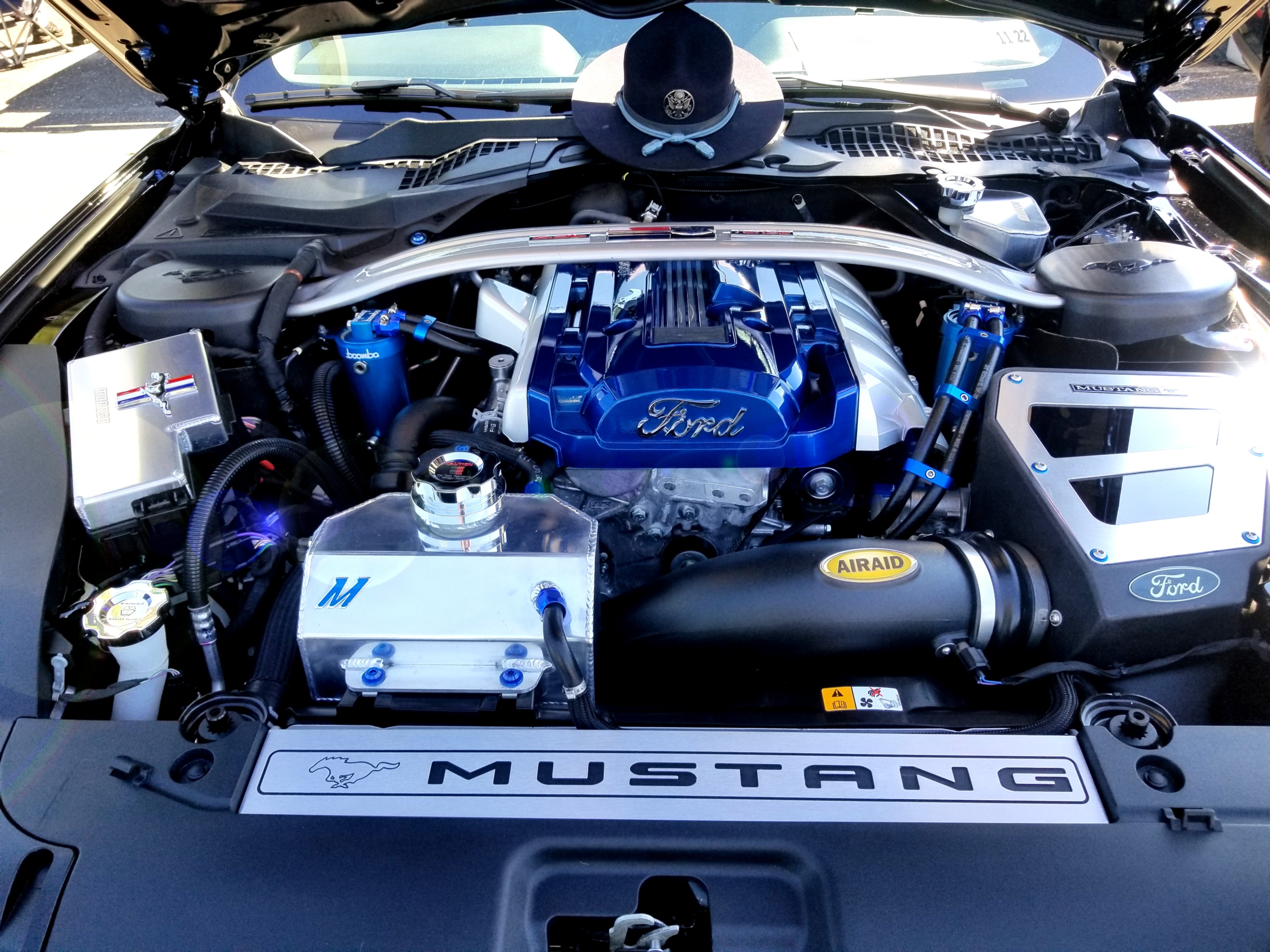
Is your engine pulling as hard as it should — or is the factory airbox holding it back? If you have been thinking about squeezing more horsepower out of your muscle car without tearing the engine apart, a cold air intake is one of the simplest and most cost-effective places to start. In this guide, you will learn how a cold air intake works, what benefits to expect, how to choose between filter types and airbox designs, and which options fit your specific platform — whether you drive a Mustang, Camaro, Challenger, or Charger.
What Is a Cold Air Intake?
A cold air intake is an aftermarket system that replaces your vehicle's restrictive factory airbox with a wider intake tube, a high-flow air filter, and a heat shield — all designed to pull cooler, denser air into the engine for better combustion and more power. Ever pop your hood after a spirited drive and feel the wave of heat rolling off the engine? Your stock intake sits right in the middle of that hot zone, pulling in air that is already well above ambient temperature. That is a problem because hot air is less dense than cool air. At 80 degrees Fahrenheit, a cubic foot of air holds noticeably less oxygen than that same cubic foot at 50 degrees. This effect is called heat soak — the gradual warming of the intake charge that reduces the oxygen available for combustion. Less oxygen means less fuel can burn per cycle, and less fuel burned means less power at the wheels.
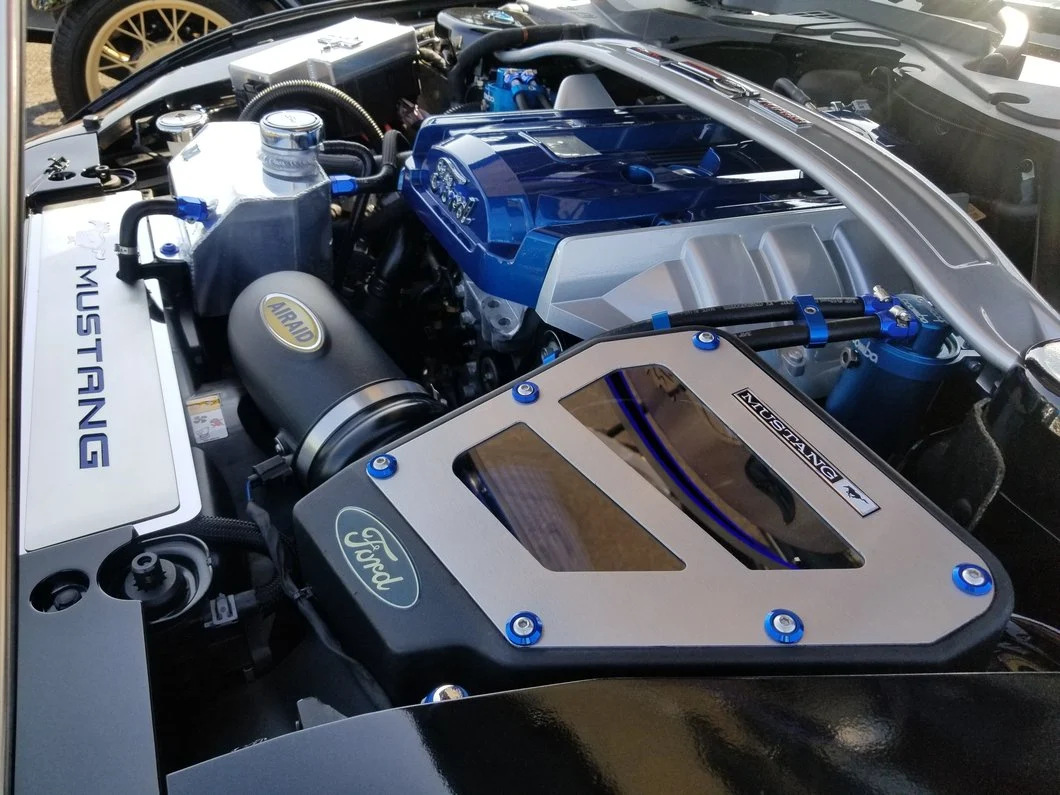
A cold air intake solves this by relocating the filter away from the engine's heat and using a larger-diameter tube to move more air per second. The heat shield acts like a wall between the filter and the exhaust manifold, keeping inlet temperatures down. The result is a denser charge of oxygen entering each cylinder, which lets the engine burn fuel more efficiently and produce more power on every combustion event.
Most aftermarket intakes also use a less restrictive filter media than the factory paper element. Where a stock filter prioritizes quiet operation and long service intervals, a performance filter is engineered for maximum airflow — letting the engine breathe freely without choking at high RPM. Combined with the cooler air and wider tubing, that is how a relatively simple bolt-on mod translates into measurable gains on the dyno.
Benefits of Upgrading to a Cold Air Intake
A cold air intake is one of the most popular first upgrades for muscle car owners because it delivers multiple benefits — more horsepower, better fuel economy, sharper throttle response, a meaner exhaust note, and lower long-term maintenance costs — all from a single bolt-on part. Here is a closer look at what you can expect when you pair your engine parts with a quality performance mod for your engine.
More Horsepower and Torque
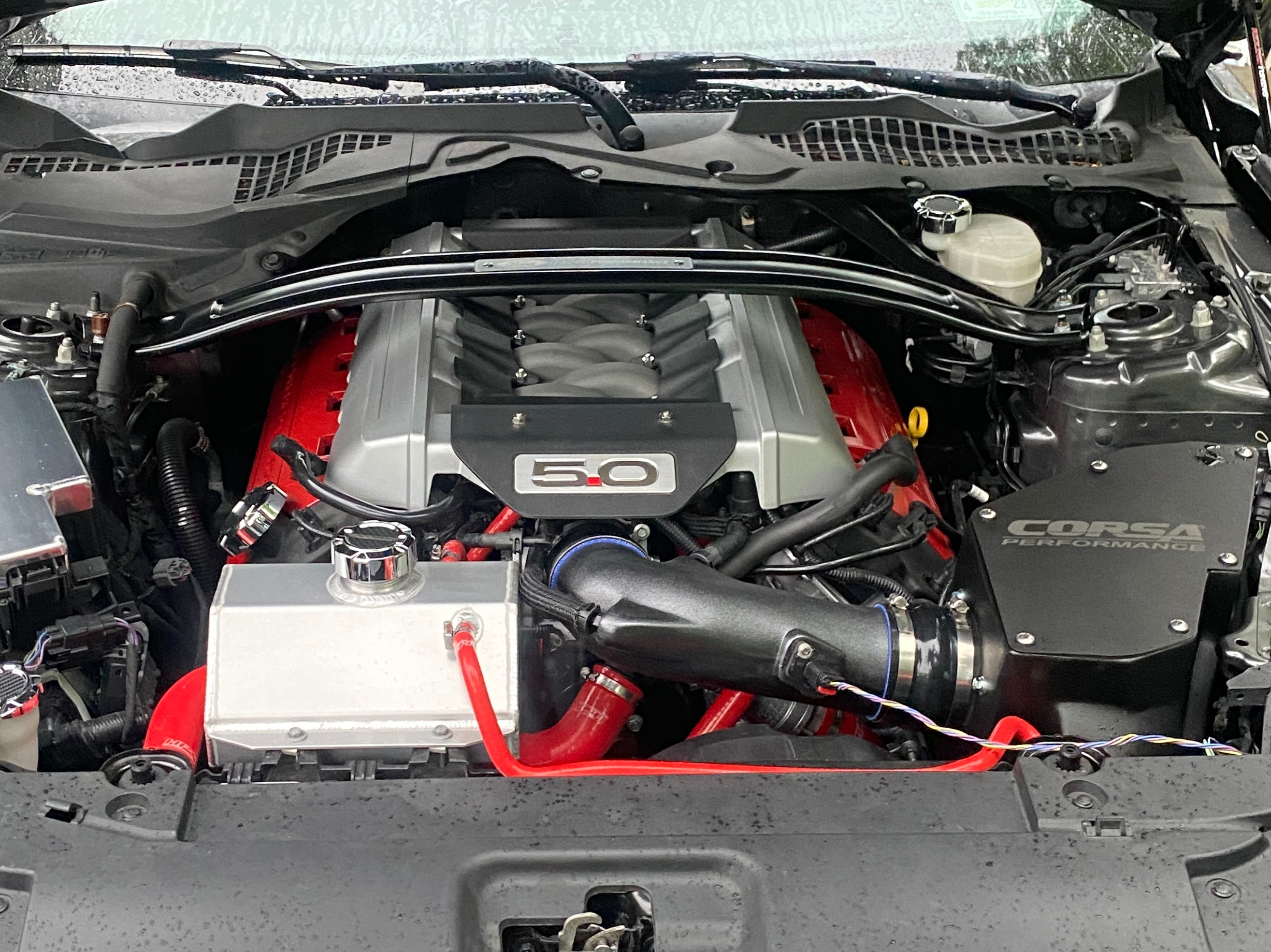
A cold air intake typically adds between 5 and 20 horsepower, with the exact gain depending on your engine displacement and the rest of your setup. As a rule of thumb, expect roughly a 2 to 5 percent increase over your factory rated output.
Bigger engines see bigger numbers. A 5.0-liter V8 like the Coyote in the Mustang GT can pick up 15 to 20 horsepower with a quality intake, while a turbocharged four-cylinder like the 2.3-liter EcoBoost typically gains 5 to 8 horsepower. The gains come from more efficient combustion: cooler, denser air lets the engine burn more fuel per cycle, and a less restrictive filter and wider tube reduce the pumping losses that rob power at higher RPM. You will also pick up a few extra pound-feet of torque across the mid-range, which makes the car feel stronger during everyday acceleration.
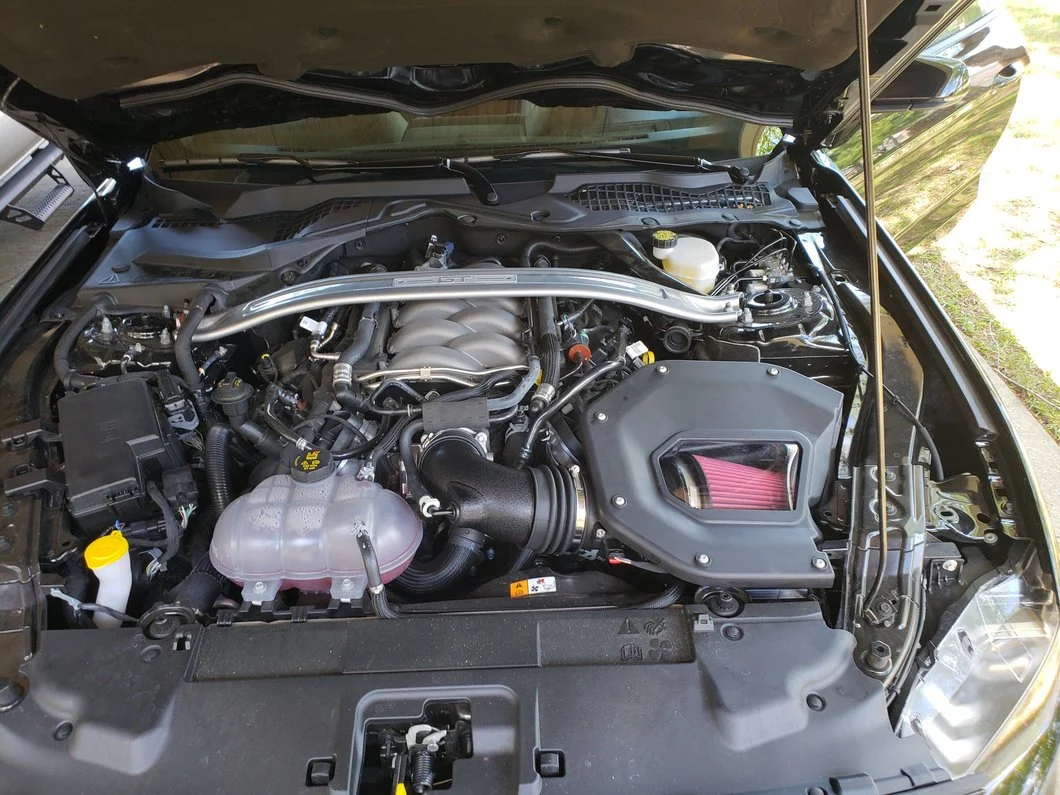
Keep in mind that those numbers reflect the intake alone. Stack it with a tuner and an exhaust upgrade, and the combined gains multiply because each mod lets the engine breathe better on both the intake and exhaust side.
Better Fuel Efficiency
A cold air intake can improve fuel economy by roughly 1 to 3 miles per gallon under normal driving conditions. The reason is straightforward: when the engine receives cooler, oxygen-rich air, it does not have to work as hard to produce the same amount of power. The ECU can lean out the fuel mixture slightly, and the engine spends less energy overcoming the airflow restriction of the stock airbox.
You are most likely to notice the improvement during steady-state highway cruising, where the engine operates in a narrow RPM band and the denser air charge has the biggest impact on combustion efficiency. Around town, gains will be smaller because stop-and-go driving introduces too many other variables. Still, every extra mile per gallon adds up over the life of the vehicle — especially with fuel prices that never seem to go in the right direction.
Sharper Throttle Response
Because a cold air intake uses a wider tube and a less restrictive filter, air reaches the combustion chamber faster when you press the gas pedal. The result is a noticeable improvement in throttle response — the car reacts more quickly to your right foot, with less of the sluggish delay that a factory airbox can introduce at partial throttle.
This matters most during spirited driving, merging onto the highway, or rolling into the throttle out of a corner. The engine feels crisper and more connected to your inputs because it is no longer waiting for air to trickle through a restrictive paper filter and narrow plastic tube. If you have ever described your car as feeling "lazy" off the line, a cold air intake is often the first mod that fixes that sensation.
Aggressive Engine Sound
Here is a benefit the spec sheet does not always capture: a cold air intake changes the way your engine sounds, and most enthusiasts love the difference. The factory airbox is engineered to muffle intake noise as much as possible. An aftermarket intake removes that sound deadening, so you hear the engine inhale more aggressively every time you open the throttle.
The deeper, throatier growl is especially noticeable on V8 engines, but even turbocharged four-cylinders pick up a more pronounced induction whistle. Pair the intake with an aftermarket exhaust system, and the combination creates a full-bodied soundtrack from idle to redline. It is one of those mods that makes you roll the windows down — even in January.
Long-Lasting and Lower Maintenance Costs
Most aftermarket cold air intakes come with reusable, washable filters that are designed to last the lifetime of the vehicle. Instead of buying a disposable paper filter every 12,000 to 15,000 miles, you simply wash and re-oil (or just wash, if you go with a dry filter) approximately every 20,000 miles and reinstall the same filter.
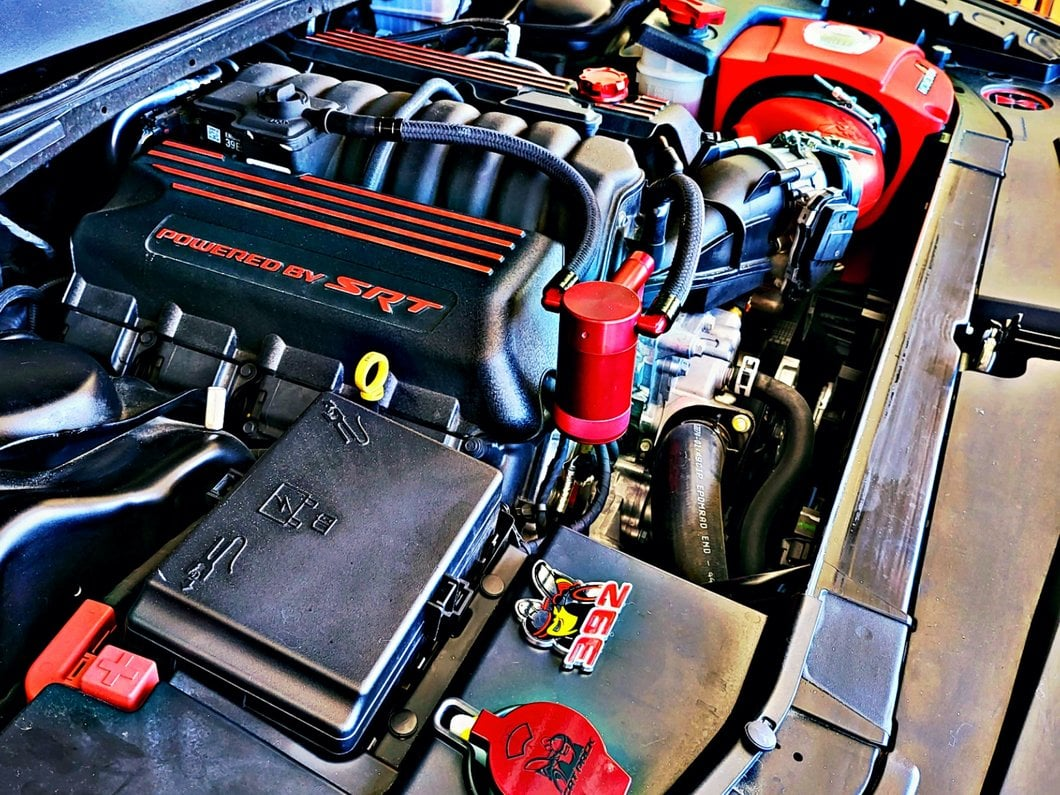
Beyond the filter savings, aftermarket intakes are built from higher-quality materials than stock — think mandrel-bent aluminum tubes, carbon-fiber airboxes, and silicone couplers instead of thin plastic. These components resist heat, vibration, and corrosion far better than factory parts, which means they hold up over years of daily driving and hard pulls. The smoother airflow also reduces stress on the engine over time, contributing to lower long-term maintenance costs.
Types of Cold Air Intakes: How to Choose
![]() Not every cold air intake is designed the same way, and the right choice depends on how you drive. Here are the three biggest decisions you will make when shopping for an intake.
Not every cold air intake is designed the same way, and the right choice depends on how you drive. Here are the three biggest decisions you will make when shopping for an intake.
Oiled vs. Dry Air Filters
An oiled cotton filter — the style popularized by brands like K&N — flows the most air because the cotton gauze media creates very little resistance. The tradeoff is maintenance: you need to wash and re-oil the filter roughly every 5,000 miles (or sooner in dusty conditions) to keep filtration effective. If you skip the oiling step, dirt can slip past the media and reach the engine.
A dry synthetic filter eliminates the oiling step entirely. You wash it, let it dry, and reinstall — no oil, no mess. Dry filters typically offer slightly less peak airflow than oiled cotton, but the difference is marginal for most street applications. If ease of maintenance matters more to you than squeezing out every last CFM, a dry air filter is the simpler choice.
Enclosed Airbox vs. Open Filter With Heat Shield
An enclosed airbox fully surrounds the filter inside a sealed housing, isolating it from engine heat. This design keeps inlet air temperatures consistently low and is the best option for daily drivers, hot-climate cars, and anyone who sits in traffic regularly. The enclosed box acts as a barrier against heat soak, keeping inlet temperatures low even when the car is idling or crawling through traffic.
An open filter with a heat shield exposes the filter element directly, relying on a partial shield to deflect radiant heat from the exhaust manifold. Open designs maximize airflow at high RPM and look aggressive under the hood, but they are more susceptible to heat soak during stop-and-go driving. If your car spends most of its time on the track or you are chasing peak horsepower numbers, an open design makes sense. For a daily-driven muscle car, an enclosed airbox is the safer bet.
Metal vs. Composite Intake Tubes
Mandrel-bent aluminum tubes are the classic choice. They create smooth, consistent bends that reduce turbulence inside the tube, and they look great under the hood with a polished or powder-coated finish. The downside is that metal conducts heat — an aluminum tube sitting near the exhaust manifold can warm the air before it reaches the throttle body.
HDPE (high-density polyethylene) composite tubes solve that problem. Plastic does not transfer heat the way metal does, so inlet temperatures stay lower even in a crowded engine bay. Composite tubes are also lighter and can be molded into complex shapes that follow the factory routing more closely. The tradeoff is aesthetics: a black plastic tube does not have the show-car appeal of polished aluminum. Pick based on your priorities — looks under the hood or the lowest possible intake temperatures.
Do You Need a Tune With a Cold Air Intake?
![]() In most cases, you do not need a tune to run a cold air intake on a modern muscle car. The factory ECU uses a mass airflow (MAF) sensor to measure how much air enters the engine in real time, and it adjusts fuel delivery automatically. As long as the intake uses a MAF-compatible housing and does not dramatically alter the sensor's calibration, the ECU adapts on its own.
In most cases, you do not need a tune to run a cold air intake on a modern muscle car. The factory ECU uses a mass airflow (MAF) sensor to measure how much air enters the engine in real time, and it adjusts fuel delivery automatically. As long as the intake uses a MAF-compatible housing and does not dramatically alter the sensor's calibration, the ECU adapts on its own.
That said, a tune unlocks the intake's full potential. A custom or off-the-shelf calibration can adjust fuel maps, ignition timing, and throttle response curves to take advantage of the increased airflow. Many enthusiasts pair a cold air intake with a handheld tuner right out of the box — the two mods complement each other, and the combined gains are often noticeably larger than either mod alone.
If you are running additional bolt-ons like headers, a cat-back exhaust, or a throttle body upgrade, a tune becomes more important because the ECU needs updated parameters to manage the higher total airflow. For a standalone intake on an otherwise stock car, though, you are safe to bolt it on and drive.
Cold Air Intakes by Vehicle: Model-Specific Picks
![]() Every engine bay is different, and a cold air intake that fits a Mustang will not work on a Camaro. Here is what to look for on each platform.
Every engine bay is different, and a cold air intake that fits a Mustang will not work on a Camaro. Here is what to look for on each platform.
Ford Mustang (S550 and S650)
The Mustang is the most popular platform for cold air intake upgrades, and the selection reflects it. For the 5.0-liter Coyote V8, expect dyno-proven gains in the 15 to 20 horsepower range from brands like JLT, Roush, Airaid, and Ford Performance. The Coyote responds well to increased airflow because the engine was designed with high-revving, naturally aspirated performance in mind.
If you are running the 2.3-liter EcoBoost, gains are typically in the 5 to 8 horsepower range. Turbocharged engines already force air into the combustion chamber under boost, so the intake's contribution is smaller — but the improved throttle response and induction sound are still worth the upgrade. Check out our cold air intake collection for the full Mustang lineup, or visit our S550 Performance Pack guide for more on building a complete performance package.
Chevrolet Camaro
The Camaro's 6.2-liter LT1 (and supercharged LT4 in the ZL1) responds well to a cold air intake, with dyno-proven gains in the 12 to 18 horsepower range on the naturally aspirated engine. Popular options come from BBK, aFe, and Injen, all of which offer enclosed airbox designs that work well with the Camaro's tighter engine bay packaging.
Because the LT1 uses a different MAF sensor housing than the Coyote, make sure you are buying a Camaro-specific kit — intakes are not cross-compatible between platforms. Browse our full selection of Camaro cold air intakes to find the right fit for your year and trim.
Dodge Challenger and Charger
HEMI-powered Challengers and Chargers are natural candidates for a cold air intake. The 5.7-liter and 6.4-liter HEMI engines typically see dyno-proven gains of 10 to 18 horsepower, with the larger 392 benefiting more from the increased airflow. Corsa, K&N, and Mopar all offer well-regarded kits for the HEMI platform.
The HEMI's wide, flat intake manifold means filter placement is critical — look for kits that position the filter as far from the exhaust manifolds as possible, ideally behind an enclosed airbox or a robust heat shield. Check out our Challenger cold air intakes and Charger cold air intakes for platform-specific options.
How to Install a Cold Air Intake
![]() Installing a cold air intake is one of the most beginner-friendly performance upgrades you can do. Most kits install in 30 to 60 minutes with basic hand tools and no cutting, drilling, or permanent modifications required. Here is the general process.
Installing a cold air intake is one of the most beginner-friendly performance upgrades you can do. Most kits install in 30 to 60 minutes with basic hand tools and no cutting, drilling, or permanent modifications required. Here is the general process.
- Disconnect the battery. Remove the negative terminal cable to prevent any electrical issues while you work around the MAF sensor and engine wiring.
- Remove the stock airbox. Unclamp the intake tube from the throttle body, disconnect the MAF sensor harness, and unbolt the factory airbox from its mounting points. Set the hardware aside in case you ever need to reinstall the stock parts.
- Transfer the MAF sensor. Most aftermarket intakes reuse the factory MAF sensor. Carefully remove it from the stock tube and install it in the new intake tube, making sure the sensor's orientation arrow points toward the engine.
- Install the new intake tube and heat shield. Mount the heat shield (if included), then slide the new intake tube into position. Secure it to the throttle body with the provided silicone coupler and clamps. Hand-tighten first, then snug everything down evenly.
- Attach the air filter. Slide the new filter onto the end of the intake tube and tighten the hose clamp. If you are using an oiled filter, make sure it has been properly oiled before installation.
- Reconnect the battery and test. Reconnect the negative terminal, start the engine, and let it idle for a few minutes. Check for any air leaks around the couplers, listen for unusual sounds, and verify that the check-engine light does not come on. Take a short test drive to confirm everything feels right.
For vehicle-specific walkthroughs with step-by-step video, check out our Watch Before You Wrench installation guides on your product page.
CARB Compliance: What You Need to Know
![]() If you live in California or another state that follows California emissions standards, you need a cold air intake that carries a CARB Executive Order (EO) number. A CARB EO means the intake has been tested and certified to not increase vehicle emissions, making it legal for use on pollution-controlled vehicles in all 50 states.
If you live in California or another state that follows California emissions standards, you need a cold air intake that carries a CARB Executive Order (EO) number. A CARB EO means the intake has been tested and certified to not increase vehicle emissions, making it legal for use on pollution-controlled vehicles in all 50 states.
Not every intake is CARB-compliant. Intakes without an EO number are considered "off-road use only" and can cause your vehicle to fail a smog inspection. When you are shopping, look for "50-state legal" or "CARB EO" in the product description — this confirms the kit has a valid exemption order on file with the California Air Resources Board.
If you split your driving between states with different emissions requirements, choosing a CARB-compliant intake gives you the flexibility to register and inspect your vehicle anywhere without removing the mod. It is a small detail that saves a big headache down the road.
Practical Takeaways
- Match the airbox to your driving style: Choose an enclosed airbox if you daily-drive in warm weather or sit in traffic regularly. Go open-filter with a heat shield if you are building for the track or chasing peak numbers.
- Pick your filter based on maintenance preference: Oiled cotton filters flow more air but need re-oiling. Dry synthetic filters are wash-and-go with no oil step.
- Check CARB compliance before you buy: If you live in California or a CARB-enforcing state, verify the kit has an Executive Order number so it is 50-state legal.
- Pair with a tuner for the best results: A cold air intake works on its own, but a custom tune unlocks the full potential of the increased airflow and adjusts fuel delivery to match.
- Shop by your exact vehicle: Intakes are platform-specific. Always filter by your year, make, model, and engine to guarantee a direct fit.
Conclusion
![]() A cold air intake is one of the highest-value bolt-on upgrades you can make to a muscle car. It delivers dyno-proven gains in horsepower and torque, sharpens throttle response, improves fuel efficiency, and adds an aggressive induction note — all from a part that installs in under an hour. Whether you are building a daily-driven Mustang GT, a weekend Camaro, or a straight-line Challenger, the right intake matched to your platform and goals makes the engine breathe the way it was meant to.
A cold air intake is one of the highest-value bolt-on upgrades you can make to a muscle car. It delivers dyno-proven gains in horsepower and torque, sharpens throttle response, improves fuel efficiency, and adds an aggressive induction note — all from a part that installs in under an hour. Whether you are building a daily-driven Mustang GT, a weekend Camaro, or a straight-line Challenger, the right intake matched to your platform and goals makes the engine breathe the way it was meant to.
Ready to give your muscle car the air it deserves? Explore our full cold air intake collection to find the right kit for your vehicle, or check out our guide to the best first mods for your Mustang to see how an intake fits into a complete build plan. If you need help choosing the right setup, our Sales Techs are standing by to match you with the perfect intake for your platform and goals.
Frequently Asked Questions About Cold Air Intakes
Cold air intakes are one of the most popular bolt-on performance mods for muscle cars. Here are answers to the most common questions enthusiasts ask before upgrading.
What Does a Cold Air Intake Do?
A cold air intake replaces your vehicle's factory air intake assembly with a less restrictive system that pulls cooler, denser air from outside the engine bay. Cooler air contains more oxygen per cubic foot, which allows the engine to burn fuel more efficiently and produce more horsepower, torque, and throttle response with every combustion cycle.
How Much Horsepower Does a Cold Air Intake Add?
Most cold air intakes add between 5 and 20 horsepower depending on your engine size and vehicle. A 5.0L Coyote V8 Mustang GT typically gains 15 to 20 hp, while a four-cylinder EcoBoost typically sees 5 to 8 hp. Expect roughly a 2 to 5 percent increase in horsepower across most applications, with additional torque gains as a bonus.
Are Cold Air Intakes Worth It?
Yes. Cold air intakes deliver measurable gains in horsepower, throttle response, and engine sound for a relatively low cost — typically $150 to $400. They are one of the easiest bolt-on mods to install, most come with reusable filters that save money long-term, and they pair well with exhaust upgrades and tuners for even bigger performance gains.
Do Cold Air Intakes Improve Fuel Economy?
A cold air intake can improve fuel efficiency by one to three miles per gallon under normal driving conditions. The denser, oxygen-rich air allows the engine to produce power more efficiently, reducing the amount of fuel needed per combustion cycle. Actual gains depend on driving habits, engine size, and whether the intake is paired with a tune.
Do You Need a Tune With a Cold Air Intake?
Many cold air intakes are designed to work without a tune, but adding a custom tune maximizes your gains. A tune adjusts the ECU's air-to-fuel ratio and ignition timing to account for the increased airflow, unlocking the full potential of the intake. Some intakes with larger MAF housings may require a tune for proper operation.
What Is the Difference Between Oiled and Dry Cold Air Intake Filters?
Oiled cotton filters (like K&N) trap contaminants using oil-coated cotton layers, allowing up to 50 percent more airflow than paper filters. Dry synthetic filters (like aFe Pro DRY S) use layered synthetic media and require no oiling — just periodic cleaning. Oiled filters flow slightly more air; dry filters are lower maintenance.
How Do I Choose the Right Cold Air Intake for My Car?
Start with your vehicle's year, make, model, and engine size to narrow compatible options. Then decide between an enclosed airbox (better heat shielding, ideal for daily drivers) or open filter with heat shield (maximum airflow for performance builds). Check CARB compliance if you live in California or a CARB-enforcing state.
Can a Cold Air Intake Damage My Engine?
A properly installed cold air intake from a reputable manufacturer will not damage your engine. However, intakes that position the filter too low can ingest water during heavy rain or water crossings, which can cause hydrolock. Choose an intake with a sealed airbox or bypass valve, and avoid driving through deep water.