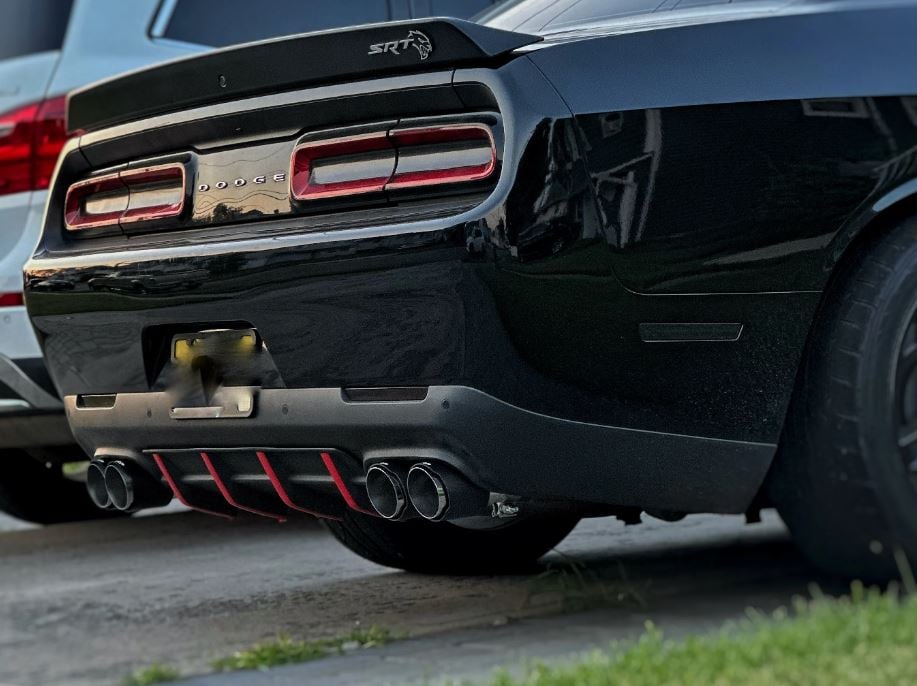
Still running the factory exhaust on your Mustang, Challenger, or Camaro? You could be leaving 30 to 50 horsepower on the table — power your engine already makes but can't push out through those restrictive stock pipes. Whether you want more pull on the highway, a faster track time, or just a meaner exhaust note, the right exhaust upgrades deliver all three. In this guide, you will learn exactly how much horsepower each exhaust component adds, which brands deliver the best results, and how to build a complete exhaust system that maximizes your gains.
How Exhaust Systems Add Horsepower
![]() So how much horsepower can you gain from an exhaust system? A full exhaust upgrade from headers through the cat-back typically adds 30 to 50+ horsepower by reducing restrictions in the exhaust path and letting your engine breathe the way it was designed to. Your muscle car's engine is essentially an air pump — it pulls air and fuel in, ignites the mixture, and pushes exhaust gases out. The faster those spent gases exit, the more efficiently the next combustion cycle runs.
So how much horsepower can you gain from an exhaust system? A full exhaust upgrade from headers through the cat-back typically adds 30 to 50+ horsepower by reducing restrictions in the exhaust path and letting your engine breathe the way it was designed to. Your muscle car's engine is essentially an air pump — it pulls air and fuel in, ignites the mixture, and pushes exhaust gases out. The faster those spent gases exit, the more efficiently the next combustion cycle runs.
The factory exhaust on most Mustangs, Challengers, and Camaros is engineered around cost, noise regulations, and emissions standards — not peak performance. Those compromises create backpressure, the resistance that builds up when exhaust gases can't exit the engine quickly enough. Every PSI of unnecessary backpressure is horsepower left on the table.
Aftermarket exhaust systems reclaim that power through three mechanisms. First, larger-diameter tubing and mandrel-bent curves reduce flow restrictions. Mandrel bending maintains a consistent internal diameter through each curve, unlike the cheaper crush-bending process that pinches the pipe and chokes airflow. Second, performance headers with tuned-length primary tubes take advantage of exhaust scavenging — the pressure pulses from each cylinder firing actually help pull spent gases out of the next cylinder in the sequence, improving volumetric efficiency. Third, high-flow catalytic converters and less-restrictive mufflers reduce the bottleneck effect further downstream.
Think of your exhaust as a complete system rather than individual parts. Headers, the mid-pipe section (including catalytic converters), and the cat-back work together — and each stage amplifies the gains from the others. A cat-back on its own might add 15 HP, but pair it with long tube headers and high-flow cats, and total gains jump well above the sum of each component installed alone.
Exhaust Component Breakdown: Where the Power Comes From
![]() Every exhaust upgrade delivers a different balance of horsepower, sound, and cost. Here is what each component actually does — and what kind of gains you can realistically expect on a modern muscle car.
Every exhaust upgrade delivers a different balance of horsepower, sound, and cost. Here is what each component actually does — and what kind of gains you can realistically expect on a modern muscle car.
Headers — 5 to 20 HP
Do headers add horsepower? Yes — aftermarket headers are one of the most effective bolt-on exhaust upgrades, adding 5 to 20 HP depending on whether you choose short tube or long tube designs. Short tube headers (also called shorty headers) replace only the exhaust manifold and typically bolt up to the factory mid-pipe. They are easier to install, usually emissions-legal, and deliver 5 to 10 HP by improving exhaust flow at the cylinder head. Long tube headers extend primary tubes past the transmission crossmember, producing 10 to 20 HP and a noticeable bump in mid-range torque through improved scavenging. 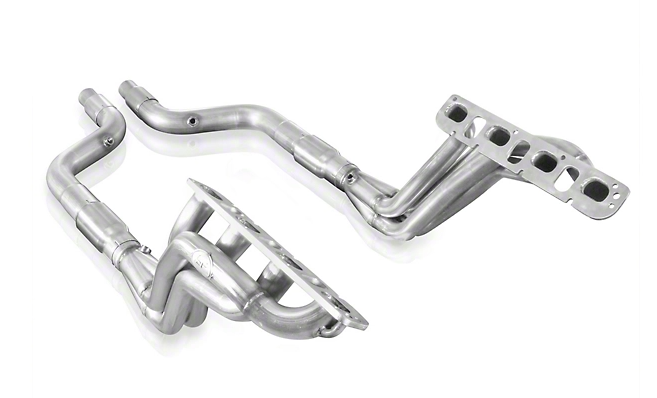 Primary tube diameter matters. Smaller tubes (1-5/8 inch) build low-end torque for street driving, while larger tubes (1-7/8 inch or 2 inches) shift the powerband higher in the RPM range for track use. For most daily-driven muscle cars with naturally aspirated V8s, 1-3/4 to 1-7/8 inch primaries hit the sweet spot.
Brands like Kooks and Stainless Works specialize in headers built from 304 stainless steel with merge collectors designed to maximize scavenging efficiency. BBK offers strong value in the short tube header segment with CNC-machined flanges that seal tightly against the cylinder head — eliminating exhaust leaks that rob power and create annoying ticking sounds.
Keep in mind that long tube headers on late-model vehicles usually require a professional tune to recalibrate the air-fuel ratio and prevent check engine lights from rear O2 sensor relocation. Budget for a set of quality headers plus a tuning session for the best results.
Catalytic Converters — 5 to 15 HP
The factory catalytic converter is one of the largest single restrictions in your exhaust. While it serves a critical emissions role, the stock unit on most muscle cars uses a dense substrate that chokes exhaust flow. High-flow catalytic converters use a less restrictive substrate — typically 200-cell versus the stock 400-cell or higher — that lets exhaust gases pass through faster while still meeting emissions standards. Expect 5 to 10 HP from a quality set of high-flow cats on a V8 application. 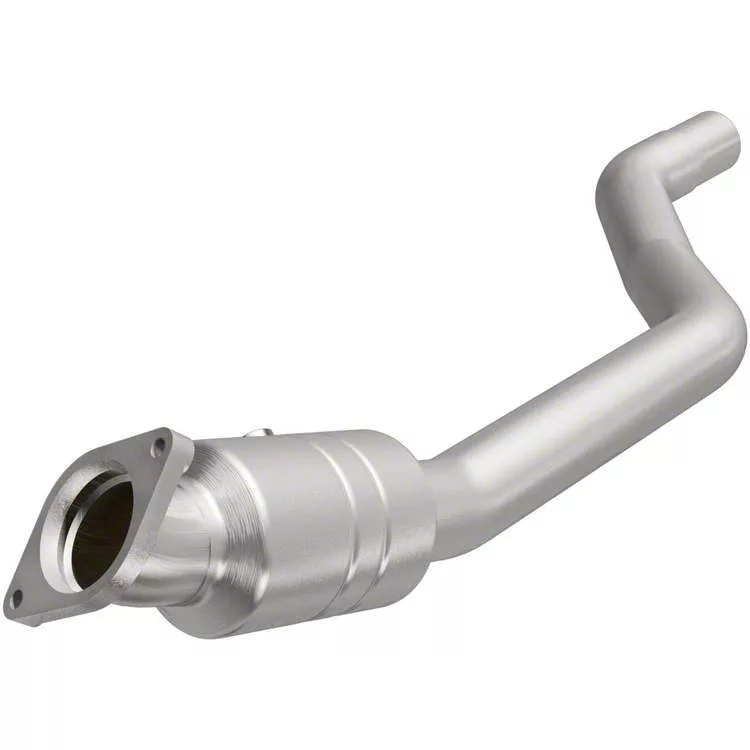 Magnaflow is the benchmark in this category, offering direct-fit high-flow catalytic converters for most Mustang, Challenger, and Camaro applications. Their stainless steel construction resists corrosion, and the direct-fit design means no cutting or welding — they bolt directly to your factory connection points.
A full de-cat (removing catalytic converters entirely and replacing them with straight pipes) can yield up to 15 HP, but this comes with significant trade-offs. It is not emissions-legal in most states, produces a far more aggressive (and often rawer) exhaust tone, and can trigger check engine lights without a tune. For street-driven vehicles, high-flow cats deliver the best balance of performance gain and legal compliance.
Cat-Back Exhaust Systems — 10 to 40 HP
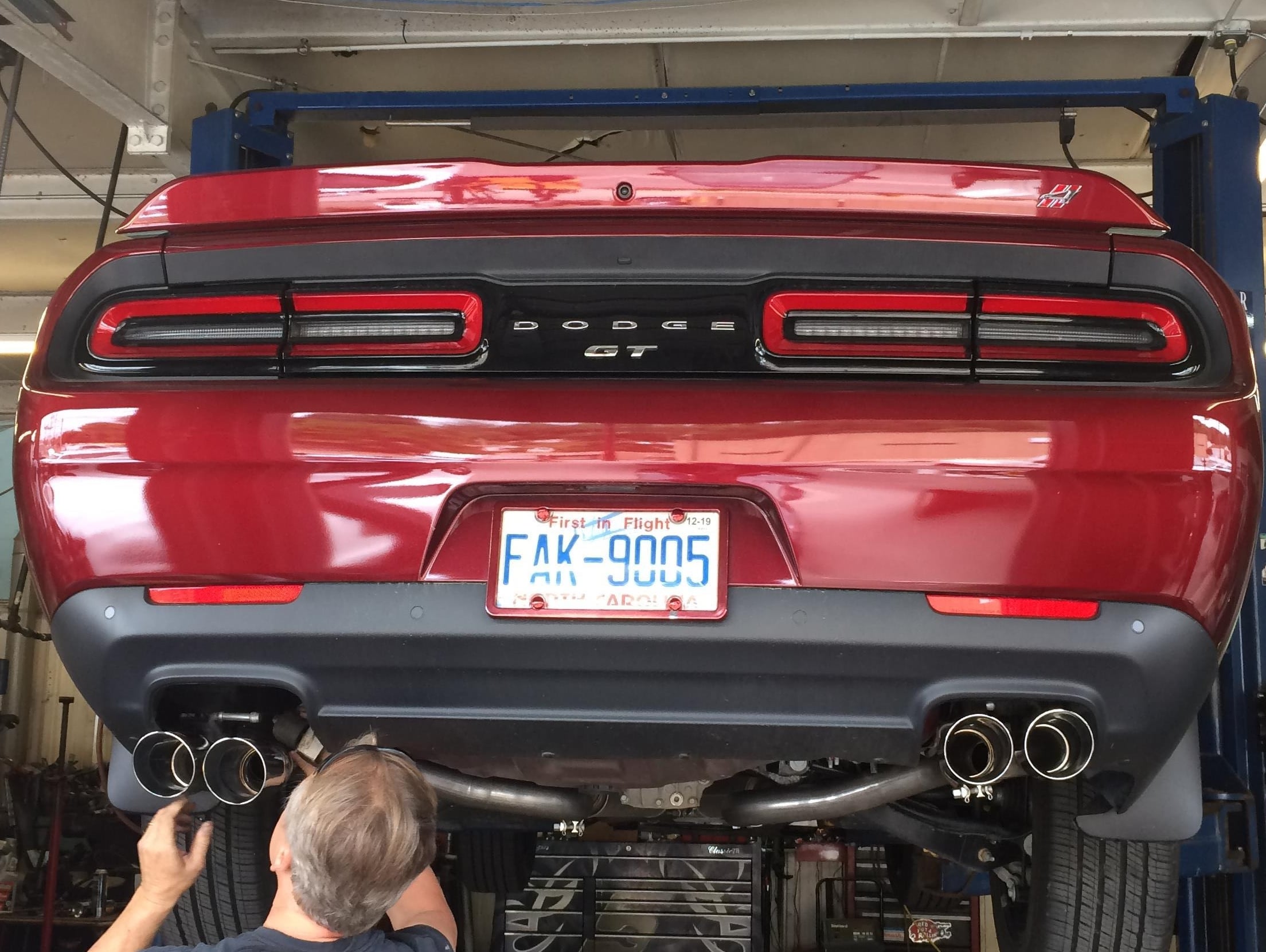
How much HP does a cat-back exhaust add? A cat-back exhaust system typically delivers 10 to 40 horsepower depending on the vehicle platform, engine displacement, and system design. This makes cat-back systems the single best horsepower-per-dollar exhaust upgrade for most muscle car owners. A cat-back exhaust system replaces everything from behind the catalytic converters to the tailpipe tips — the mid-pipe (or H-pipe/X-pipe), muffler, and exit pipes.
Material quality matters for longevity and performance. 304 stainless steel is the premium choice — it resists corrosion, welds cleanly, and holds up under extreme heat. 409 stainless steel is more affordable but offers less corrosion resistance, making it better suited for dry-climate vehicles or budget builds. Aluminized steel sits at the entry level and works fine for mild use but will deteriorate faster in salt-belt states. 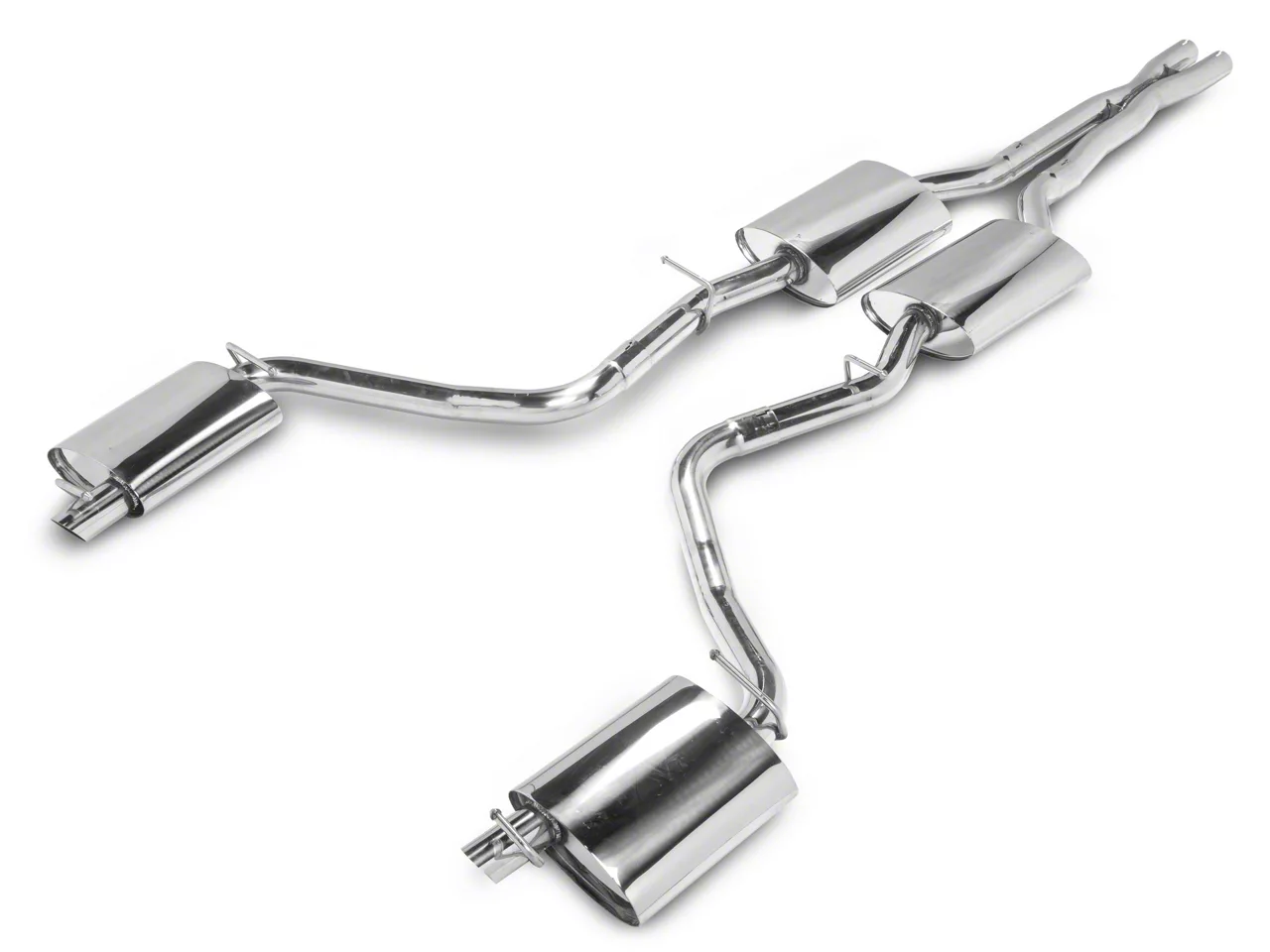 Sound level is a real decision variable, not an afterthought. Aggressive exhaust systems — like the Corsa Xtreme series — deliver a loud, unmistakable V8 bark at wide-open throttle with a deep idle rumble. They are perfect for weekend warriors and track cars but can cause drone on long highway cruises. Moderate systems — such as the Borla S-Type or Magnaflow MagPack — produce a muscular tone that is noticeable outside the car but keeps the interior civilized at cruising RPM. If you drive your muscle car daily, prioritize a system with anti-drone technology or a moderate sound profile.
For vehicles equipped with active exhaust systems, look for cat-back kits that retain the factory valve controllers. Brands like Corsa and Borla offer active-exhaust-compatible systems that let you toggle between quiet and loud modes from your steering wheel or infotainment — preserving the factory functionality you paid for.
Top cat-back exhaust systems for muscle cars include the Corsa Xtreme and Corsa Sport for no-drone performance, Borla ATAK and S-Type for proven track-to-street versatility, Magnaflow for that classic deep rumble at a strong price point, MBRP for budget-friendly gains, and Pypes for aggressive tone at an entry-level price.
Axle-Back vs Cat-Back: Which Adds More Power?
Cat-back exhaust systems add significantly more horsepower than axle-back systems. An axle-back exhaust replaces only the mufflers and tailpipes behind the rear axle — changing your exhaust note without addressing the mid-pipe restrictions that limit airflow. Expect roughly 3 to 5 HP from an axle-back versus the 10 to 40 HP a full cat-back delivers. 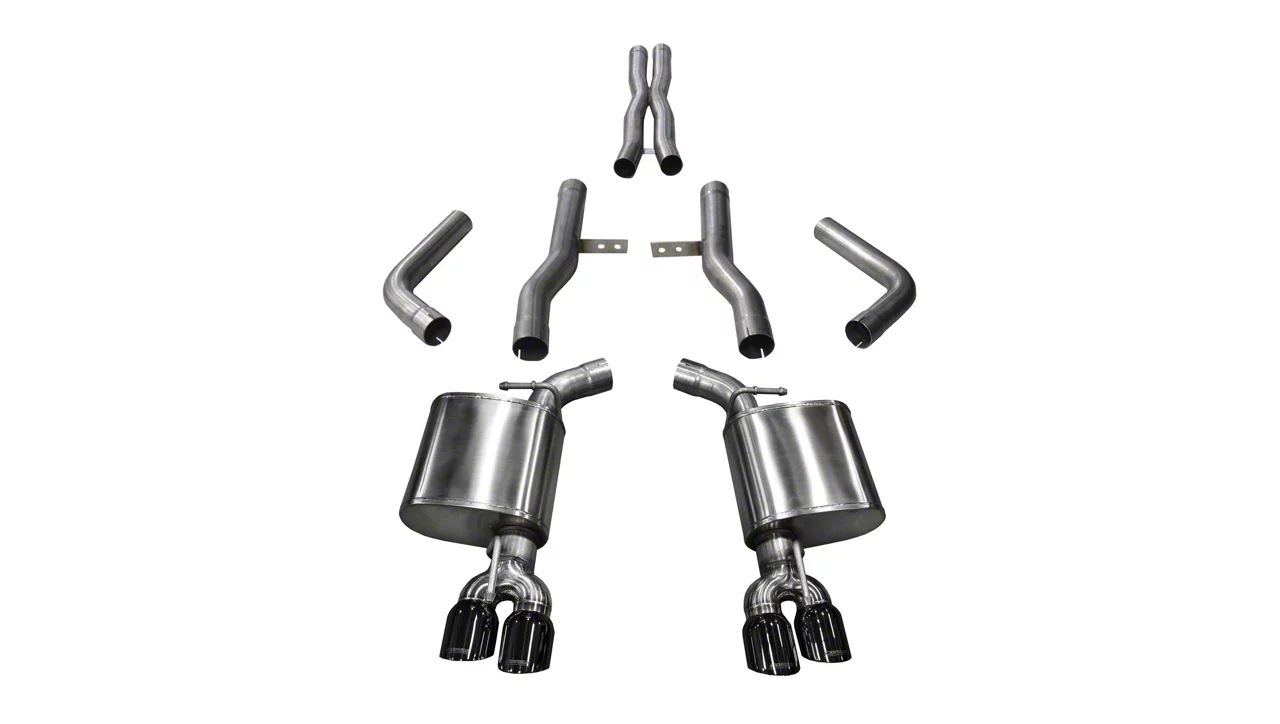 So when does an axle-back make sense? If you primarily want to change your exhaust sound on a budget and horsepower is secondary, an axle-back is a quick, affordable bolt-on that can be installed in under an hour with basic hand tools. It is also a good entry point if you plan to upgrade to a full cat-back later — many manufacturers design their axle-backs and mid-pipes to work together as a modular system.
For a deeper look at how these two upgrade paths compare across sound, power, cost, and installation, read our cat-back vs axle-back exhaust comparison guide.
Exhaust System HP Gains Comparison Table
![]() Use this table to compare the horsepower potential, cost, and installation complexity of each exhaust component so you can prioritize your upgrade path.
Use this table to compare the horsepower potential, cost, and installation complexity of each exhaust component so you can prioritize your upgrade path.
|
Component
|
HP Gain Range
|
Cost Range
|
Install Difficulty
|
Best For
|
|
Short Tube Headers
|
5 – 10 HP
|
$250 – $600
|
Moderate
|
Street drivers wanting gains without a tune
|
|
Long Tube Headers
|
10 – 20 HP
|
$600 – $1,800
|
Advanced
|
Serious power builds, track cars
|
|
High-Flow Catalytic Converters
|
5 – 10 HP
|
$200 – $800 (pair)
|
Moderate
|
Emissions-legal flow improvement
|
|
Axle-Back Exhaust
|
3 – 5 HP
|
$200 – $800
|
Easy
|
Budget sound upgrade, entry-level mod
|
|
Cat-Back Exhaust System
|
10 – 40 HP
|
$400 – $2,500
|
Easy – Moderate
|
Best HP-per-dollar, sound + power in one bolt-on
|
|
Full System (Headers + Cats + Cat-Back)
|
30 – 50+ HP
|
$1,200 – $5,000+
|
Advanced
|
Maximum gains, complete builds, track setups
|
Note: HP gains are estimates based on naturally aspirated V8 muscle car platforms. Forced-induction vehicles (supercharged or turbocharged) may see larger gains from exhaust improvements due to reduced backpressure on the turbo or blower.
Best Exhaust Brands for Muscle Cars
![]() The best exhaust brands for muscle cars combine vehicle-specific engineering, quality materials, and a sound profile that matches your build goals. Here are the brands that AmericanMuscle customers trust most — and what each one does best.
The best exhaust brands for muscle cars combine vehicle-specific engineering, quality materials, and a sound profile that matches your build goals. Here are the brands that AmericanMuscle customers trust most — and what each one does best.
Borla — A premium exhaust manufacturer with decades of race heritage. Borla builds every system from T-304 stainless steel and backs it with a million-mile warranty. Their ATAK line delivers aggressive, track-ready volume, while the S-Type and Touring lines offer progressively quieter options. Borla's multi-core muffler technology produces a rich, complex tone without interior drone — a combination that is hard to beat for daily-driven muscle cars.
Corsa Performance — Corsa's proprietary Reflective Sound Cancellation (RSC) technology is specifically designed to eliminate highway drone while still delivering a deep, aggressive V8 tone at wide-open throttle. The Xtreme line is loud and unapologetic; the Sport line provides a civilized daily-driver experience. Corsa also supports factory active exhaust valves on compatible vehicles.
Magnaflow — Known for that deep, classic American V8 rumble. Magnaflow uses straight-through perforated core muffler designs that minimize restriction. They offer strong value across their lineup, making them a popular choice for enthusiasts who want a quality stainless exhaust without the premium price tag. Their high-flow catalytic converters are among the best available.
Kooks — The go-to header brand for serious power builds. Kooks engineers headers with precision-formed merge collectors that maximize exhaust scavenging. Their long tube header and mid-pipe combos are popular in the drag racing and road racing communities, and they offer fitment solutions for nearly every modern muscle car platform.
Stainless Works — Custom-grade exhaust components built in the USA from thick-wall 304 stainless. Stainless Works specializes in turbo-back and long tube header systems for high-horsepower builds where off-the-shelf solutions do not cut it. Their chamfered collectors and precision mandrel bends are favored by professional builders.
MBRP — Budget-friendly performance without sacrificing quality. MBRP offers cat-back and axle-back systems in both 409 stainless and aluminized steel, making them accessible for enthusiasts building on a tighter budget. Sound profiles lean toward the aggressive side, and their Race and Street series cover a range of volume preferences.
Model-Specific Exhaust Recommendations
![]() Every muscle car platform responds differently to exhaust upgrades based on engine displacement, factory exhaust routing, and ECU calibration. Here is what to expect for the most popular vehicles.
Every muscle car platform responds differently to exhaust upgrades based on engine displacement, factory exhaust routing, and ECU calibration. Here is what to expect for the most popular vehicles.
Ford Mustang GT Exhaust Gains
The 5.0L Coyote V8 in the Mustang GT is one of the most responsive engines to exhaust upgrades. The factory exhaust on S550 and S650 Mustangs is reasonably well-designed but still leaves 25 to 40 HP on the table when you combine long tube headers, high-flow cats, and a cat-back system. A cat-back alone typically adds 12 to 25 HP on the Coyote, with the biggest gains in the upper RPM range where the engine naturally makes its power.
Mustang GT owners also benefit from the wide selection of exhaust options available. Whether you want the aggressive bark of a Corsa Xtreme, the refined tone of a Borla S-Type, or the budget-friendly performance of an MBRP Race, there is a Mustang exhaust upgrade for every preference and price point. For header shoppers, check out our guide to the best Mustang headers for a full comparison of short tube and long tube options.
If you are selecting a cat-back specifically, our guide on how to choose a cat-back exhaust for your Mustang walks you through the key decisions — sound level, material, tip style, and active exhaust compatibility.
Dodge Challenger and Charger HEMI Exhaust Gains
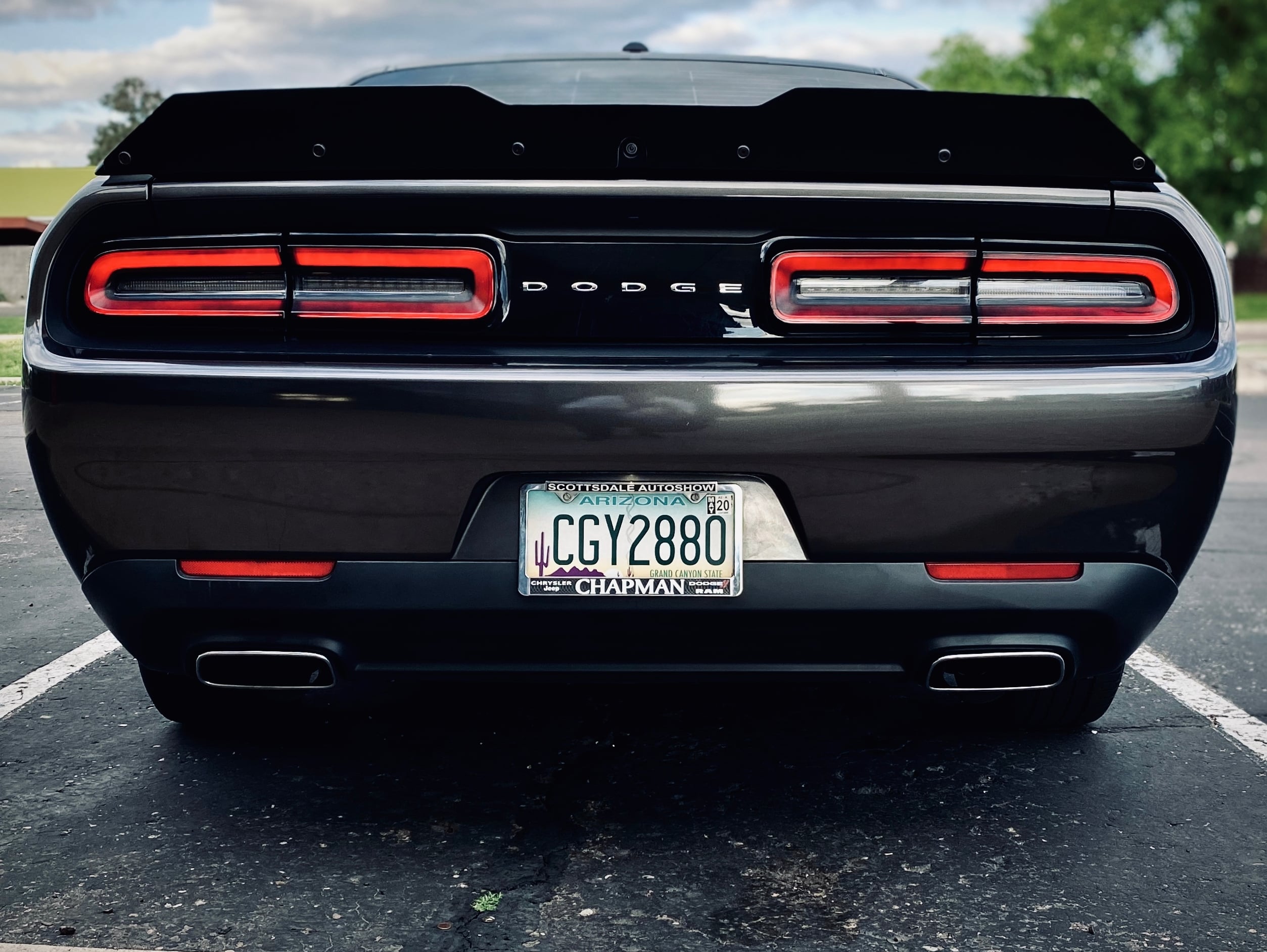
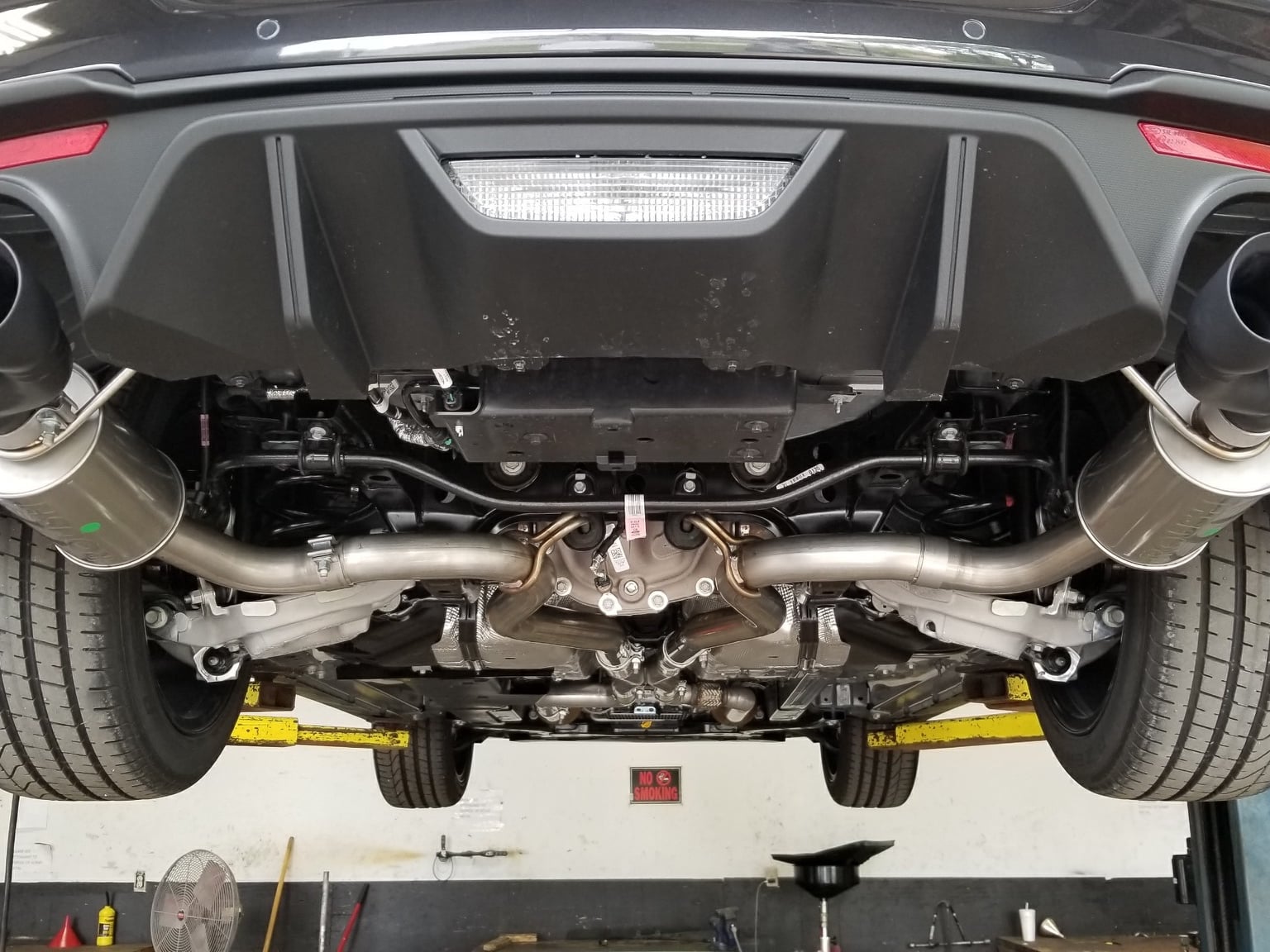
The HEMI platform responds well to exhaust mods, though gains differ between the 5.7L and 6.4L engines. The 5.7L HEMI typically sees 10 to 20 HP from a cat-back system and another 5 to 15 HP from headers. The 6.4L HEMI, already making 485 HP in SRT trim, picks up a similar percentage — roughly 15 to 25 HP from a cat-back and 10 to 20 HP from long tube headers.
One detail specific to the HEMI platform: many Challenger and Charger models use Multi-Displacement System (MDS) valve technology that deactivates four cylinders during light-load cruising. Make sure your exhaust system is compatible with MDS operation — most quality cat-back systems from Corsa, Borla, and Magnaflow are designed to work seamlessly with MDS. Long tube headers typically require disabling MDS through a tune.
Browse Challenger exhaust systems to find cat-back, axle-back, and header options matched to your specific HEMI displacement.
Chevy Camaro and Corvette Exhaust Gains
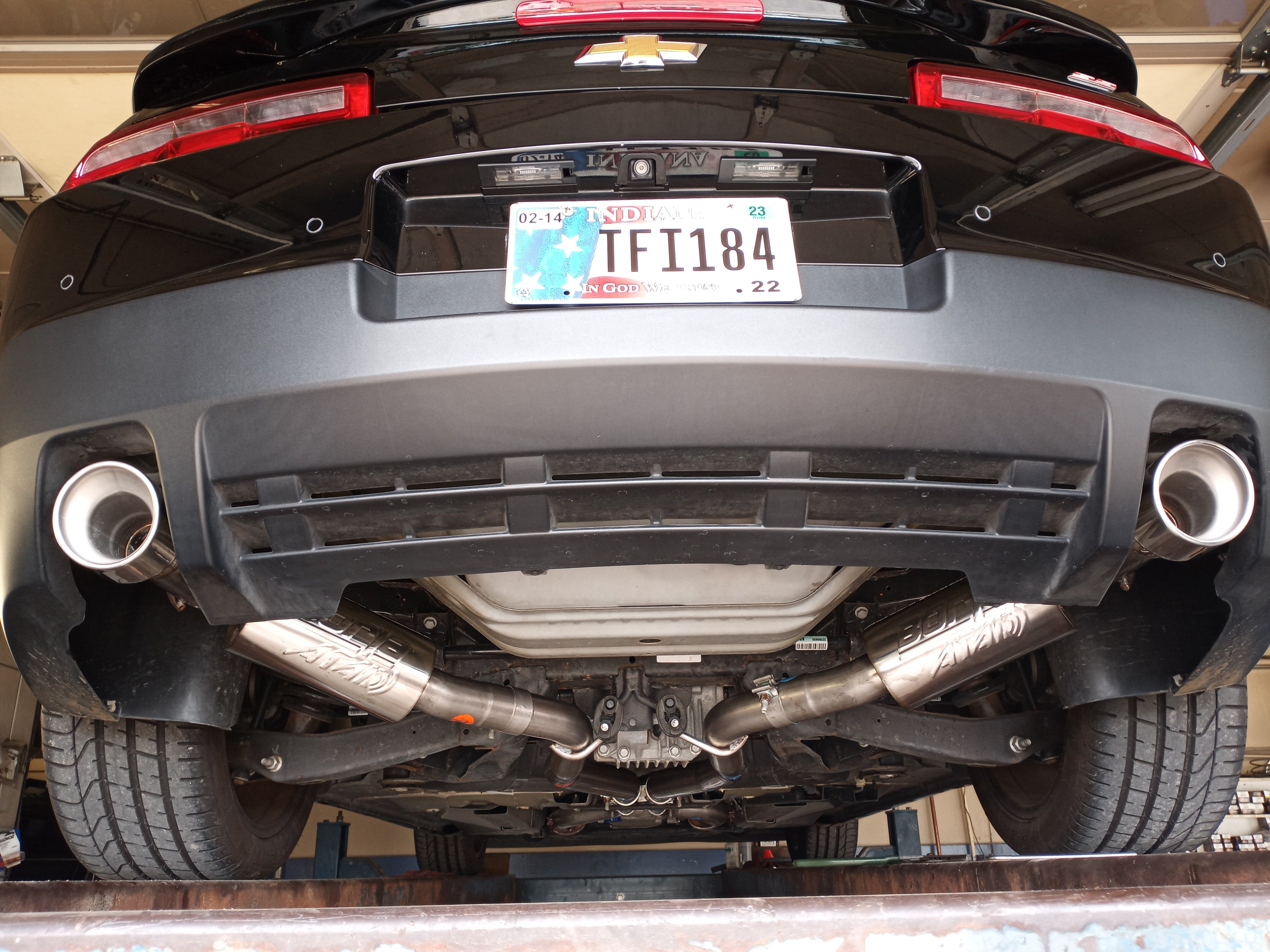
The LS and LT engine families powering the Camaro SS, ZL1, and Corvette Stingray are exhaust-upgrade machines. The LT1 in the sixth-gen Camaro SS typically gains 15 to 25 HP from a quality cat-back system, while the supercharged LT4 in the ZL1 can see even larger gains thanks to reduced backpressure helping the blower push air more efficiently.
Corvette C7 and C8 owners should pay special attention to active exhaust compatibility. Both generations use bi-modal exhaust valves that toggle between quiet and performance modes. Borla and Corsa both offer Corvette-specific systems that retain full valve functionality, so you get the best of both worlds — a civilized highway cruiser that turns into a screaming track weapon at the push of a button.
For the Camaro platform, long tube headers from Kooks or Stainless Works paired with a Corsa or Borla cat-back represent one of the most popular and effective exhaust combos on the market, delivering 30 to 45 HP in combined gains on the LT1.
How to Maximize Your Total Exhaust HP Gains
How do you add 100 HP to a car? While exhaust alone typically delivers 30 to 50+ HP on a naturally aspirated V8, combining your exhaust upgrade with a few complementary bolt-ons can push you past the 100 HP mark without opening the engine. The key is upgrading in the right order and thinking of your entire intake-combustion-exhaust path as an integrated system.
Recommended upgrade order:
- Cat-back exhaust system first. This is the easiest install, requires no tune on most platforms, and delivers the best combination of power gain and sound improvement. It also creates the foundation for future upstream upgrades to flow through.
- Long tube headers and high-flow cats second. These upstream upgrades amplify the gains from your cat-back by clearing restrictions closer to the engine. Plan on getting a tune at this stage to optimize air-fuel ratios and eliminate any check engine lights from O2 sensor changes.
- Cold air intake and performance tune third. A cold air intake upgrade adds 5 to 15 HP by delivering denser, cooler air to the engine. Pair it with a professional tune that adjusts fuel maps, ignition timing, and throttle response to take full advantage of your improved exhaust flow, and you are looking at another 20 to 40 HP on top of your exhaust gains.
When shopping for components, consider exhaust combo packages that bundle headers, mid-pipes, and cat-back systems from the same manufacturer. These kits are designed to work together as a matched system, ensure proper fitment between components, and often save you 10 to 15 percent versus buying each piece separately.
A realistic total for a 5.0L Mustang GT or 6.4L HEMI Challenger with a full exhaust system, cold air intake, and a quality tune: 70 to 100+ wheel horsepower over stock, all without cracking the engine open.
Practical Takeaways
![]() Start with a cat-back exhaust if you want the best combination of horsepower gains, sound improvement, and ease of installation — no tune required on most platforms.
Start with a cat-back exhaust if you want the best combination of horsepower gains, sound improvement, and ease of installation — no tune required on most platforms.- Add long tube headers second for the largest single-component HP boost (10–20 HP), but budget for a professional tune to recalibrate your air-fuel ratios.
- Match your sound level to your driving style. Aggressive systems sound incredible at wide-open throttle but can drone on long highway drives. Moderate or anti-drone systems are better for daily drivers.
- Check active exhaust and MDS compatibility before purchasing. If your vehicle has factory exhaust valves or Multi-Displacement System, confirm the aftermarket system works with those electronics.
- Consider exhaust combo packages if you are building a full system. Header-to-tip bundles from the same manufacturer ensure proper fitment between components and often save 10–15% versus buying each piece individually.
- Use 304 stainless steel for maximum corrosion resistance and longevity, especially in salt-belt states. Budget builds in dry climates can save with 409 stainless or aluminized steel.
Conclusion
![]() Ready to hear and feel the difference on your next drive? Explore AmericanMuscle's full selection of vehicle-specific cat-back exhaust systems, Mustang exhaust upgrades, and exhaust combo packages — all engineered to fit your exact year, make, and model. Orders over $149 ship free to the continental US, and most ship the same day. If you need help choosing the right exhaust setup for your build, AmericanMuscle's Sales Techs are ready to help you find the perfect match.
Ready to hear and feel the difference on your next drive? Explore AmericanMuscle's full selection of vehicle-specific cat-back exhaust systems, Mustang exhaust upgrades, and exhaust combo packages — all engineered to fit your exact year, make, and model. Orders over $149 ship free to the continental US, and most ship the same day. If you need help choosing the right exhaust setup for your build, AmericanMuscle's Sales Techs are ready to help you find the perfect match.