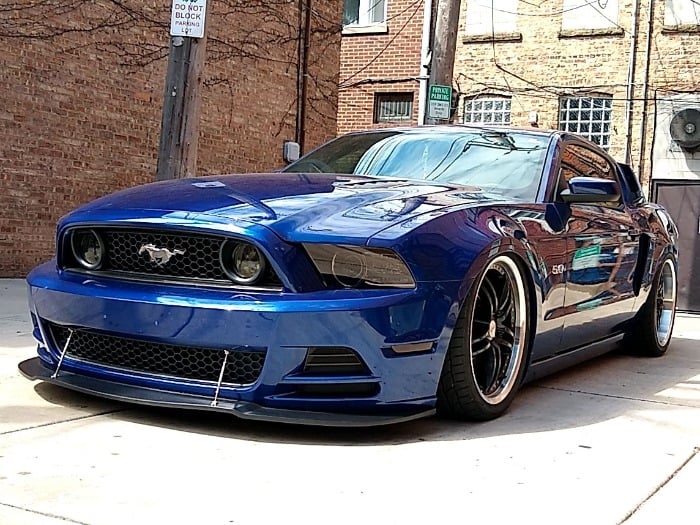
Have you noticed your tires wearing unevenly on one edge, or felt your car pulling to one side after a suspension upgrade? Is your Mustang pushing wide through corners even though the rest of your setup feels dialed in? Chances are, camber is the missing piece of the puzzle.
In this guide, you will learn exactly how camber affects driving — from cornering grip and tire wear to straight-line stability and fuel efficiency. We will break down the differences between negative, neutral, and positive camber, walk through the ideal angles for daily driving, spirited street use, track days, and drag racing, and show you how to adjust camber on your car with the right parts.
What Is Camber on a Car?
Understanding how does camber affect driving starts with a simple definition: camber is the inward or outward tilt of your wheels when viewed from the front of the vehicle, measured in degrees from perfectly vertical. Even a fraction of a degree changes how your tires contact the pavement, which in turn changes handling, grip, and tread life.
Drivers who are passionate about performance often fine-tune camber as part of their overall suspension setup. Whether you are chasing faster lap times, building a comfortable daily driver, or dialing in a drag-strip launch, camber angle is one of the most accessible adjustments you can make — and one of the most impactful.
Most factory muscle cars leave the assembly line with a slight negative camber, typically between -0.5° and -1°. That factory setting is a compromise engineered for predictable handling, reasonable tire life, and a margin of safety across a wide range of conditions. But once you start modifying your suspension — lowering your ride height, swapping in coilovers, or bolting on wider wheels — the stock geometry shifts, and your camber angle shifts with it. Lowering springs compress the suspension travel and push the tops of the wheels inward, adding negative camber beyond what the factory intended. Wider wheels change the scrub radius and lever arm at the knuckle. Even a modest two-inch drop on a Mustang can add an extra degree or more of negative camber per side, which is enough to noticeably accelerate inner-edge tire wear if left uncorrected.

Negative Camber
Negative camber means the tops of your wheels tilt inward toward the center of the vehicle. When you look at the front of your car, the tires lean slightly toward each other at the top. This is the most common performance-oriented setup and the direction most aftermarket suspension adjustments push you.
When your wheels are tilted inward, the outer edge of the tire carries a larger share of the load during straight-line driving. However, when you enter a turn and the body rolls, that tilt works in your favor — the loaded outside tire flattens against the pavement, maximizing the contact patch (the area of rubber actually touching the road) right when you need grip the most. That is why negative camber is the go-to setting for road courses, autocross, and spirited back-road driving.
Neutral (Zero) Camber
Neutral camber, or zero camber, means your wheels sit perfectly perpendicular to the road surface. The tire's tread contacts the pavement evenly across its full width during straight-line driving. This produces the most uniform tire wear and the largest possible contact patch on flat, level ground.
In practice, true zero camber is rare on a street car. Most alignments fall slightly on the negative side of zero to account for suspension flex under load. Zero camber is most commonly targeted on drag cars where maximum straight-line traction matters more than cornering grip.
Positive Camber
Positive camber is the opposite of negative — the tops of your wheels tilt outward, away from the vehicle. The outer edges of the tires carry more load during straight-line driving while the inner edges lift slightly off the surface.
Positive camber was common on older vehicle designs where it helped compensate for heavy manual steering systems and road crown. On modern muscle cars, positive camber is unusual and generally unwanted. It reduces cornering grip because the outside tire tilts further away from the road surface during a turn, shrinking the contact patch right when you need it most. The main scenario where a touch of positive camber appears intentionally is on dedicated drag cars, where it can aid straight-line tracking under hard acceleration.
How Camber Affects Your Vehicle's Performance
Camber does not work in isolation — it interacts with your tire compound, wheel width, ride height, and driving habits every time you get behind the wheel. Here is how each performance area responds to camber changes.

Cornering Grip and Handling
Negative camber improves cornering grip by keeping the outside tire's contact patch flat against the pavement as the body rolls through a turn. The result is more mechanical grip exactly where you need it — at the front axle during turn-in and at the rear during mid-corner loading.
For performance drivers, this translates to noticeably reduced understeer (the tendency for the front end to push wide in a corner). Your steering inputs feel more connected, turn-in response sharpens, and you can carry more speed through sweeping bends without the front tires washing out. If you have ever pushed your Mustang, Camaro, or Challenger through a tight autocross course and felt the front end slide wide, adding a degree or two of negative camber through caster camber plates is one of the most effective fixes.
The tradeoff is that more camber than your driving style demands can actually reduce grip in certain conditions. If you run -3° of camber on a car that never sees a track, you are shrinking the tire's effective contact patch during straight-line driving with no cornering benefit to show for it.
Tire Wear Patterns
Does negative camber wear tires faster? In most real-world driving, yes. When the tops of your wheels tilt inward, the inner edge of each tire carries a disproportionate share of the load during straight-line cruising — which is where you spend the vast majority of your time on the street. Over thousands of miles, that shows up as accelerated wear along the tire's inner shoulder while the outer tread still looks fresh.
Positive camber creates the opposite pattern, wearing the outer edge faster. And zero camber promotes the most even tread wear across the full width of the tire.
This does not mean negative camber ruins your tires overnight. A moderate setting of -0.5° to -1° produces wear patterns that most drivers will never notice between normal rotation intervals. It is when you push past -2° for street use that inner-edge wear becomes a real cost factor — you may find yourself replacing performance tires significantly sooner than expected.
Straight-Line Stability
A slight amount of negative camber actually improves high-speed straight-line stability. When both front wheels tilt inward equally, they create a natural self-centering effect through the steering geometry. Small inputs from road imperfections are absorbed rather than amplified, keeping your car tracking straight without constant steering corrections.
This is one reason factory alignments include a touch of negative camber rather than true zero. At highway speeds, that stability margin makes a noticeable difference in driver confidence, especially in crosswinds or on crowned roads.
Excessive camber in either direction, however, hurts stability. Too much negative camber narrows the effective contact patch during straight-line driving, while positive camber can cause the steering to feel vague and wander at speed.
Fuel Efficiency and Ride Quality
Does camber make your car slower or less fuel-efficient? Aggressive camber angles can contribute to both. When the tires are not sitting flat against the road, rolling resistance increases slightly because a smaller portion of the tread is doing the work. Over long highway drives, that translates to a small but measurable drop in fuel economy.
Ride quality also takes a hit at extreme angles. With aggressive negative camber, you are effectively riding on the inner shoulder of each tire rather than the full tread width. Bumps and road imperfections transfer more directly into the cabin because there is less rubber absorbing the impact. If your primary use case is daily commuting or long highway trips, this is a real consideration.
For most enthusiasts running moderate camber settings, the fuel economy and ride quality changes are minor enough that they are not a deciding factor. But if you are building a dedicated track car and running -3° or more, you will likely want a separate set of wheels and tires for street duty. Upgrading to a setup where coilovers improve ride quality can help offset some of the harshness when you are not on the track.
Positive vs. Negative Camber: A Quick Comparison
![]() What is the difference between positive and negative camber in practical terms? This side-by-side breakdown covers the key performance areas so you can see how each direction affects your car.
What is the difference between positive and negative camber in practical terms? This side-by-side breakdown covers the key performance areas so you can see how each direction affects your car.
|
Performance Factor
|
Negative Camber
|
Positive Camber
|
|
Cornering Grip
|
Increases contact patch during turns for better lateral grip
|
Decreases contact patch during turns, reducing cornering ability
|
|
Straight-Line Stability
|
Mild negative improves high-speed tracking; excessive amounts reduce it
|
Can improve straight-line tracking under hard acceleration (drag setups)
|
|
Tire Wear
|
Inner-edge wear increases with more negative angle
|
Outer-edge wear increases with more positive angle
|
|
Fuel Efficiency
|
Slight decrease at aggressive angles due to increased rolling resistance
|
Slight decrease at aggressive angles due to uneven contact
|
|
Ride Comfort
|
Harsher at extreme settings; mild settings have minimal impact
|
Harsher at extreme settings; mild settings have minimal impact
|
|
Best Use Case
|
Street performance, road courses, autocross, spirited driving
|
Drag racing, straight-line applications, some off-road rigs
|
Best Camber Angles for Different Driving Styles
![]() There is no single camber setting that works for every car and every situation. The best angle for your build depends on how you actually drive. Here are the recommended ranges based on common use cases.
There is no single camber setting that works for every car and every situation. The best angle for your build depends on how you actually drive. Here are the recommended ranges based on common use cases.
Daily Driving and Commuting
Recommended: 0° to -1°
For a car that sees mostly highway miles, city traffic, and the occasional spirited backroad, stay close to factory specs. This range delivers even tire wear, predictable handling, and the best fuel economy. You still get a slight cornering advantage over true zero camber without sacrificing tread life.
Spirited Street Driving and Weekend Cruising
Recommended: -1° to -2°
If you push your Mustang or Camaro harder than the average commuter — think canyon carving, car meets, and the occasional on-ramp blast — a bit more negative camber sharpens turn-in response and reduces understeer. Tire wear is modestly increased on the inner edge, but it is manageable with regular rotations. Pairing this range with properly tuned performance suspension gives you a noticeably more connected feel behind the wheel.
Track Days and Autocross
Recommended: -2° to -4.5°
Dedicated track cars and serious autocross builds benefit from more aggressive negative camber. At these angles, the tire's contact patch stays maximized through hard cornering loads that would overwhelm a milder setting. Is 2 degrees of camber a lot? For the street it is on the aggressive side, but for track use it is actually the entry point. Many competitive autocross setups run -3° to -4.5° on the front axle. Keep in mind that this range accelerates inner-edge tire wear significantly during any street driving. If your track car doubles as a daily, consider adjustable lowering kits or coilover setups that let you dial camber back for the commute and crank it up for event days.
Drag Racing
Recommended: 0° (or slight positive)
Drag racing is all about putting power to the ground in a straight line. Zero camber gives you the largest possible contact patch for maximum traction off the line. Some drag racers run a hair of positive camber on the rear to help the tires hook up under extreme acceleration loads. Cornering grip is irrelevant when the only turn is back to the pits.
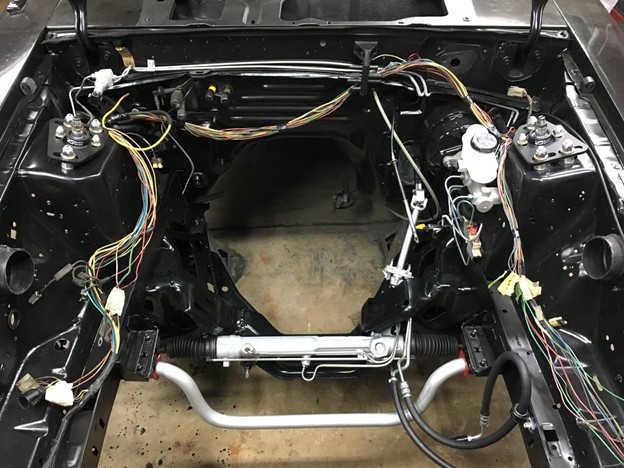
Signs You Need to Adjust Your Camber
![]() What are the signs of bad camber? If your alignment is off, your car will usually tell you before you ever put it on a lift. Watch for these symptoms:
What are the signs of bad camber? If your alignment is off, your car will usually tell you before you ever put it on a lift. Watch for these symptoms:
- Uneven tire wear on one edge: Excessive inner-edge wear points to too much negative camber; outer-edge wear suggests positive camber or a geometry issue.
- Vehicle pulls to one side: If your car drifts left or right without steering input, unequal camber angles between the two sides may be to blame.
- Reduced grip in corners: If your car suddenly feels less confident in turns than it used to, a camber shift from worn bushings or a suspension modification could be the cause.
- Steering wheel vibration or wobble: While this can have several causes, a significant camber imbalance can contribute to vibrations at highway speed.
- Recent suspension modification: Any time you install lowering springs, coilovers, or other suspension components, your camber will shift. A professional alignment after any suspension change is essential.
These symptoms are especially common after lowering your car. If you have recently dropped your ride height, understand that lowering your car affects wheel alignment across all three angles — camber, caster, and toe — and all three need to be checked together.
How to Adjust Camber on Your Car
How do you adjust camber? There are three primary methods, and the right one depends on your platform, your budget, and how much adjustment range you need.
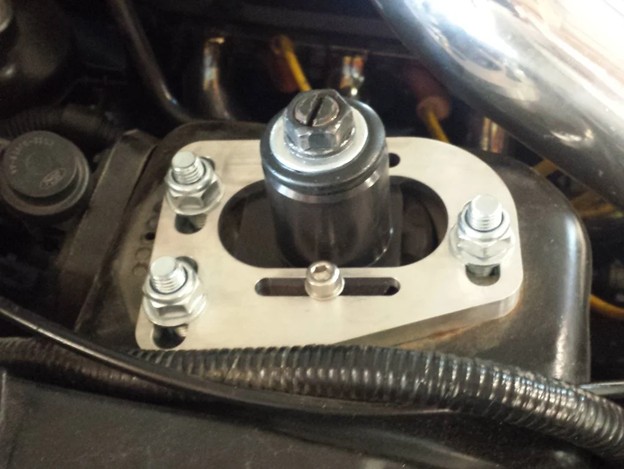
Caster Camber Plates
Caster camber plates mount at the top of your front strut towers and replace the fixed factory strut mount with an adjustable plate. They give you independent control over both caster and camber angles, typically offering ±2° to ±3° of camber adjustment range. This is the most popular method for Mustangs and other strut-suspension platforms because it is bolt-on, fully reversible, and lets you make changes at the track without pulling the car apart.
Camber Bolts
Camber bolts replace the factory bolts at the top of your strut-to-knuckle connection with eccentric (offset) bolts that let you shift the knuckle position. They are the most affordable camber adjustment option, typically adding ±1° to ±1.5° of range. Camber bolts work well for correcting minor camber shifts after a lowering spring install, but they do not offer enough range for aggressive track setups.
Adjustable Camber Arms
For rear independent suspension setups — common on Mustangs from 2015 onward, fifth-gen Camaros, and modern Challengers — adjustable rear camber arms replace the fixed factory control arms with adjustable units. They let you dial in rear camber independently, which is critical for balancing a track car's handling. If you want your rear tires to wear evenly after lowering your car, rear camber arms are often the right solution.
No matter which method you choose, always get a professional four-wheel alignment after making camber adjustments. Camber does not exist in isolation — changes to one angle affect caster, toe, and your overall suspension geometry. A proper alignment ensures all three angles work together, and it gives you a documented baseline so you can track changes over time.
If you are shopping for wheel and tire packages alongside your camber setup, pay attention to offset and backspacing specs. Wheel geometry interacts directly with your camber angle, and the wrong combination can push your tires into the fender liner or create clearance issues with your brake calipers.
Practical Takeaways
![]() Here is what to take away from everything above — the short list of decisions and actions that will make the biggest difference for your build.
Here is what to take away from everything above — the short list of decisions and actions that will make the biggest difference for your build.
- Start with your use case. Daily drivers should stay between 0° and -1° of negative camber. Spirited street builds benefit from -1° to -2°. Track-focused cars can run -2° to -4.5° on the front axle.
- Get an alignment after every suspension change. Lowering springs, coilovers, new control arms — any of these shift your camber. A professional four-wheel alignment is not optional; it is the only way to confirm all three angles (camber, caster, and toe) are working together.
- Watch your tire wear. Inner-edge wear is the first sign of excessive negative camber for your driving style. Check tread depth on both edges at every tire rotation.
- Invest in adjustable hardware. Caster camber plates give you the widest adjustment range and the most repeatable results. Camber bolts are a budget-friendly fix for minor corrections. Adjustable rear control arms are essential for lowered cars with independent rear suspension.
- Match your camber to your tires. Wider, stickier performance compounds tolerate more negative camber before inner-edge wear becomes a problem. Narrow all-season tires show wear faster at the same angle.
Set Your Camber Up Right
![]() Whether you are chasing tenths on a road course, building a comfortable daily cruiser, or setting up a weekend drag car, camber angle is one of the most impactful suspension adjustments you can make. The right setting transforms how your car handles, how your tires wear, and how confident you feel behind the wheel.
Whether you are chasing tenths on a road course, building a comfortable daily cruiser, or setting up a weekend drag car, camber angle is one of the most impactful suspension adjustments you can make. The right setting transforms how your car handles, how your tires wear, and how confident you feel behind the wheel.
Ready to dial in your setup? Explore AmericanMuscle's full selection of suspension components, from coilover kits and caster camber plates to complete Mustang suspension upgrades. Every part is backed by detailed fitment data, install guides, and real-world reviews from enthusiasts who build just like you.
Frequently Asked Questions About Camber
Camber is one of the most common suspension questions for muscle car owners — here are direct answers to the questions we hear most often.
Does Negative Camber Improve Handling?
Yes. Moderate negative camber (-0.5° to -2°) improves handling by maximizing the tire's contact patch during cornering. The outside tire flattens against the road as the body rolls, delivering more grip exactly when you need it. Excessive negative camber beyond what your driving style requires can reduce straight-line grip and accelerate tire wear without providing additional cornering benefit.
Is Camber OK for Daily Driving?
Absolutely. A mild negative camber setting between 0° and -1° is perfectly suitable for daily driving. Most factory cars ship with a slight negative camber from the assembly line because it provides a good balance of handling, tire wear, and stability. Problems arise only when camber angles become excessive for street use, typically beyond -2°.
Is 2 Degrees of Camber a Lot?
It depends on your use case. For daily driving, -2° is on the aggressive side and will produce noticeable inner-edge tire wear over time. For track days and autocross, -2° is a moderate starting point — many competitive setups run -3° to -4.5° on the front axle. If your car splits time between the street and the track, -2° is a common compromise.
Does Negative Camber Wear Tires Faster?
Yes, negative camber causes the inner edge of your tires to wear faster during straight-line driving. The more aggressive the angle, the faster the wear. At mild settings (-0.5° to -1°), the difference is minimal and easily managed with regular tire rotations. At track-oriented settings (-2° and beyond), inner-edge wear becomes significant.
Does Camber Make Your Car Slower?
Not in corners — negative camber typically makes you faster through turns by increasing available grip. In a straight line, aggressive camber can slightly increase rolling resistance and reduce the tire's effective contact patch, which may cost a small amount of acceleration and top speed. For most street and track applications, the cornering gains far outweigh any straight-line penalty.
Will an Alignment Fix Camber?
A standard alignment can correct camber only within the range your car's factory adjustments allow. Many muscle cars have limited stock camber adjustment, so if your camber is significantly off — especially after lowering — you may need aftermarket hardware like caster camber plates, camber bolts, or adjustable control arms to bring it back into spec.
What Camber Is Best for Handling?
For most street-driven muscle cars, -0.5° to -1.5° offers the best balance of improved cornering grip and acceptable tire wear. Track-focused builds benefit from -2° to -4.5° depending on the car, tire compound, and type of racing. The ideal number depends on your suspension setup, tire width, and how hard you drive in corners.
What Is the Difference Between Positive and Negative Camber?
Negative camber tilts the tops of the wheels inward toward the vehicle, improving cornering grip but increasing inner-edge tire wear. Positive camber tilts the tops outward, which can benefit straight-line traction for drag racing but reduces cornering ability. Most performance street cars and track cars run negative camber, while drag-focused builds run zero or slight positive.