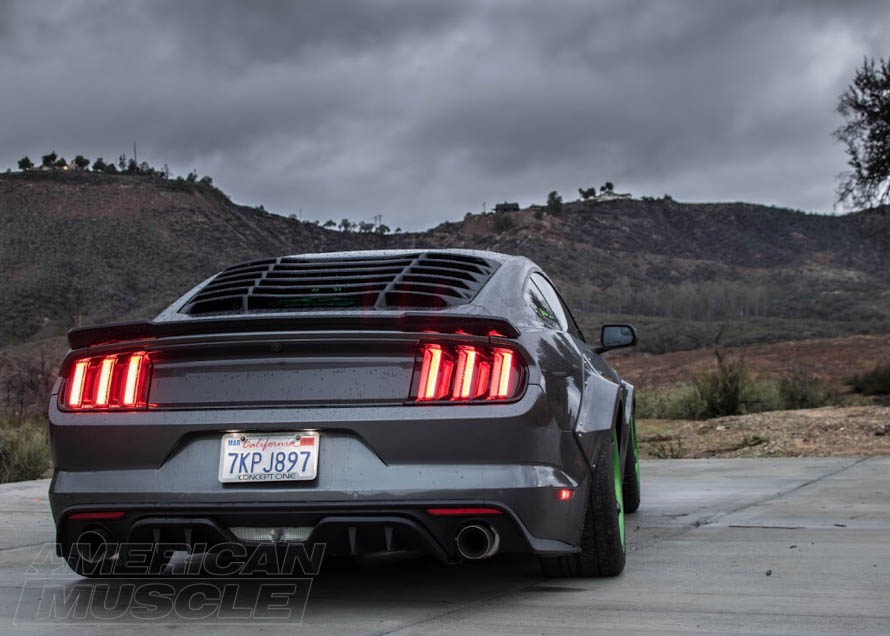
Thinking about picking up a sixth-gen Mustang but not sure which year, engine, or package is actually worth your money? You're not alone -- the S550 is one of the most diverse Mustang lineups Ford has ever built, and sorting through nearly a decade of submodels, facelifts, and special editions can feel overwhelming. In this guide, you'll get the complete breakdown of every S550 Mustang produced from 2015 to 2023, including specs, performance numbers, modification paths, and buying advice so you can find the right car and start building it your way.
What Is the S550 Mustang?
![]() The S550 Mustang is Ford's sixth-generation Mustang, produced from the 2015 through 2023 model years, and it represents the most significant engineering overhaul in the nameplate's history. The "S550" designation is Ford's internal platform code -- the same way the previous generation was called S197 and the current seventh-gen is labeled S650.
The S550 Mustang is Ford's sixth-generation Mustang, produced from the 2015 through 2023 model years, and it represents the most significant engineering overhaul in the nameplate's history. The "S550" designation is Ford's internal platform code -- the same way the previous generation was called S197 and the current seventh-gen is labeled S650.
What makes the S550 such a landmark? Three things set it apart from every Mustang that came before it:
- Independent rear suspension (IRS): Ford finally ditched the solid rear axle that had defined Mustang handling for decades. The new integral-link IRS transformed the car from a straight-line bruiser into a legitimate corner-carving machine.
- Global platform design: The S550 was the first Mustang engineered for worldwide sale from the start -- right-hand-drive markets included. That meant stiffer chassis construction and more refined NVH (noise, vibration, harshness) characteristics than any previous generation.
- Engine diversity: For the first time, a turbocharged four-cylinder (the 2.3L EcoBoost) sat alongside a naturally aspirated V6 and the legendary 5.0L Coyote V8, giving buyers a genuine performance spectrum from 300 HP all the way up to 760 HP in the GT500.
Over its eight model years, the S550 platform hosted everything from the daily-driveable EcoBoost to the flat-plane-crank GT350 and the supercharged GT500 -- making it, by any measure, the most versatile generation of Mustang ever produced.
S550 Mustang Engine Specs and Options
![]() The S550 Mustang offered six distinct engines across its production run. Each powerplant serves a different kind of build, so understanding the differences is the first step toward picking the right platform for your goals.
The S550 Mustang offered six distinct engines across its production run. Each powerplant serves a different kind of build, so understanding the differences is the first step toward picking the right platform for your goals.
2.3L EcoBoost (310 HP / 320 lb-ft)
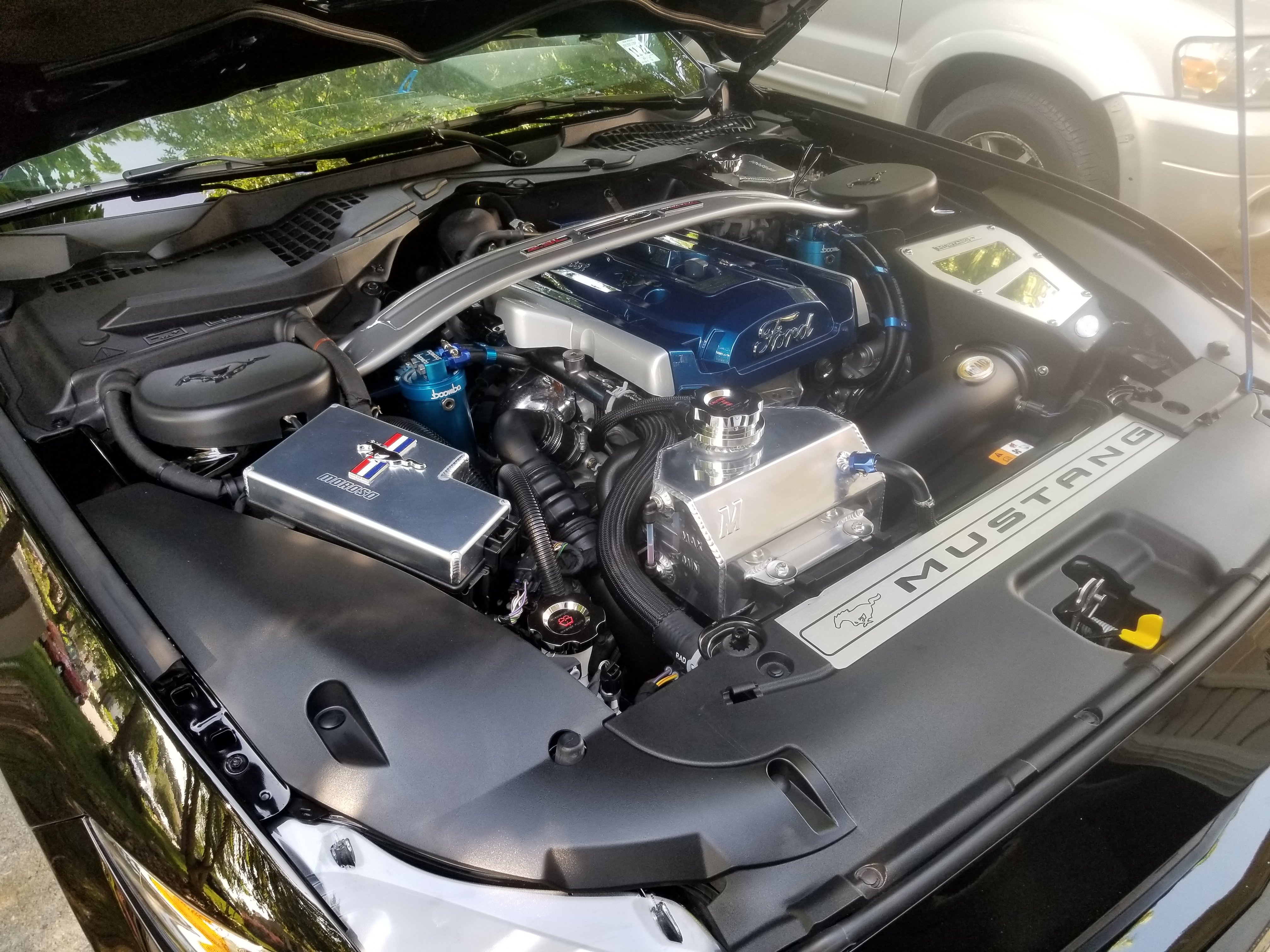
The S550's 2.3L EcoBoost is a turbocharged, direct-injected inline four-cylinder producing 310 HP and 320 lb-ft of torque -- making it the most powerful base-engine Mustang ever sold. That torque figure, available from just 2,500 RPM, gives the EcoBoost surprisingly strong street-level performance. Expect a 0-60 time around 5.4 seconds with the manual transmission.
The EcoBoost uses a twin-scroll turbocharger and Ford's Ti-VCT (Twin Independent Variable Cam Timing) system. It's no Coyote, but don't write it off -- the turbo architecture means bolt-on mods like a cold air intake, intercooler upgrade, and a tune can push the EcoBoost past 350 wheel horsepower without touching internals. If you're building a lightweight autocross car or a fuel-efficient daily with some punch, this engine delivers.
3.7L Ti-VCT V6 (300 HP / 280 lb-ft) -- 2015-2017 Only
The 3.7L Duratec V6 was carried over from the S197 generation, producing 300 HP and 280 lb-ft of torque. Ford dropped this engine after 2017, leaving the EcoBoost as the sole entry-level powertrain. With a 0-60 time around 5.7 seconds, the V6 was competent but never inspired the same aftermarket enthusiasm as the four-cylinder turbo or the V8.
If you're shopping used and stumble onto a V6 S550, it's a perfectly solid daily driver, but the modification ceiling is significantly lower than either the EcoBoost or GT. Most builders looking at the V6 price range are better served by an EcoBoost for its stronger tuning potential.
5.0L Coyote Gen 2 V8 (435 HP / 400 lb-ft) -- 2015-2017
The Gen 2 Coyote is a 5.0-liter, naturally aspirated, dual-overhead-cam V8 producing 435 HP at 6,500 RPM and 400 lb-ft of torque at 4,250 RPM. This engine uses Ford's Ti-VCT system and a forged steel crankshaft. It's the heart of the pre-facelift Mustang GT, and it set the tone for the entire S550 generation. A stock GT with the Gen 2 Coyote hits 0-60 in about 4.4 seconds.
The Gen 2 Coyote is a proven platform with a massive parts catalog. Cold air intakes, long-tube headers, a cat-back exhaust, and a good tune will put you in the 460-480 wheel horsepower range without cracking the engine open. If you want to go further, the Gen 2 responds well to cams, ported heads, and supercharger kits.
5.0L Coyote Gen 3 V8 (460 HP / 420 lb-ft) -- 2018-2023
The Gen 3 Coyote arrived with the 2018 facelift, bumping output to 460 HP at 7,000 RPM and 420 lb-ft of torque at 4,600 RPM thanks to revised port and direct injection (dual fuel), a higher 12.0:1 compression ratio, and redesigned intake manifold runners. The Gen 3 also picked up Ford's new 10-speed automatic transmission as an option. Expect a 0-60 time around 4.0 seconds with the 10R80 auto and about 4.2 seconds with the manual.
The jump from Gen 2 to Gen 3 isn't just about the 25 extra horsepower -- the dual-fuel system improves throttle response across the RPM range, and the higher compression ratio means the engine is more efficient at extracting energy from every combustion event. For modders, the Gen 3 is the sweet spot: it responds aggressively to bolt-ons and makes a phenomenal base for supercharger and turbo builds, with many shops pushing well past 700 wheel horsepower on stock internals.
5.2L Voodoo V8 (526 HP / 429 lb-ft) -- GT350/GT350R
The 5.2L Voodoo is a flat-plane-crank, naturally aspirated V8 producing 526 HP at 7,500 RPM and 429 lb-ft of torque at 4,750 RPM -- and it revs to a screaming 8,250 RPM redline. This engine is an engineering statement: the flat-plane crankshaft (a first for a production Mustang) delivers a firing order that sounds more like a Ferrari than a Ford. Displacement comes from a 94.0 mm bore and 93.0 mm stroke.
The Voodoo is designed for the track, and Ford built it accordingly with forged aluminum pistons, plasma-transferred wire-arc cylinder bores, and sodium-filled exhaust valves for heat management. Most GT350 owners focus on suspension, brakes, and aerodynamic mods rather than chasing additional horsepower, because the Voodoo already delivers one of the most exhilarating naturally aspirated experiences you can buy. 0-60 time: approximately 4.0 seconds.
5.2L Predator V8 (760 HP / 625 lb-ft) -- GT500
The 5.2L Predator is a cross-plane-crank, supercharged V8 producing 760 HP at 7,300 RPM and 625 lb-ft of torque at 5,000 RPM, making the GT500 the most powerful street-legal Ford ever built. It uses an Eaton TVS 2650 roots-type supercharger with an air-to-liquid intercooler, producing 12 PSI of boost on the stock pulley.
Despite sharing displacement with the Voodoo, the Predator is a completely different animal -- cross-plane crank, different block casting, and a massive blower on top. The DCT-only drivetrain puts the power down through a carbon-fiber driveshaft, and the car runs a 0-60 time of 3.3 seconds and a quarter-mile in the mid-10-second range. For the modding community, even a conservative pulley swap and tune can push the Predator past 850 wheel horsepower.
S550 Mustang Transmission Options
Choosing the right transmission for your S550 depends on how you plan to use the car. Here's what Ford offered across the lineup.
Getrag MT-82 Six-Speed Manual
The MT-82 is the standard manual transmission in the EcoBoost and GT models (2015-2017 GT, continued in EcoBoost through 2023). It's a capable unit for stock power levels, but it has earned a reputation for notchy 1-2 shifts and limited torque capacity once you start adding power. If you're building a high-horsepower GT, the MT-82 is typically the first thing that needs attention -- upgraded shifter assemblies, MGW shifters, and short-throw kits help significantly with shift feel. For a deeper look at the MT-82's strengths and weaknesses, check out our MT-82 transmission breakdown.
10R80 Ten-Speed Automatic
The 10R80 debuted for 2018 and immediately changed the game for automatic Mustang performance. Co-developed with General Motors, this ten-speed automatic delivers faster shifts, better fuel economy, and quicker 0-60 times than the manual in most testing. It's rated to handle over 600 lb-ft of torque from the factory and responds well to custom calibrations. If you're building a drag car or want the fastest possible street times, the 10R80 is hard to beat.
Tremec TR-3160 Six-Speed Manual (GT350/Mach 1)
The Tremec TR-3160 is a heavy-duty six-speed manual purpose-built for the GT350, GT350R, and Mach 1. It features rev-matching capability, shorter throws, and significantly higher torque capacity than the MT-82. This is the manual transmission most GT owners wish they had from the factory -- and it's the reason the GT350 and Mach 1 feel so much more connected in spirited driving. If you're swapping transmissions in your GT build, the TR-3160 is the gold standard.
Tremec TR-9070 DCT Seven-Speed Dual-Clutch (GT500)
The Tremec TR-9070 DCT is exclusive to the GT500. Ford didn't offer a manual option for the 760 HP GT500 -- this dual-clutch unit is designed to handle the Predator's massive torque output while delivering shifts in under 100 milliseconds. It features five different drive modes (Normal, Sport, Track, Drag, and Weather) and launch control calibration. The DCT is a purpose-built piece of hardware, and it's one of the reasons the GT500 runs consistent 10-second quarter-mile passes straight from the factory.
Every S550 Mustang Submodel and Special Edition
The S550 spawned more distinct submodels and special editions than any previous Mustang generation. Here's every variant and what makes each one unique.
S550 EcoBoost (2015-2023)
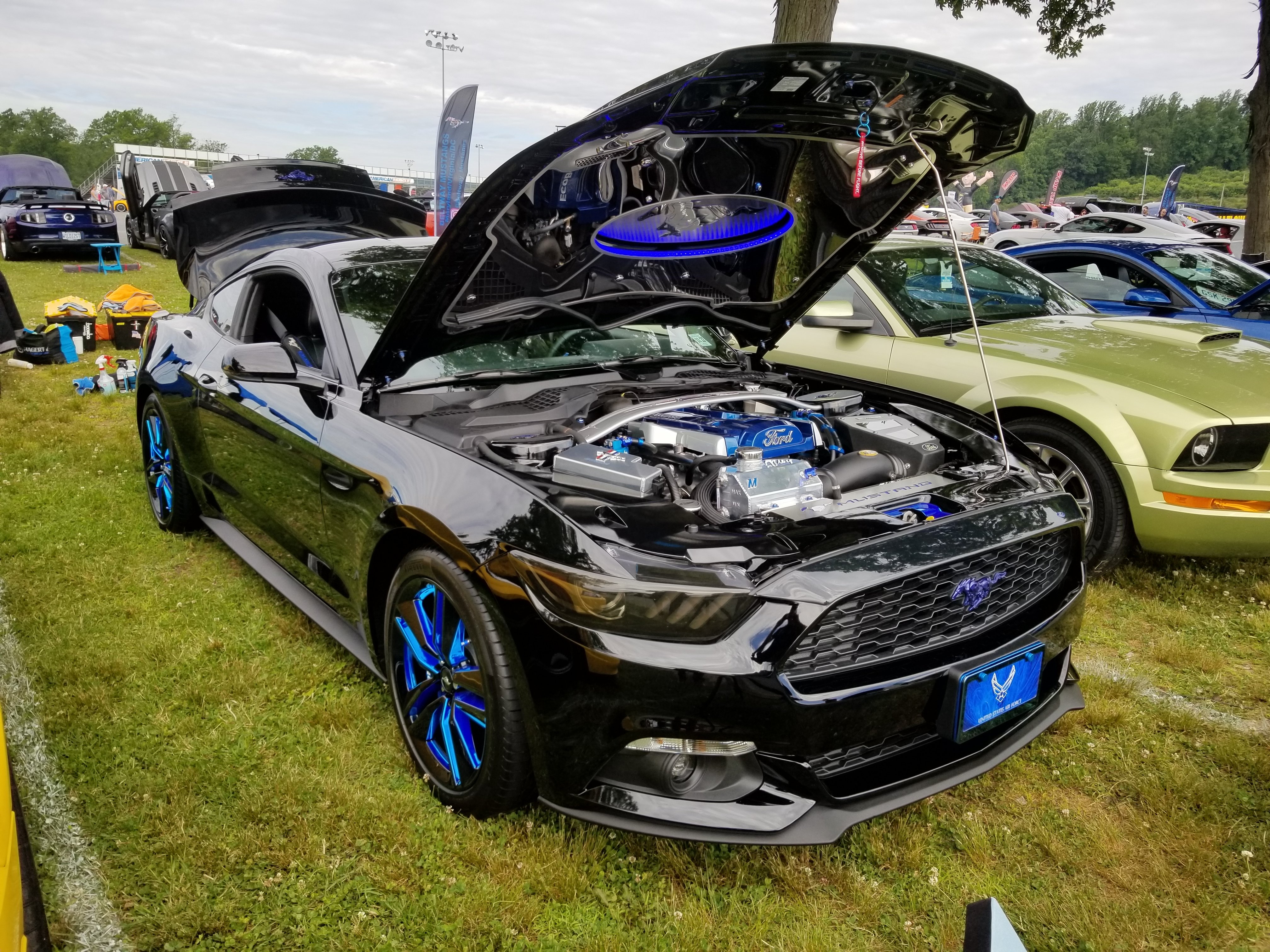
The EcoBoost is the entry point to S550 ownership, powered by the 2.3L turbocharged four-cylinder. Available as a fastback or convertible, the EcoBoost comes standard with a six-speed manual and optional 10-speed automatic (2018+). Key features include independent rear suspension, SYNC infotainment, and available Performance Package with larger brakes and a limited-slip differential. Don't mistake "entry-level" for boring -- the EcoBoost's turbo architecture gives it a modification ceiling that embarrasses naturally aspirated V6 competitors.
S550 Mustang GT (2015-2023)
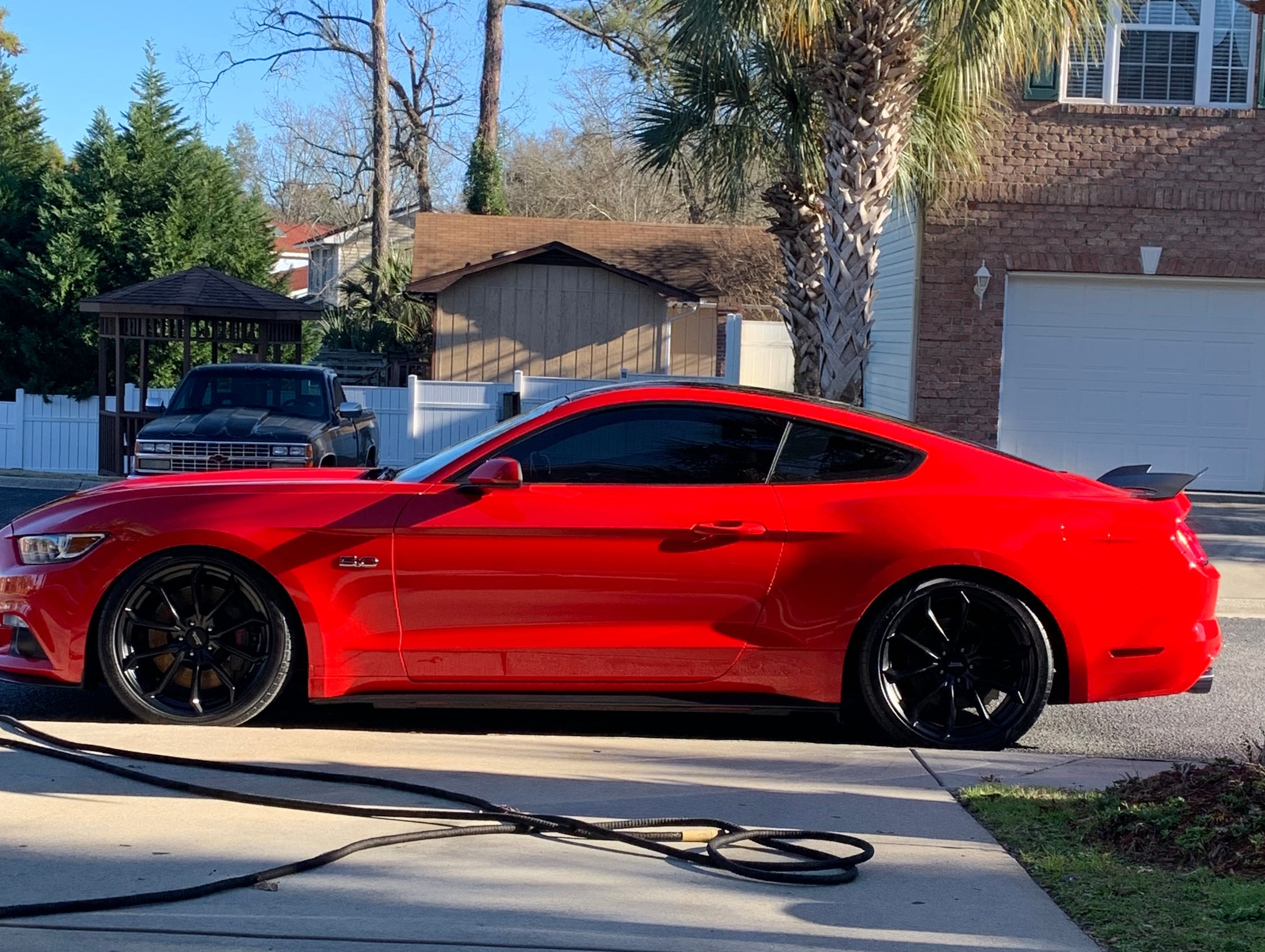
The GT is the volume V8 model and the backbone of the S550 lineup. The 2015-2017 GT runs the 435 HP Gen 2 Coyote; 2018-2023 models get the 460 HP Gen 3 Coyote. Both are available in fastback and convertible, with manual or automatic transmissions. The GT is where most enthusiasts start their build, thanks to the broadest aftermarket support of any S550 model. Performance Packs (PP1 and PP2) add track-ready hardware at the factory level.
Shelby GT350 (2016-2020)
The GT350 is a track-focused, naturally aspirated monster built around the 5.2L Voodoo flat-plane-crank V8 producing 526 HP and 429 lb-ft of torque. It comes exclusively with the Tremec TR-3160 six-speed manual and features MagneRide magnetic dampers, a Torsen limited-slip differential, Brembo six-piston front brakes, and aerodynamic enhancements including a rear spoiler and front splitter. Ford sold the GT350 from 2016 through 2020, and it has rapidly become a collector-grade vehicle. The 8,250 RPM redline and flat-plane exhaust note make this one of the most emotionally engaging Mustangs ever built.
Shelby GT350R (2016-2020)
The GT350R takes the GT350 formula and strips it for the track. It deletes the rear seat, adds carbon-fiber wheels (a production-car first for Ford), and includes a more aggressive front splitter and rear wing. Suspension tuning is firmer than the standard GT350, and the car comes without air conditioning or a stereo in its most focused configuration. If you're looking at a GT350R, you're looking at a weekend track weapon -- and values have only gone up since production ended.
Shelby GT500 (2020-2023)
The GT500 is the flagship S550, packing the 760 HP, 5.2L supercharged Predator V8 and the Tremec DCT. It sits on the widest fenders in S550 history, wears a massive front splitter and rear wing (in the Carbon Fiber Track Package), and uses 16.5-inch front brake rotors clamped by Brembo six-piston calipers. Quarter-mile times hover around 10.6 seconds at 132 MPH in stock trim. The GT500 is Ford's answer to the Dodge Hellcat and Chevy ZL1, and it wins that argument convincingly.
Bullitt (2019-2020)
The Bullitt is a limited-edition GT tribute to Steve McQueen's 1968 film car. It gets a unique calibration of the Gen 3 Coyote producing 480 HP (20 more than the standard GT), a Torsen limited-slip differential, Brembo brakes, MagneRide suspension, and the GT350's intake manifold and 87mm throttle body. Available only in Dark Highland Green or Shadow Black, it comes exclusively with the six-speed manual. The Bullitt is a refined, no-stripe GT with a meaningful performance bump -- perfect for the enthusiast who wants a V8 with a story behind it.
Mach 1 (2021-2023)
The Mach 1 fills the gap between the GT and the GT350, offering many GT350 chassis components paired with the Gen 3 Coyote V8 producing 480 HP. Key hardware includes the Tremec TR-3160 manual transmission, a Torsen limited-slip differential, MagneRide dampers, Brembo brakes, revised oil and transmission coolers, and an aggressive front fascia with dedicated brake cooling ducts. It also picks up a rear diffuser and the GT350's intake manifold. The Mach 1 is the best-handling standard-production S550 GT you can buy, and it's quickly becoming the enthusiast pick for a car that does everything well.
Performance Pack 1 vs. Performance Pack 2
Ford offered two factory Performance Pack tiers for the S550 GT. Understanding what each package includes will help you decide whether the factory upgrades cover your needs or if you'll be building past them anyway.
Performance Pack 1 (PP1)
Performance Pack 1 is the enthusiast-value package and the single most recommended option for any S550 GT buyer.
Here's what it adds:
- Brembo front brakes with six-piston calipers and 15-inch rotors (check out Brembo brake upgrades for pad and rotor options) 3.73:1
- Torsen limited-slip differential -- a massive improvement over the open differential in base GTs
- Wider 255/40R19 front and 275/40R19 rear tires on unique 19-inch wheels
- Larger radiator for improved cooling under sustained load
- Gauge pack with oil pressure, boost/vacuum, and coolant temperature readouts
- Strut tower brace for improved front-end rigidity
- Unique suspension tuning with stiffer springs and revised damper settings
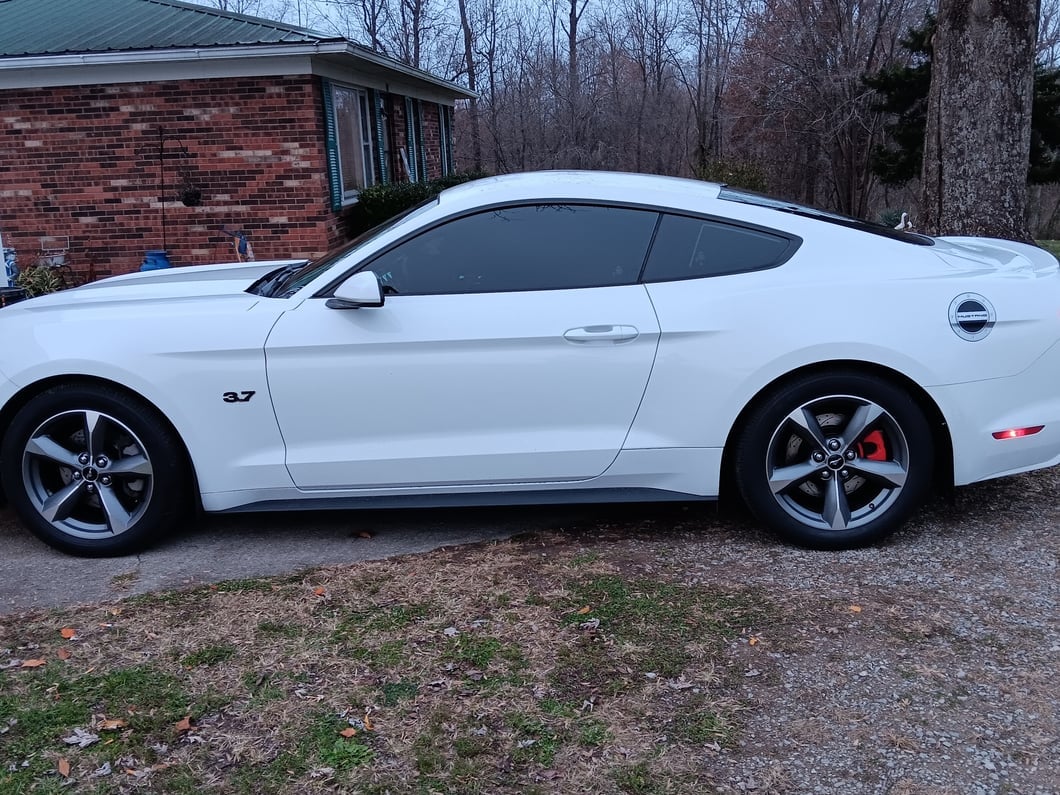
PP1 transforms the GT from a quick muscle car into a genuinely capable road-course platform. If you're buying a GT and you can find one with PP1, buy it -- the Brembo brakes and Torsen diff alone are worth the factory option price.
Performance Pack 2 (PP2) -- 2018+ Only
Performance Pack 2 builds on PP1 and adds MagneRide magnetic dampers, even wider tires, and aerodynamic upgrades.
The full PP2 additions over PP1 include:
- MagneRide 3.0 magnetic dampers -- the same adaptive suspension technology used in the GT350
- 305/30R19 rear tires and wider rear wheels for increased mechanical grip
- Larger front splitter and revised front aero for additional downforce
- Stiffer rear sway bar Unique spring rates tuned specifically for the MagneRide system
PP2 is only available on the 2018+ GT with the manual transmission. It requires PP1 as a prerequisite, so you're stacking both packages. The result is the closest thing to a GT350 handling experience in a standard GT body -- and it costs significantly less than stepping up to the Shelby.
S550 Mustang Styling and Design Changes
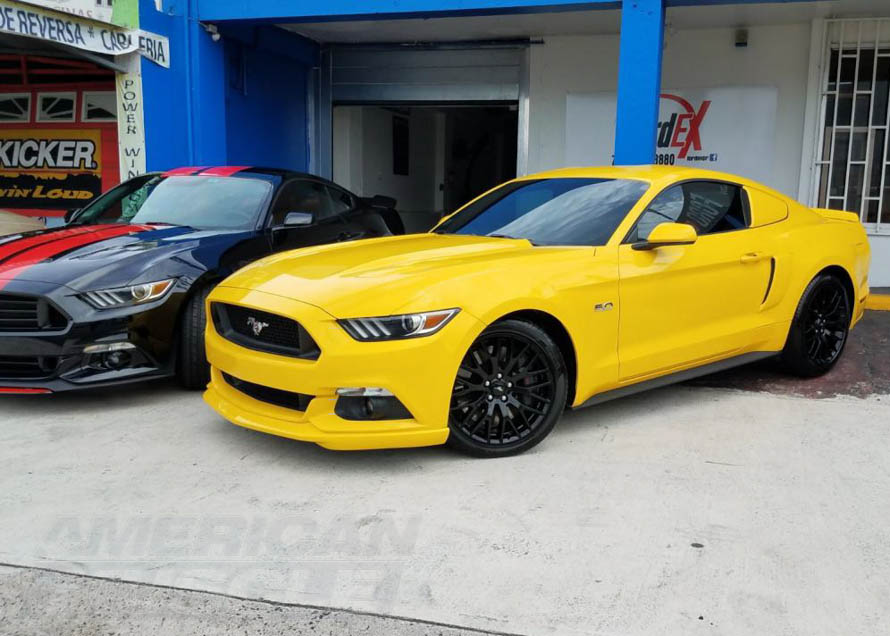
The S550 received a significant mid-cycle facelift for 2018 that divided the production run into two distinct visual eras.
Pre-Facelift (2015-2017)
The 2015-2017 S550 debuted with a design language that blended classic Mustang cues -- the long hood, short rear deck, and tri-bar taillights -- with a more aggressive, angular front end. The headlights featured a sharper, more geometric shape with available HID projectors. The grille sat wider and lower than the outgoing S197, and the body sides used deeper sculpting to create a more muscular profile.
From a front fascia design perspective, the pre-facelift car has a simpler, more angular look that many enthusiasts still prefer. The interior featured a clean dashboard design with physical HVAC controls and Ford's SYNC 2 infotainment system. For a full overview of the exterior modification options available for the first S550 models, explore our exterior styling upgrades guide.
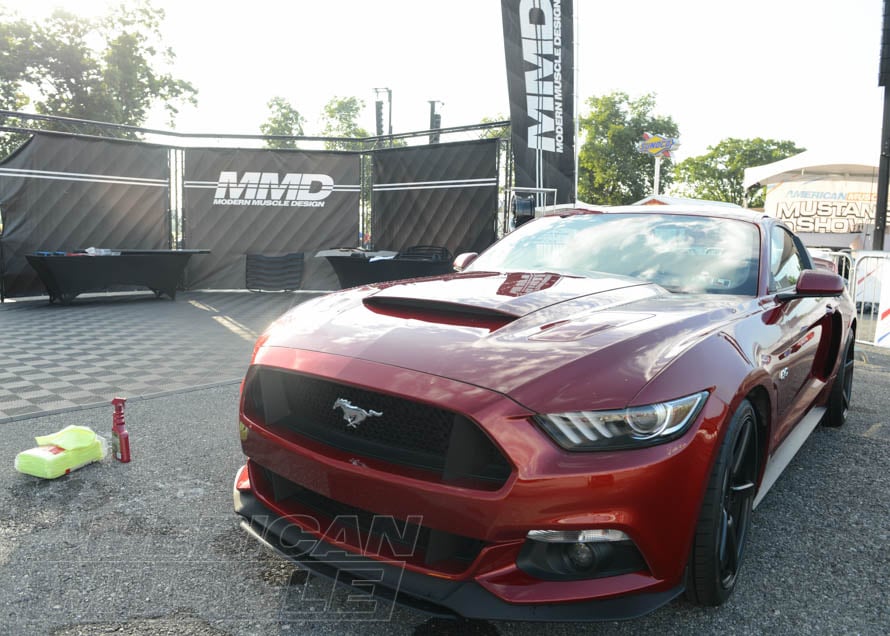
Post-Facelift (2018-2023)
The 2018 facelift brought a more refined, rounded front end with a resculpted hood, redesigned headlights, and a new lower grille. The taillights received a sequential LED turn-signal feature that became an instant signature. Inside, the dashboard was redesigned with a 12-inch digital instrument cluster (available), a more intuitive center stack, and Ford's SYNC 3 infotainment system with Apple CarPlay and Android Auto.
The facelift also dropped the V6 engine entirely, streamlined the trim lineup, and introduced the 10-speed automatic. Structurally, Ford stiffened the chassis with revised subframe mounts and cross-members. The 2018+ car drives noticeably tighter than the 2015-2017, even on the same suspension components -- the chassis improvements are that significant.
S550 vs. S197: What Changed Between Generations
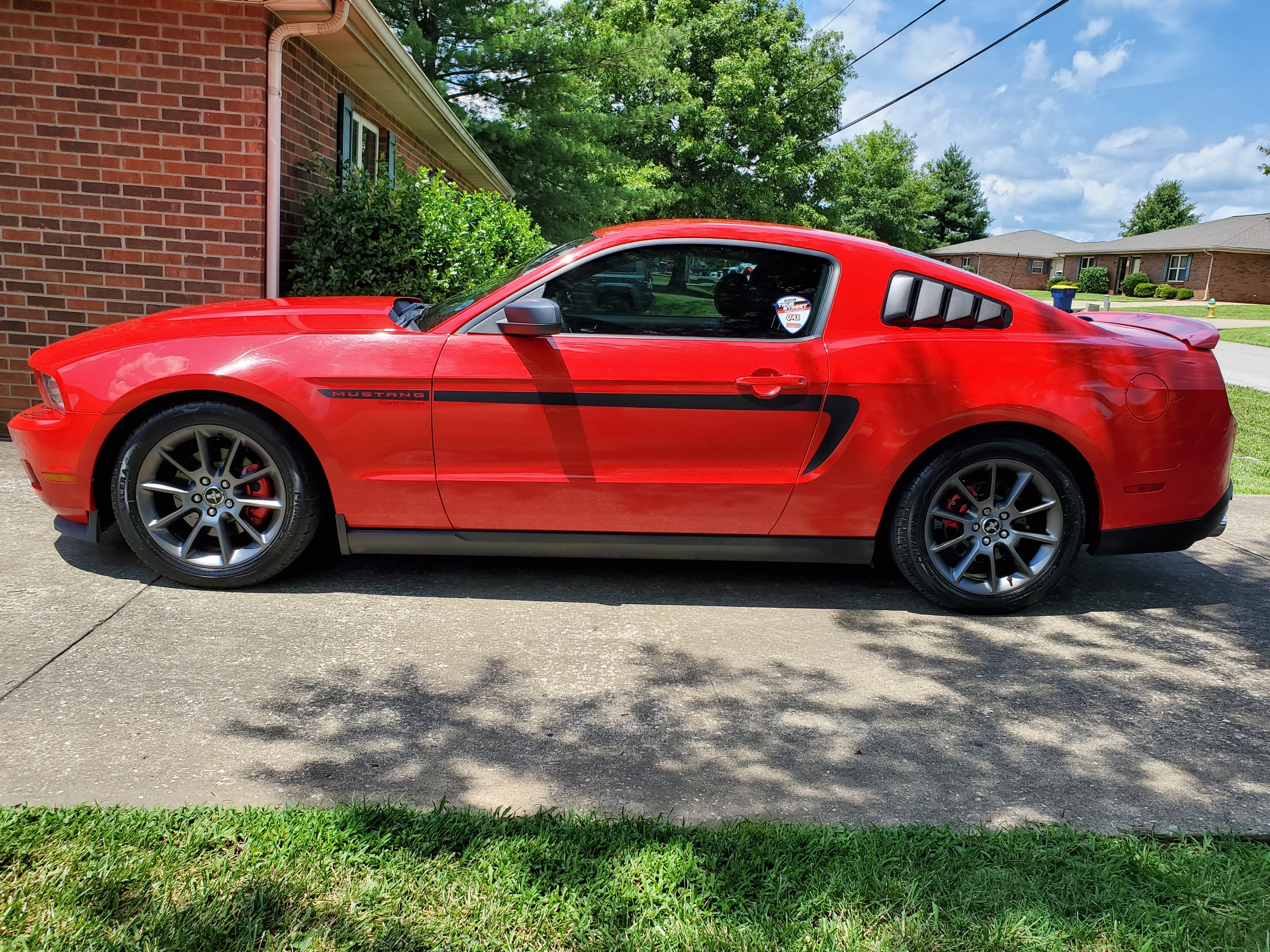
![]() The S550 represents the biggest generational leap in Mustang history: it replaced the S197's solid rear axle with a fully independent rear suspension, gained 25-75 HP across its engine lineup, and shed the previous generation's truck-like ride quality for genuine sports-car composure.
The S550 represents the biggest generational leap in Mustang history: it replaced the S197's solid rear axle with a fully independent rear suspension, gained 25-75 HP across its engine lineup, and shed the previous generation's truck-like ride quality for genuine sports-car composure.
Here's how the two platforms compare across the key metrics that matter for your build:
- Rear suspension: The S197 used a solid (live) rear axle -- great for straight-line drag launches but compromised over bumps and in corners. The S550's integral-link IRS keeps both rear wheels in contact with the pavement independently, transforming mid-corner stability and ride quality.
- Power: The final S197 GT made 420 HP from the Gen 1 Coyote; the first S550 GT opened with 435 HP from the Gen 2 Coyote, and the 2018+ car pushed that to 460 HP. Across every engine option, the S550 starts with more power.
- Curb weight: The S550 is slightly heavier than the S197 (roughly 3,530 lbs for a GT vs. 3,500 lbs), but the weight distribution is better -- approximately 52/48 front-to-rear compared to the S197's 54/46.
- Chassis rigidity: Ford quoted a significant improvement in torsional rigidity for the S550. The stiffer platform means suspension components do their actual job rather than fighting chassis flex.
- Interior quality: The S197 interior, especially in early models, felt utilitarian at best. The S550 brought a cabin that rivals European sports coupes in material quality and design.
- Technology: Selectable drive modes, electronic line-lock, launch control, and available MagneRide suspension were all firsts for the S550 generation.
The bottom line: if you're choosing between an S197 and S550 for a multi-purpose build -- something that needs to handle road courses, autocross, weekend cruises, and daily driving -- the S550 is the better platform by a wide margin. The S197 still has its place in dedicated drag builds where the solid axle is an advantage, but for everything else, the S550 is the better-engineered car.
S550 vs. S650: How the Seventh Generation Compares
![]()
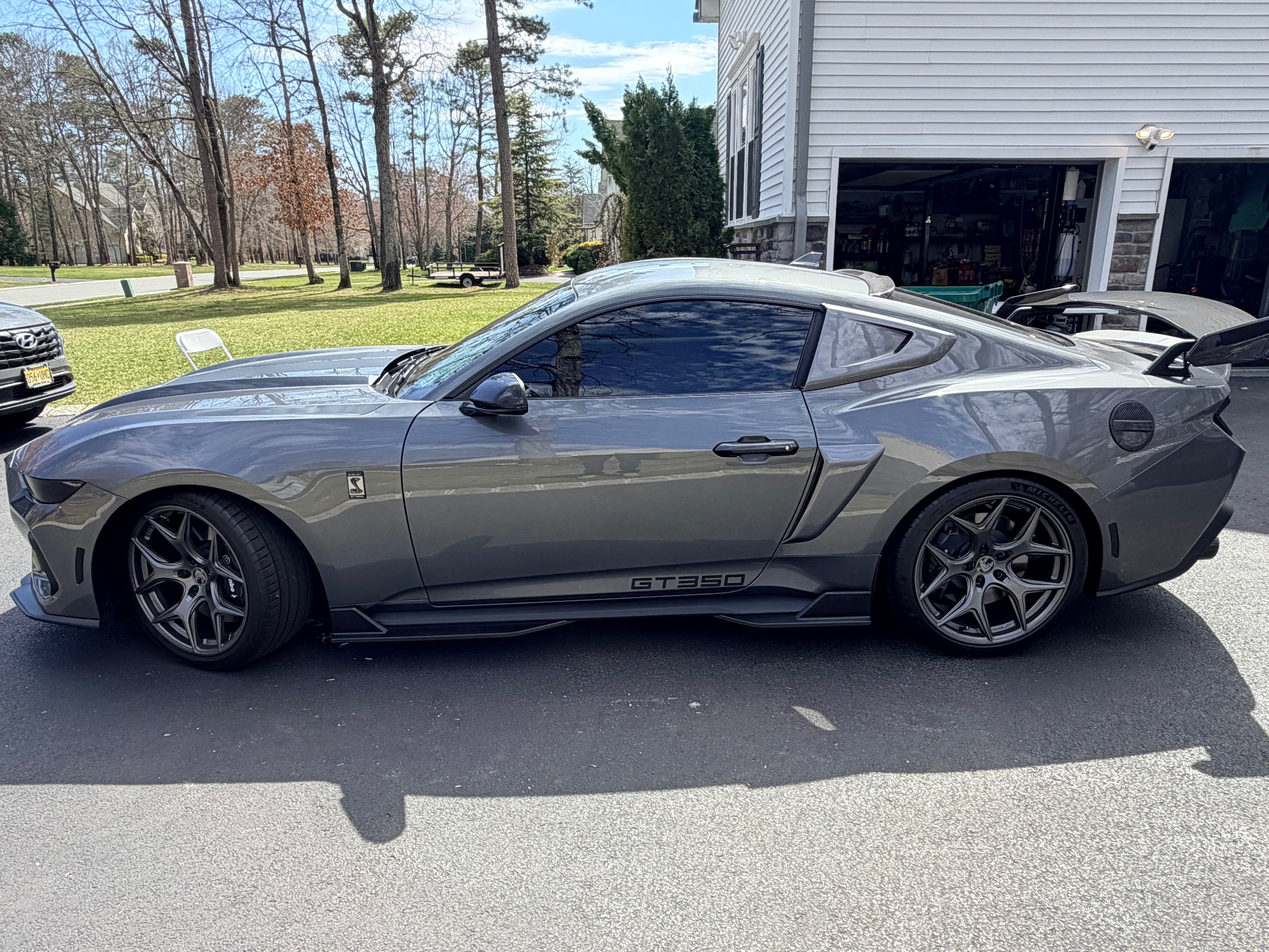
The S650 (2024+) is an evolution of the S550 platform rather than a clean-sheet redesign, sharing the same basic architecture but adding a revised interior, updated styling, and the new Dark Horse model that replaces the Mach 1 as the top naturally aspirated GT variant.
Here's what changed -- and what didn't:
- Platform: The S650 rides on a heavily revised version of the S550's architecture. It's not a new platform from scratch, which means many S550 aftermarket parts (especially suspension and drivetrain components) carry over or require minimal modification to fit.
- Weight: The S650 gained approximately 100 lbs over the S550 GT, pushing base curb weight past 3,800 lbs in some configurations. That added weight has been a consistent critique from the enthusiast community.
- Price: Base pricing for the S650 GT jumped significantly compared to the outgoing S550 GT. For budget-conscious builders, a used S550 GT now represents substantially more car per dollar.
- Dark Horse: The S650's headline model, the Dark Horse, produces 500 HP from a revised Coyote V8 with the GT350's connecting rods and Mach 1's oil coolers. It's a compelling car, but it also commands a hefty premium.
- Interior: The S650 received a completely redesigned cabin with a large center-mounted touchscreen and digital gauge cluster. Material quality is improved, but some enthusiasts miss the S550's more driver-focused layout.
- Manual transmission: Both generations offer a six-speed manual in the GT, but the S650 carries over a revised Getrag unit rather than adopting the Tremec that the Mach 1 used. The Mach 1's Tremec TR-3160 remains one of the S550's strongest advantages for manual-transmission enthusiasts.
For builders, the S550 is entering its golden era as a used performance platform. Prices are coming down, the aftermarket is fully mature, and every common issue has a well-documented solution. If you don't need the latest styling, the S550 delivers equal or better performance value compared to the S650 at a significantly lower cost of entry.
Best S550 Mustang Modifications
![]() The S550 platform has one of the deepest aftermarket catalogs of any modern performance car. Whether you're chasing power, handling, sound, or aesthetics, here are the modifications that deliver the most noticeable improvements for your dollar.
The S550 platform has one of the deepest aftermarket catalogs of any modern performance car. Whether you're chasing power, handling, sound, or aesthetics, here are the modifications that deliver the most noticeable improvements for your dollar.
Cold Air Intakes and Tuners
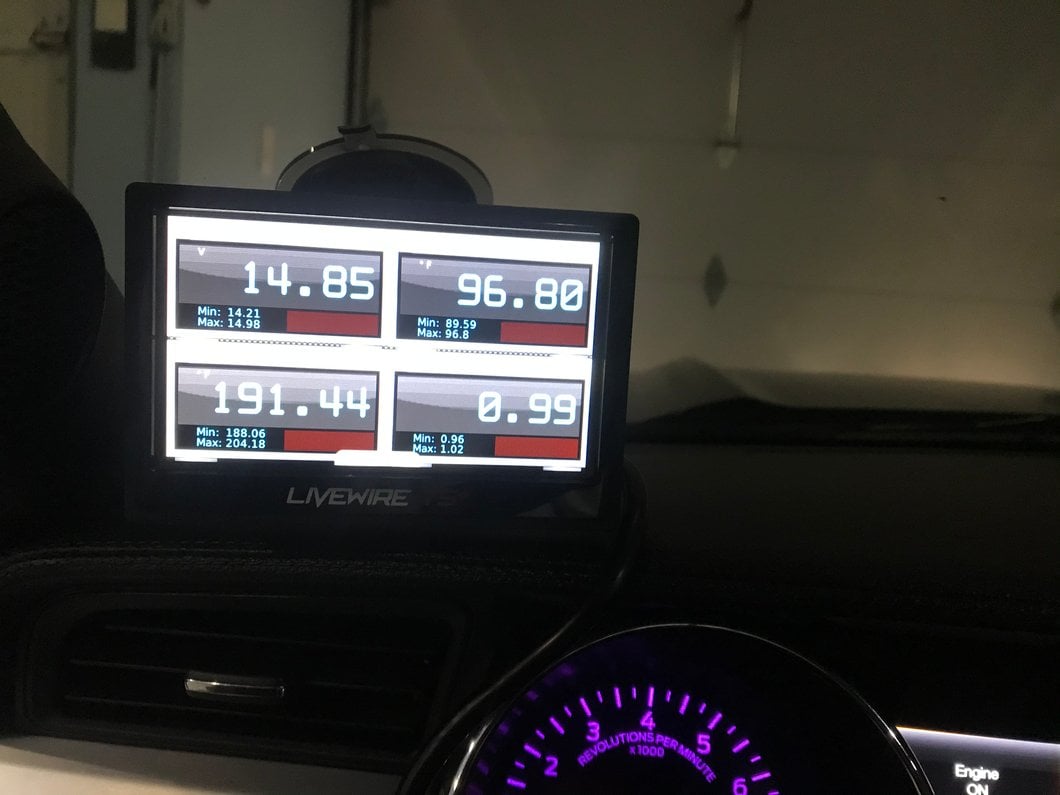
A cold air intake and a calibrated tune are the classic first mods for any S550 build, and for good reason -- they're the most cost-effective power adders you can bolt on. A quality cold air intake replaces the restrictive factory airbox with a larger-volume, free-flowing system that delivers cooler, denser air to the engine. On the GT, expect gains of 10-20 HP from the intake alone.
But the real magic happens when you pair it with a custom tune. A performance tuner recalibrates your fuel maps, ignition timing, and shift points (on automatics) to take full advantage of the increased airflow. Intake plus tune on a Gen 3 Coyote typically yields 30-50 wheel horsepower gains -- a massive return for a bolt-on modification that takes less than an hour to install.
On the EcoBoost side, the gains are even more dramatic. Because the 2.3L is factory-turbocharged, a tune can increase boost pressure significantly, and intakes paired with an upgraded intercooler and tune routinely push EcoBoost cars into the 340-380 wheel horsepower range.
Exhaust Systems
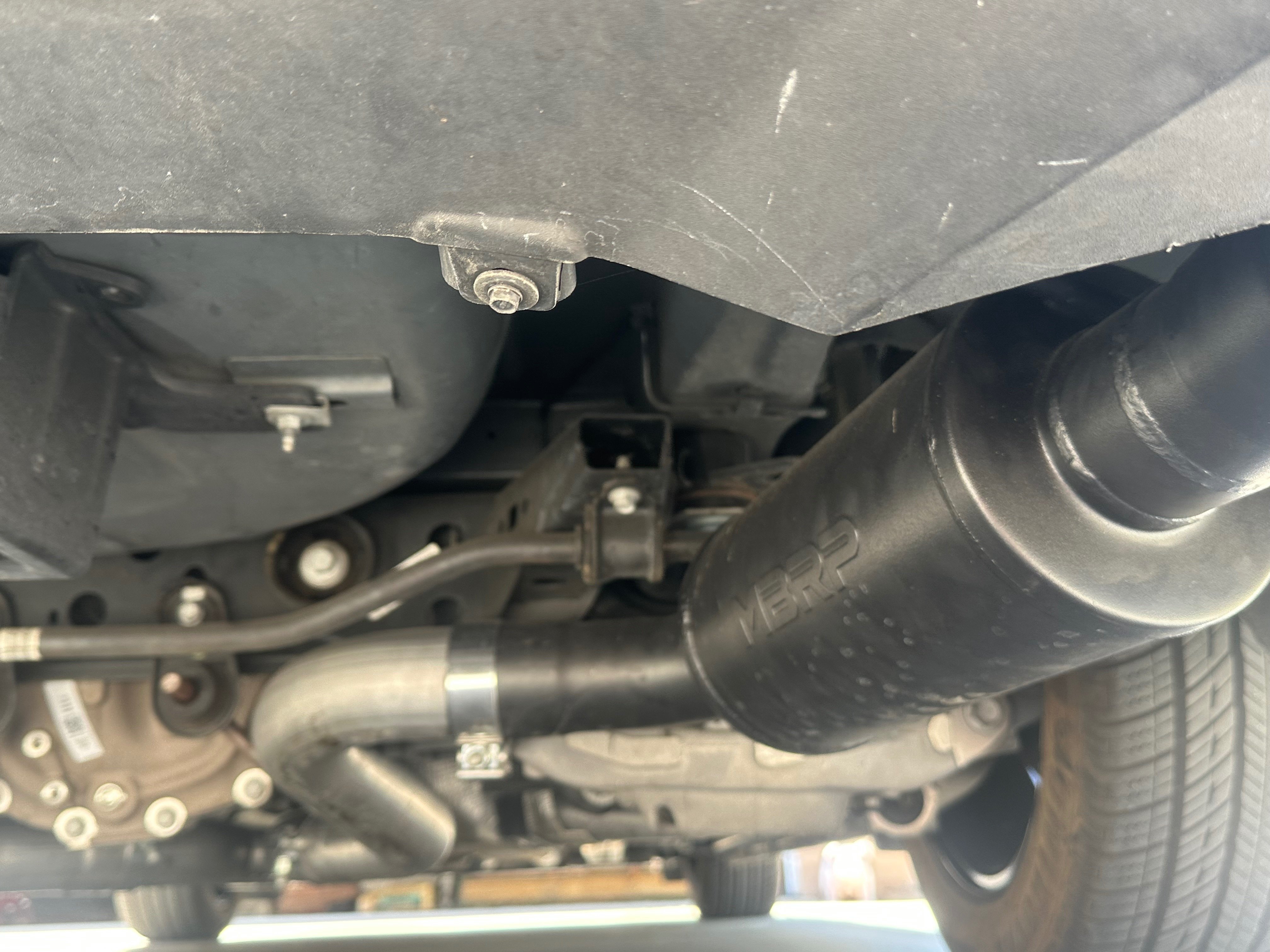
Exhaust upgrades are one of the most popular S550 modifications because they deliver three things simultaneously: more power, better sound, and improved aesthetics. The upgrade path typically follows a progression from least to most aggressive:
- Axle-back exhaust: Replaces the mufflers and tips behind the rear axle. Easiest install, best value for sound improvement, modest power gains (5-10 HP). Great starting point.
- Cat-back exhaust: Replaces everything from the catalytic converters rearward. Larger-diameter piping reduces backpressure and unlocks 10-25 HP on the GT, with a more aggressive exhaust note. Check out our guide to cat-back exhaust systems for sound-level comparisons and fitment details.
- Long-tube headers: The single biggest bolt-on power adder for the Coyote V8. Replacing the factory cast-iron exhaust manifolds with equal-length long-tube headers, paired with an off-road or catted mid-pipe and a tune, can add 40-60 wheel horsepower to a Gen 3 Coyote.
Keep in mind that exhaust modifications above the axle-back level typically require a tune to avoid check-engine lights and optimize the engine's calibration for the reduced exhaust backpressure.
Suspension Upgrades
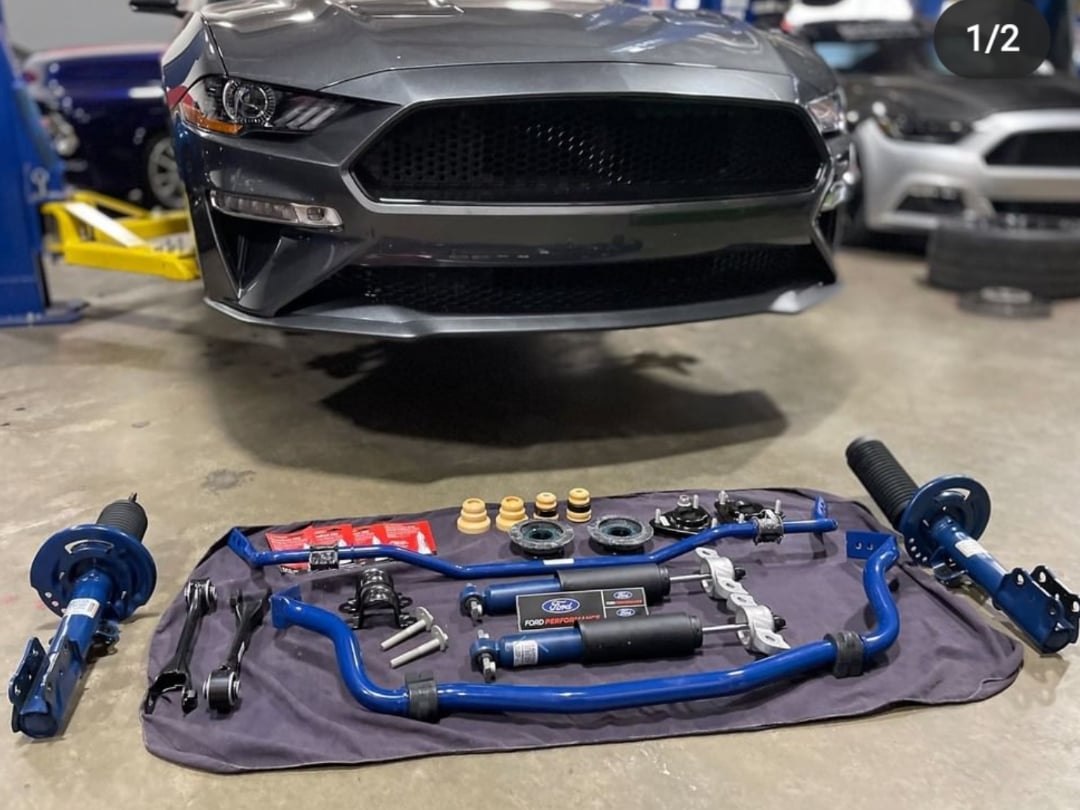
The S550's IRS is a fantastic foundation, but factory suspension is tuned for a broad range of drivers and road conditions. If you're taking your Mustang to autocross events, track days, or just want a tighter street feel, aftermarket suspension components make a transformative difference.
Start with lowering springs -- they reduce ride height by 1-1.5 inches, lower the center of gravity, and tighten body roll. If you want more adjustability, coilovers let you dial in ride height, damping force, and spring rate independently. For track-focused builds, adjustable sway bars, camber plates, and rear toe links let you fine-tune alignment geometry beyond what the factory allows.
Don't forget about bushings. The factory rubber bushings in the rear subframe, rear control arms, and differential mounts are designed for NVH comfort, not precision. Upgrading to polyurethane or spherical bushings sharpens steering response and reduces rear-end slop under hard cornering. For a complete overview of the suspension modification path, see our suspension upgrades guide.
Wheels and Tires
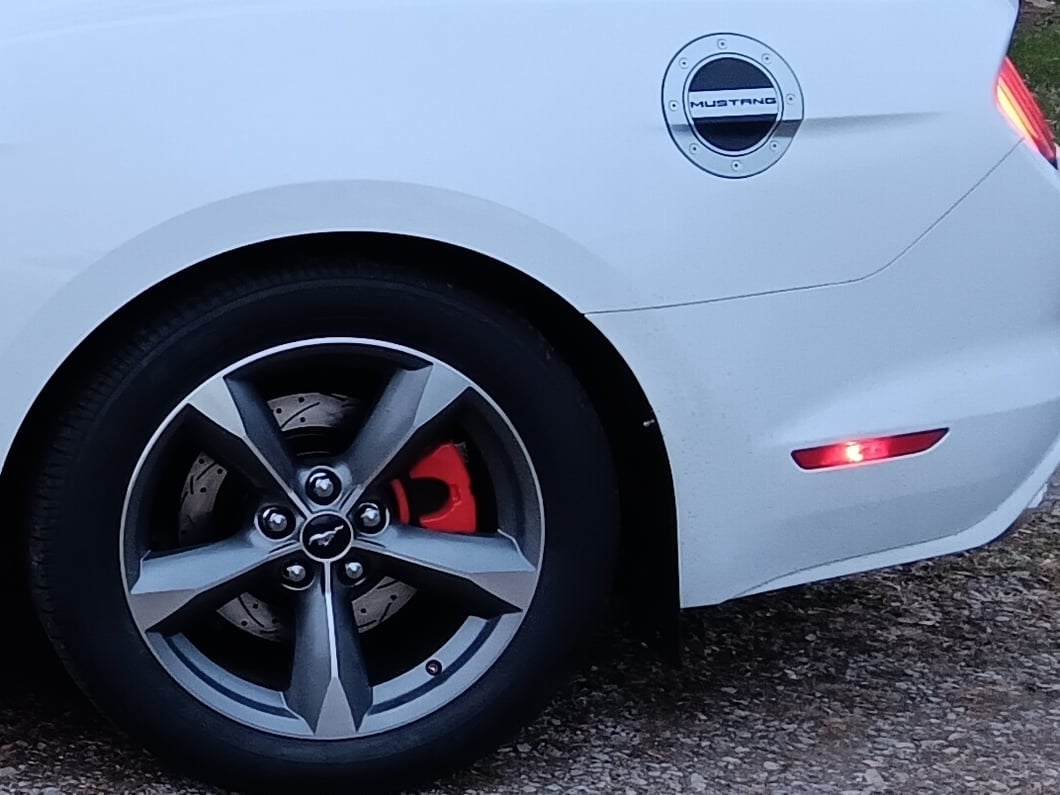
Tires are the single most impactful handling modification you can make -- period. All the suspension tuning in the world doesn't matter if you're rolling on mediocre rubber. For street use, a high-performance summer tire like a Michelin Pilot Sport 4S or Continental ExtremeContact Sport in the right size will transform your S550's cornering grip, braking distance, and steering feel.
Wheel sizing matters just as much. The S550 GT's factory stagger (different front and rear widths) is a good starting point, but many enthusiasts run a wider square setup for more predictable handling. Common aftermarket sizing includes 19x10 front and 19x11 rear or a 20x10/20x11 stagger for a more aggressive look. Our wheel sizing and fitment guide covers bolt patterns, offsets, and tire sizing in detail for every S550 submodel.
If you're also upgrading your drivetrain, consider pairing new rear gear ratios with your wheel and tire package -- changing tire diameter affects your effective gear ratio, and re-gearing ensures your engine stays in its optimal powerband.
Forced Induction
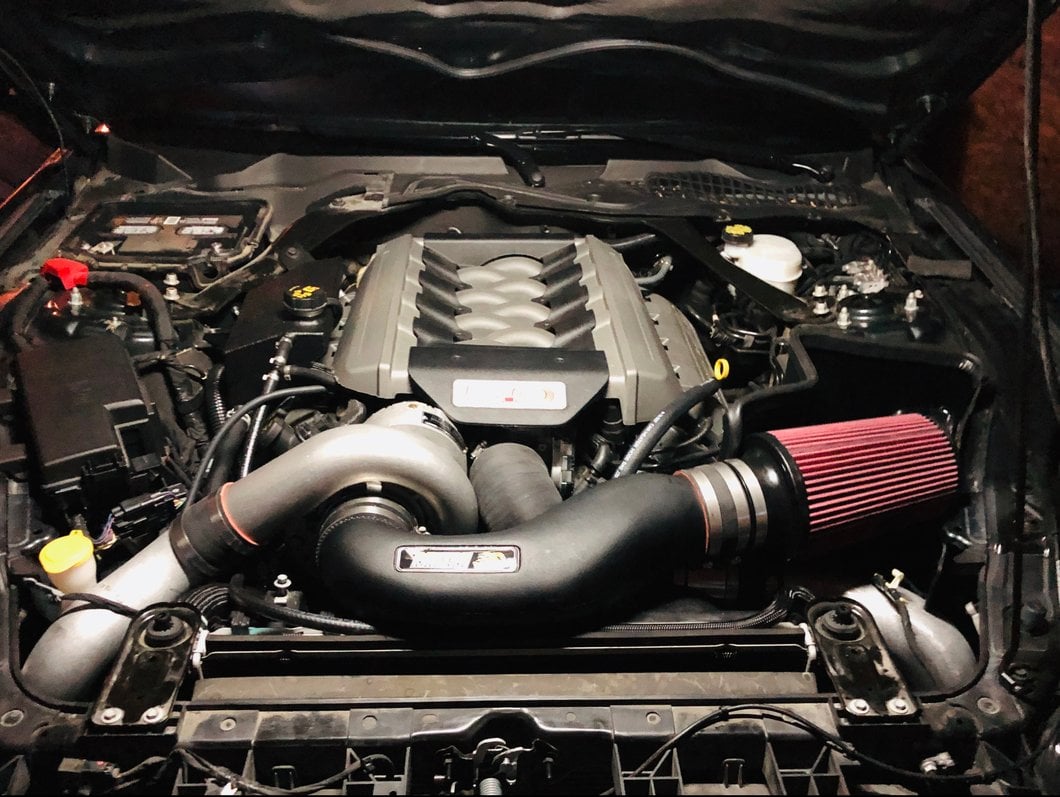
When bolt-ons aren't enough and you're ready to make serious power, forced induction is the next step. For the Coyote V8, supercharger kits are the most popular route because they deliver massive, linear power gains while maintaining the streetable character of the engine.
A quality supercharger kit on a Gen 3 Coyote typically pushes output to 700-800 wheel horsepower depending on the pulley size and tune. Roots-type and twin-screw superchargers are the most common choices for street-driven S550s because they provide strong low-RPM boost and predictable power delivery. Centrifugal superchargers are another option that trades low-end grunt for higher peak power numbers.
Turbocharger kits are available as well, offering the highest peak power potential but with more complex installation and tuning requirements. Before diving into forced induction, make sure your supporting modifications are in place: upgraded fuel system (injectors, fuel pump, lines), a quality tune from a reputable shop, and drivetrain upgrades (clutch, half-shafts, differential) to handle the increased torque.
S550 Mustang Buying Guide: What to Look For
![]() The best overall value in the S550 lineup is the 2018-2021 Mustang GT with Performance Pack 1 and the six-speed manual -- it delivers Gen 3 Coyote power, Brembo brakes, a Torsen limited-slip differential, and the broadest aftermarket support at a price that hasn't caught up to its performance capability.
The best overall value in the S550 lineup is the 2018-2021 Mustang GT with Performance Pack 1 and the six-speed manual -- it delivers Gen 3 Coyote power, Brembo brakes, a Torsen limited-slip differential, and the broadest aftermarket support at a price that hasn't caught up to its performance capability.
Best Years to Buy
If you want the best combination of features, refinement, and value, focus your search on 2018-2021 GT models. The 2018 facelift brought the Gen 3 Coyote, 10-speed automatic option, stiffer chassis, and updated interior. The 2021 model year added the Mach 1 to the lineup and represents the most refined version of the pre-special-edition S550.
For budget-conscious buyers, 2015-2017 GTs are becoming excellent values. The Gen 2 Coyote is a proven, reliable engine with strong aftermarket support, and prices have dropped significantly as 2018+ cars have become more available. Just be aware that you're getting the older SYNC 2 infotainment and the pre-facelift interior.
Price Ranges (Used Market)
As of 2024-2025, expect the following approximate price ranges for clean, low-mileage examples:
- 2015-2017 GT: $24,000-$32,000
- 2018-2023 GT: $30,000-$42,000
- 2018-2023 GT PP1: $33,000-$45,000
- Bullitt (2019-2020): $38,000-$52,000
- Mach 1 (2021-2023): $42,000-$55,000
- GT350 (2016-2020): $48,000-$70,000+
- GT350R (2016-2020): $60,000-$90,000+
- GT500 (2020-2023): $70,000-$100,000+
Prices vary significantly based on mileage, condition, color, and options. Manuals typically command a premium over automatics in the GT and higher trims.
Common Issues to Watch For
The S550 is a well-built platform, but there are a few known trouble areas to inspect during your pre-purchase check:
- MT-82 transmission issues (GT, pre-2018): Grinding on 1-2 upshifts, especially when cold. Check for smooth engagement in all gears during your test drive.
- Coolant intrusion (2015-2017 GT): Some early Gen 2 Coyote engines experienced coolant leaking into the cylinders through the water jacket crossover gaskets. Look for milky oil residue on the dipstick and white exhaust smoke.
- IRS clunking: The rear cradle bushings and differential mount bushings can develop play over time, creating a clunking noise over bumps. Not a safety issue, but it does indicate bushings that need replacing.
- Oil consumption (2015-2017): Some early Coyotes consumed oil at a higher-than-expected rate. Check oil level carefully and ask the seller about consumption habits.
- 10R80 adaptation issues (2018+): The 10-speed automatic can feel jerky or indecisive in its lower gears, especially in city driving. Ford released multiple TCM (transmission control module) recalibrations to address this. Ask whether the most recent update has been applied.
Manual vs. Automatic
This is ultimately a personal decision, but here are the practical considerations:
Choose the manual if you prioritize driver engagement, want the most connected driving experience, and plan to do your own wrenching. The manual GT with PP1 is the quintessential S550 enthusiast car. If you're looking at the GT350 or Mach 1, the Tremec TR-3160 is one of the best manual gearboxes in any modern muscle car.
Choose the 10-speed automatic if you want the fastest possible acceleration numbers, plan to use the car in stop-and-go traffic regularly, or are building a dedicated drag car. The 10R80 is genuinely faster than the manual in most performance metrics, and custom calibrations have turned it into a legitimate performance transmission. There's no shame in the auto -- it's a seriously capable unit.
The one exception is the GT500: it's DCT-only, so the choice is made for you. And honestly, the Tremec DCT is perfectly matched to the Predator's power delivery. You won't miss a third pedal.
Practical Takeaways for S550 Buyers and Builders
![]() Best value pick: A 2018-2021 GT with Performance Pack 1 and a six-speed manual gives you Gen 3 Coyote power, Brembo brakes, and a Torsen LSD at used prices in the low $30,000s.
Best value pick: A 2018-2021 GT with Performance Pack 1 and a six-speed manual gives you Gen 3 Coyote power, Brembo brakes, and a Torsen LSD at used prices in the low $30,000s.- Start with the chassis, not the engine: Wider tires, upgraded brake pads, and suspension mods will make a bigger difference in real-world performance than your first power adder.
- Check the transmission carefully: Pre-2018 MT-82 manuals can have grinding 1-2 shifts. Test all gears during your pre-purchase drive — cold and warm.
- Bolt-on power combo: A cold air intake, cat-back exhaust, and professional tune together deliver 30-50 wheel horsepower on a Coyote V8 for under $2,000 total.
- Don't overlook the EcoBoost: The 2.3L turbo responds aggressively to mods — intake, intercooler, and tune push it past 350 wheel HP without opening the engine.
- PP1 is essential, PP2 is optional: The Brembo brakes and Torsen diff in PP1 are must-haves. PP2 adds MagneRide and wider rubber, but it's not necessary unless you're tracking regularly.
- Verify links and fitment: Always confirm part fitment by year, engine, and transmission before ordering — the S550 had significant changes between 2015-2017 and 2018-2023 models.
Start Your S550 Mustang Build
The S550 is one of the most rewarding platforms you can own, modify, and drive -- whether you're building a daily with bolt-ons, a weekend track car, or a 700+ HP monster. With eight model years of production, a massive aftermarket, and prices that are still accessible, there's never been a better time to jump in. Explore AmericanMuscle's complete catalog of S550 Mustang parts and accessories to find everything you need for your build -- from cold air intakes and exhaust systems to suspension kits, wheels, and forced induction. Whatever you're building, we've got the parts to get you there.