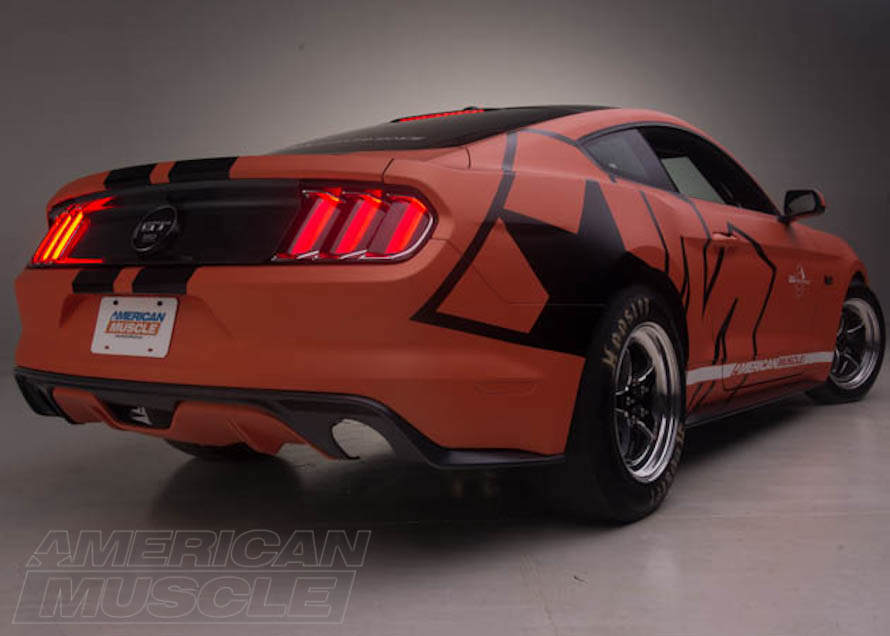
Running stock rubber on your S550 and wondering whether a wider tire will actually fit — or whether you will end up rolling fenders and trimming inner liners? You have come to the right place. The S550 Mustang (2015–2023) is one of the most tire-friendly platforms Ford has ever built, capable of fitting up to a 315-width rear tire with zero modifications. In this guide, we will walk you through every stock tire and wheel combination by trim and year, show you the maximum widths that clear front and rear, explain how tire sizing notation works (for example, 235/55R17 — where 235 is the section width in millimeters, 55 is the aspect ratio or sidewall height as a percentage of width, R means radial construction, and 17 is the wheel diameter in inches), and help you pick the right setup for your build — whether you are daily driving, hitting the drag strip, or chasing lap times on a road course.
Stock Tire and Wheel Sizes by Trim and Year
![]() Before you start shopping for wider rubber, you need to know exactly what came on your car from the factory. The S550 Mustang (2015–2023) spans a wide range of stock tire and wheel combinations depending on the trim level, model year, and whether any factory performance packages were optioned. Knowing your baseline is the first step to choosing the right upgrade.
Before you start shopping for wider rubber, you need to know exactly what came on your car from the factory. The S550 Mustang (2015–2023) spans a wide range of stock tire and wheel combinations depending on the trim level, model year, and whether any factory performance packages were optioned. Knowing your baseline is the first step to choosing the right upgrade.
The table below covers every major S550 trim and package. If you see "staggered," that means the rear wheels and tires are wider than the fronts — Ford did this from the factory on several performance-oriented trims to maximize rear traction.
|
Model / Trim
|
Standard Wheel
|
Standard Tire
|
Optional Wheel
|
Optional Tire
|
|
V6 (2015–2017)
|
17x7.5
|
235/55R17
|
18x8
|
235/50R18
|
|
EcoBoost (2015–2023)
|
17x7.5
|
235/55R17
|
18x8 / 19x8.5
|
235/50R18 / 255/40R19
|
|
EcoBoost w/ Performance Pack (2018+)
|
19x8.5
|
255/40R19
|
—
|
—
|
|
GT (2015–2017)
|
18x8
|
235/50R18
|
19x8.5
|
255/40R19
|
|
GT (2018–2023)
|
18x8
|
255/45R18
|
19x9 / 19x9.5
|
255/40R19 / 275/40R19
|
|
GT w/ Performance Pack 1 (2015–2017)
|
19x9 (F) / 19x9.5 (R)
|
255/40R19 (F) / 275/40R19 (R)
|
—
|
—
|
|
GT w/ Performance Pack 1 (2018–2023)
|
19x9 (F) / 19x9.5 (R)
|
255/40R19 (F) / 275/40R19 (R)
|
—
|
—
|
|
GT w/ Performance Pack 2 (2019–2020)
|
19x10.5 (F) / 19x11 (R)
|
305/30R19 (F) / 315/30R19 (R)
|
—
|
—
|
|
GT350 (2015–2020)
|
19x10.5 (F) / 19x11 (R)
|
295/35R19 (F) / 305/30R19 (R)
|
—
|
—
|
|
GT500 (2020–2022)
|
20x11 (F) / 20x11.5 (R)
|
305/30R20 (F) / 315/30R20 (R)
|
Carbon fiber track pack wheels (same size)
|
305/30R20 (F) / 315/30R20 (R)
|
|
Mach 1 (2021–2023)
|
19x9.5 (F) / 19x10 (R)
|
285/30R19 (F) / 305/30R19 (R)
|
—
|
—
|
|
Mach 1 w/ Handling Pack (2021–2023)
|
19x10.5 (F) / 19x11 (R)
|
305/30R19 (F) / 315/30R19 (R)
|
—
|
—
|
As you can see, there is a significant jump in tire width as you move up the trim ladder. The base V6 and EcoBoost models roll on modest 235-width rubber, while the GT350 and GT500 push into 295, 305, and even 315 territory from the factory. That factory range is actually great news for you — it means the S550 platform is engineered to handle wide tires without major suspension or fender work.
If you are looking for a direct replacement set, check out our full selection of S550 Mustang tires. Want a complete package with wheels, tires, and free mounting and balancing? Browse our wheel and tire packages filtered by your specific year and trim.
What Is the Widest Tire for an S550 Mustang?
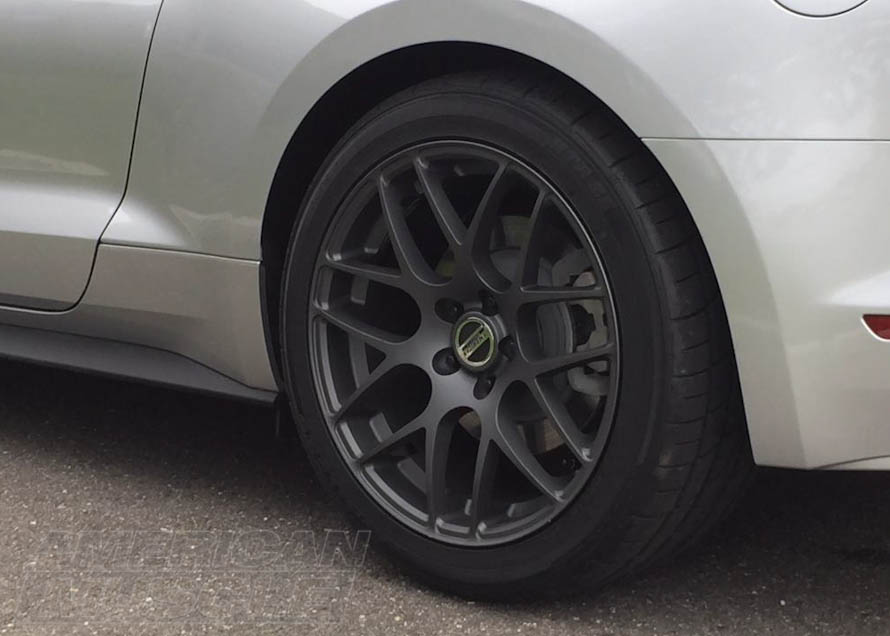
The S550 Mustang can fit a 315-width tire in the rear and a 305 up front without any modifications for fender clearance. That is one of the biggest advantages of the S550 platform — Ford engineered generous fender wells and suspension geometry that accommodate seriously wide rubber right out of the box.
Maximum Rear Tire Width
For the rear, a 315/30R19 or 315/30R20 on a 19x11 or 20x11.5 wheel is the practical maximum on a stock-body S550 without any fender rolling or trimming. This is the same size Ford fits on the GT500 and GT Performance Pack 2 from the factory. If you are running lowering springs or coilovers with aggressive drop, you may need to fine-tune your ride height to avoid contact with the inner fender liner at full compression.
Some owners push to 325-width or wider in the rear, but at that point you are likely looking at fender rolling, pulling, or aftermarket fender flares. For most enthusiasts, 315 is the sweet spot — maximum contact patch with zero bodywork.
Maximum Front Tire Width
Up front, 305/30R19 is the widest common fitment that clears without rubbing on a properly set-up S550. The GT350 runs 295/35R19 fronts from the factory, and the GT500 runs 305/30R20 fronts, confirming that Ford designed the front knuckle geometry and fender opening for up to 305-width rubber. Going wider than 305 up front usually creates interference with the steering knuckle or inner fender at full lock.
Clearance by Suspension Setup
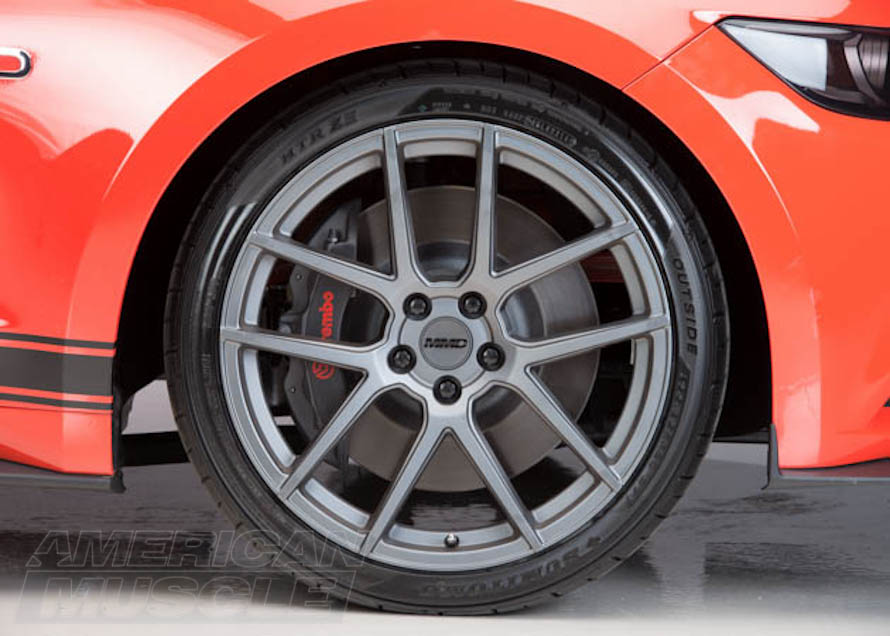
Your suspension setup directly affects how wide you can go. Here is a quick reference:
- Stock suspension: 305 front / 315 rear fits with no issues on the appropriate wheel widths.
- Lowering springs (1–1.5-inch drop): Same tire widths usually clear, but double-check inner fender clearance — some spring kits bring the tire closer to the liner at full jounce.
- Coilovers with adjustable ride height: You get the most flexibility here because you can dial in exactly how much clearance you need. A quality set of coilover kits lets you run maximum width while maintaining full suspension travel.
- Drag-specific setups: If you are running dedicated drag and competition tires like a 315/60R15 or wider slick, you will likely need tubs or mini-tubs for the rear, plus tubular or relocated control arms.
How to Choose the Right S550 Tire Size
Choosing the right tire size is not just about width — it is about making sure your new tire's overall diameter stays close to the factory spec so your speedometer, odometer, ABS, and traction control systems continue to work correctly. Get this wrong, and you are looking at inaccurate speed readings, botched shift points if you are running an automatic, and potentially a check-engine light.
The key rule to follow is the 3% speedometer rule: your replacement tire's overall diameter should be within 3% of the original tire's diameter. Go beyond that, and your speedometer will read noticeably fast or slow. For example, if your stock 255/40R19 tire has an overall diameter of approximately 27.0 inches, your replacement should fall between about 26.2 and 27.8 inches.
When you increase tire width, the sidewall height (the second number in the tire size — the "40" in 255/40R19) becomes critical. That number is an aspect ratio, meaning it is a percentage of the section width. So a 275/40R19 has a taller sidewall in absolute terms than a 255/40R19, even though both are "40-series," because 40% of 275 mm is larger than 40% of 255 mm. This means going wider with the same aspect ratio increases your overall diameter — you may need to drop to a shorter sidewall (like a 35 or 30 series) to compensate.
The easiest way to verify your numbers is to use a tire size calculator. Plug in your stock size and your proposed new size, and it will show you the diameter difference, speedometer error, and revolutions per mile. Our wheel sizing guide also walks you through matching wheel width to tire width — for example, a 305-width tire typically needs a 10 to 11-inch-wide wheel for the correct profile.
Best Tire Types for Your S550 Mustang
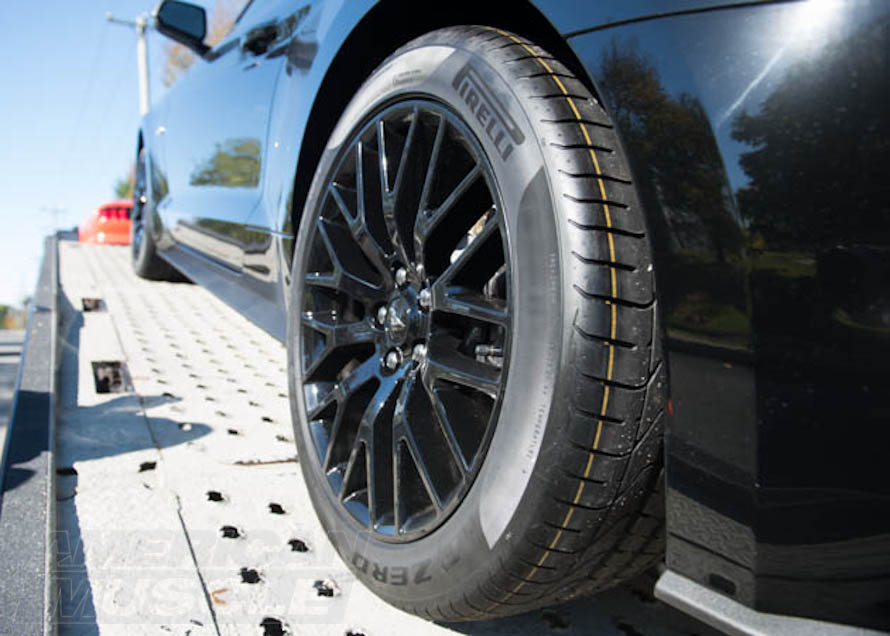
![]() Not all tires are built the same, and your choice of compound and tread pattern should match how you actually drive your Mustang. Here is a breakdown of the four main categories most S550 owners consider.
Not all tires are built the same, and your choice of compound and tread pattern should match how you actually drive your Mustang. Here is a breakdown of the four main categories most S550 owners consider.
Summer Tires
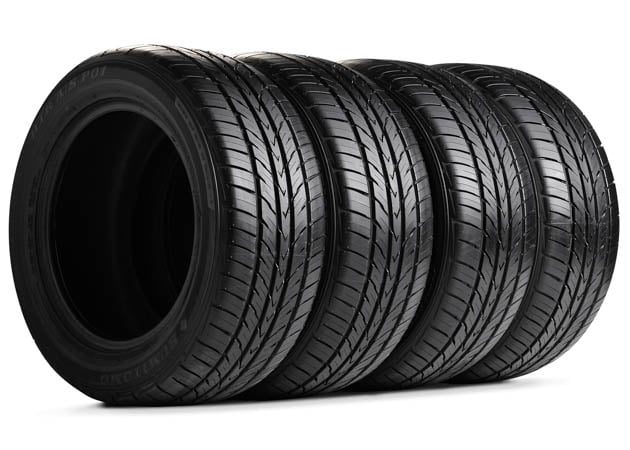
Summer performance tires are the go-to for most enthusiasts who daily drive their S550 in warm climates or garage it during winter. They use a softer compound and aggressive tread design to maximize grip in dry and wet conditions above roughly 40 degrees Fahrenheit. Expect significantly better braking and cornering compared to the stock all-season rubber that comes on base models. The tradeoff is tread life — most summer tires last 20,000 to 40,000 miles depending on driving style.
All-Season Tires
If your S550 is your daily driver year-round — including cold mornings and occasional light snow — all-season tires keep you moving safely without swapping sets. Modern high-performance all-seasons have closed the gap on summer tires considerably, offering reasonable dry grip while maintaining cold-weather flexibility. They are a solid choice for EcoBoost and V6 owners who want a single set that handles everything from a Monday commute to a weekend cruise.
Drag Radials
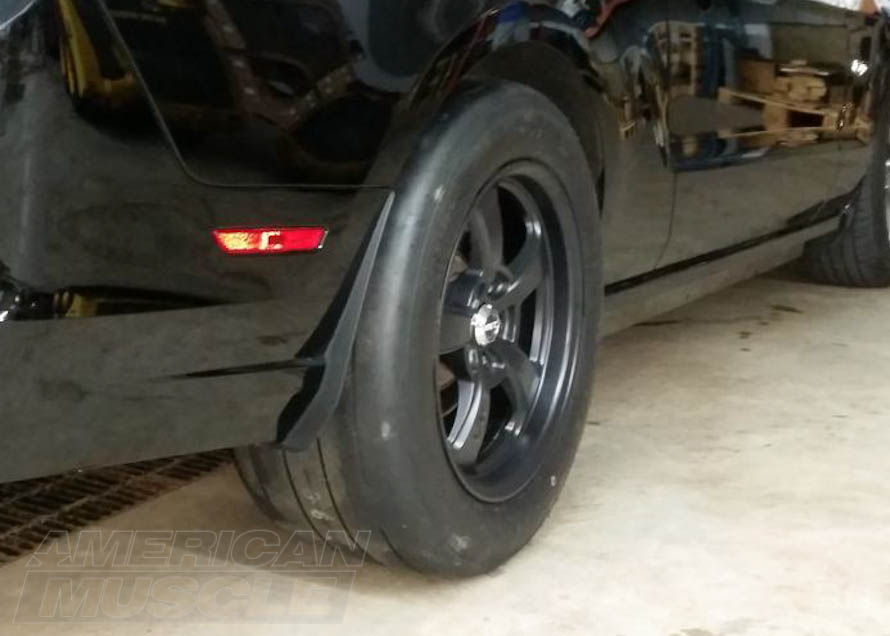
Drag radials are purpose-built for straight-line traction off the line. They feature an extremely soft compound and minimal tread to maximize the contact patch at launch. Popular sizes for the S550 include 305/45R17 and 315/35R17 on 17-inch drag wheels, or 305/35R20 if you want to keep your factory 20-inch setup. Drag radials are street-legal but wear fast on daily-driven cars — most owners run them on a dedicated rear set for strip days.
Track-Day Tires
For road-course and autocross use, you want a 200-treadwear or lower competition tire designed for lateral grip and sustained high-speed cornering. These tires generate enormous grip when they reach operating temperature but can feel slippery on cold laps. Most track-day S550 owners run a square setup — the same tire width on all four corners, typically 285/35R19 or 305/30R19 — so they can rotate tires evenly and maintain balanced handling through long sweeping turns.
For a more detailed comparison, check out our guide to the best tires for your Mustang or jump straight to our picks for the best tires for the S550.
Why Upgrade to Wider Tires on Your S550?
Wider tires put more rubber on the pavement, and more rubber on the pavement means more grip — period. But the benefits go deeper than that, and understanding them helps you pick the right width for your goals.
Traction and Launch
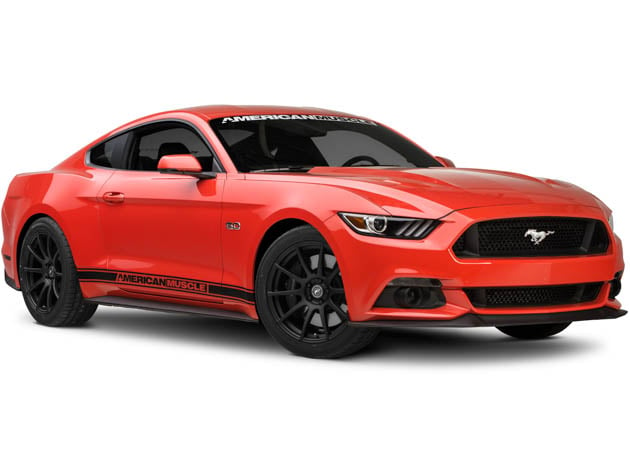
If you have ever felt your S550 GT spin the rear tires in first and second gear on a warm day, you already know why wider tires matter. The stock 235 or 255-width rear tires on base GTs simply cannot handle the torque on aggressive launches. Moving to a 285 or 305-width rear tire dramatically increases the contact patch — the physical area of rubber touching the road. That larger contact patch distributes the torque over more surface area, reducing wheelspin and improving your 60-foot times at the strip.
Braking and Cornering
It is not just about straight-line grip. Wider tires also improve braking distances and cornering G-forces. A wider contact patch gives the tire more surface area to resist lateral forces in a turn and more friction to work with under hard braking. On a road course, the difference between stock 255-width tires and a set of 295s or 305s can shave seconds off your lap times while giving you more confidence to push your entry speeds.
Staggered Versus Square Setups
One of the biggest decisions when upgrading your S550's tires is whether to go staggered or square:
Staggered (wider rear, narrower front): This is the classic muscle car approach and what Ford does on most factory performance trims. A staggered setup — for example, 275/40R19 front and 305/35R19 rear — biases traction toward the drive wheels. It is ideal for drag launches, street driving, and that aggressive rear-heavy stance most owners want. The downside is that you cannot rotate tires front to rear, so your rears will wear faster.
Square (same size all four corners): A square setup — like 285/35R19 all around — allows full tire rotation and produces more balanced, neutral handling on a road course. It is the preferred setup for autocross and track-day drivers who need predictable turn-in and equal grip front and rear. You sacrifice some of that rear-heavy look, but you gain even tire wear and handling consistency.
For most street and drag-oriented S550 owners, staggered is the way to go. If you are building a dedicated track car, square makes more sense. Check out our guide on drag racing suspension setup for more detail on pairing your tire choice with the right suspension geometry, and browse our full selection of S550 wheels to find the right width for your setup.
Wheel Spacers and Offset for S550 Tire Upgrades
When you upgrade to wider tires and wheels, offset and spacing become just as important as the tire size itself. Get the offset wrong, and your new setup could rub the inner fender or poke out past the fender lip — neither of which is the look or function you want.
Offset is the distance in millimeters from the wheel's mounting surface to the centerline of the wheel. The factory S550 offset range is typically 35 mm to 45 mm, depending on the trim and wheel width. A lower offset (closer to 35 mm) pushes the wheel face outward toward the fender lip, giving you a more aggressive stance. A higher offset (closer to 45 mm) tucks the wheel further inboard.
When you go wider on the wheel — say from a stock 9-inch-wide wheel to an 11-inch-wide wheel — you often need to decrease the offset slightly to prevent the inner lip of the wheel from contacting the suspension or inner fender. Most aftermarket S550 wheels in the 10 to 11-inch width range come with an offset between 35 mm and 50 mm specifically tuned for clearance.
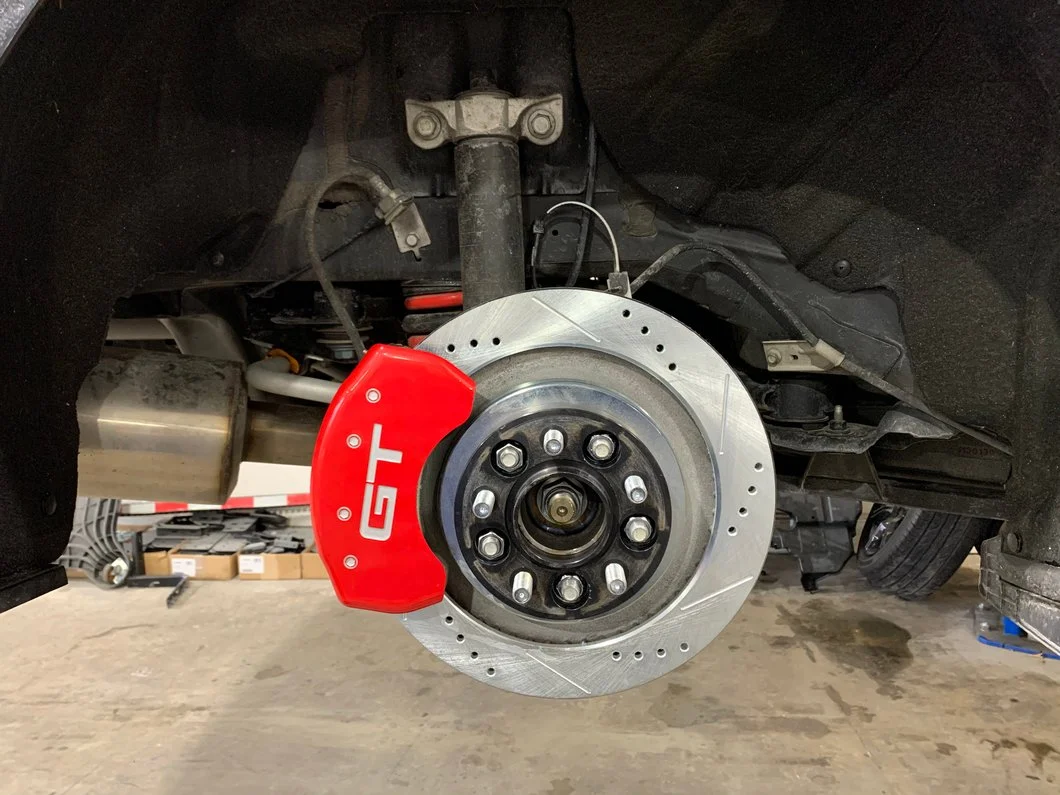
Wheel spacers are another option when your wheels have the right width but slightly too much offset. A 15 mm or 20 mm hubcentric wheel spacer effectively reduces the offset and pushes the wheel outward. Hubcentric spacers — ones machined to match the S550's 70.5 mm hub bore — are critical for vibration-free performance and safe wheel centering. Never run non-hubcentric spacers on a car you drive at speed.
Not sure whether you need spacers or just different-offset wheels? Our wheel spacer guide breaks down the math and shows you how to measure your current fitment so you know exactly what you need before you order.
Practical Takeaways
![]() Here is a quick-reference checklist to keep handy when shopping for your next set of S550 tires:
Here is a quick-reference checklist to keep handy when shopping for your next set of S550 tires:
- Start with your baseline: Find your trim and year in the stock fitment table above so you know your factory tire size, wheel width, and offset before you start comparing upgrades.
- Follow the 3% rule: Whatever width you choose, make sure the overall tire diameter stays within 3% of stock. Use a tire size calculator to verify before you order.
- Match wheel width to tire width: A 275 tire fits a 9.5-inch wheel, a 305 needs at least a 10-inch wheel, and a 315 needs a 10-inch minimum (10.5 recommended).
- Choose staggered or square based on your goals: Staggered (wider rear) for drag and street stance. Square (same all four corners) for road-course handling and even tire wear.
- Check your offset before ordering wheels: The S550 factory offset range is 35–45 mm. Wider wheels often need a slightly lower offset. If your offset is too high, hubcentric spacers are a clean fix.
Pick the right compound for how you drive: Summer tires for warm-weather grip, all-seasons for year-round daily driving, drag radials for strip traction, and 200-treadwear tires for road-course work.
Conclusion
![]() The S550 Mustang gives you one of the widest tire fitment envelopes of any modern muscle car — from modest 235-width daily drivers to aggressive 315-width drag setups, all without cutting or rolling a single fender panel. Whether you are chasing better grip off the line, sharper turn-in on a road course, or just want that aggressive rear-heavy stance, the right tire size is out there for your build. Use the fitment tables and sizing guidance in this guide to narrow down your options, and you will be rolling on the perfect setup in no time.
The S550 Mustang gives you one of the widest tire fitment envelopes of any modern muscle car — from modest 235-width daily drivers to aggressive 315-width drag setups, all without cutting or rolling a single fender panel. Whether you are chasing better grip off the line, sharper turn-in on a road course, or just want that aggressive rear-heavy stance, the right tire size is out there for your build. Use the fitment tables and sizing guidance in this guide to narrow down your options, and you will be rolling on the perfect setup in no time.
Ready to put the right rubber on your S550? Whether you are looking for a direct-fit replacement, a wider upgrade for better traction, or a full wheel and tire package with free mounting and balancing, you can find everything filtered by your exact year and trim. Explore our full lineup of S550 wheels and tires and get the fitment dialed in for your build.
Frequently Asked Questions About S550 Mustang Tire Sizes
These are the most common questions S550 Mustang owners ask when upgrading their wheels and tires.
What Are the Stock Tire Sizes on an S550 Mustang?
The S550 Mustang (2015-2023) came with stock tire sizes ranging from 235/55R17 on the base V6 and EcoBoost to 305/30R19 on the GT350 and 315/30R20 on the GT500. The GT shipped standard with 235/50R18 tires on 18x8 wheels, while staggered setups with 275/40R19 rears were available as options on select trims.
What Is the Widest Tire You Can Fit on an S550 Mustang?
The S550 Mustang can comfortably fit a 315-width tire in the rear and a 305-width tire up front without any modifications for fender clearance. A 315 tire requires a minimum 10-inch-wide wheel to mount properly. This makes the S550 one of the most tire-friendly Mustang platforms ever built.
Can You Fit 315 Tires on an S550 Without Modifications?
Yes, a 315 tire fits the rear of an S550 Mustang without needing fender rolling, quad shock removal, or control arm trimming. The only requirement is a wheel at least 10 inches wide with proper offset and backspacing. Similarly, a 305 tire clears the front without modifications on most suspension setups.
What Wheel Size Do I Need for Wider S550 Tires?
For wider S550 tires, match the wheel width to the tire width. A 275 tire fits well on a 9.5-inch wheel, a 305 tire needs at least a 10-inch wheel, and a 315 tire requires a minimum 10-inch wheel (10.5 recommended). Wheel diameters from 17 to 20 inches all work on the S550 platform with proper offset.
How Do Wider Tires Affect My S550 Speedometer?
Wider tires can throw off your speedometer if the overall tire diameter changes significantly. The industry standard allows no more than a 3% speedometer error. When upsizing tire width, choose a profile that keeps the overall diameter within 3% of stock — for example, going from a 255/40R19 to a 305/30R19 maintains a similar overall height.
What Is the Best Tire Setup for S550 Drag Racing?
For S550 drag racing, a staggered setup with 305 or 315 drag radials in the rear and narrower 255 or 275 tires up front maximizes straight-line traction while reducing front-end weight. Mickey Thompson ET Street R and Nitto NT555R II are popular choices among S550 drag racers looking for consistent 60-foot times.
Should I Run Staggered or Square Tires on My S550?
Choose staggered (wider rear, narrower front) for drag racing or aggressive street looks. Choose square (same size all around) for road course driving, autocross, or if you want to rotate tires for even wear. Square setups with 275 or 285 tires on all four corners are popular among S550 track day enthusiasts.
Do I Need Wheel Spacers for Wider Tires on an S550?
Wheel spacers are not required for most wider tire upgrades on the S550 if your wheels have the correct offset (typically 35-45mm for the S550 platform). However, hubcentric spacers can push stock-offset wheels outward for a more aggressive stance. Always use hubcentric spacers rated for your lug pattern to maintain proper wheel centering.