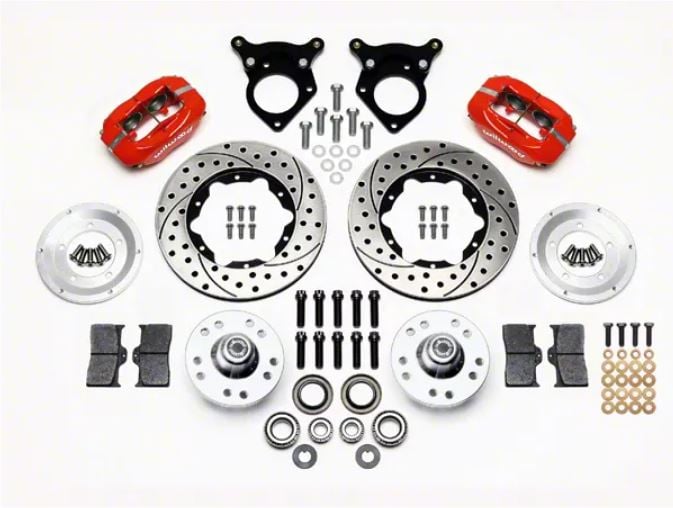
Are your Mustang's brakes squealing every time you roll up to a stoplight? Or maybe you've bolted on a cold air intake, a tune, and a set of long-tube headers — and now the car feels like it takes half a football field to slow down from highway speed? You're not alone, and you've come to the right place.
Whether you're commuting in a bone-stock EcoBoost or pushing a 700-horsepower Coyote on track days, the right brakes can be the difference between confident driving and a white-knuckle experience. In this guide, we'll walk you through the best brake pads, rotors, and complete kits for your Mustang — covering every generation from Fox Body to S550 — so you can find the perfect setup for the way you actually drive.
Why Upgrading Your Mustang's Brakes Matters
Your Mustang's braking system is the single most important safety component on the car. Factory brakes are engineered to handle stock power levels and everyday driving conditions, but the moment you start adding horsepower — whether through a supercharger, turbo kit, or even basic bolt-ons — you're asking those same brakes to manage significantly more kinetic energy every time you hit the pedal.
Here's the physics: kinetic energy — the energy of your car in motion — increases with the square of your speed. That means doubling your speed quadruples the energy your brakes need to absorb. Add a few hundred extra horsepower and you're reaching higher speeds more quickly, which compounds the problem. Your stock pads and rotors can overheat, leading to brake fade — a dangerous condition where the friction material loses its ability to grip the rotor, and your pedal feels soft or spongy right when you need it most.
Upgraded brakes deliver three major benefits:
- Shorter stopping distances: Higher-quality pad compounds and larger rotors provide more friction surface area and stronger initial bite, bringing you to a stop faster.
- Better heat management: Performance rotors and pads are designed to dissipate heat more efficiently, which means consistent pedal feel lap after lap or stop after stop.
- Reduced dust and noise: Modern ceramic and carbon-fiber ceramic compounds produce far less brake dust than stock semi-metallic pads, keeping your wheels cleaner and cutting down on that annoying squeal.
Do you need to upgrade brakes after adding horsepower? If you've added more than about 50 horsepower over stock — or if you're planning to do any track days, autocross events, or spirited canyon driving — upgrading your brakes isn't just a nice idea, it's essential. Even on a stock-power Mustang, upgrading to better pad compounds and rotors can dramatically improve your daily driving confidence and extend the life of your brake components.
Learn more about the benefits of upgrading your Mustang's brakes in our dedicated guide.
How to Choose the Right Brakes for Your Mustang
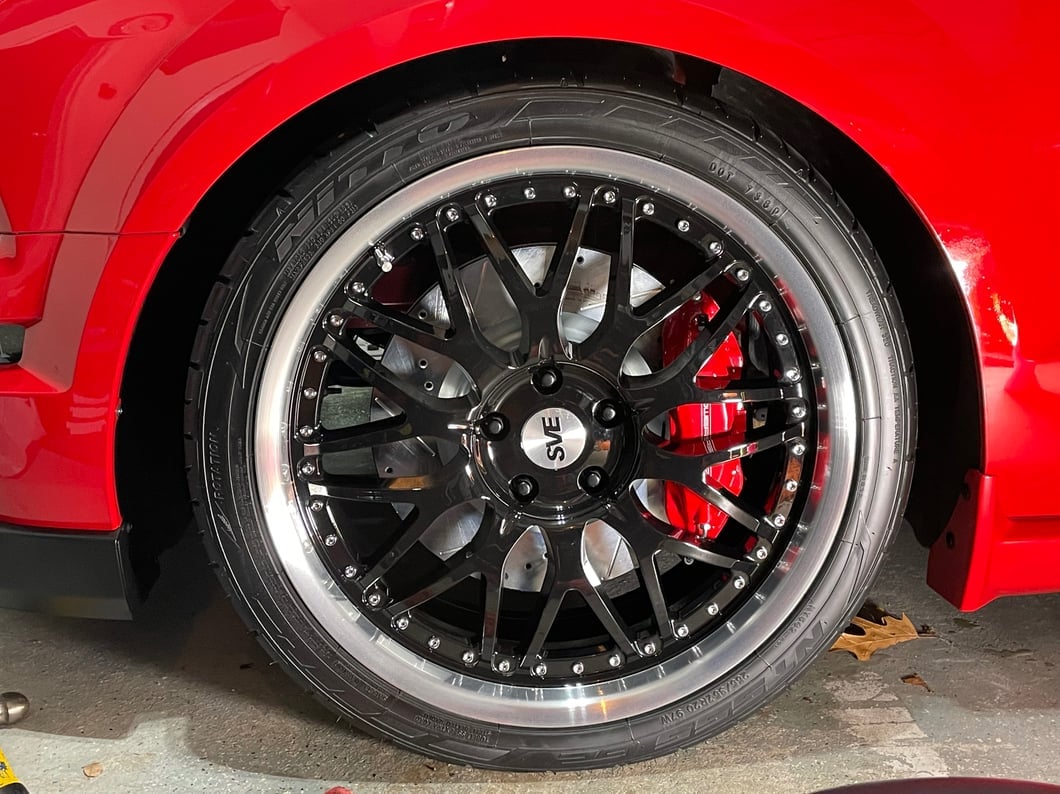
With so many options on the market — ceramic pads, drilled rotors, complete kits — it can feel overwhelming to figure out what's right for your build. Let's break down each component so you can make a confident decision.
Brake Pads — Ceramic vs. Semi-Metallic vs. Organic
Your brake pads are the friction material that clamps against the rotor to slow your car. The compound you choose has a direct impact on stopping power, noise, dust, and pad life. Here are the three main types:
| Material |
Best For |
Dust Level |
Noise |
Heat Tolerance |
| Ceramic |
Daily driving, street cruising |
Low |
Quiet |
Moderate (up to ~600°F) |
| Semi-Metallic |
Track, performance driving |
High |
Moderate to loud |
High (up to ~1,200°F) |
| Organic |
Budget replacement, light use |
Moderate |
Quiet |
Low (up to ~400°F) |
Ceramic pads are the go-to choice for most daily-driven Mustangs. They produce minimal brake dust — a big deal if you're running polished or dark-colored wheels — and operate quietly even in cold weather. Their friction compound is stable across a wide temperature range, which means consistent pedal feel in stop-and-go traffic.
Semi-metallic pads contain metal fibers (typically steel, iron, or copper) mixed into the friction material, giving them a much more aggressive bite and far better heat tolerance. If you're doing track days, autocross, or any kind of repeated hard braking, semi-metallic pads hold up where ceramics start to fade. The trade-off is more brake dust and increased noise.
Organic pads are made from materials like rubber, glass, and Kevlar fibers bonded with resin. They're the softest and quietest option, but they wear out the fastest and can't handle high temperatures. These are strictly a budget replacement for light-duty commuting — not recommended if you push your Mustang at all.
Brake Rotors — Blank vs. Drilled vs. Slotted
Your brake rotors are the discs that spin with your wheels. When you press the brake pedal, the pads squeeze against these rotors to create friction and slow the car. The design of the rotor surface matters more than you might think:
| Type |
Best For |
Heat Dissipation |
Durability |
Price |
| Blank (Smooth) |
OE replacement, daily driving |
Standard |
High |
$ |
| Drilled |
Street, mild performance |
Good |
Moderate |
$$ |
| Slotted |
Track, heavy towing |
Excellent |
High |
$$ |
| Drilled & Slotted |
Performance street, weekend track |
Excellent |
Good |
$$$ |
Blank rotors — also called smooth rotors — are the same design your Mustang came with from the factory. They're the most affordable option and work well for a straightforward replacement. If your driving is mostly commuting and occasional highway pulls, blank rotors paired with quality pads will get the job done.
Drilled rotors feature holes bored through the friction surface. These holes help vent heat and allow water and gas to escape, which can improve wet-weather braking performance. They also look great behind an open-spoke wheel. The downside is that the holes can become stress points under extreme heat, so drilled rotors aren't ideal for sustained track abuse.
Slotted rotors have shallow channels machined into the friction surface. These slots — typically 0.5mm to 1mm deep — help sweep away brake dust, gas, and water from the pad-to-rotor contact patch, maintaining consistent friction. Slotted rotors are the preferred choice for track use because they handle repeated high-heat braking cycles without the stress-cracking risk of drilled rotors.
Drilled and slotted rotors combine both designs for a versatile option that works well on the street and handles the occasional track day. You get improved heat dissipation, better pad bite, and a performance look — making them the most popular upgrade choice for Mustang enthusiasts who want a little bit of everything.
Complete Brake Kits vs. Individual Components
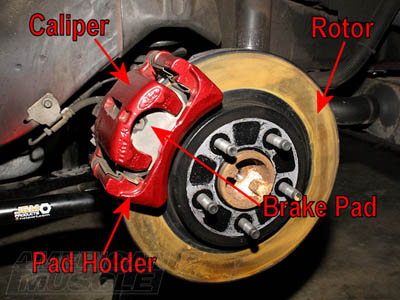
When shopping for brake upgrades, you'll see two main approaches: complete brake kits and individual components.
Complete brake kits bundle pads, rotors, and often hardware (like clips, pins, and shims) into a single box, matched and tested to work together. This is the easiest route if you're doing a full brake refresh — you know the components are compatible, and you often save money compared to buying everything separately.
Individual components give you the freedom to mix and match. Maybe you want ceramic pads up front for low dust but semi-metallic pads in the rear for extra bite. Or perhaps your rotors are fine but your pads are toast. Buying individually lets you fine-tune your setup for specific needs.
For most Mustang owners doing a maintenance refresh or a first-time upgrade, a complete kit is the way to go. If you're building a dedicated track car or have very specific preferences, piecing things together individually gives you more control. Check out our Mustang brake system tech guide for a deeper dive into how all these components work together.
Best Mustang Brake Kits
A quality brake kit takes the guesswork out of upgrading. Here are the top picks that Mustang owners trust across a range of driving styles and budgets.
Power Stop Z23 Evolution — Best Value Daily Driver Kit
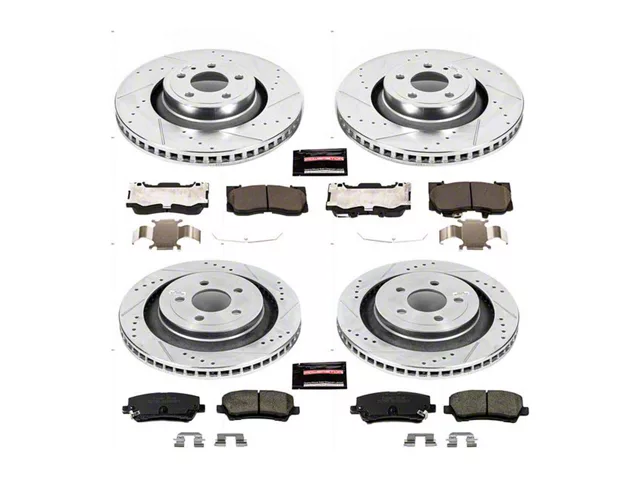
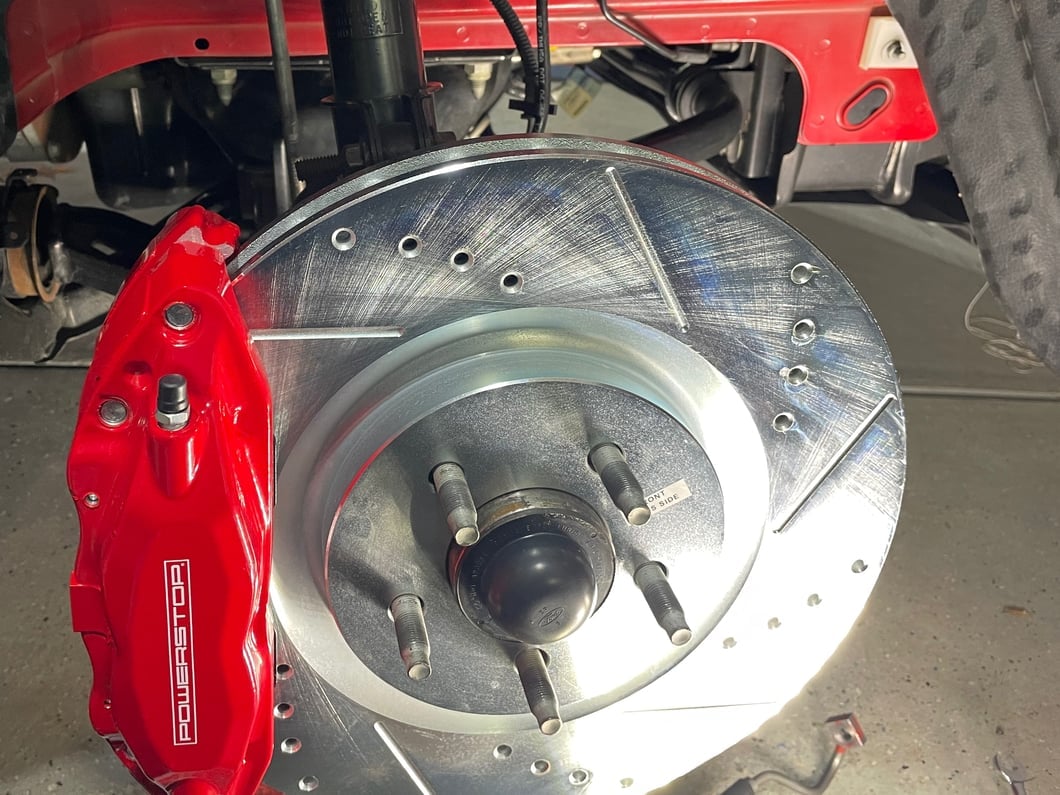
The Power Stop Z23 Evolution kit is one of the most popular brake upgrades in the Mustang community, and for good reason. It pairs carbon-fiber ceramic pads — a compound that combines the low-dust and quiet operation of ceramics with added carbon fiber for improved heat resistance — with drilled and slotted rotors for better cooling and pad bite.
This is a true bolt-on upgrade: you won't need any brackets, adapters, or modifications. The kit drops right into your factory caliper setup, making it a weekend-friendly install for anyone with basic hand tools. The rotors come with a silver zinc coating for corrosion resistance, which keeps them looking clean even after months of daily driving.
As one AmericanMuscle customer put it: "Replaced the front brakes and rotors on my 2015 Mustang. They fit perfectly and work very well."
If you want a noticeable improvement over stock without breaking the bank, the Z23 Evolution is hard to beat.
Power Stop Z26 Extreme Street Warrior — Best Performance Street Kit
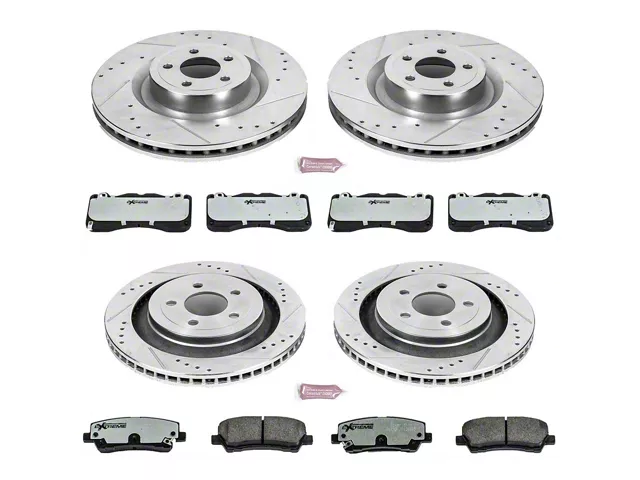
The Power Stop Z26 steps things up with a more aggressive pad compound designed for enthusiasts who push their Mustangs harder than the typical commuter. The high-carbon formula delivers stronger initial bite and better heat tolerance, making this kit ideal for spirited street driving, on-ramp pulls, and the occasional track day.
Like the Z23, the Z26 kit includes drilled and slotted rotors with zinc plating. But the pad compound is noticeably more aggressive — you'll feel the difference the first time you stand on the brakes coming into a corner. It still maintains reasonable dust levels and noise for a street-driven car.
AmericanMuscle customers agree: "The braking has improved!!!"
This kit bridges the gap between a pure daily driver setup and a track-focused build.
EBC Brake Kits — Best Track-Ready Option
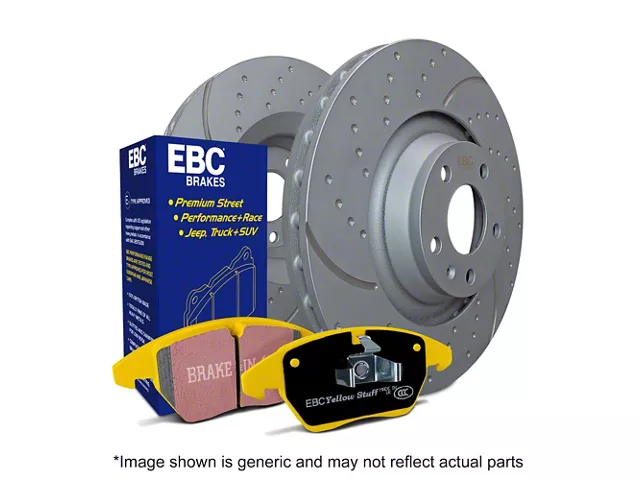
EBC offers a range of brake kits that pair their performance rotors with application-specific pad compounds. The two most popular options for Mustang owners are:
- EBC Yellowstuff pads + USR slotted rotors: A dedicated track combination. The Yellowstuff compound comes alive at high temperatures and delivers exceptional bite once warmed up.
- EBC Redstuff pads + GD drilled rotors: A street-performance combination that offers strong initial bite, low dust, and a clean look behind your wheels.
EBC rotors feature a thermic black coating that prevents corrosion on unswept areas (the hub hat and edges), keeping the rotors looking fresh. Their pad compounds are formulated to deliver predictable friction curves, so pedal feel stays consistent whether you're on your first lap or your twentieth.
One satisfied Mustang owner shared: "Good value for the money. Have had these brake pads and rotors before and they hold up well."
If you're serious about track days or autocross, an EBC kit gives you the performance compound and rotor design to match. For a look at larger upgrade options, explore our selection of big brake kits.
Best Mustang Brake Rotors
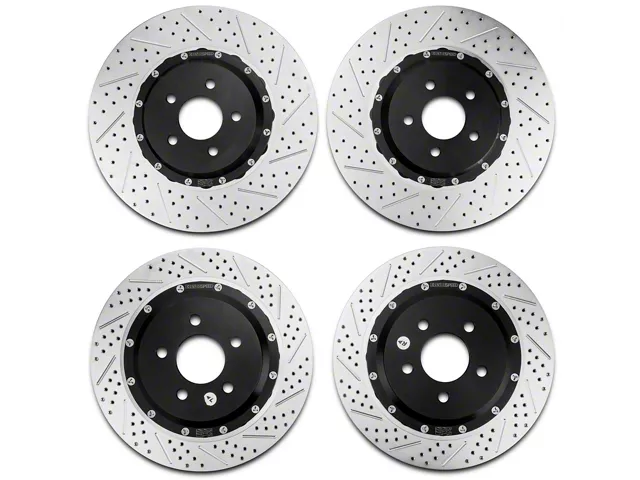
Sometimes your pads still have life in them but your rotors are warped, scored, or just ready for an upgrade. Here are the best standalone rotor options for your Mustang.
Baer Eradi Speed — Best Performance Drilled and Slotted
Baer is a name that's synonymous with high-end braking in the muscle car world. The Eradi Speed rotors feature a precision drilled-and-slotted design with a zinc wash finish that protects against corrosion — particularly important if you live in a region with road salt or high humidity.
These rotors are manufactured from a high-carbon iron alloy that resists warping under heat. The drill pattern is optimized to avoid stress risers while still providing effective gas and water venting. If you want the best combination of performance, durability, and looks, the Eradi Speed rotors deliver.
A customer review says it all: "The quality is top notch... This is how the car should have come from the factory."
StopTech Slotted — Best Mid-Range Slotted
StopTech's slotted rotors feature a curved internal vane design — meaning the cooling fins inside the rotor are shaped to create a centrifugal pumping effect, pulling cool air through the center of the disc. This results in more efficient cooling compared to straight-vane rotors, especially during repeated heavy braking.
The slot pattern on the friction surface is designed to keep the pad face clean and maintain consistent contact. These rotors are cast from premium iron and precision-machined to tight tolerances, resulting in smooth operation right out of the box with minimal break-in vibration.
As one Mustang owner noted: "These rotors are great for the price."
StopTech slotted rotors hit a sweet spot between performance and value — a strong choice for enthusiasts who want better-than-stock braking without jumping to a full big-brake setup.
Centric Premium — Best Budget OE Replacement
If you need a reliable rotor replacement at a budget-friendly price, Centric Premium rotors are hard to beat. These are precision-balanced, e-coated — meaning they're treated with an electrostatically applied anti-corrosion coating — and machined to OE specifications for direct fitment.
Centric doesn't try to reinvent the wheel here. These are solid, well-made blank rotors that match factory performance and feel. They're an excellent choice when you need to replace worn rotors and want quality without paying for performance features you won't use.
Customers appreciate the straightforward quality: "High-quality, well-made rotors that look good, perform well."
Best Mustang Brake Pads
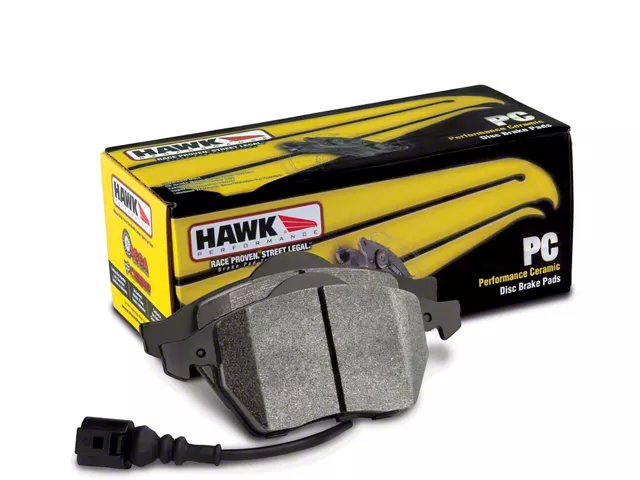
Brake pads wear out faster than rotors and have the biggest impact on how your brakes feel day to day. Here are the top pad choices for different driving styles.
EBC Redstuff — Best Street Performance Ceramic
EBC Redstuff pads use a ceramic-based compound that delivers strong initial bite right from cold — no waiting for the brakes to warm up before they feel confident. The compound produces minimal dust, which is a big plus for anyone running dark or polished wheels.
Redstuff pads are designed to work in the 200°F to 900°F temperature range, covering everything from cold-morning commutes to aggressive street driving. They're a popular choice for Mustang owners who want better-than-stock braking feel without the noise and dust of a full semi-metallic pad.
One reviewer put it simply: "Nice stopping and reliability."
Hawk Performance Ceramic — Best Low-Dust Daily Driver
If your number-one priority is keeping your wheels clean, Hawk Performance Ceramic pads are the answer. These pads are engineered to produce virtually no visible brake dust while still delivering confident, consistent stopping power for everyday driving.
The compound is formulated for low noise, low vibration, and a smooth pedal feel. Hawk uses a proprietary friction technology that balances pad life with performance — you won't have to sacrifice stopping power for clean wheels.
A happy Mustang driver confirmed: "They look great, stop well, and do not leave brake dust."
For a daily-driven Mustang where appearance and comfort matter, Hawk Ceramic pads are a top-tier choice.
EBC Yellowstuff — Best Track Compound
EBC Yellowstuff pads are a purpose-built track compound designed to perform at temperatures where other pads start to give up. The high-temperature compound has an effective operating range from approximately 300°F to over 1,300°F, making it one of the most heat-resistant street-legal pads available.
A few things to know: Yellowstuff pads require a thorough break-in procedure — typically 30 or more moderate stops from speed to build up a proper transfer layer on the rotor surface. Until that layer is established, stopping power will feel below expectations. Once broken in, these pads deliver incredible bite and fade resistance lap after lap.
They do produce more dust than ceramic compounds and can be noisier on the street, so they're best suited for Mustangs that see regular track time. As one track enthusiast confirmed: "Perfect for high-performance braking."
For more on choosing the right pad for your setup, read our guide on upgrading your Mustang's brake pads.
Best Brakes by Mustang Generation
Every generation of Mustang has different factory brake hardware, different common issues, and different upgrade paths. Here's what to know about yours.
S550 Mustang Brakes (2015–2023)
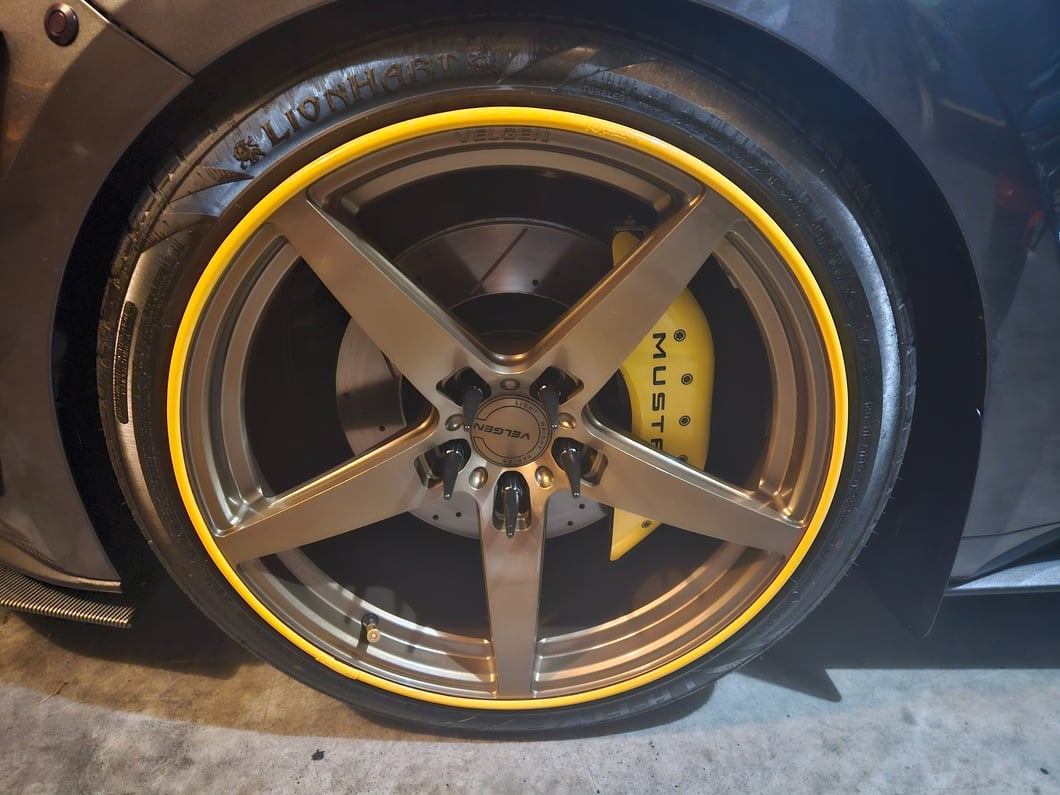
The S550 generation came with the best factory brakes of any Mustang to date. The standard GT setup features 13.9-inch front rotors and 13-inch rear rotors with four-piston front calipers — a solid foundation for street driving. If you opted for the Performance Package or Brembo brake package, you got upgraded 15-inch front rotors with six-piston Brembo calipers, which are genuinely track-capable from the factory.
For daily driving, a Power Stop Z23 or Z26 kit is an excellent direct-fit upgrade for the standard brake setup. If you're building a track car and don't already have the Brembo package, consider stepping up to a Baer or StopTech big-brake kit for that extra rotor diameter and caliper clamping force.
Even S550 owners with factory Brembos benefit from upgrading to performance pad compounds — swapping to EBC Yellowstuff or a semi-metallic compound for track days can make a noticeable difference in fade resistance.
Get the full rundown on upgrading S550 Mustang brakes.
S197 Mustang Brakes (2005–2014)
The S197 generation offered decent street brakes but had well-known limitations under hard use. The standard GT came with 12.4-inch front rotors and single-piston sliding calipers. The optional Brembo package (available on select GT and Boss 302 models) bumped the front up to 14-inch rotors with four-piston calipers.
The most common complaint with S197 brakes is overheating on track. The stock rotor diameter simply doesn't provide enough thermal mass for repeated high-speed stops. If you're tracking your S197, two popular upgrade paths are:
- GT500 brake swap: Installs 15-inch front rotors with six-piston Brembo calipers using available brackets and hardware.
- S550 brake swap: Some builders swap to the S550 platform's larger brakes with adapter brackets for even more rotor area.
For street-only use, a quality pad and rotor kit from Power Stop or EBC is usually all you need to dramatically improve the feel and confidence of your S197's brakes.
SN95 Mustang Brakes (1994–2004)
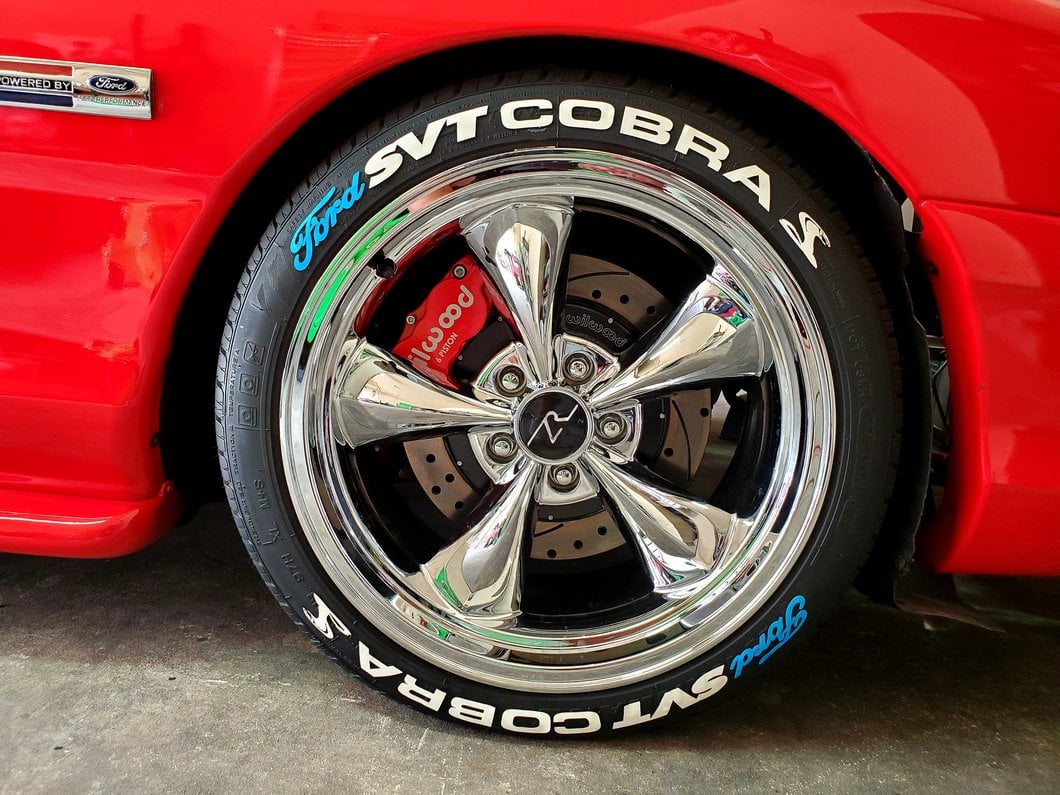
The SN95 generation is where brake upgrades start making a really big impact. The standard GT came with relatively small 10.84-inch front rotors and rear drums (on many models), which feel seriously undersized if you've added any power mods.
The most popular upgrade path for SN95 owners is the Cobra brake swap, which moves you up to 13-inch front rotors with PBR twin-piston calipers from the SVT Cobra. This is a well-documented swap with excellent aftermarket support, and it makes a night-and-day difference in stopping power.
For SN95 owners looking for even more stopping performance, aftermarket big-brake kits from Baer and Wilwood offer 14-inch and larger rotors with multi-piston calipers. Browse our full selection of SN95 brake accessories for options that fit your build.
Fox Body Mustang Brakes (1979–1993)
Fox Body Mustangs present a unique challenge: every model in this generation came with rear drum brakes from the factory. While drums are functional for light-duty driving, they're heavy, prone to fade, and significantly less effective than disc brakes — especially on a car that's been modified for more power.
The number-one brake upgrade priority for any Fox Body is a rear drum-to-disc conversion. This swap replaces the rear drums and shoes with disc rotors and calipers, dramatically improving stopping power, reducing weight, and making brake maintenance much simpler.
Many Fox Body owners combine the rear disc conversion with a 5-lug wheel swap (the Fox Body came with 4-lug hubs), which opens up a much wider range of wheel and brake options. Aftermarket kits from Baer and Wilwood make this conversion straightforward, bundling everything you need including new hubs, rotors, calipers, brackets, and brake lines.
Check out our Fox Body big brake kits for complete conversion packages.
Choosing Brakes for Your Driving Style
The "best" brakes for your Mustang depend entirely on how you drive. Here's a quick breakdown to help you zero in on the right setup.
Daily Driving
If your Mustang is your daily commuter — stop-and-go traffic, highway cruising, weekend errands — prioritize comfort and cleanliness. That means:
- Pads: Ceramic compound (Hawk Performance Ceramic or EBC Redstuff)
- Rotors: Blank or drilled for a clean look
- Priority: Low dust, quiet operation, smooth pedal feel
You don't need the most aggressive pad compound or the biggest rotors for daily use. A quality ceramic pad on a good rotor will outperform your worn factory brakes by a wide margin, and you'll appreciate the clean wheels and quiet stops every day.
Track Days and Autocross
Track driving puts enormous demands on your brakes. Repeated high-speed stops generate sustained heat that can overwhelm street-oriented components. For track use, you need:
- Pads: Semi-metallic or high-temperature compound (EBC Yellowstuff, or a dedicated track pad)
- Rotors: Slotted or drilled-and-slotted for maximum heat dissipation and debris clearing
- Brake fluid: Upgrade to DOT 4 fluid — it has a higher boiling point (approximately 446°F dry vs. DOT 3's 401°F dry), which prevents that spongy pedal feel caused by fluid boiling under extreme heat
- Brake lines: Stainless steel braided lines eliminate flex for a firmer pedal
If you're tracking your Mustang regularly, consider a big-brake kit upgrade for the additional rotor diameter and caliper clamping force. The thermal mass of a larger rotor absorbs more heat before temperatures reach critical levels.
Drag Racing
Drag racing has different braking demands than road course or autocross. You're making one hard stop at the end of the quarter mile, plus using your brakes at the staging line. For drag setups, consider:
- Lightweight components: Every pound counts. Lightweight rotors and single-piston calipers reduce unsprung weight — the weight not supported by your suspension — which improves acceleration and handling.
- Line lock compatibility: A line lock is a solenoid that holds pressure to the front brakes while releasing the rears, allowing you to do burnouts to heat your rear tires. Make sure your brake setup is compatible with your line lock system.
- Drag-specific kits: Wilwood and Baer offer lightweight drag brake packages designed specifically for quarter-mile use, with appropriately sized components that prioritize weight savings over sustained heavy-braking endurance.
When to Replace Your Mustang's Brakes
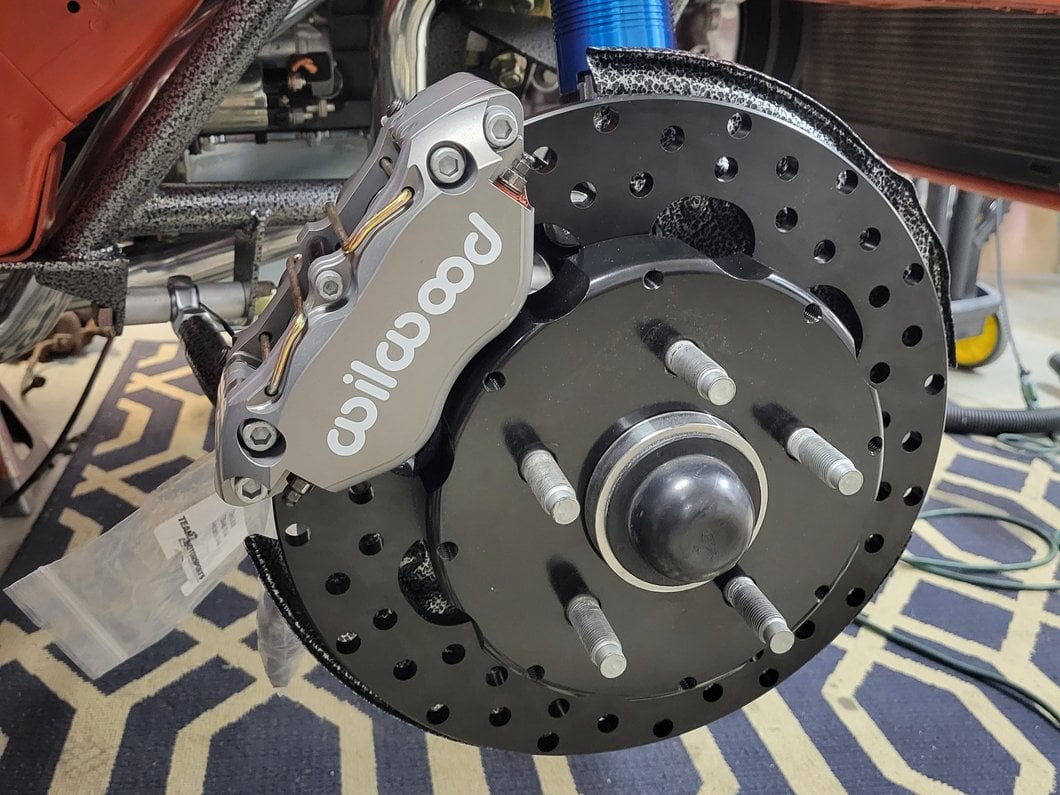
Knowing when to replace your brakes can save you money, prevent rotor damage, and — most importantly — keep you safe. Here are the warning signs to watch for:
- Squealing or squeaking: Most brake pads include a small metal wear indicator — a thin tab that contacts the rotor when the pad material wears down to a minimum thickness, creating a high-pitched squeal. This is your first warning.
- Grinding noise: If squealing progresses to a metallic grinding sound, the pad friction material is completely worn and the metal backing plate is contacting the rotor. This damages the rotor surface and requires immediate attention.
- Vibration or pulsing: A pulsing sensation through the brake pedal or steering wheel usually indicates rotor runout — warping or uneven wear on the rotor surface. Mild cases can sometimes be corrected by machining (turning) the rotor, but heavily warped rotors need replacement.
- Longer stopping distances: If your Mustang takes noticeably more distance to stop than it used to, your pads may be glazed or worn, your brake fluid may be degraded, or your rotors may be past their useful life.
- Visual inspection: You can check pad thickness by looking through the spokes of your wheel. If the pad material is less than 3mm thick (about the thickness of two stacked nickels), it's time for new pads.
General Replacement Intervals
Brake component life varies significantly based on driving style, pad compound, and conditions. Here are general guidelines:
- Brake pads: Every 30,000 to 70,000 miles. Aggressive drivers and track users will be on the shorter end; gentle commuters on the longer end.
- Brake rotors: Every 50,000 to 80,000 miles. Rotors can sometimes last through two sets of pads if they haven't been damaged by worn pads grinding on them.
- Brake fluid: Every 2 to 3 years, regardless of mileage. Brake fluid is hygroscopic — it absorbs moisture from the air over time, which lowers its boiling point and can lead to corrosion inside your brake lines and calipers.
For a more detailed breakdown, check out our guide on when to replace your Mustang's brakes.
Practical Takeaways
Here's a quick-reference checklist to help you make the right brake decision for your Mustang:
- Match pads to your driving style first. Ceramic for daily driving (low dust, quiet), semi-metallic or Yellowstuff for track days (high heat tolerance, aggressive bite), organic only as a budget stopgap.
- Upgrade rotors when you upgrade pads. Drilled-and-slotted rotors are the most versatile choice for Mustang owners who split time between street and spirited driving.
- Start with a complete kit if this is your first upgrade. Kits like the Power Stop Z23 or Z26 bundle matched pads, rotors, and hardware — no guesswork on compatibility.
- Know your generation's stock specs. S550 GT: 13.9" front. S197 GT: 12.4" front. SN95 GT: 10.84" front. Fox Body: rear drums. Knowing your starting point helps you choose the right upgrade path.
- Don't forget brake fluid. Upgrade to DOT 4 if you track your car, and flush the system every 2–3 years regardless of use.
- Inspect pads regularly. Replace when thickness drops below 3mm — waiting longer risks damaging your rotors and increasing your repair bill.
Conclusion
Your Mustang's brakes are more than a maintenance item — they're a performance upgrade and a safety investment rolled into one. Whether you're refreshing worn-out pads on your daily driver or building a track-ready setup for your weekend warrior, the right combination of pads, rotors, and hardware can transform how your car stops and how confident you feel behind the wheel. Match your components to your driving style, stay on top of maintenance intervals, and your Mustang will reward you with consistent, reliable stopping power for years to come.
Ready to upgrade? Browse our full selection of Mustang parts and accessories to find the right brake setup for your build. With vehicle-specific fitment for your exact year, make, and model — plus free shipping on orders over $149 — it's easy to get the stopping power your Mustang deserves.