Introduction
Ever mashed the throttle leaving a stoplight and felt only one tire light up while the other just sat there? Or noticed your Mustang pushing wide through a corner instead of rotating on the throttle? In both cases, the differential is the component calling the shots. Understanding differential types is the first step toward getting more traction, better handling, and consistent power delivery from your drivetrain. In this guide, we break down every type of rear differential you will encounter in the Mustang world — open, limited slip, Torsen, locking, and spool — so you can choose the right one for your build and driving style.
What Is a Differential and Why Does It Matter?
A differential is a gearset housed in the rear axle assembly that performs three critical jobs: it transmits engine power from the driveshaft to the rear wheels, it provides a final gear reduction between the transmission and the wheels, and it allows each rear wheel to rotate at a different speed when your Mustang goes through a turn.

That last function is more important than it sounds. When you turn, the outside rear wheel has to travel a longer arc than the inside wheel. Without a differential allowing independent wheel speeds, the inside tire would scrub and skip across the pavement, fighting the chassis through every curve. The differential solves this by using a set of spider gears (also called side gears and pinion gears) that let the two axle shafts spin at different rates while still delivering torque to both.
For a rear-wheel-drive muscle car producing 300, 400, or 500-plus horsepower, the type of differential you run determines how effectively all that power reaches the pavement. A differential that cannot manage torque distribution between the left and right wheels will leave you doing a one-tire burnout instead of hooking up and launching hard. That is why choosing the right differential is one of the most impactful drivetrain decisions you can make for your build.
Open Differentials
An open differential splits torque equally between both rear wheels at all times, regardless of how much traction each tire has. It is the simplest and least expensive differential design, but it is also the least effective when you need maximum grip from a high-powered Mustang.
Here is the problem: while an open diff divides torque 50/50, it cannot control which wheel actually spins. If one tire breaks loose on a wet surface or during a hard launch, all the power follows the path of least resistance and goes straight to the spinning wheel. The result is the dreaded one-wheel-peel, where one tire roasts while the other sits motionless. You are literally wasting half your available traction.
Open differentials came standard on the following Mustangs:
- V6 models: Standard through 2011
- V8 models: Standard through 1986 (before Ford began fitting Trac-Lok LSDs to most GT and performance trims)
Pros of Open Differentials
- Lowest cost to manufacture and replace
- Smooth, predictable behavior during normal street driving
- No maintenance required beyond differential fluid changes
- No tire chirp or binding during slow-speed turns
Cons of Open Differentials
- Zero torque management during wheel slip
- One-wheel-peel under hard acceleration
- Poor performance in wet or low-traction conditions
- Not suitable for any serious performance driving
For a daily-driven V6 Mustang that never sees the track, an open differential does the job. But if you own a GT or any Mustang you plan to drive hard, an open diff is a significant traction bottleneck. Upgrading to a limited slip differential is one of the best bang-for-the-buck modifications you can make.
Limited Slip Differentials
A limited slip differential (LSD) redirects torque from a spinning wheel to the wheel with better traction, giving you more grip during acceleration, cornering, and launches. This is the bread and butter of Mustang differentials, and the majority of GT-trimmed Mustangs have shipped from the factory with some form of LSD since the late 1980s.
Unlike an open diff that simply allows the easy wheel to spin, an LSD uses an internal resistance mechanism to limit the speed difference between the two axle shafts. When one tire starts to lose traction, the differential biases torque toward the tire that can actually use it. The result is two-tire burnouts instead of one, better corner exit traction, and significantly improved straight-line launches.
There are three main types of limited slip differentials you will encounter in the Mustang world: clutch-type, Torsen (helical gear), and viscous. Each uses a different mechanism to achieve the same basic goal.
Clutch-Type LSD (Ford Trac-Lok)
Ford's Trac-Lok is a clutch-type limited slip differential and is the most common LSD found in Mustangs. It uses a set of friction clutch packs — thin discs stacked on each side of the differential case — along with a preload spring that pushes the side gears against the clutch plates. This spring pressure creates friction that resists independent wheel rotation.
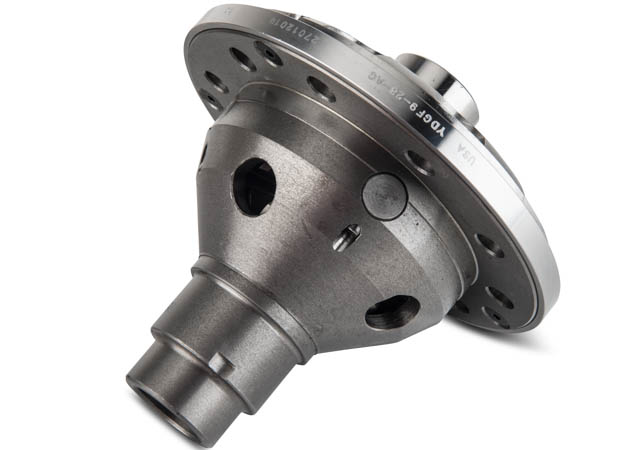
During straight-line driving, the side gears remain mostly stationary and the clutch packs keep both axle shafts locked together. In a turn, the difference in wheel speed is small enough that the clutch packs allow some slip so your Mustang can turn smoothly. But during a hard launch or when one tire hits a slick patch, the clutch packs resist the sudden speed difference and redirect torque to the tire with grip.
Clutch-type LSDs come in several engagement configurations:
- 1-way: Engages only during acceleration. The differential acts like an open diff during deceleration and coasting. This is the most common type for street Mustangs.
- 1.5-way: Provides full engagement on acceleration and partial engagement during deceleration. Offers more stability during trail braking and corner entry.
- 2-way: Engages equally on acceleration and deceleration. Preferred by drifters and road-course drivers who want consistent rear-end behavior in all phases of a corner.
The downside of any clutch-type LSD is wear. The friction material on the clutch packs gradually breaks down with use, reducing clamping force over time. When the clutch packs wear out completely, your Trac-Lok will behave like an open differential. Aftermarket carbon-fiber clutch pack kits and upgraded friction modifiers can extend the life and increase the locking force of a Trac-Lok unit.
Torsen (Helical Gear) Differentials
A Torsen differential (short for "torque-sensing") uses a set of helical-cut worm gears instead of clutch packs to bias torque between the two axle shafts. The gear geometry itself creates resistance, so when one wheel starts to slip, the Torsen mechanically redirects torque to the wheel with more traction. There are no wear components like clutch packs, which means a Torsen diff requires zero maintenance beyond standard fluid changes.
Ford introduced the Torsen T2 differential in the S550 Mustang GT Performance Pack, and it has become a favorite among road-course and autocross enthusiasts. The Torsen responds instantly to traction differences because it is purely mechanical — there is no delay waiting for clutch packs to engage. It provides smooth, progressive torque biasing that makes the rear end predictable and easy to manage at the limit.
The typical Torsen T2 offers a torque bias ratio of approximately 2.5:1 to 3.5:1, meaning it can send up to 3.5 times more torque to the wheel with grip compared to the slipping wheel. This is effective for high-performance street and track driving, though it is worth noting that a Torsen cannot provide 100% lockup the way a locking differential can.
If you drive an S550 and want to explore Torsen options, check out the S550 differential options available for your platform.
Advantages of Torsen differentials:
- No clutch packs to wear out — essentially maintenance-free
- Instant, progressive torque biasing with no engagement lag
- Smooth operation with no clunking, chattering, or tire chirp
- Excellent for road-course and autocross applications
Disadvantages of Torsen differentials: Cannot provide 100% lockup for drag launches Higher cost than a basic Trac-Lok rebuild Limited effectiveness when one wheel is completely unloaded (airborne or on ice)
Viscous LSD
A viscous limited slip differential uses a sealed chamber filled with a thick silicone-based fluid to resist speed differences between the two axle shafts. When one wheel spins faster than the other, the fluid shears and heats up, increasing its resistance and transferring torque to the slower wheel.
Viscous LSDs are less common in the Mustang world but are worth understanding for completeness. They offer smooth, quiet operation with no maintenance, but their response time is slower than clutch-type or Torsen units because the fluid needs to heat up before resistance builds. They also tend to fade under sustained hard use as the fluid overheats.
For most Mustang applications, a clutch-type Trac-Lok or Torsen will outperform a viscous unit in both street and track scenarios.
Locking Differentials
A locking differential forces both axle shafts to rotate at identical speeds, sending equal power to both rear wheels regardless of traction conditions. This delivers maximum launch traction because both tires are always working together, but it comes with significant tradeoffs for street drivability.
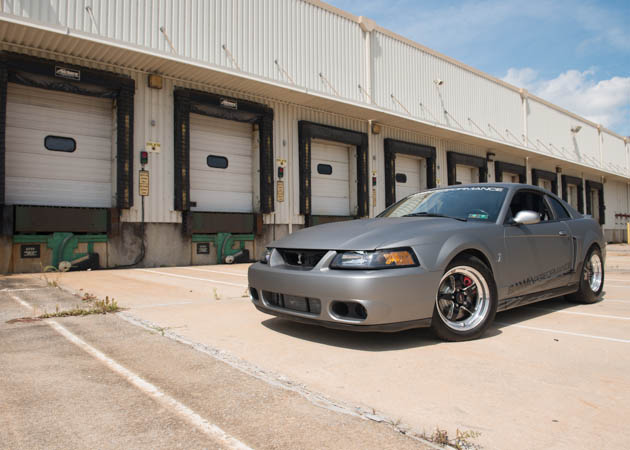
When both axle shafts are locked together and you enter a turn, the outside wheel cannot speed up to cover its longer arc. The result is understeer on corner entry, a sudden bucking or jerking sensation as the locker fights the turn, and audible tire chirp from the inside rear tire being dragged along. For straight-line performance, nothing beats a locker. For street comfort and cornering, it is a compromise you need to accept.
Automatic Lockers (Detroit Locker)
An automatic locking differential — most commonly the Detroit Locker — stays in the locked position during straight-line driving and automatically unlocks during turns to allow the outside wheel to overrun. When the car straightens out, the locker re-engages with an audible click or clunk.
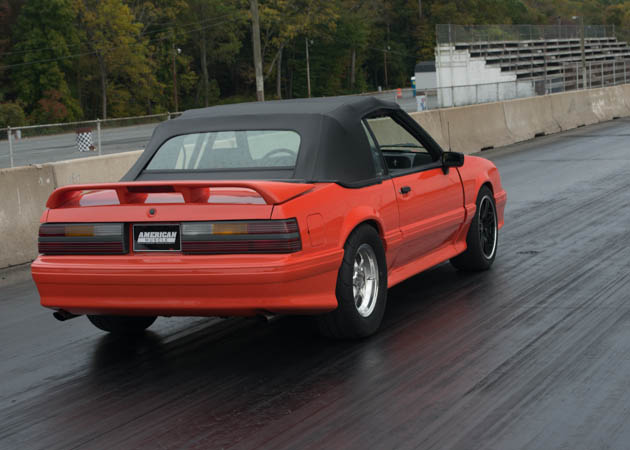
The Detroit Locker is the go-to choice for drag racing Mustangs because it ensures both tires hook up on every launch. However, the constant engage-disengage cycle during street driving produces noticeable clunking when turning, increased tire wear from the locking action, and occasional unpredictable handling when the locker re-engages mid-corner.
Best for: Dedicated drag cars, weekend warriors who primarily run the quarter-mile, and Mustangs that see limited street driving.
Not ideal for: Daily drivers, road-course cars, or builds where ride quality and cornering predictability matter.
Spools
A spool is a solid, one-piece unit that permanently connects both axle shafts to the ring gear. It replaces the entire carrier assembly and provides absolutely no differentiation between the two rear wheels. Both wheels are locked together 100% of the time with zero slip, zero give, and zero compromise.
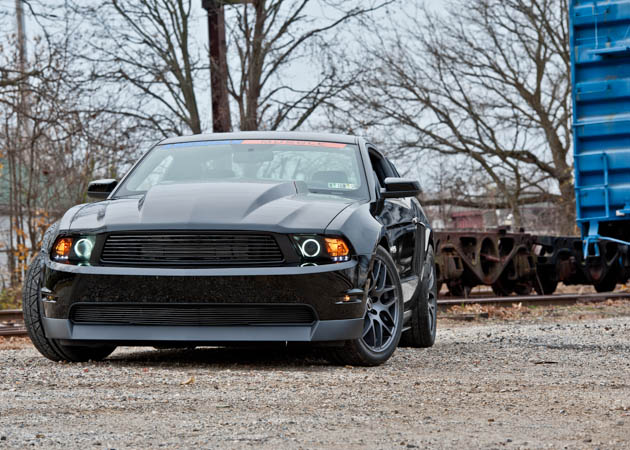
Spools are the strongest and lightest locking option available because there are no internal gears or clutch packs to break. They are also the most extreme. Turning on pavement with a spool loads the drivetrain aggressively, scrubs tires, and makes the car nearly undrivable at low speeds in parking lots or tight turns.
Spools are recommended only for dedicated race cars — drag cars that go straight, turn around, and go straight again. They have no place on a street-driven Mustang.
Differential Types Compared: Open vs. LSD vs. Locking vs. Spool

|
Feature
|
Open
|
Clutch-Type LSD (Trac-Lok)
|
Torsen (Helical)
|
Locking (Detroit)
|
Spool
|
|
Traction Under Power
|
Poor — one-wheel-peel
|
Good — biases torque to grip
|
Very Good — instant response
|
Excellent — full lockup
|
Maximum — permanent lock
|
|
Cornering Behavior
|
Smooth, predictable
|
Smooth with mild push
|
Smooth, progressive
|
Clunky, tire chirp in turns
|
Severe binding, tire scrub
|
|
Street Comfort
|
Excellent
|
Very Good
|
Excellent
|
Fair — noticeable clunking
|
Poor — not street-friendly
|
|
Maintenance
|
Fluid changes only
|
Clutch packs wear over time
|
Fluid changes only
|
Minimal
|
None
|
|
Best For
|
Base models, daily commuting
|
Street/strip, daily GTs
|
Road course, autocross
|
Drag racing, weekend track
|
Dedicated race cars only
|
|
Relative Cost
|
Lowest
|
Moderate
|
Moderate-High
|
Moderate
|
Low
|
The right choice depends entirely on how you use your Mustang. A daily-driven GT that sees occasional weekend fun runs has very different requirements than a stripped-out Foxbody that lives at the drag strip. Use the table above as a starting point, then read the model-specific recommendations below to narrow down the best fit for your platform.
Which Differential Is Best for Your Mustang?
The best differential for your Mustang depends on your generation, your power level, and how you actually drive the car. A properly functioning limited slip differential is the best all-around compromise for most builds, but the specific type of LSD — and whether a locker makes more sense — comes down to your use case.
By-Model Recommendations
Foxbody (1979–1993)
The Foxbody platform uses the venerable 8.8-inch rear end, which has become one of the most swappable and upgradeable axle assemblies in the Mustang world. Foxbodies made before 1981, automatics, and four-cylinder models came with open differentials. Manual V8 Foxbodies from 1981 onward received the Trac-Lok LSD.
- Best street upgrade: Trac-Lok rebuild with aftermarket carbon clutch packs
- Best track upgrade: Detroit Locker for drag, Torsen for road course
- Pair with: A 3.73 or 4.10 gear ratio for improved acceleration
SN95 / New Edge (1994–2004)
GT models received the Trac-Lok as standard equipment, while V6 models got open differentials. The 8.8-inch rear carries over from the Foxbody, so aftermarket support is excellent. The 2003–2004 Cobra (Terminator) came with an independent rear suspension (IRS) and Trac-Lok, adding complexity to differential swaps.
- Best street upgrade: Upgraded Trac-Lok clutch pack kit for better holding power
- Best track upgrade: Detroit Locker for drag builds, upgraded Trac-Lok for street/strip
- Note: V6 SN95 owners converting to LSD should budget for the full carrier assembly
S197 (2005–2014)
The S197 continued the solid rear axle with 8.8-inch housing on GT models, with the Trac-Lok clutch-type LSD as standard equipment. The platform saw significant horsepower bumps — the 2011+ Coyote 5.0L pushed 412 horsepower — making differential performance even more important.
- Best street upgrade: Upgraded Trac-Lok with carbon fiber clutch packs
- Best track upgrade: Torsen for road course, Detroit Locker for drag
- Pair with: Rear differential gears in 3.73 or 3.55 ratios for the Coyote engine
S550 (2015–2023)
The S550 was the first Mustang GT to feature independent rear suspension (IRS) across all trims, using a new Super 8.8-inch rear end. Base GTs received a Trac-Lok clutch-type LSD, while the Performance Pack upgraded to a Torsen T2 helical differential — a significant improvement for track-oriented driving. The GT350 went even further with a standard Torsen unit tuned for its flat-plane-crank 5.2L Voodoo engine.
- Best daily/street setup: Factory Trac-Lok is solid; rebuild with quality clutch packs when worn
- Best performance upgrade: Torsen T2 (if not already equipped via Performance Pack)
- Explore options: Check out the full lineup of S550 differential options
S650 (2024+) The current-generation S650 carries forward the IRS with the Super 8.8-inch rear end. The GT comes standard with an electronic limited slip differential (eLSD) on Performance Pack trims, while the Dark Horse features a Torsen unit paired with the updated 5.0L Coyote producing 500 horsepower. The aftermarket is still developing for this platform, but the architecture shares enough with the S550 that many upgrades carry over.
- Best approach: Evaluate factory equipment first — the S650 comes well-equipped from the factory
- Future upgrades: Watch for aftermarket Torsen and clutch-type options as the platform matures
By-Use-Case Recommendations
Daily Driver / Street Cruiser
Stick with a clutch-type LSD like the Trac-Lok. It provides plenty of traction for spirited driving without any of the clunking, binding, or tire wear that comes with a locking differential. Rebuild or replace the clutch packs when they wear out, and you are good to go.
Spirited Street Driving / Autocross
A Torsen T2 is the ideal upgrade. Maintenance-free operation, instant torque biasing, and smooth cornering behavior make it the best differential for enthusiasts who push their Mustang hard on back roads and at autocross events. Pair it with the right gear ratio for your engine and tire combination.
Drag Racing
A Detroit Locker or spool delivers maximum traction on every launch. Both rear tires hook up together, which is exactly what you want when you are trying to put 400-plus horsepower through the rear tires on a prepped track surface. A spool is lighter and stronger but makes the car undrivable on the street.
Road Course / Track Days A Torsen T2 or high-quality upgraded Trac-Lok with 1.5-way or 2-way engagement is the right call. You need smooth, predictable rear-end behavior during corner entry, mid-corner, and especially on throttle application at corner exit. A locking differential will upset the car's balance and make it difficult to drive consistently at the limit.
How to Tell if Your LSD Is Worn Out
A worn-out limited slip differential will gradually lose its ability to redirect torque, eventually behaving like an open differential. Catching the signs early lets you replace the clutch packs before you lose traction at the worst possible moment.

The One-Wheel-Peel Test
This is the quickest and most definitive way to check your LSD. Find a large, vacant area (an empty parking lot works), and from a dead stop, do a brief burnout by dropping the clutch and applying full throttle. After the tires stop spinning, get out and examine the tire marks on the pavement.
- Two clear tire marks: Your LSD is working. Both wheels are receiving torque and spinning together.
- One tire mark: Your clutch packs are worn out. The differential is acting as an open unit, sending all power to the wheel with the least resistance.
Other Signs of Worn LSD Clutch Packs
- Clunking or popping from the rear end during low-speed turns, especially in parking lots
- Chattering or shuddering during tight turns, often accompanied by a vibration through the floor
- Inconsistent traction during acceleration — the car hooks up on one pull and does a one-wheel-peel on the next
- Increased rear-end noise during spirited driving, particularly under load
When to Rebuild vs. Replace
If your differential housing and gears are in good shape, a clutch pack rebuild is the most cost-effective solution. Aftermarket carbon-fiber clutch pack kits offer improved friction characteristics and longer life compared to stock units. If the gears, carrier, or housing show wear or damage, a complete differential replacement may be the smarter long-term investment.
Does Your Mustang Have a Factory LSD?
Knowing what differential your Mustang left the factory with saves you time and money when planning upgrades. Here is a general breakdown by generation and engine.
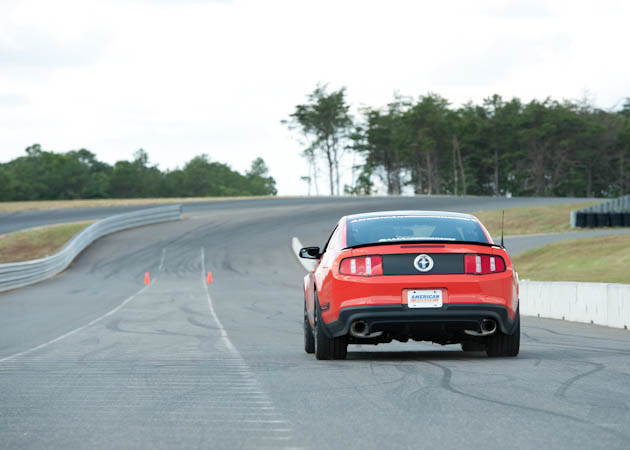
General rules:
- V6 Mustangs through 2011: Open differential was standard
- V8 Mustangs from 1981 onward (manual transmission): Trac-Lok LSD was standard on most trims
- Foxbody V8 automatics: Many received open differentials despite having the V8 engine
- Pre-1981 Mustangs: Open differential was common across all trims
- S550 GT Performance Pack (2015–2023): Torsen T2 helical LSD
- S650 Dark Horse (2024+): Torsen differential standard
How to Check Your Differential
- RPO sticker / build sheet: Check the driver-side door jamb sticker or order a build sheet from Ford. Look for axle codes that indicate Trac-Lok or limited slip.
- The burnout test: Use the one-wheel-peel test described above. Two tire marks mean LSD; one mark means open.
- Visual inspection: Jack up the rear of the car and spin one rear wheel by hand. On an open differential, the other wheel spins in the opposite direction. On a working LSD, both wheels resist spinning or spin in the same direction.
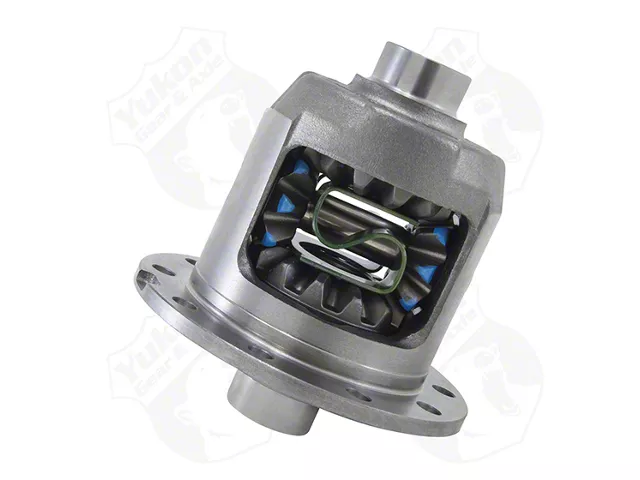
If your Mustang does not have a factory LSD and you want to add one, you have several paths. You can swap in a complete differential carrier assembly with a Trac-Lok already installed, or you can install an aftermarket LSD unit into your existing housing. Both options require some mechanical skill and proper setup, including setting gear backlash and preload. Pairing the LSD upgrade with a fresh set of rear differential gears is a common approach that maximizes the value of the work.
Practical Takeaways
- Daily drivers and street GTs: A clutch-type Trac-Lok LSD is the best all-around choice. Rebuild the clutch packs with aftermarket carbon-fiber kits when traction starts to fade.
- Road course and autocross enthusiasts: Upgrade to a Torsen T2 helical differential for instant, maintenance-free torque biasing and predictable cornering behavior at the limit.
- Drag racers: A Detroit Locker ensures both tires hook on every launch. For dedicated race-only builds, a spool provides the strongest, lightest permanent lock.
- Check your current diff first: Use the one-wheel-peel burnout test or jack-up spin test to confirm whether your Mustang has a functioning LSD before spending money on upgrades.
- Pair with the right gears: A differential upgrade delivers the best results when matched with the correct gear ratio for your engine, transmission, and tire combination.
- Do not skip the supporting mods: Fresh rear differential gears, quality gear oil with friction modifier (for clutch-type LSDs), and properly set backlash ensure your new differential performs as intended.
Conclusion
Your differential is one of the hardest-working components in your Mustang's drivetrain, and choosing the right type can transform how your car puts power down. Whether you are rebuilding a worn-out Trac-Lok, stepping up to a Torsen for the track, or bolting in a Detroit Locker for the drag strip, the right differential matches your build goals and driving style.
Browse the full selection of Mustang differentials and limited slip units, explore rear differential gears to pair with your setup, and check out the gear ratio guide to dial in the perfect combination for your Mustang.
Frequently Asked Questions About Differential Types
Choosing the right differential for your Mustang depends on how you drive. Here are the most common questions muscle car owners ask about differentials, traction, and upgrades.
Which Is Better, a Limited Slip or Locking Differential?
A limited slip differential is the better all-around choice for most Mustang owners because it balances street drivability with improved traction. Locking differentials provide maximum traction for drag racing and off-road use but create harsh ride characteristics on the street, including tire chirping and drivetrain binding during turns.
What Is the Difference Between an Open Differential and a Limited Slip?
An open differential splits torque equally between both wheels regardless of traction, meaning one tire can spin freely while the other sits still. A limited slip differential senses wheel slip and redirects torque to the wheel with better grip, keeping both tires engaged and putting power to the ground more effectively.
How Can I Tell if My Differential Is Open or Limited Slip?
The simplest test is a burnout in a safe, empty area. If both rear tires leave marks on the pavement, you have a functioning limited slip differential. If only one tire leaves a mark — the dreaded one-wheel-peel — you either have an open differential or your LSD clutches are worn out and need replacement.
Why Would You Want an Open Differential?
Open differentials are the simplest, most affordable, and lowest-maintenance option. They work fine for daily commuting where maximum traction is not critical. However, for any Mustang owner who wants better launches, improved cornering grip, or track performance, upgrading to a limited slip differential is strongly recommended.
What Type of Differential Is Best for a Mustang?
For most Mustang owners, Ford's Trac-Lok clutch-type limited slip differential offers the best compromise of street comfort and performance. Track-focused builds benefit from a Torsen T2 helical LSD for consistent, maintenance-free traction. Dedicated drag cars may prefer a Detroit Locker or spool for maximum straight-line grip.
Can a Limited Slip Differential Wear Out?
Yes. Clutch-type limited slip differentials like Ford's Trac-Lok use friction discs that wear down over time and with aggressive driving. When the clutches wear out, the LSD behaves like an open differential and only one tire spins during hard acceleration. Replacing the clutch packs restores full LSD function.
What Is a Torsen Differential and How Does It Compare to a Clutch-Type LSD?
A Torsen differential uses helical worm gears instead of clutch packs to transfer torque between wheels. It responds instantly to traction changes, requires no maintenance, and never wears out like clutch discs do. Ford uses the Torsen T2 in Performance Pack Mustangs, making it a popular upgrade for enthusiasts who want set-it-and-forget-it traction.
What Gear Ratio Should I Pair With My Differential Upgrade?
The ideal gear ratio depends on your Mustang's engine, transmission, and tire size. Common performance ratios include 3.55, 3.73, and 4.10 gears. Lower numerical ratios like 3.15 favor highway cruising, while higher ratios like 4.10 deliver stronger acceleration. Consult a gear ratio guide for your specific model year and powertrain combination.
Does My Mustang Have a Factory Limited Slip Differential?
Most V8 Mustangs from 1986 onward came equipped with Ford's Trac-Lok limited slip differential. V6 models typically received open differentials until 2011. Pre-1981 Foxbody Mustangs and all automatics from that era also used open differentials. Check your RPO sticker or perform the burnout test to confirm your specific car's equipment.
What Is a Spool Differential and Should I Install One?
A spool is a solid one-piece unit that permanently locks both axles together with zero differentiation between wheels. Spools are extremely strong and lightweight but are only appropriate for dedicated drag racing or track cars. They cause severe tire wear, harsh cornering, and drivetrain stress on the street and should never be used for daily driving.