
A good emergency preparedness kit should include water, shelf-stable food, flashlights, batteries, first aid supplies, medications, chargers, and important documents. Keep a larger kit at home and a smaller version in your vehicle, and review everything at least once a year.
 FREE 1 to 3-Day Delivery on Orders $149+ Details
Emergency Preparedness Kits for Home and Car Emergencies
Natural disasters and other emergencies can happen without much warning, disrupting daily routines and creating stressful situations for families. Whether it's a severe storm, wildfire, flood, earthquake, power outage, or another unexpected event, being prepared ahead of time can make it easier to stay safe, respond calmly, and recover more quickly.
An emergency plan works best when everyone in the household understands it. Family members should know where to meet, who to contact, and where emergency supplies are stored. It's also important to remember that emergency responders may need time to reach affected areas after a major disaster. Having the right supplies at home and in your vehicle can help your family stay safe and comfortable until help becomes available. Reviewing your plan and emergency kits every year helps ensure you're ready when they're needed most.
Home Emergency Supply Kit
Assemble your home emergency kit in a sturdy, waterproof container that's easy to carry if you need to leave quickly. Consider how much storage space there is in your car's trunk.
Consider including:
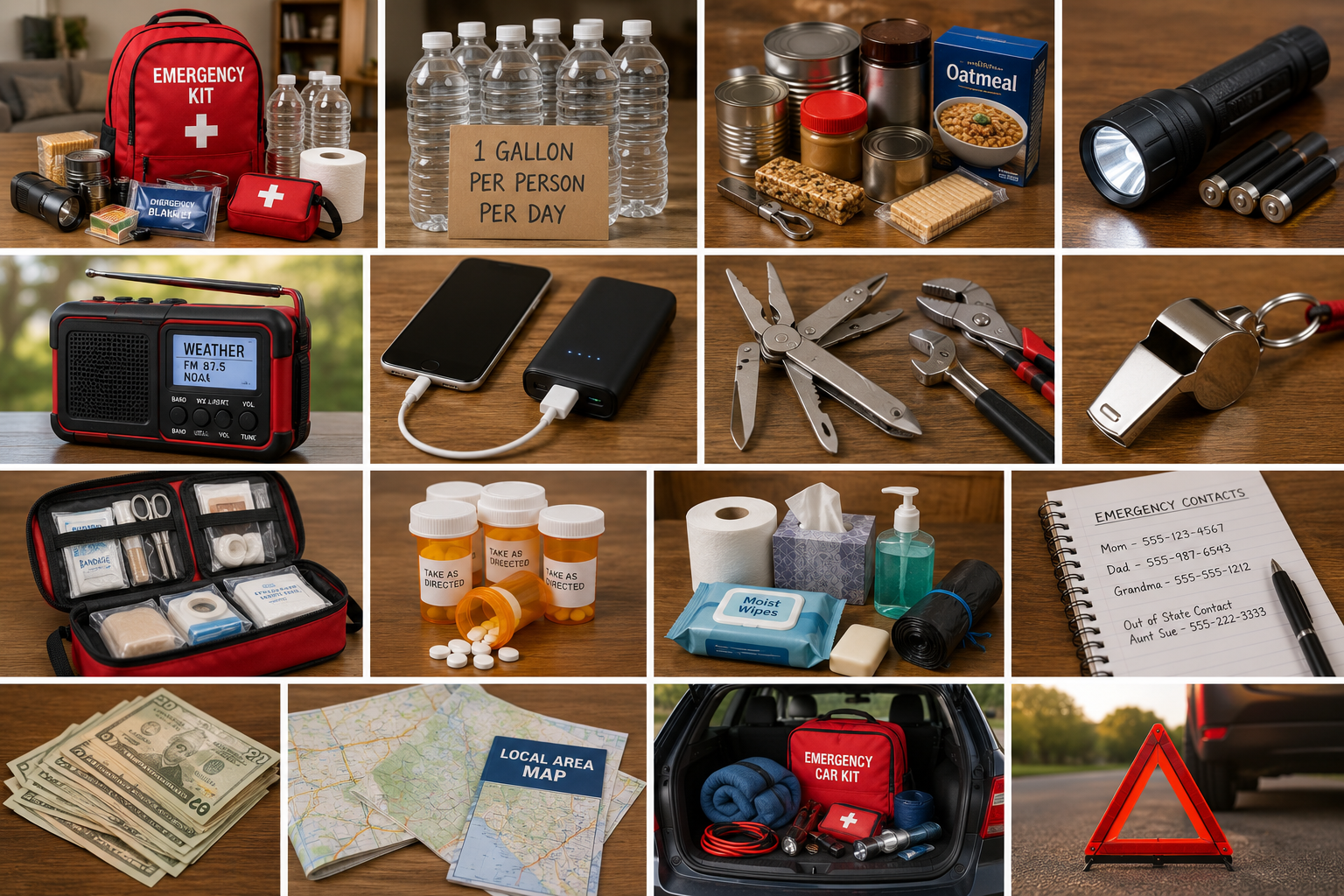
- At least one gallon of water per person per day, with enough stored for a minimum of three days.
- A three-day supply of shelf-stable foods that require little or no preparation.
- Flashlights with extra batteries.
- A battery-powered or hand-crank radio, including a NOAA weather radio if available.
- Cell phone charger and backup battery.
- Basic emergency tools, such as a multipurpose tool, manual can opener, and wrench or pliers for shutting off utilities.
- A whistle to help signal for assistance.
- A fully stocked first aid kit.
- A seven-day supply of prescription medications and any essential medical equipment.
- Personal hygiene and sanitation supplies, including garbage bags, moist towelettes, soap, and toilet paper.
- A printed list of family members and emergency contact information.
- Extra cash in small bills for situations when electronic payments are unavailable.
- Printed local maps in case GPS or mobile service is unavailable.
Car Emergency Supply Kit
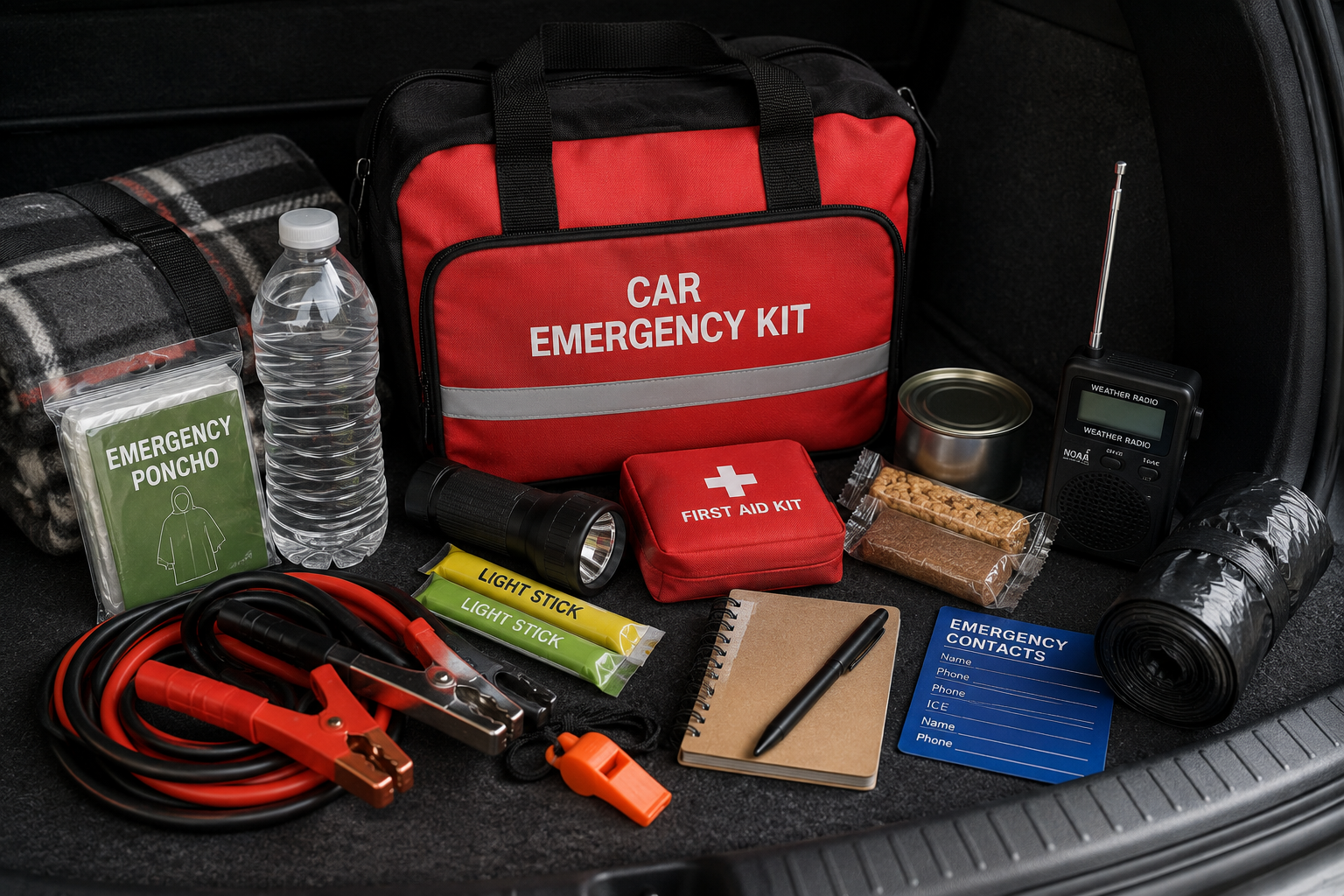
Keep a smaller emergency kit in your vehicle so you're prepared if you become stranded or need to evacuate.
- Bottled water for emergencies.
- Nonperishable snacks, canned food, or energy bars.
- A compact first aid kit.
- A flashlight with spare batteries.
- Emergency light sticks for added visibility.
- Warm blankets or sleeping bags.
- Jumper cables.
- Trash bags for cleanup or temporary protection from the weather.
- A notebook with a pen or pencil.
- An emergency whistle.
- A printed list of important phone numbers and emergency contacts.
- A battery-powered weather alert radio.
- A phone charger or portable charging device.
- Cash and loose change for emergency purchases.
Additional Supplies
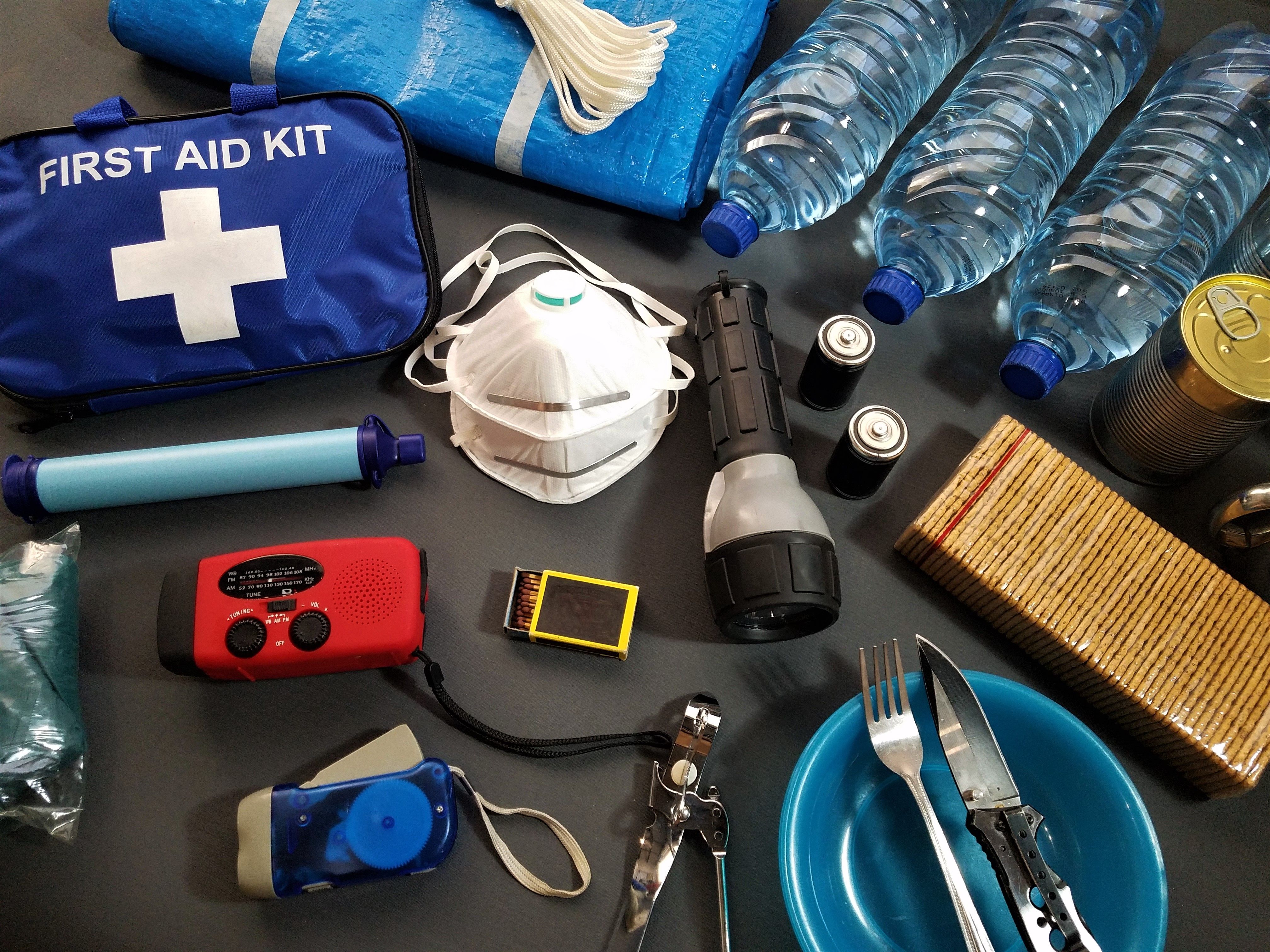
Depending on your household's needs and storage space available, these additional supplies can also be useful.
- Face masks, soap, hand sanitizer, and disinfecting wipes.
- Waterproof matches.
- Plastic sheeting, duct tape, and scissors.
- Supplies needed to temporarily secure or protect your home.
- Unscented household bleach for cleaning or disinfecting when appropriate.
- Disposable cups, plates, utensils, paper towels, and mess kits.
- Paper and pencils for recording important information.
- Rain gear such as ponchos or umbrellas.
- Extra clothing, sturdy shoes, hats, and work gloves.
- Towels.
- Blankets or sleeping bags.
Copies of Personal Documents
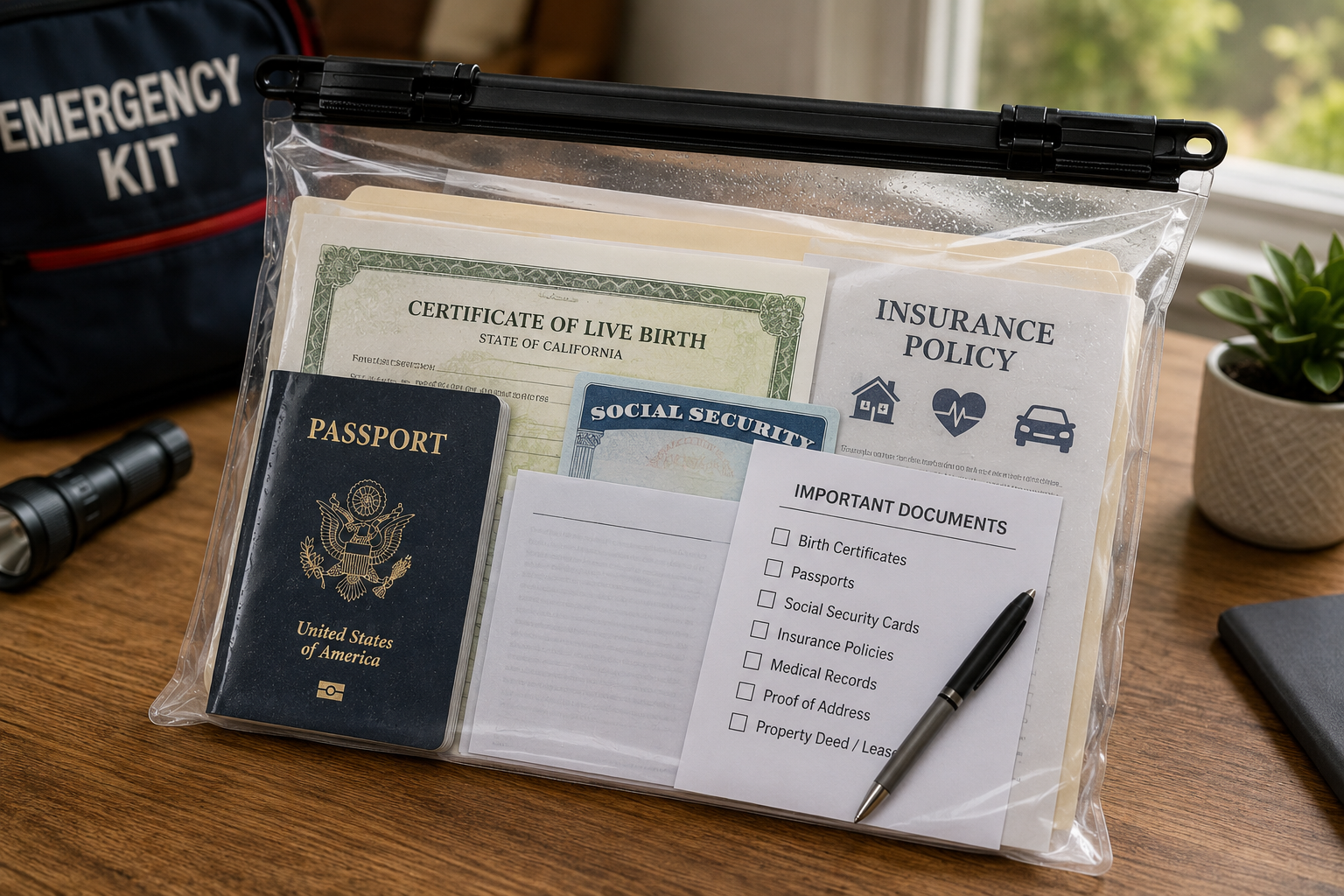
Store copies of important records in a waterproof container or sealed bag.
- Current medication lists and important medical information.
- Proof of address.
- Copies of your lease or property deed.
- Birth certificates and passports.
- Home, health, and auto insurance documents.
Special Needs
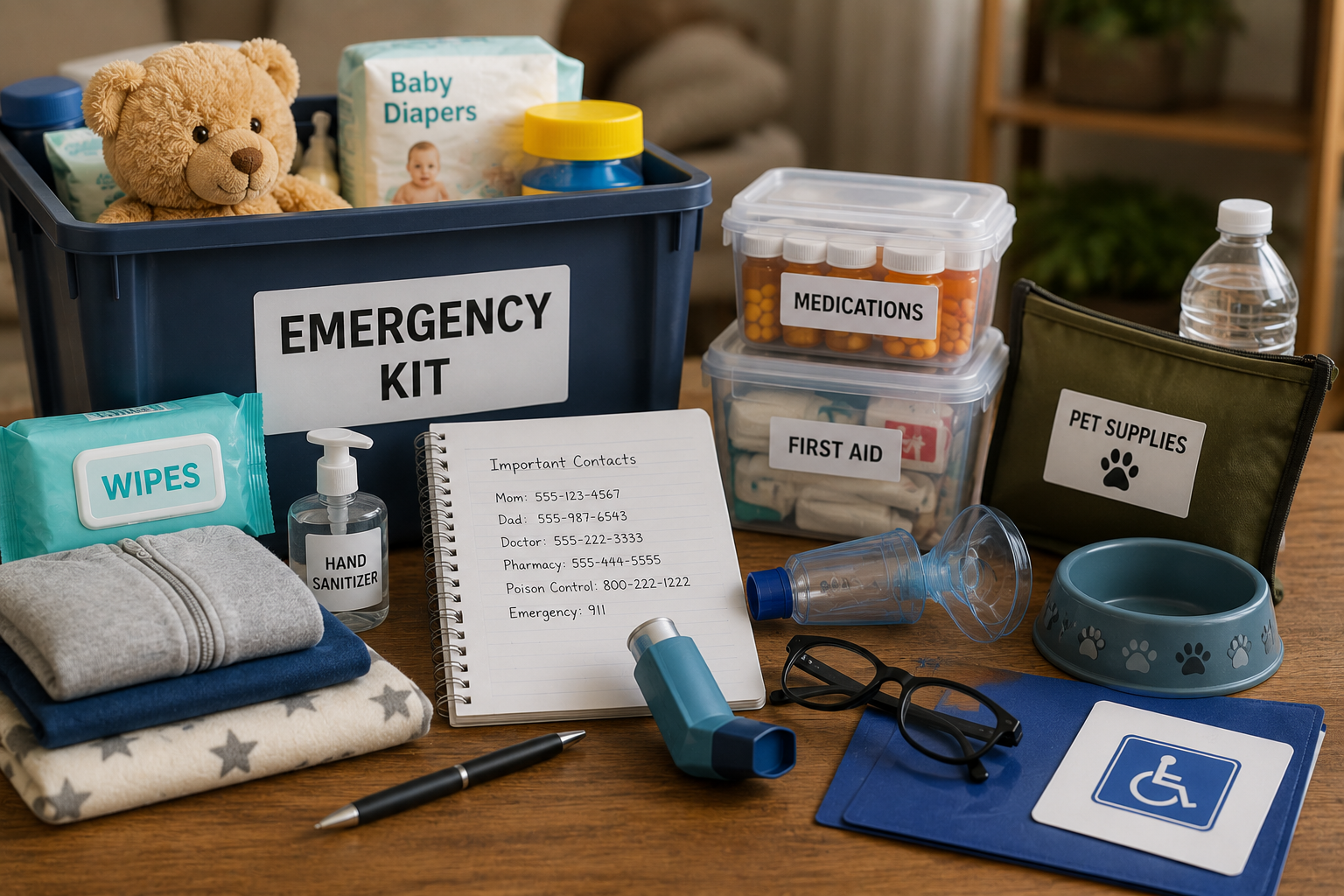
Customize your emergency kit for everyone in your household.
- Eyeglasses, contact lenses, hearing aids, and related supplies.
- Formula, bottles, diapers, baby food, and other infant essentials.
- Books, games, or quiet activities to help entertain children.
- Pet supplies, including identification, vaccination records, a leash or carrier, food, and water.
Maintaining and Storing Your Kit
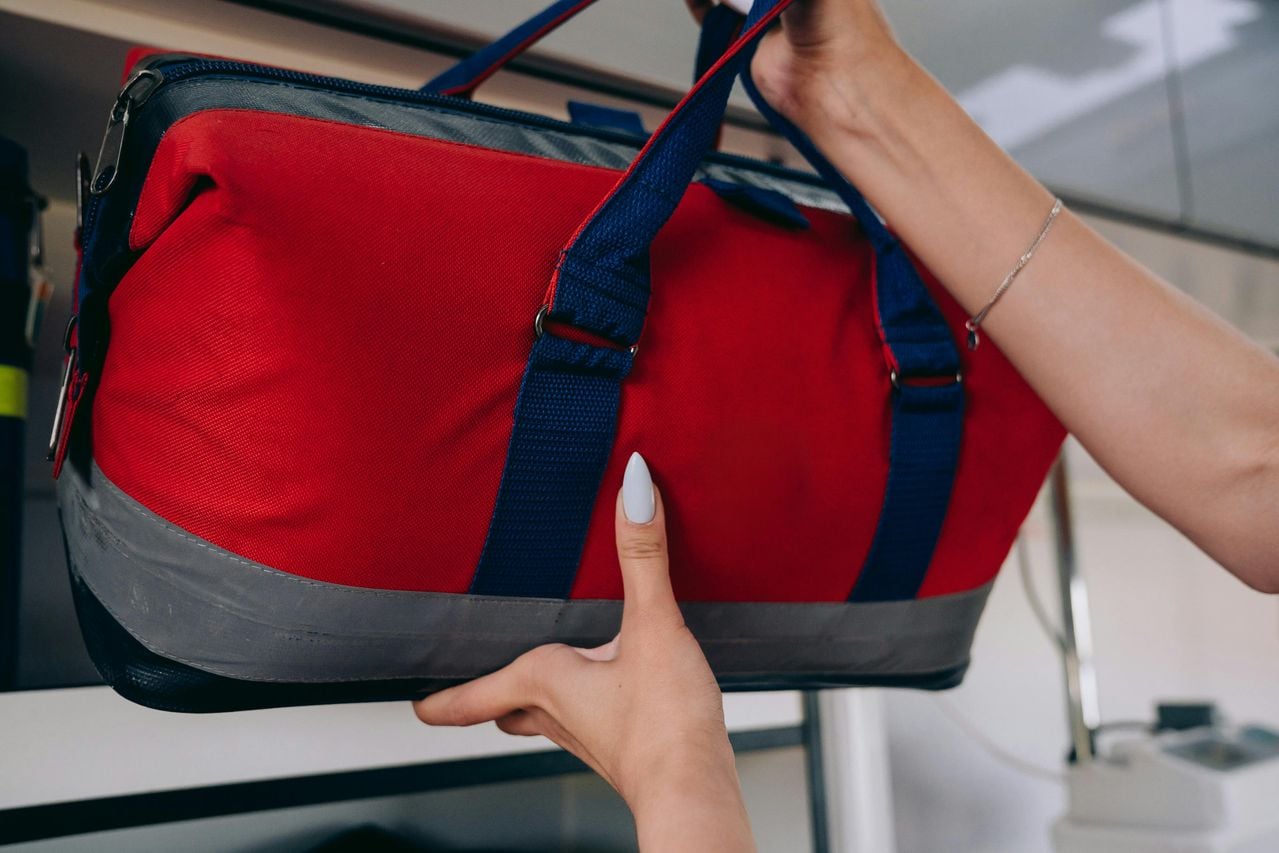
Store your emergency kit in a cool, dry location where everyone in your household knows how to find it, and consider keeping a smaller version in your vehicle. If you have space, consider including camping gear in case an evacuation or other unexpected event leaves you away from home overnight. If you drive a utility vehicle or truck, you could even look into the options for truck bed tents.
Protect important supplies by storing them in airtight bags or waterproof containers, regularly check expiration dates, and replace food, water, batteries, medications, and other items before they expire. Review your kit at least once a year - or sooner if your family's needs change - and take time to inspect your vehicle as well, including your wheels and tires, before long trips or severe weather seasons.
Additional Emergency Preparedness Resources
- Make a Plan
- Build an Emergency Kit
- Weather Safety
- Emergency Preparedness and Response
- Sesame Street in Communities
- Earthquake Hazards Program
- From Bystander to Lifesaver
- Emergency Preparedness
- Emergency Evacuation Planning
- Pets and disasters
- Food Safety During Power Outage
- Disaster Preparedness and Recovery for Older Adults
- Be Prepared
- Safety Tips
- Community Resilience
What should be included in an emergency preparedness kit for home?
A home emergency kit should include water, nonperishable food, flashlights, extra batteries, a radio, first aid supplies, medications, hygiene items, a charger, tools, and copies of important documents.
What should be in a car emergency kit?
A car emergency kit should include bottled water, snacks, a first aid kit, a flashlight, jumper cables, blankets, a phone charger, a whistle, trash bags, and emergency contact information.
How much water should I store in an emergency kit?
Store at least one gallon of water per person per day for a minimum of three days. Families should plan for more if they have children, pets, or special medical needs.
How often should I update my emergency supply kit?
Review your emergency kit at least once a year, and sooner if your family’s needs change. Replace expired food, water, batteries, and medications regularly.
What special items should be added for children, pets, or older adults?
Add diapers, formula, baby food, books or games for children, and pet food, leashes, carriers, and vaccination records for pets. Older adults may need eyeglasses, hearing aids, and extra medication supplies.