What Makes a Great Mustang Performance Mod?
The best Mustang performance mods deliver measurable horsepower and torque gains relative to their cost, install easily without professional help, and preserve daily drivability. A cold air intake, performance tuner, and cat-back exhaust are widely considered the top three starting modifications because they produce 15–40 HP combined for under $1,500 total, install in a home garage, and require no permanent engine changes.
You bought your Mustang because it already had power. But after a few months behind the wheel, you know there is more sitting on the table — throttle response that could be sharper, exhaust note that could hit harder, and straight-line pull that could pin you deeper into the seat.
Not every mod is created equal. Before spending a dime, it helps to evaluate each upgrade across four factors:
- HP gain per dollar — How much measurable power does this mod actually add relative to what it costs?
- Install difficulty — Can you handle this in your driveway, or does it need a lift and a professional?
- Daily drivability — Will this upgrade change how the car behaves on your Monday commute?
- Supporting mod requirements — Does this part work on a stock car, or does it need a tune, upgraded fuel system, or other hardware to function safely?
Those four criteria matter because Mustang builds can spiral fast. A $300 cold air intake is easy to justify — it pays for itself in smiles the first time you hear the intake roar under wide-open throttle. But a $7,000 supercharger kit that also needs a $1,500 fuel system upgrade, a $500 tune, and upgraded driveline components to handle the torque is a very different commitment. Knowing where each mod falls on the cost-versus-gain spectrum keeps your build focused, your car reliable, and your wallet in one piece.
Build order matters just as much as part selection. Installing a set of long tube headers before you have a tuner to recalibrate the ECU is leaving power on the table. Running a supercharger on stock fuel injectors is not just inefficient — it is risky. The tiers below are organized so each stage of modifications stacks on the one before it. Start at the bottom, build up, and let each upgrade reach its full potential before moving to the next level.
If you are brand new to modifying a Mustang, take a look at our rundown of the best first mods for every Mustang for a broader starting point.
Tired of leaving power on the table every time you hit the throttle? Not sure where to start — or how much to spend — on your first round of performance mods? This guide breaks down the best Mustang mods for performance organized by budget tier — under $500, $500–$2,000, and over $2,000 — so you can build smart from day one, whether you drive a Fox Body, an S550, or a brand-new S650.
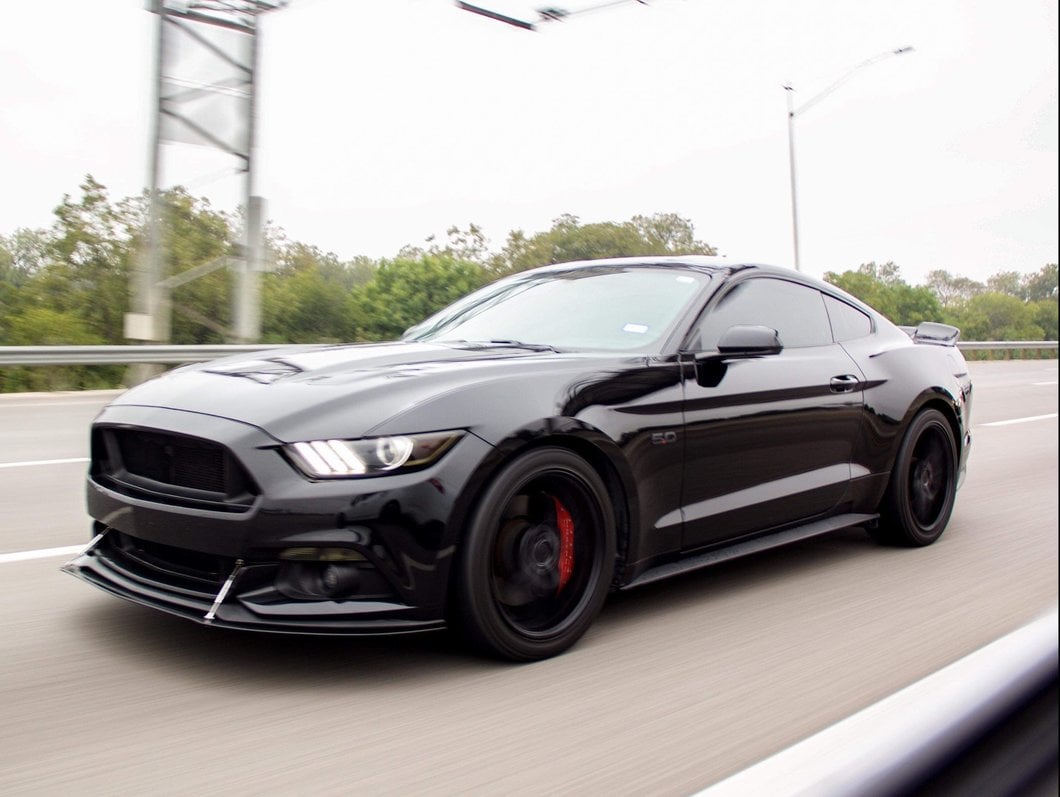
Best Mustang Performance Mods Under $500
The best Mustang performance mods under $500 are a cold air intake ($200–$400, 5–15 HP), a handheld performance tuner ($300–$500, 15–25 HP), and an axle-back exhaust ($300–$500, improved sound and throttle response). Each one installs in under an hour with basic hand tools and requires no permanent modifications to the engine or drivetrain.
This is where most builds start, and for good reason. The sub-$500 tier gives you the highest return on investment of any performance upgrades available for a Mustang. These are genuine bolt-on modifications — parts you install with a ratchet set and some patience on a Saturday morning, no lift required.
Cold Air Intakes: Best Bang for Your Buck
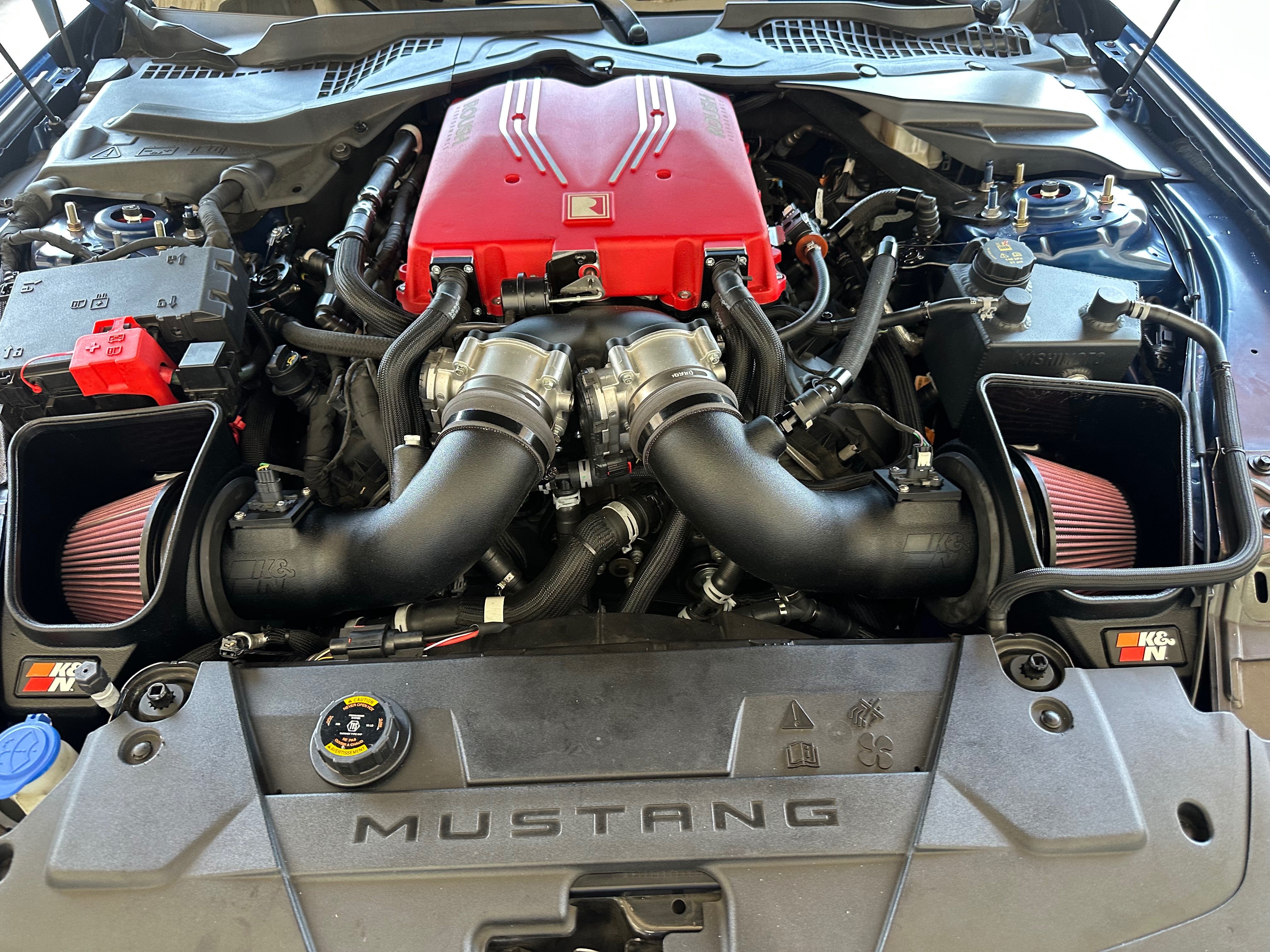
If you only do one mod to your Mustang, a cold air intake — a replacement intake system that routes cooler outside air into the engine — is the place to start. The factory airbox is designed around noise reduction and cost savings, not airflow. A cold air intake opens up the breathing path with a high-flow filter and a redesigned intake tube that draws air from outside the engine bay, where temperatures are significantly lower.
Cooler air is denser, which means more oxygen per combustion cycle, which means more power. On a Mustang GT with the 5.0L Coyote engine, expect 5–15 HP from a cold air intake alone, according to manufacturer dyno testing. That number climbs further when you pair the intake with a custom tune that adjusts fuel and timing tables to match the improved airflow.
Cost: $200–$400
HP gain: 5–15 HP (more with a tune)
Install time: 30–60 minutes, basic hand tools
Fits: All Mustang generations (Fox Body through S650)
The best part is the generational versatility. Whether you have a pushrod 5.0 Fox Body or a late-model Coyote, there is a cold air intake kit designed to fit your specific engine bay. Browse the full selection of Mustang cold air intakes to find the right match for your year and engine. If you are running an S550 (2015–2023), check out the dedicated S550 cold air intakes page for generation-specific options.
Performance Tuners and Custom Tunes
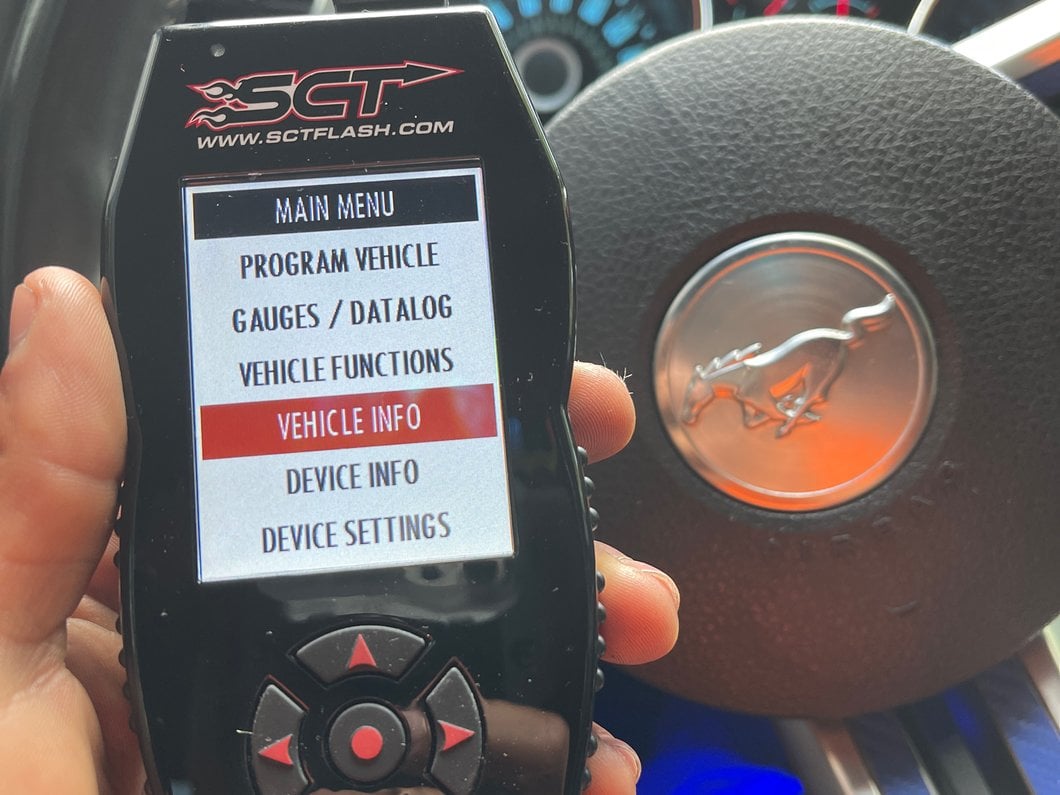
A handheld performance tuner adds 10–20 HP on a stock 5.0 Mustang GT using a canned (pre-loaded) tune. A custom dyno tune from a reputable calibrator typically delivers 20–30 HP on a naturally aspirated setup and adjusts fuel, ignition timing, and transmission shift points to match your specific combination of bolt-on modifications.
A performance tuner — a handheld device that reprograms your Mustang's ECU (engine control unit) — is arguably the single smartest mod you can make. Here is why: every other bolt-on you install changes the hardware, but the factory computer does not know it. Your stock tune was calibrated for stock parts. A tuner recalibrates fuel delivery, ignition timing, and transmission behavior to take advantage of every modification you have added.
There are two paths here:
- Canned tunes — Pre-loaded files on a handheld tuner that work with common mod combinations. Expect 10–20 HP on a stock Mustang GT. Brands like SCT and Bama offer plug-and-play options.
- Custom tunes — A calibrator (like Lund Racing or Palm Beach Dyno) builds a tune specific to your car's exact modifications, altitude, fuel grade, and driving style. Custom tunes typically deliver 20–30 HP on a naturally aspirated car, with even bigger gains when paired with bolt-ons.
Cost: $300–$500 (handheld with canned tunes), $500–$800 (custom tune)
HP gain: 10–30 HP depending on tune type and supporting mods
Install time: 15–30 minutes (plug into OBD-II port and follow prompts)
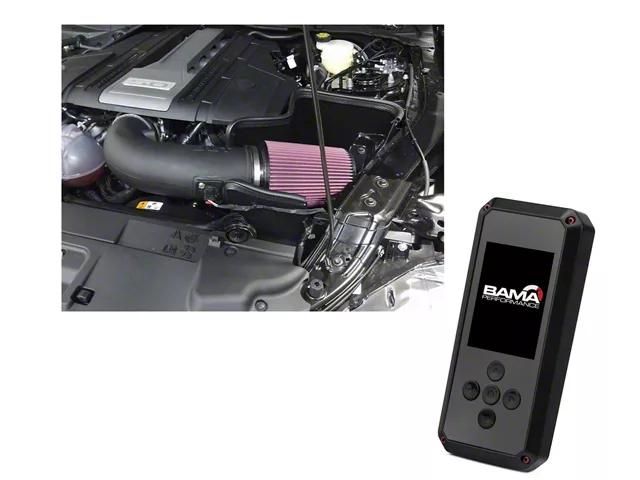
For the best value, pick up a cold air intake and tuner kit that bundles both parts together. The intake feeds more air, the tuner tells the ECU what to do with it, and you end up with a larger combined gain than either part would deliver on its own.
Axle-Back and Cat-Back Exhaust Systems
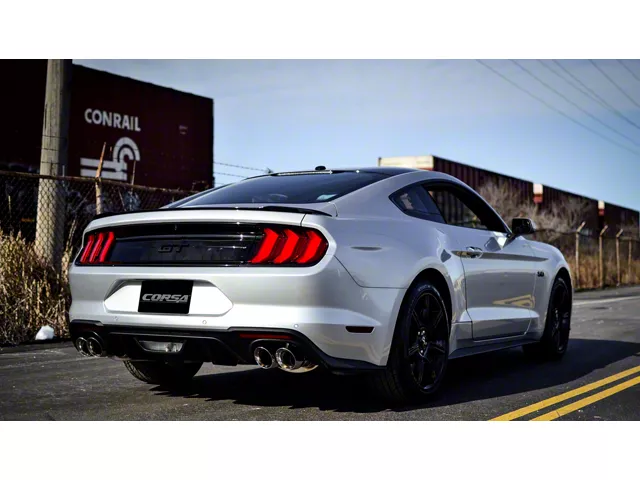
An exhaust upgrade gives your Mustang a deeper, more aggressive tone while improving exhaust flow. An axle-back system replaces the mufflers and tips for $300–$500, primarily improving sound. A cat-back system replaces everything from the catalytic converters back for $500–$800, adding 5–15 HP alongside the sound improvement by reducing exhaust backpressure across the entire system.
If a cold air intake changes how your Mustang breathes in, an exhaust upgrade changes how it breathes out. And for a lot of owners, the exhaust note is what transforms the car from "nice" to "turn heads in every parking lot."
Two terms to know:
- Axle-back exhaust — Replaces the mufflers and exhaust tips only, from the rear axle back. Primarily a sound upgrade. Quick install, typically under 45 minutes.
- Cat-back exhaust — Replaces everything from the catalytic converters rearward, including mid-pipes, mufflers, and tips. This is where you pick up measurable horsepower because you are reducing backpressure across a larger section of the exhaust system.
Axle-back cost: $300–$500 | HP gain: Minimal (sound-focused)
Cat-back cost: $500–$800 | HP gain: 5–15 HP
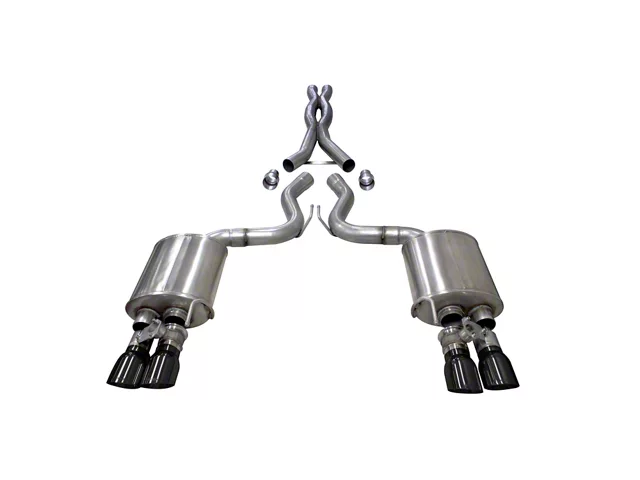
The exhaust is one of those mods where personal preference matters as much as performance. Some owners want a deep V8 rumble at idle that settles into a cruise-friendly drone level on the highway. Others want a raspy, aggressive bark under wide-open throttle. Listen to clips and read reviews before choosing — the "Watch Before You Wrench" library has exhaust comparison videos that let you hear the difference before you buy.
Best Mustang Performance Mods: $500–$2,000
The most impactful bolt-on mods in the $500–$2,000 range for a 5.0 Mustang are long tube headers (20–40 HP, $800–$1,500), coilover suspension kits ($1,000–$2,000), and big brake kits ($1,000–$2,000). Long tube headers deliver the single largest bolt-on horsepower gain available for the Coyote engine, while suspension and brakes ensure your chassis can handle the added power safely.
Once you have knocked out the sub-$500 basics — intake, tune, exhaust — the mid-tier is where your Mustang starts to feel like a genuinely different car. These mods deliver larger individual gains, but they also tend to require more install time, occasionally professional help, and a willingness to think about your build as a system rather than a collection of parts.
Long Tube Headers
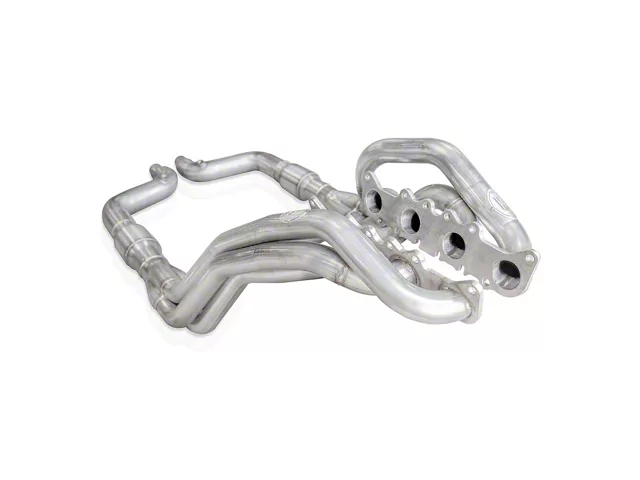
If there is one bolt-on modification that experienced Mustang builders point to as the biggest single upgrade, it is long tube headers — replacement exhaust manifolds with extended-length primary tubes that improve exhaust scavenging and flow. On a 5.0L Coyote engine, manufacturer testing consistently shows 20–40 HP gains from long tube headers paired with a custom tune.
Why such a big jump? The factory exhaust manifolds are a major bottleneck. They are designed around cost, packaging, and emissions compliance — not airflow. Long tube headers use individual, mandrel-bent tubes for each cylinder that merge into a collector, dramatically reducing backpressure and improving the engine's ability to expel exhaust gases.
Cost: $800–$1,500
HP gain: 20–40 HP (with custom tune)
Install time: 6–10 hours; professional install recommended
Note: Long tube headers typically require an off-road or high-flow mid-pipe and a custom tune to realize full gains
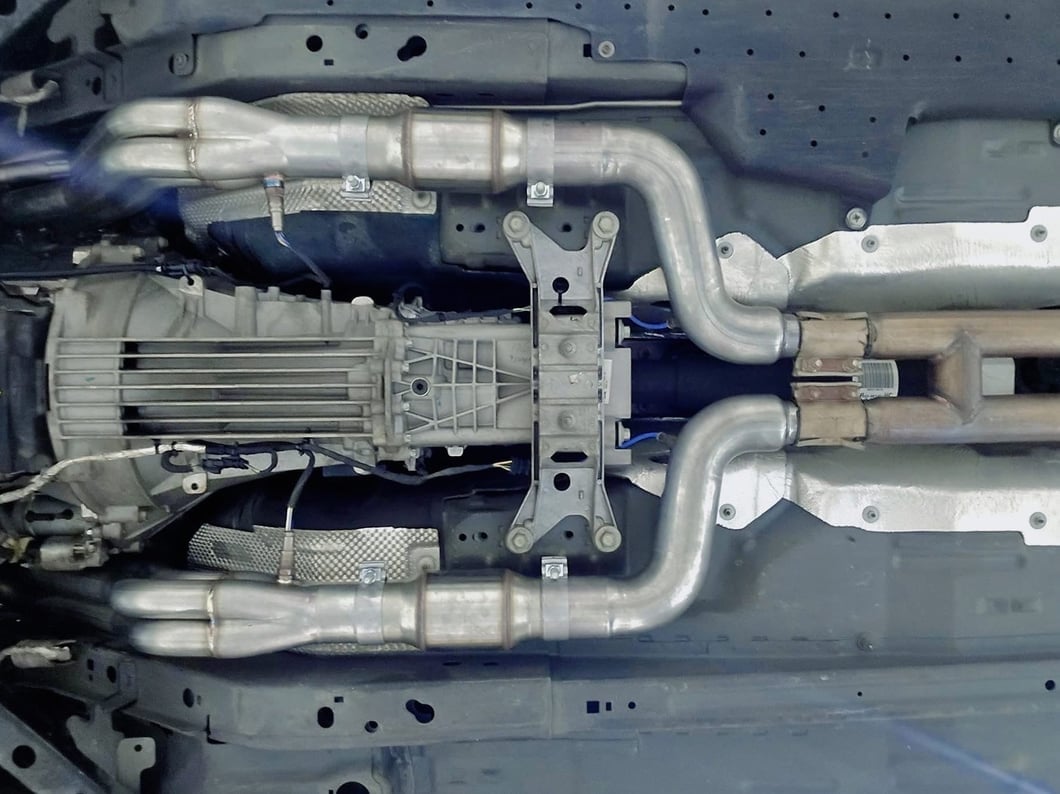
This is not a Saturday morning driveway job for most people. Headers require dropping the steering shaft or subframe on many Mustang generations, and the install can be tight and frustrating without a lift. Budget for professional installation if you are not comfortable working underneath the car for an extended session. Browse Mustang engine parts for header options that match your year and engine.
Suspension and Handling Upgrades
Here is a reality most first-time builders overlook: adding 50+ HP to a car with stock suspension makes it faster in a straight line but does not actually make it a better car. If you track your Mustang, autocross it, or simply want it to handle corners with more confidence, suspension upgrades belong in the conversation right alongside engine mods.
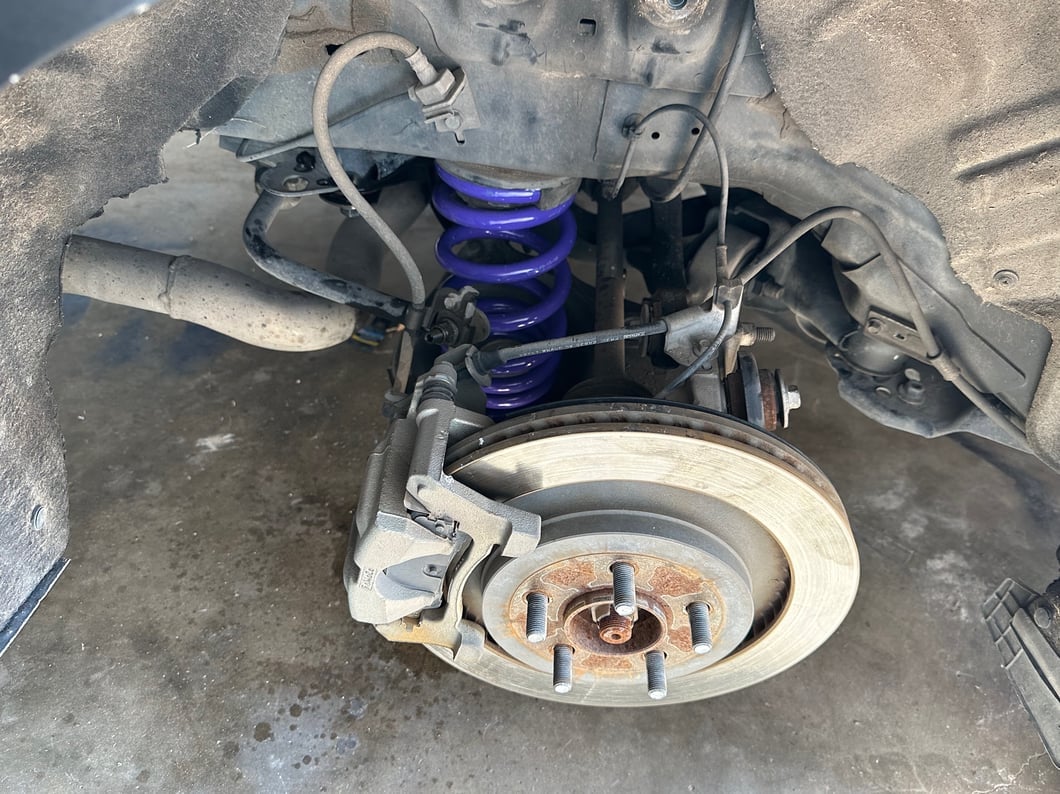
There are three main categories to consider:
- Lowering springs ($200–$500) — Drop the ride height 1–1.5 inches, lower the center of gravity, and improve body roll without a full suspension overhaul. This is the most affordable handling upgrade and delivers a noticeable improvement in cornering stability and stance. Check out the full lineup of Mustang lowering springs and read up on proper lowering practices before you order.
- Coilovers ($1,000–$2,000) — A coilover suspension — a combined coil spring and shock absorber unit with adjustable ride height and damping — gives you full control over how the car sits and handles. You can dial in ride height, compression, and rebound to match your driving style, whether that is daily comfort, spirited back-road driving, or full track duty.
- Sway bars ($200–$400) — Thicker sway bars (also called anti-roll bars) — metal bars that connect the left and right sides of the suspension — reduce body roll in corners. They are one of the most underrated handling modifications because they deliver a dramatic improvement in turn-in response for relatively little money and straightforward installation.
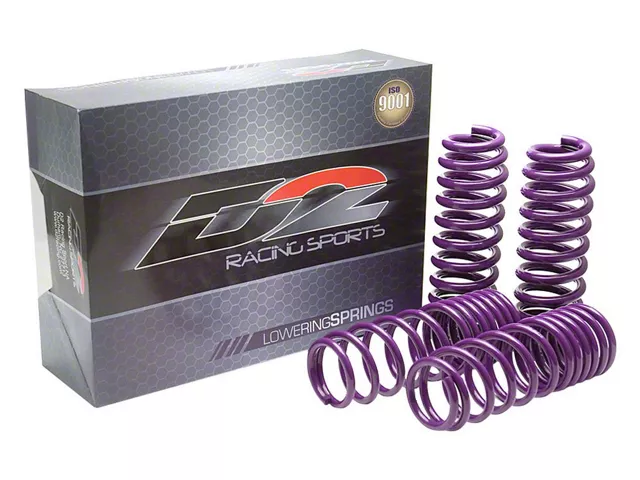
If you are deciding between a drag strip setup and a road course configuration, the approach is fundamentally different. Our guide on drag racing vs. road course suspension breaks down exactly what you need for each style.
Brake Upgrades
This is the mod that nobody gets excited about until they need it. Adding power without upgrading your brakes is like putting a bigger engine in a car with the parking brake stuck on — you are creating a problem you will eventually have to solve, and it is better to solve it proactively.
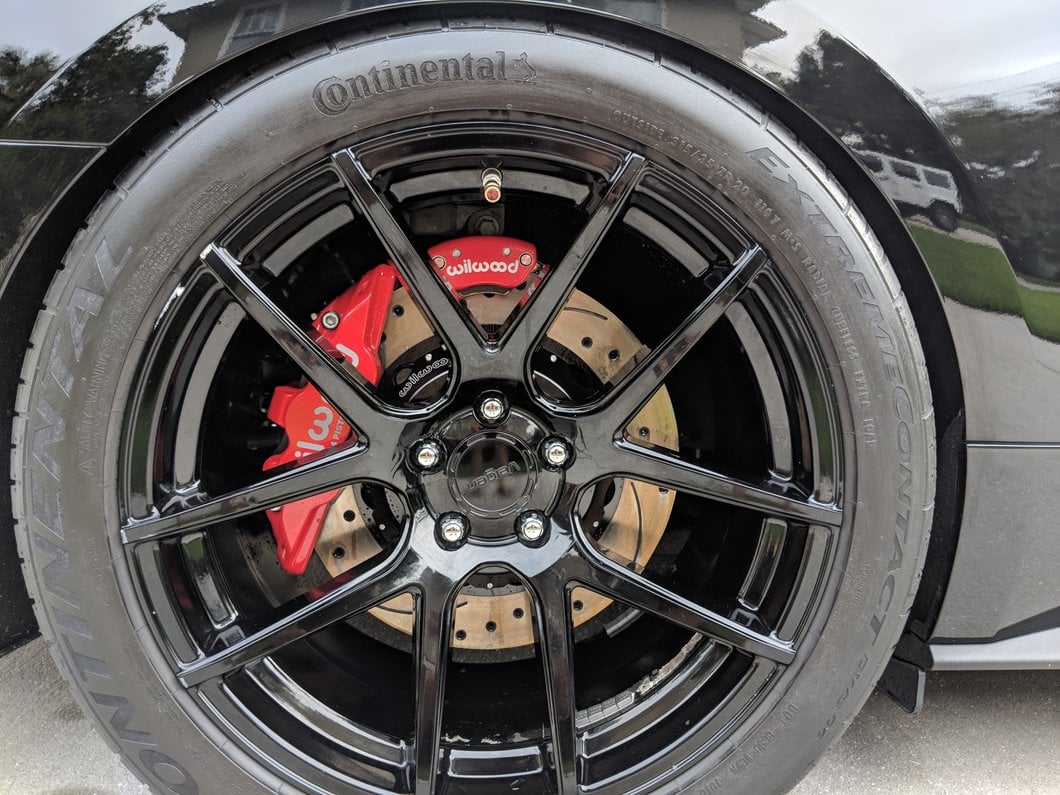
Two levels of brake upgrades to consider:
- Performance pads and rotors ($300–$800) — Replacing the factory brake pads with a higher-friction compound and swapping to slotted or drilled rotors — brake discs with machined grooves or holes that improve heat dissipation — gives you shorter stopping distances, better pedal feel, and improved fade resistance during spirited driving or track sessions.
- Big brake kits ($1,000–$2,000) — A big brake kit (BBK) replaces the entire front (and sometimes rear) brake assembly with larger-diameter rotors, multi-piston calipers, and braided stainless steel lines. BBKs are recommended for any Mustang making 450+ HP at the wheels, especially if you track the car or do repeated hard stops.
Cost: $300–$2,000 depending on level
Install time: 2–4 hours for pads and rotors; 4–6 hours for a full BBK
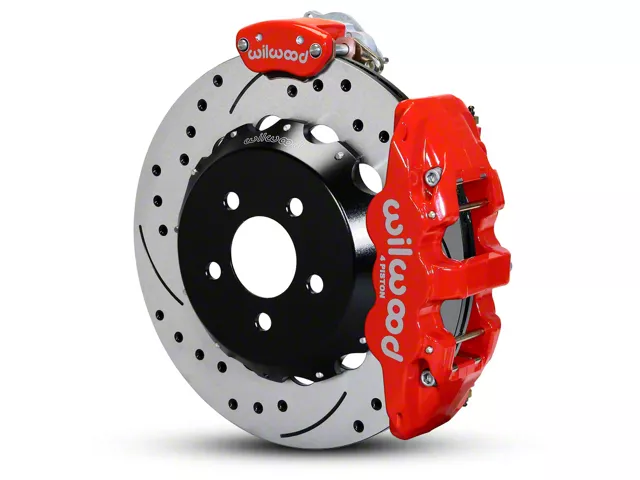
Think of brake upgrades as the safety net your power mods need. Every horsepower you add is a horsepower your brakes have to manage. If you are building past the bolt-on stage into forced induction territory, a big brake kit is not optional — it is essential.
The Full Bolt-On Build
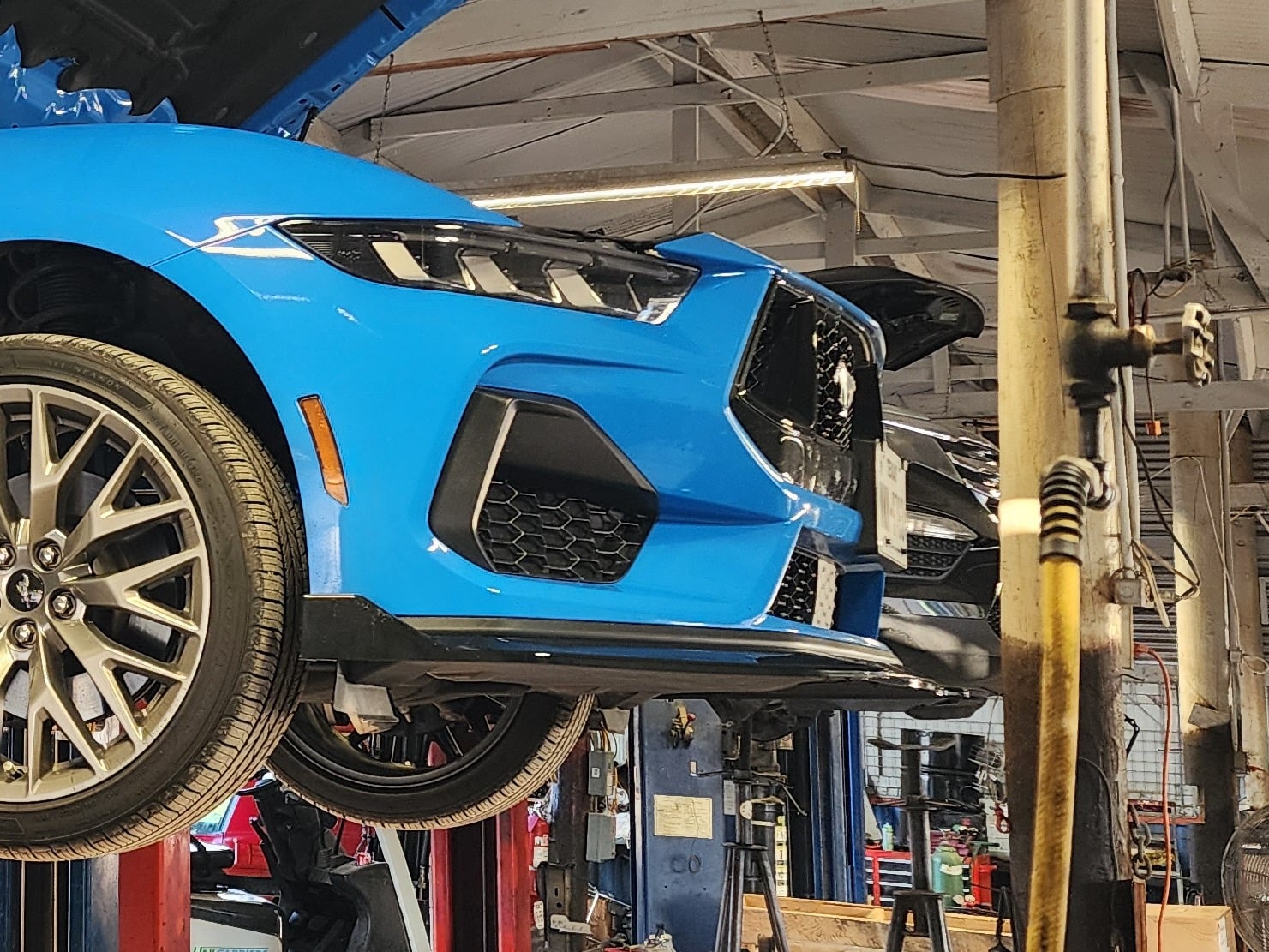
A full bolt-on Mustang GT build — cold air intake, performance tuner, cat-back exhaust, long tube headers, and a custom tune — typically costs $2,500–$4,000 and produces 50–70 HP over stock on a 5.0L Coyote engine. This combination keeps the engine naturally aspirated and streetable while delivering a substantial improvement in throttle response, sound, and straight-line performance.
Here is what a complete naturally aspirated bolt-on build looks like when you stack everything from the first two budget tiers together:
| Modification |
Typical Cost |
Estimated HP Gain |
| Cold Air Intake |
$200–$400 |
5–15 HP |
| Performance Tuner (handheld) |
$300–$500 |
10–20 HP |
| Cat-Back Exhaust |
$500–$800 |
5–15 HP |
| Long Tube Headers |
$800–$1,500 |
20–40 HP |
| Custom Dyno Tune |
$500–$800 |
Optimizes all above |
| Total |
$2,300–$4,000 |
50–70 HP combined |
A few important notes on that table. First, HP gains are not purely additive — the tune is what ties everything together and determines how much of each mod's potential you actually realize. Second, the total cost range assumes you are doing some of the install work yourself. Professional installation for the full list adds $500–$1,000 depending on your shop's labor rates.
The beauty of a full bolt-on build is that your Mustang remains naturally aspirated, street-friendly, and fully reversible. You can drive it to work on Monday and to the track on Saturday without changing a single setting. And for the 5.0L Coyote in particular, 50–70 HP over stock transforms the car without pushing it into the territory where you need to worry about fuel system upgrades or internal engine reinforcement.
Best Mustang Performance Mods Over $2,000
The best Mustang performance mod over $2,000 is a supercharger kit, which adds 150–300+ HP to a 5.0L Coyote GT for $6,000–$8,000. Whipple, Roush, and ProCharger are the most popular brands. Superchargers deliver instant, linear boost and represent the most cost-effective path to 600+ HP on a Mustang GT when paired with supporting modifications like upgraded fuel injectors and a custom tune.
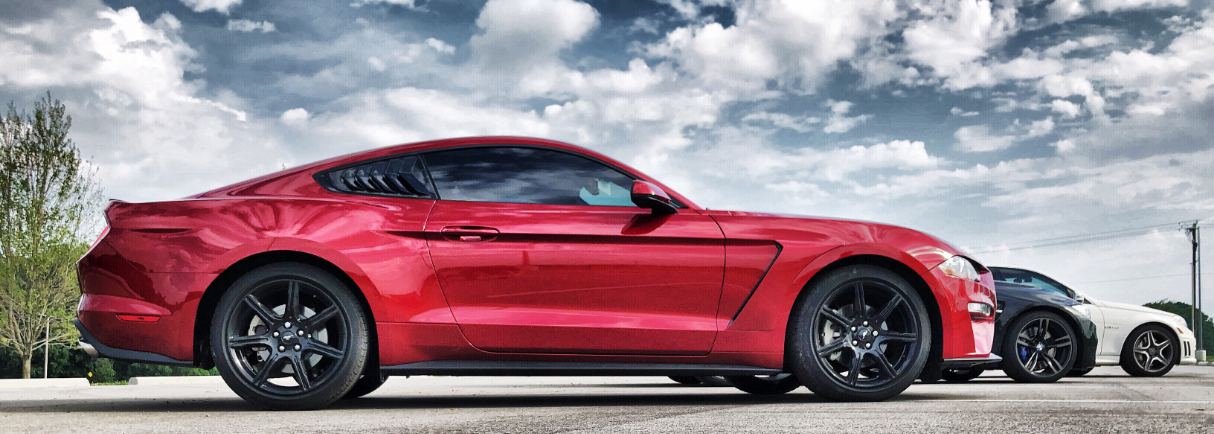
This is where your Mustang stops being "modified" and starts being "built." Forced induction — superchargers and turbocharger kits — represents the single biggest power leap available for any Mustang, but it also requires the most planning, the largest budget, and a supporting mod list that goes beyond just bolting on one part.
Supercharger Kits
A supercharger is a belt-driven compressor that forces more air into the engine than it could inhale on its own. More air means more fuel, which means more power — a lot more power. On a 5.0L Coyote Mustang GT, a supercharger kit from a major manufacturer typically adds 150–300+ HP depending on the boost level, tune, and supporting modifications.
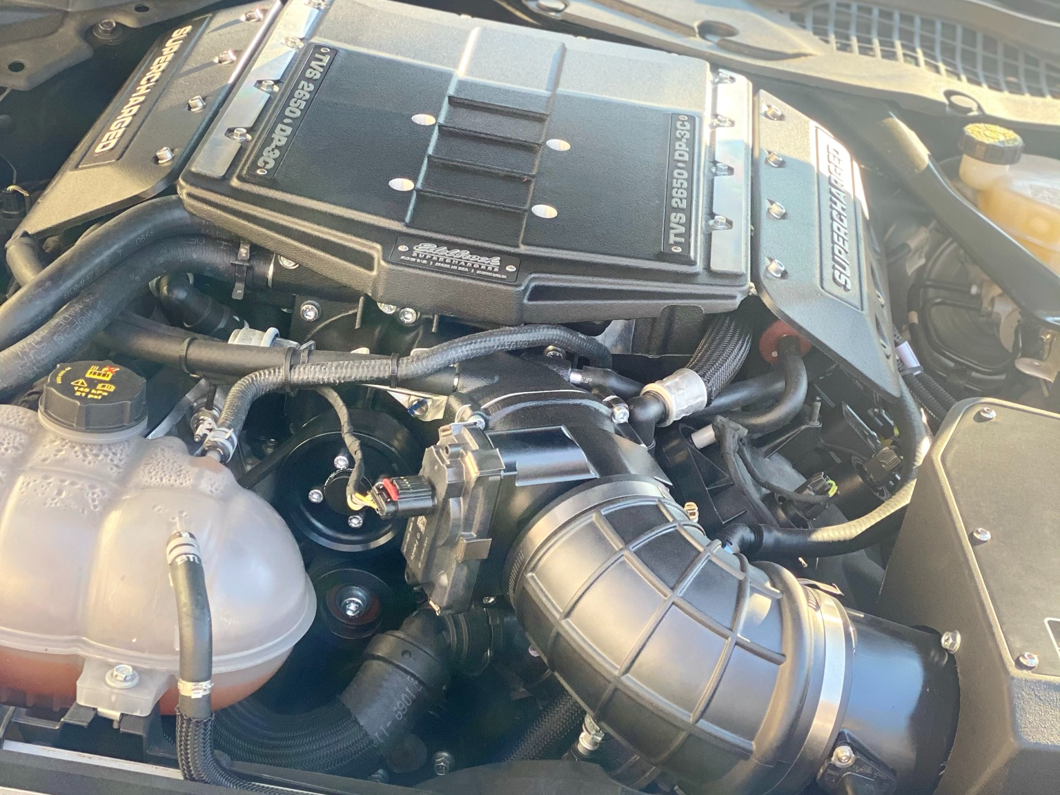
Three brands dominate the Mustang supercharger market:
- Whipple — Twin-screw positive displacement design. Delivers instant boost from idle with strong low-end and mid-range torque. Known for making big power reliably. Whipple-equipped Coyotes regularly exceed 700 HP with supporting mods.
- Roush — TVS (Twin Vortices Series) roots-style supercharger with an OEM-level fit. Roush offers a factory warranty option on select kits, which is a significant advantage if your Mustang is still under warranty coverage.
- ProCharger — Centrifugal supercharger design. Unlike the roots and twin-screw units, ProCharger's centrifugal blowers build boost progressively with RPM, delivering a linear power curve and excellent top-end pull. Slightly less instant low-end torque, but very effective at higher RPM ranges.
Cost: $6,000–$8,000+ (kit only; add $500–$1,500 for professional install and custom tune)
HP gain: 150–300+ HP depending on boost level and supporting mods
Install time: 8–16 hours; professional install strongly recommended
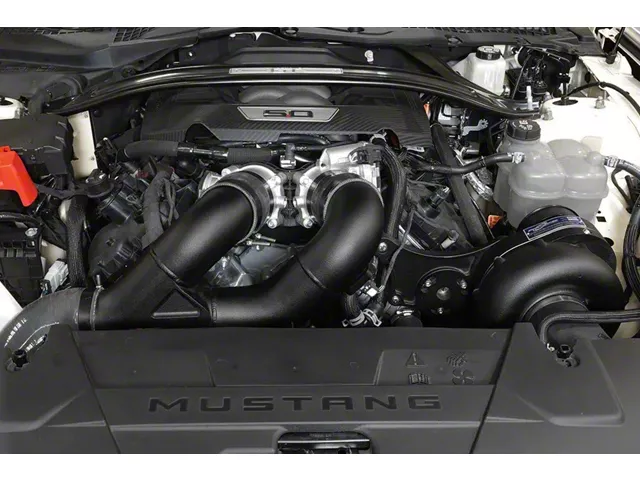
Supporting mods you will need: At the power levels a supercharger produces, the factory fuel system, driveshaft, and sometimes clutch or transmission components need upgrading to handle the load. Budget for upgraded fuel injectors, a higher-flow fuel pump, and a professional custom tune at minimum. If you are pushing past 700 HP, plan on a driveshaft upgrade and potentially a built transmission or a stronger clutch assembly.
Browse Mustang supercharger kits to compare options by brand, boost level, and Mustang generation. If you are running a 2024 or newer S650, check the dedicated 2024–2026 Mustang supercharger kits page for the latest fitment-verified options.
Turbocharger Kits
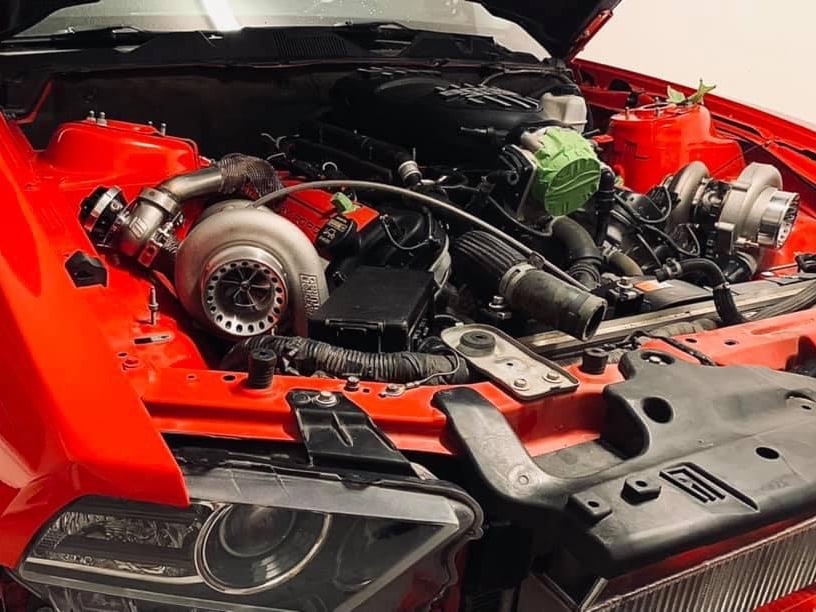
A turbocharger works on the same principle as a supercharger — forcing more air into the engine — but instead of being belt-driven, a turbo is powered by exhaust gas spinning a turbine. That difference in how the boost is generated affects the power delivery character significantly.
Where a supercharger delivers boost from idle, a turbo builds boost progressively as RPMs climb. The result is a power curve that ramps up with engine speed, often delivering explosive top-end pull once the turbo reaches full spool. On a Coyote 5.0 Mustang, turbo kits can produce 150–400+ HP depending on the turbo size, boost level, and supporting modifications.
Cost: $5,000–$10,000+ (single turbo kits on the lower end, twin turbo setups on the higher end)
HP gain: 150–400+ HP
Install time: Professional install required for most kits
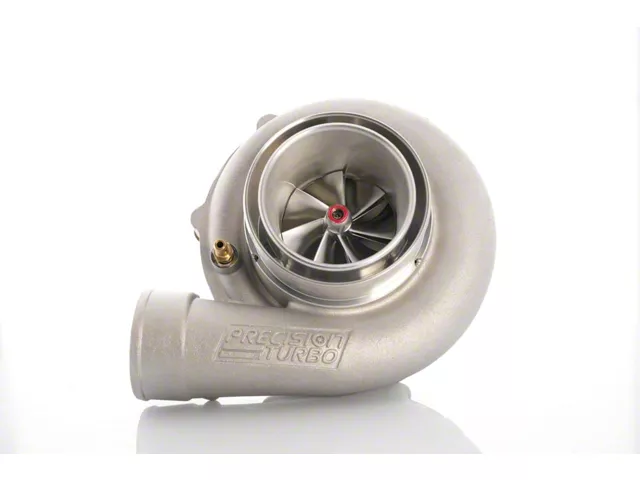
Turbo vs. supercharger — which one? It comes down to how you use the car. Superchargers deliver instant, predictable boost that feels like a bigger version of your naturally aspirated engine — great for street driving and drag racing. Turbos reward higher RPMs and tend to produce more peak power for the dollar, making them popular with road course and high-HP drag builds. Both require similar supporting modifications (fueling, tune, driveline) at comparable power levels.
Explore the full range of Mustang turbocharger kits to find setups matched to your generation and power goals.
Best Mods by Mustang Generation
Not every Mustang responds to mods the same way. Engine architecture, factory tuning, and available aftermarket support vary by generation. Here is a quick-reference breakdown of the top three performance modifications for each major Mustang platform:
| Generation |
Years |
Engine |
Top 3 Mods |
| Fox Body |
1979–1993 |
5.0L Pushrod V8 |
Heads and cam swap, cold air intake, exhaust (shorty headers + cat-back) |
| SN95/New Edge |
1994–2004 |
4.6L SOHC / 4.6L DOHC |
Cold air intake and tune, cat-back exhaust, PI head swap (for 2V engines) |
| S197 |
2005–2014 |
4.6L 3V / 5.0L Coyote (2011+) |
Cold air intake, performance tuner, long tube headers (Coyote years) |
| S550 |
2015–2023 |
5.0L Coyote / 2.3L EcoBoost |
Cold air intake + tune combo, long tube headers, supercharger kit |
| S650 |
2024–Present |
5.0L Coyote (Gen 4) / 2.3L EcoBoost |
Performance tuner, cold air intake, cat-back exhaust (aftermarket still expanding) |
Fox Body owners: The pushrod 5.0 responds dramatically to cylinder head and camshaft upgrades because the factory heads are the biggest airflow restriction. A heads-and-cam package with a matching tune is the single best dollar-for-dollar power upgrade on the Fox Body platform.
SN95 and New Edge owners: If you have the 2-valve 4.6L, a PI (Performance Improved) head swap from a 1999+ model dramatically improves airflow and adds roughly 25–40 HP. The 4-valve Cobra engines already have excellent heads — focus on intake, exhaust, and forced induction.
S197 Coyote owners (2011–2014): You have the advantage of the first-generation Coyote engine, which responds extremely well to bolt-ons. Long tube headers paired with a custom tune are the biggest single upgrade on this platform.
S550 owners: The broadest aftermarket support of any current Mustang generation. Nearly every modification discussed in this guide has multiple brand options available. The combination of a cold air intake, tuner, and headers on the S550 Coyote is one of the most well-documented bolt-on builds in the Mustang community.
S650 owners: The aftermarket is expanding quickly for the newest generation. Start with a tuner and cold air intake while manufacturers continue developing generation-specific forced induction and exhaust options.
EcoBoost owners: The 2.3L turbocharged four-cylinder responds extremely well to a cold air intake and custom tune because the factory turbo has headroom that the conservative stock tune does not use. An intercooler upgrade and downpipe are the next logical steps before considering a larger turbo setup.
Mustang Performance Mod Order: Where to Start
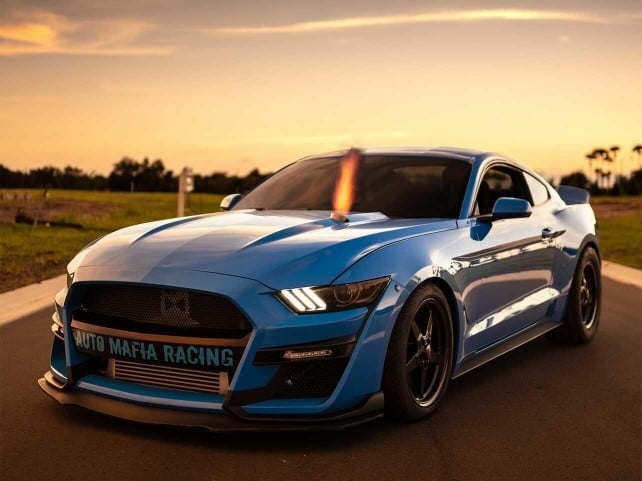
The recommended Mustang mod order is: cold air intake and performance tuner first, then cat-back exhaust, followed by long tube headers with a custom tune, then suspension and brake upgrades. Save forced induction — supercharger or turbo — for last, after supporting modifications like fueling and driveline upgrades are in place. This order maximizes power gains at each stage while keeping the car safe and streetable.
One of the most common questions Mustang owners ask is "what should I do first?" The answer matters more than most people realize, because the wrong order can leave you with parts that do not work well together, power you cannot safely use, or money spent on upgrades that a later modification makes redundant.
Here is the build order we recommend for a naturally aspirated Mustang GT that eventually wants to go forced induction:
- Cold air intake + performance tuner — Best power-per-dollar ratio. The tuner unlocks the intake's full potential and gives you a platform for future tunes as you add more parts.
- Cat-back exhaust — Improves sound, adds modest power, and reduces backpressure for future exhaust-side upgrades.
- Long tube headers + off-road mid-pipe + custom tune — The biggest single bolt-on gain. A custom tune at this stage recalibrates everything for your full intake-to-exhaust modification list.
- Suspension upgrades — Lowering springs or coilovers, sway bars, and subframe connectors. These make the car handle the power you have added and prepare the chassis for more.
- Brake upgrades — Performance pads and rotors at minimum; big brake kit if you are tracking or heading past 450 HP at the wheels.
- Forced induction (supercharger or turbo) — This goes last because it requires supporting mods (fueling, driveline, tune) that are easier to plan and install when your bolt-on foundation is already complete.
Common mistakes to avoid:
- Installing a supercharger on a completely stock car. While it will work, you miss out on the bolt-on gains that stack on top of forced induction. Headers, intake, and exhaust all add power above and beyond what the blower delivers alone.
- Skipping the tune. Every hardware mod you add without retuning leaves power on the table. Your ECU does not automatically adjust to new parts — it needs to be told what changed.
- Ignoring suspension and brakes. Adding 100+ HP to a car with stock brakes and factory suspension creates a vehicle that goes faster but does not stop or corner any better. That is a safety problem, not just a performance one.
- Buying parts for the wrong generation. Mustang fitment is generation-specific. A cold air intake for an S550 will not fit an S197, and an S197 header will not bolt onto a Fox Body. Always verify fitment for your exact year, engine, and trim before ordering.

After you have built up your Mustang, keeping it running strong is just as important as the parts you installed. Our guide to maintenance after mods covers what changes on the service side once you have added performance hardware.
Practical Takeaways
Here is the short version of everything above — the checklist to keep handy as you plan, order, and install:
- Start with a cold air intake and tuner. These two mods deliver the highest HP per dollar and install in under an hour. They also establish the foundation every future mod builds on.
- Always pair hardware with a tune. Every bolt-on you add changes the airflow, fuel, or exhaust dynamics. Without a recalibrated ECU, you are leaving power on the table and potentially running suboptimal air-fuel ratios.
- Follow the build order. Intake → tune → exhaust → headers → suspension → forced induction. Each tier prepares the car for the next level of modification.
- Do not skip brakes. Every horsepower you add is a horsepower your brakes have to manage. Upgrade pads and rotors before — or at the same time as — your first power mod above 50 HP over stock.
- Verify fitment before ordering. Mustang parts are generation-specific. A cold air intake for an S550 will not fit an S197, and header fitment varies by engine and transmission combination. Always confirm year, engine, and transmission match before checkout.
- Budget in tiers, not all at once. The under-$500 tier alone transforms how the car drives. Enjoy it, tune it, and learn what you want next before jumping to forced induction.
Start Your Build
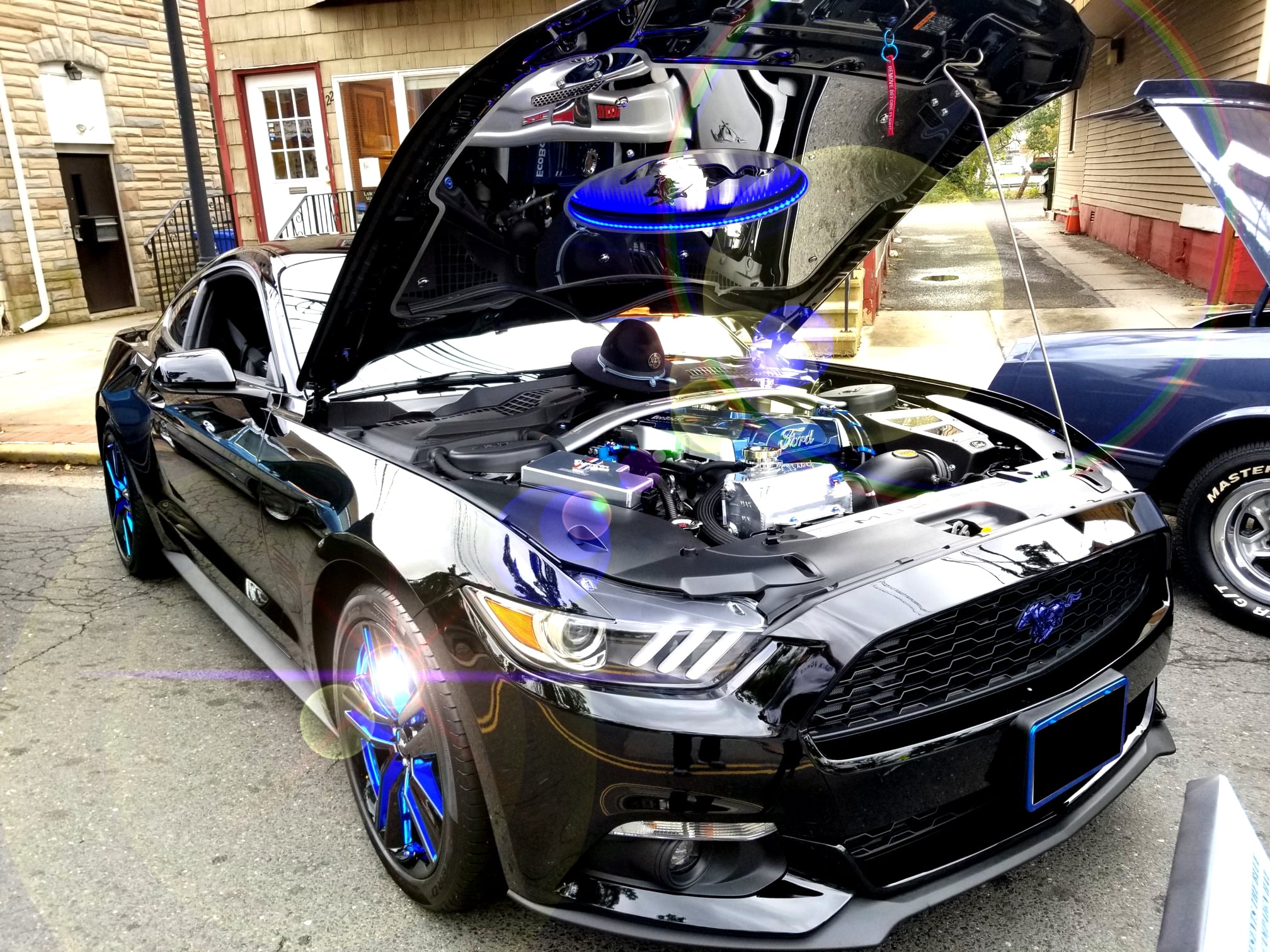
Whether you are chasing your first 15 HP with a cold air intake or planning a 700 HP supercharged build, the path forward starts with the right parts matched to your Mustang's year, engine, and goals. Every modification in this guide is available with vehicle-specific fitment, same-day shipping on most orders, and free shipping on orders over $149 to the continental US. Browse the full catalog of Mustang performance parts to find exactly what your build needs next.