
Active exhaust is one of the most impactful upgrades you can make to your muscle car — it changes the sound, improves performance, and gives you complete control over your driving experience. Whether you're looking for a factory-integrated system or an aftermarket setup with even more range, the right active exhaust transforms how your car feels every time you turn the key. Ready to upgrade? Browse our full lineup of Mustang exhaust parts to find the active exhaust system that fits your build.
 FREE 1 to 3-Day Delivery on Orders $149+ Details
What Is Active Exhaust? Benefits, Modes & Upgrade Guide
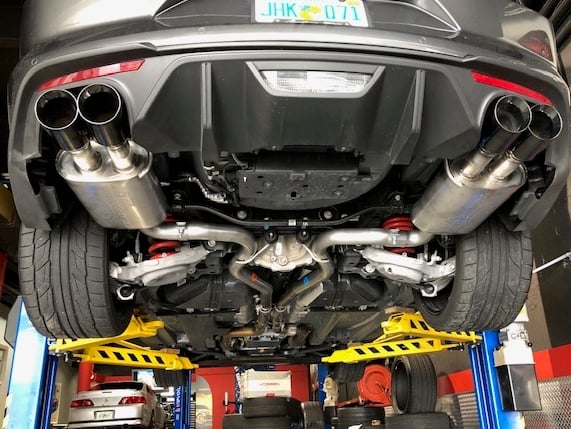
Ever wished your muscle car could rumble like a race car at the track but stay quiet enough for a 6 AM commute? Wondering what is active exhaust and whether it's worth the upgrade over your stock setup? You're not alone — active exhaust is one of the most popular upgrades among Mustang, Camaro, Challenger, Charger, and Corvette owners, and for good reason. In this guide, you'll learn exactly how active exhaust works, what each drive mode does to your sound and performance, and how to choose the right system for your build.
What Is Active Exhaust?
Active exhaust is an exhaust system that uses electronically controlled valves to let you adjust exhaust flow, sound level, and performance on demand. Unlike a traditional setup where the exhaust note is fixed from the factory, an active exhaust system puts you in control of how your car sounds and performs at any given moment.
Here's how it works at a high level: small electronic actuators mounted within the exhaust piping open and close butterfly-style valves. These valves are managed by the vehicle's ECU (engine control unit) — the onboard computer that monitors and adjusts engine parameters.
Depending on your vehicle, you can toggle between exhaust modes using a cabin switch, the infotainment screen, a center console dial, or even drive-mode selectors that bundle exhaust behavior with throttle and suspension settings.
The result is a system that can go from near-silent cruising to full-throated V8 thunder at the press of a button. If you've ever admired a Mustang GT that sounds completely different at a stoplight versus wide-open throttle on the highway, there's a good chance it's running an active exhaust system. The technology is available on many modern muscle cars, and it's also one of the most popular aftermarket upgrades for vehicles that didn't come with it from the factory. To understand how active exhaust fits into the broader picture, check out our guide to understanding exhaust systems and browse our selection of cat-back exhaust systems.
How Does Active Exhaust Work?
The heart of any active exhaust system is the exhaust valve — a butterfly or flap mechanism installed in the exhaust piping, typically near the rear of the vehicle in the axle-back or cat-back section. Electronic actuators (small motors) rotate these valves between fully closed and fully open positions based on signals from the ECU or an aftermarket controller.
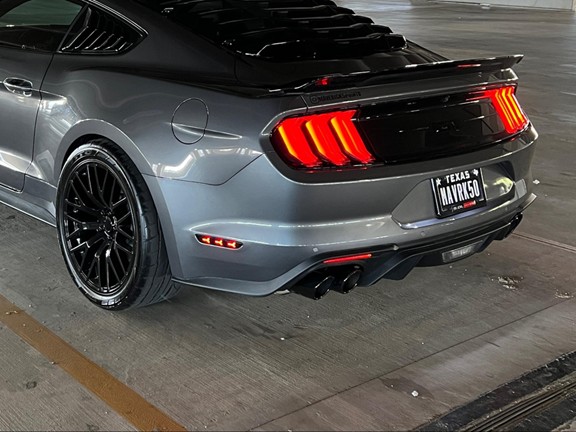
When the valves are closed, exhaust gases are forced through the mufflers and resonators, which absorb sound energy and reduce volume. The result is a quiet, refined exhaust note suitable for neighborhoods and early mornings. When the valves are open, exhaust gases bypass the mufflers entirely — or flow through a less restrictive path — creating a louder, more aggressive tone and reducing backpressure for improved performance. The transition between open and closed happens in milliseconds, and many systems also support partial valve openings for intermediate sound levels.
On factory-equipped vehicles like the Mustang GT with the active exhaust option, valve operation is tied directly to drive modes — Normal, Sport, and Track — so the exhaust note changes automatically as you switch. Aftermarket systems typically use a handheld controller, smartphone app, or wired switch to give you independent control over the valves regardless of drive mode. For a deeper dive into how these systems integrate with your vehicle, see our Mustang exhaust guide.
Active Exhaust Modes Explained
Most active exhaust systems — both factory and aftermarket — offer four distinct modes:
- Quiet/Touring: Valves stay closed, routing all exhaust gases through the mufflers. This delivers minimum noise output, making it ideal for early mornings, residential neighborhoods, and long highway cruises where cabin comfort matters most.
- Normal: Valves open to a stock-level position, providing the everyday driving experience you'd expect from your vehicle. Balanced sound with no surprises — just your engine's natural voice at moderate volume.
- Sport: Valves open more frequently at lower RPM and partial throttle, producing a noticeably louder, throatier tone. You'll hear a deeper growl on acceleration and more exhaust character during spirited driving without going full race car.
- Track: Valves stay fully open at all times, creating unrestricted exhaust flow for maximum volume and performance. Expect an aggressive, raw exhaust note with pops and crackles on deceleration. This mode is designed for track use and wide-open-throttle runs.
Benefits of Active Exhaust
The main benefits of active exhaust are adjustable sound, increased horsepower and torque, and total control over your driving experience. Here's why so many muscle car owners consider it one of the best upgrades you can make.
A Louder, More Aggressive Sound
When the exhaust valves open, gases flow freely from the cylinders with minimal restriction. The result is a deeper, throatier rumble that lets your V8 (or turbocharged four-cylinder) announce itself the way it was meant to. With the valves wide open in Track mode, your muscle car sounds like it belongs at a drag strip — rich, aggressive, and unmistakable. For many owners, this is the single biggest reason to upgrade. There's nothing quite like hearing your car come alive when you stab the throttle.
Quiet Mode for Daily Driving
Close the valves and your V8 drops to a whisper. You can leave for work at 6 AM without waking the neighborhood, hold a phone conversation at highway speed without shouting, and pass through noise-restricted areas without a second thought. This dual personality is what makes active exhaust so practical. You get the aggressive sound when you want it, and civilized manners when you need them.
Performance Gains from Reduced Backpressure
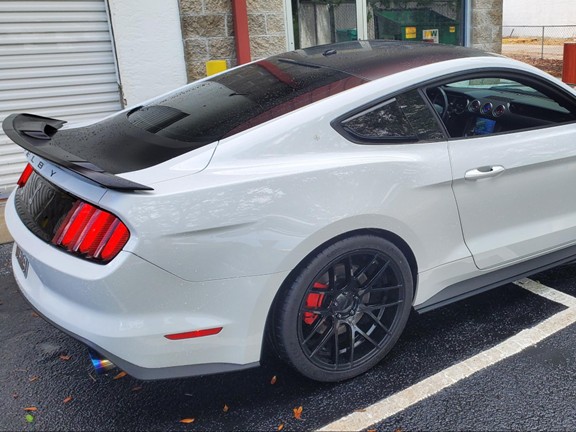
Opening the exhaust valves doesn't just change the sound — it changes how efficiently your engine operates. When valves are open, exhaust gases exit with less resistance, reducing backpressure — the force that opposes exhaust flow as gases push out through the piping, mufflers, and tips. Less backpressure means the engine can expel spent gases faster and pull in fresh air more efficiently on the next intake stroke. The result is measurable gains in both horsepower and torque, especially at higher RPM where exhaust flow volume is greatest. Paired with other breathing modifications like a cold air intake or cat-back vs. axle-back exhaust upgrade, the gains compound.
Total Customization and Control
With active exhaust, you're not locked into one exhaust personality. Toggle between modes instantly to match the situation: Quiet for rolling through neighborhoods, Normal for your daily commute, Sport for a spirited weekend cruise, and Track for wide-open throttle runs at the strip. Some aftermarket systems even let you program custom valve positions for a sound profile that sits between the factory presets. That level of control simply isn't possible with a standard exhaust. When browsing AmericanMuscle's catalog, you'll see exhaust systems labeled by sound character — Aggressive, Moderate, and similar — so you can match the system to the driving personality you're building for.
Active Exhaust vs. Standard Exhaust
A standard exhaust has fixed components and consistent sound. Active exhaust uses electronically controlled valves to adjust sound, performance, and efficiency based on driver preference. Here's how they compare across the key factors:
- Sound: A standard exhaust produces a fixed tone determined by the muffler design and pipe diameter — what you hear at idle is what you get at redline (just louder). An active exhaust system lets you shift from near-silent to wide-open aggressive with the press of a button.
- Performance: Standard exhaust systems have fixed flow characteristics. The muffler, resonator, and pipe sizing create a set amount of backpressure that never changes. Active exhaust can reduce backpressure on demand by opening valves to bypass restrictive components, letting the engine breathe more freely when you want maximum power.
- Control: With a standard exhaust, you have zero adjustment. What was installed is what you live with. Active exhaust gives you driver-selectable modes so you can tailor the exhaust behavior to your driving situation — no tools, no swap, no compromise.
- Cost: Standard exhaust systems are less expensive upfront, and aftermarket options like cat-backs and axle-backs are widely available at every price point. Active exhaust systems carry a higher price tag, but the versatility — combining quiet daily driving with aggressive performance sound in a single setup — often makes them the better long-term value for enthusiasts who want it all.
Stock vs. Aftermarket Active Exhaust Systems
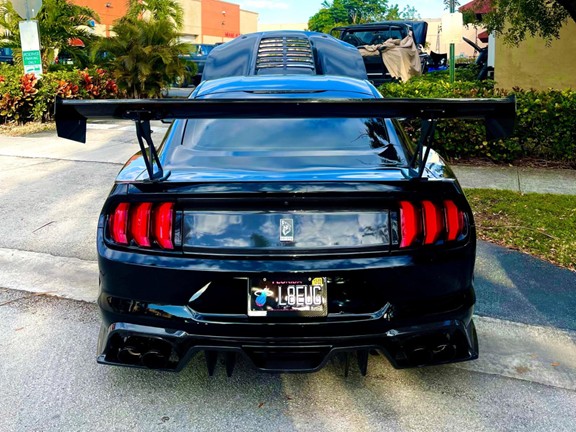
Many muscle cars come with factory active exhaust, but aftermarket systems available through AmericanMuscle often deliver a wider sound range and comparable or better performance at a competitive price point.
Factory active exhaust is available as an option on many modern muscle cars, including the Ford Mustang GT, Chevrolet Camaro SS, and select Dodge Challenger and Charger trims. The biggest advantage of the factory system is seamless integration — the valves tie directly into the vehicle's drive modes, and everything is calibrated from the factory. The downside is that factory systems are typically tuned conservatively, and adding them as a dealer option can be expensive.
Aftermarket active exhaust systems give you more flexibility. Leading manufacturers offer cat-back and axle-back systems with active valves that bolt onto your existing setup — and you can find all the top options at AmericanMuscle. Aftermarket systems often produce a wider range of sound profiles — from deeper and more aggressive to louder than anything the factory offers — and in many cases deliver comparable or better flow and power gains. The trade-off: on most aftermarket systems, the quiet mode is only available after the engine starts (the valves default to open during cold start), and you may need a separate controller rather than using the factory drive-mode selector.
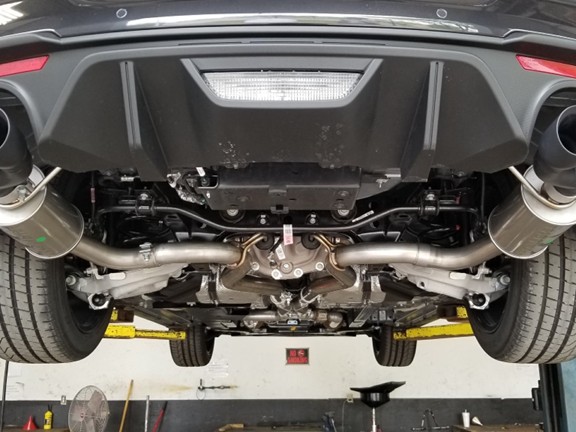
Whether you go factory or aftermarket, the key is matching the system to your goals. If you want plug-and-play simplicity with factory integration, the OEM active exhaust option is a solid choice. If you want louder sound, better performance, and more control — often at a lower price point — aftermarket is the way to go. Browse our full selection of performance exhaust systems or check out the latest 2024-2026 Mustang cat-back exhaust options to compare.
How to Upgrade to Active Exhaust
Ready to add active exhaust to your build? Here's what to consider before you buy:
Valve type and quality. Look for systems with stainless steel butterfly valves and durable electronic actuators. Cheap valve mechanisms can fail prematurely, especially in harsh weather or high-heat applications. Quality brands engineer their actuators to handle repeated cycling without degradation.
Mode count and control method. Some aftermarket systems offer two modes (open/closed), while others provide three or four distinct positions. Consider how much granularity you want. Also check how the modes are controlled — a wireless remote, smartphone app, or hardwired switch each have pros and cons depending on how you use the car.
ECU and drive-mode compatibility. If keeping factory drive-mode integration is important to you, confirm that the aftermarket system is compatible with your vehicle's ECU. Some systems are designed to work with the factory valve harness, which means your existing drive-mode buttons will control the new exhaust. Others operate independently with their own controller.
Fitment and vehicle specifics. Active exhaust systems are engineered for specific vehicles, model years, and engine configurations. A cat-back system designed for a 2024 Mustang GT won't bolt onto a 2018 Camaro SS without issues. Always verify fitment for your exact year, make, model, and engine before ordering.
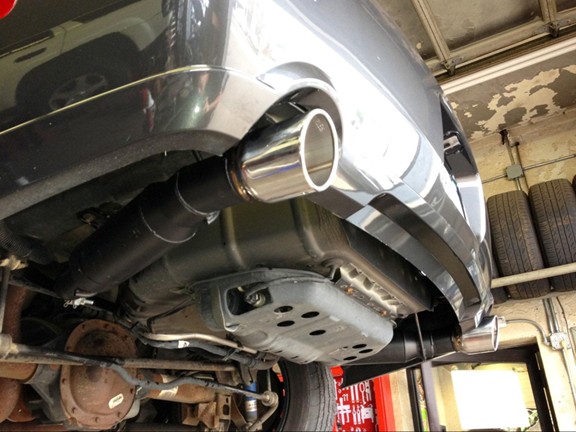
Installation considerations. Most cat-back active exhaust systems are designed for bolt-on installation with basic hand tools — no cutting or welding required. That said, routing wiring for the valve actuators and controller adds a step compared to a standard cat-back install. If you're comfortable working under the car with a jack, ramps, or a lift, it's a manageable weekend project. For more detailed guidance, check out our exhaust upgrade guide, browse our picks for the best Mustang exhaust systems, or visit our first mods buying guide if you're just getting started with your build.
Active exhaust is one of the most impactful upgrades you can make to your muscle car — it changes the sound, improves performance, and gives you complete control over your driving experience. Whether you're looking for a factory-integrated system or an aftermarket setup with even more range, the right active exhaust transforms how your car feels every time you turn the key. Ready to upgrade? Browse our full lineup of Mustang exhaust parts to find the active exhaust system that fits your build.
Frequently Asked Questions About Active Exhaust
Active exhaust is one of the most common upgrades muscle car owners research before buying. Here are the questions we hear most often.
What Is Active Exhaust?
Active exhaust is an exhaust system that uses electronically controlled valves to adjust exhaust flow, sound, and performance on demand. Unlike standard exhaust systems with fixed components, active exhaust lets you switch between quiet, normal, sport, and track modes from inside the cabin using a button, dial, or drive-mode selector.
Does Active Exhaust Add Horsepower?
Yes. When the exhaust valves open fully, backpressure (the resistance that opposes exhaust flow through the piping and mufflers) drops and exhaust gases exit the engine more efficiently. This improved airflow allows the engine to produce measurable gains in both horsepower and torque, especially at higher RPM where exhaust volume is greatest. The gains vary by system and vehicle but are consistent across quality active exhaust setups.
What Is the Difference Between Active Exhaust and Regular Exhaust?
A regular exhaust system has fixed piping, mufflers, and tips that produce a constant sound and flow level. Active exhaust adds electronically controlled valves that open and close to change the sound volume and engine performance. Regular exhaust gives you one exhaust note; active exhaust gives you multiple selectable modes.
Can You Add Active Exhaust to Any Car?
Aftermarket active exhaust systems are available for most modern muscle cars, including Mustangs, Camaros, Challengers, Chargers, and Corvettes. These systems are vehicle-specific and designed to bolt onto your existing exhaust piping. Always verify fitment for your exact year, make, model, and engine configuration before purchasing.
Is Factory Active Exhaust Better Than Aftermarket?
Factory active exhaust offers seamless integration with your vehicle's drive modes and electronics, but it's often tuned conservatively and priced at a premium. Aftermarket systems available through AmericanMuscle typically deliver a wider sound range, comparable or better performance gains, and a competitive price point — though they may require a separate controller rather than using the factory drive-mode selector.
What Are the Active Exhaust Modes?
Most active exhaust systems offer four modes: Quiet or Touring (valves closed, minimum noise), Normal (stock-level sound), Sport (louder and throatier at partial throttle), and Track (valves fully open for maximum volume and unrestricted exhaust flow). Some aftermarket systems also offer customizable valve positions between these presets.
Is Active Exhaust Worth It?
For most muscle car enthusiasts, yes. Active exhaust is one of the few upgrades that improves both sound and performance while adding daily-driver practicality through its quiet mode. You get a thunderous track-day roar when you want it and a neighbor-friendly whisper when you need it — without swapping parts or making compromises.
Does Active Exhaust Void Your Warranty?
Factory active exhaust installed at the dealership does not affect your warranty. Aftermarket systems generally do not void the full vehicle warranty either, but under the Magnuson-Moss Warranty Act (a federal law protecting consumers who install aftermarket parts), the dealer must prove that the aftermarket part caused a specific failure before denying a warranty claim on that component.