Ever launch your Mustang from a stoplight and feel like the engine is working way harder than it should just to get moving? Or maybe you've bolted on a cold air intake and exhaust but the car still feels sluggish off the line — what gives? The answer almost always lives inside your rear differential. Your Mustang's rear differential gears control how engine power translates into wheel speed, and swapping them is one of the simplest ways to transform how your car feels on the street, at the strip, or on a road course.
In this guide, you will learn exactly what rear differential gears do, which gear ratio is right for your build, what stock ratios came in every Mustang generation from the Foxbody through the S650, and what to expect from the installation process. Whether you are chasing quicker 60-foot times or just want your daily driver to feel more responsive, this is the complete roadmap.
What Are Mustang Rear Differential Gears?
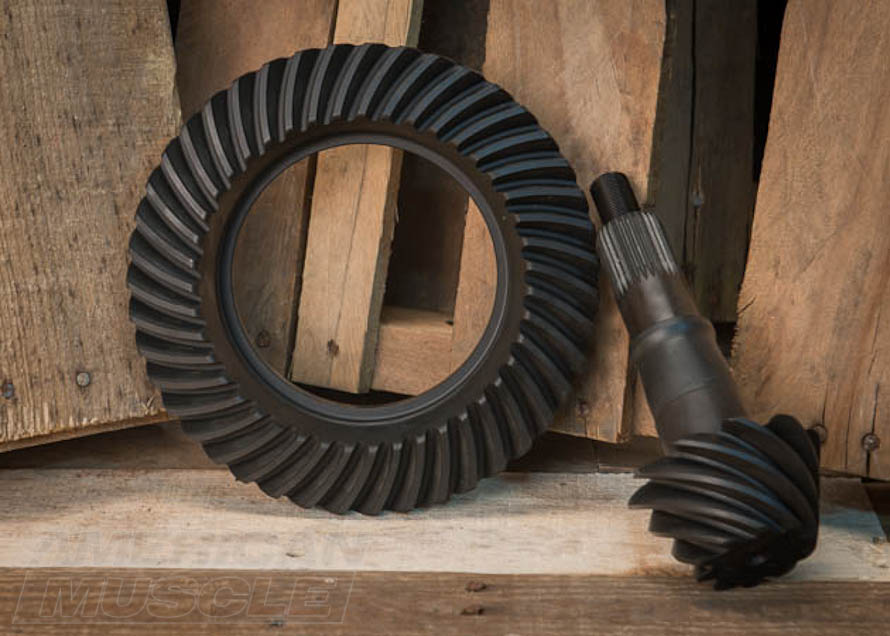
Mustang rear differential gears are the ring and pinion gear set — two interlocking gears inside your rear axle housing that convert rotational power from the driveshaft into the torque needed to spin your rear wheels. The pinion gear is the smaller gear connected to the driveshaft, and the ring gear is the larger gear bolted to the differential carrier. Together, they multiply the torque your engine produces before it reaches the tires.
These gears are described by their gear ratio (also called the final drive ratio), which tells you how many times the driveshaft must rotate to turn the rear wheels once. A set of 3.73 gears means the driveshaft spins 3.73 times for every single rotation of your rear axle. A set of 4.10 gears requires 4.10 driveshaft rotations per wheel turn.
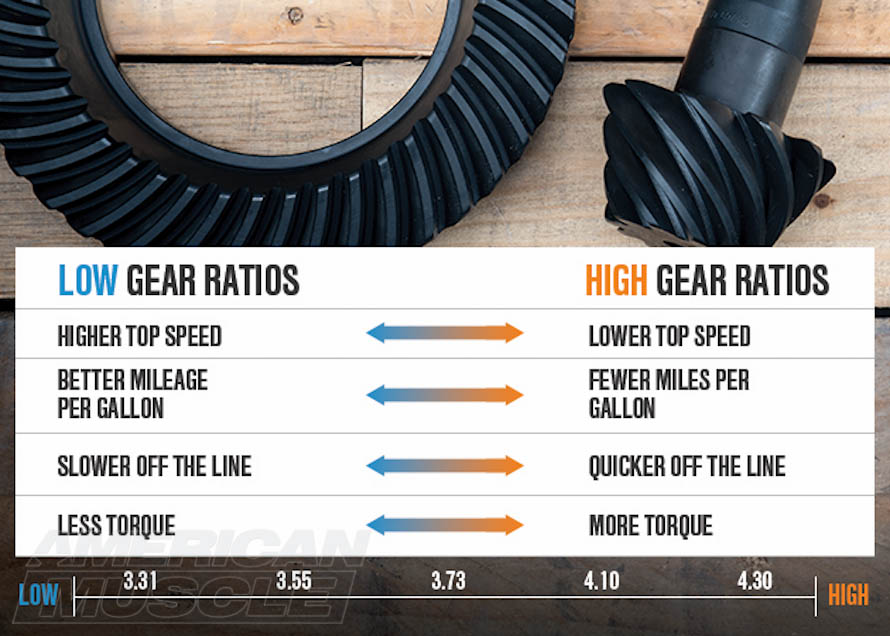
The key concept here is simple: the higher the number, the more mechanical leverage your engine has. A numerically higher ratio (like 4.10 versus 3.31) gives you quicker acceleration because the engine can use more of its torque to get the wheels moving. The trade-off is that your engine will spin at higher RPMs at highway speed, and your theoretical top speed decreases. That is why numerically higher ratios are often called shorter gears or steeper gears — they run out of room at the top end more quickly. 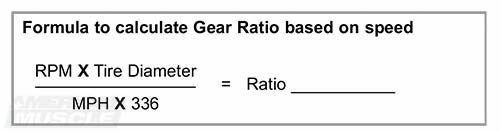
On the other end, a numerically lower ratio (like 3.15 or 3.27) is called a taller gear. Taller gears prioritize highway cruising comfort and fuel economy — the engine turns fewer times per mile, so RPMs stay lower at speed. Ford uses taller stock ratios on many EcoBoost and base models for exactly this reason.
Your Mustang's rear end assembly also includes the axles, the differential housing, and a power transfer device — either an open differential (which sends power to whichever wheel has the least resistance, often resulting in single-wheel spin), a limited-slip differential (LSD) (which distributes power to both rear wheels to maximize traction), or a spool (a solid unit that locks both axles together permanently, used primarily in dedicated race cars). The ring and pinion set is the component you swap when you change your gear ratio, and it is the single biggest factor in how your car feels off the line.
Why Upgrade Your Mustang's Gear Ratio?
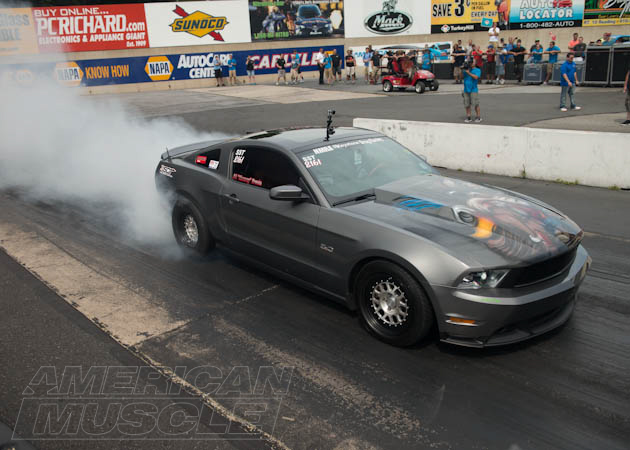
Upgrading your Mustang's rear gears is widely considered the best bang-for-buck modification you can do. A gear swap does not add a single horsepower to your engine, but it dramatically changes how the power you already have gets to the ground. The result is quicker acceleration, sharper throttle response, and noticeably faster 60-foot times at the drag strip — all for the cost of a gear set and installation.
Why does this matter so much? When Ford transitioned from the 5.0L pushrod V8 to the 4.6L modular motor in the SN95 generation, a common complaint was that the new engine felt lazy off the line. The modular motor makes its best torque higher in the RPM range, so the relatively tall stock gears left drivers waiting for power that never seemed to arrive at low speed. A gear swap solves this by letting the engine reach its power band faster with each shift.
Even on the modern 5.0L Coyote cars, swapping to a steeper gear ratio transforms the driving experience. You are not making more power — you are multiplying the available torque at the wheels. The engine revs more quickly through each gear, which means less time spent in the sluggish part of the power band and more time in the meat of the curve. On the street, it makes your Mustang feel faster than it actually is. At the track, it shows up on the time slip.
Here are the biggest benefits of a gear ratio upgrade:
- Faster acceleration: Numerically higher gears shorten the time between shifts, getting you through the quarter mile quicker.
- Improved 60-foot times: A steeper gear helps your tires hook harder off the line — a critical metric for drag racing.
- Better throttle response: The engine reaches peak torque faster in each gear, making the car feel more responsive in everyday driving.
- Low cost relative to gains: A ring and pinion set typically costs less than most bolt-on power adders, yet the seat-of-the-pants improvement can feel just as dramatic.
The trade-offs are worth understanding, too. Steeper gears increase highway RPMs, reduce fuel economy slightly, and lower your theoretical top speed. For most street-driven Mustangs, these compromises are barely noticeable in the 3.55–3.73 range. Going steeper to 4.10 or beyond is where you start to feel the highway RPM increase, but for a car that sees regular track time, the acceleration gains are well worth it.
Best Gear Ratio for Your Mustang by Use Case
![]() The best gear ratio for your Mustang depends entirely on how you drive it. A weekend drag racer needs a completely different setup than a daily commuter, and what works perfectly on a road course might feel overkill on the highway. Here is a breakdown of the most popular ratios and who they suit best.
The best gear ratio for your Mustang depends entirely on how you drive it. A weekend drag racer needs a completely different setup than a daily commuter, and what works perfectly on a road course might feel overkill on the highway. Here is a breakdown of the most popular ratios and who they suit best.
Gear Ratio Recommendation Matrix
|
Ratio
|
Best For
|
Pros
|
Cons
|
|
3.27
|
Highway cruising, fuel economy
|
Low RPMs at speed, best mileage, quiet highway manners
|
Sluggish off the line, poor acceleration feel
|
|
3.55
|
Balanced daily driver with mild improvement
|
Noticeable acceleration gain, reasonable highway RPMs
|
Not aggressive enough for serious track use
|
|
3.73
|
Street/strip combo, autocross, daily with bite
|
Strong acceleration, popular all-around ratio, works well with manual or auto
|
Slight increase in highway RPMs over stock
|
|
4.10
|
Drag racing, automatic transmissions, serious street performance
|
Aggressive launches, compensates for torque converter slip, great 60-ft times
|
Noticeably higher highway RPMs, reduced fuel economy
|
|
4.30
|
Dedicated drag cars, high-RPM builds
|
Maximum low-end hit, fastest acceleration through gears
|
High highway RPMs, not ideal for daily driving
|
|
4.56
|
Purpose-built race cars, short tracks
|
Maximum torque multiplication for quarter-mile performance
|
Impractical for street use, very high RPMs at highway speed
|
Daily Driving and Street Performance (3.55–3.73)
If your Mustang spends most of its time on public roads with occasional spirited driving, the 3.55–3.73 range hits the sweet spot. A set of 3.73 gears is the most popular upgrade ratio for street-driven Mustangs because it delivers a very noticeable improvement in throttle response and acceleration without making the car annoying on the highway. You will feel the difference the first time you stab the throttle from a roll, and highway RPMs stay reasonable enough for comfortable cruising.
For drivers who want a milder change — maybe you are swapping from a tall stock ratio like 3.15 or 3.31 and want an improvement without going aggressive — 3.55 gears split the difference nicely. They sharpen the car up without making it feel racy all the time.
Automatic vs. Manual Transmission Recommendations
Your transmission type matters when choosing a gear ratio. Automatic transmissions lose power through the torque converter — a fluid coupling that allows some slip between the engine and drivetrain. This slip means less of your engine's torque actually reaches the wheels, which makes the car feel softer off the line compared to a manual.
To compensate, automatic Mustangs generally benefit from going one ratio step steeper than a manual car would. If a manual Mustang feels great with 3.73s, the same car with an automatic will often feel best with 4.10 gears. The steeper ratio recovers the acceleration that the torque converter absorbs, bringing the automatic car's launch feel closer to what a manual experiences.
For a manual transmission Mustang used as a daily driver, 3.55 or 3.73 gears are the go-to recommendations. The direct mechanical connection means you get the full benefit of the gear change without needing to go as steep.
Drag Racing and Straight-Line Performance (4.10–4.56)
If your Mustang's primary job is running down the quarter mile, ratios in the 4.10–4.56 range put you in the power band faster and keep you there through each gear. A set of 4.10 gears is the most common drag racing choice for street/strip cars — aggressive enough to make a real difference at the tree, but still livable for the drive to the track.
Dedicated drag builds running high-RPM combinations (built Coyotes, supercharged setups, or boosted EcoBoost motors pushing big power) may benefit from 4.30 or 4.56 ratios. These very steep gears let the engine accelerate through each gear as fast as possible, shaving tenths off your ET. The trade-off is significant: highway driving becomes uncomfortable, and fuel economy drops noticeably. These ratios are best reserved for trailer queens or cars that rarely see extended highway miles.
Autocross and Road Racing (3.55–3.73)
On a road course or autocross course, the goal is to stay in the right gear for as much of the track as possible. Shifting costs time, so you want a ratio that keeps you in the meat of the power band without forcing unnecessary gear changes through tight sections.
For most Mustang road course builds, 3.73 gears are the popular choice. They keep the engine responsive coming out of slow corners without over-revving on straightaways. Some drivers on shorter, tighter courses prefer 3.55s to avoid bouncing off the rev limiter in second or third gear. Your specific track layout and power level will determine the ideal ratio — check your gear ratio guide for a deeper dive into matching your gearing to specific driving styles.
RPM at Cruise by Gear Ratio
One of the most common concerns about a gear swap is how it will affect highway RPMs. Here is a reference chart showing approximate engine RPM at a steady 70 mph cruise in top gear for common Mustang setups:
|
Gear Ratio
|
5-Speed Manual (0.68 OD)
|
6-Speed Manual (0.65 OD)
|
6-Speed Auto (0.69 OD)
|
10-Speed Auto (0.64 OD)
|
|
3.15
|
~1,750 RPM
|
~1,670 RPM
|
~1,770 RPM
|
~1,640 RPM
|
|
3.31
|
~1,840 RPM
|
~1,750 RPM
|
~1,860 RPM
|
~1,725 RPM
|
|
3.55
|
~1,970 RPM
|
~1,880 RPM
|
~2,000 RPM
|
~1,850 RPM
|
|
3.73
|
~2,070 RPM
|
~1,975 RPM
|
~2,100 RPM
|
~1,945 RPM
|
|
4.10
|
~2,275 RPM
|
~2,170 RPM
|
~2,310 RPM
|
~2,140 RPM
|
|
4.30
|
~2,390 RPM
|
~2,280 RPM
|
~2,420 RPM
|
~2,245 RPM
|
Notice that even with 4.10 gears, highway RPMs on a 10-speed automatic Mustang stay well under 2,200 RPM. Modern overdrive ratios have made steeper rear gears more livable than ever for daily driving.
How Tire Size Affects Your Final Drive Ratio
How does tire size affect gear ratio? Your tire diameter works like a second gear ratio layered on top of your ring and pinion set. A taller tire has a larger rolling circumference, which effectively makes your gearing act taller (numerically lower). A shorter tire does the opposite — it makes the gearing feel steeper. This means your tire choice directly influences how your gear swap feels in practice.
Here is a concrete example. Say you have 3.73 gears and you upgrade from a 255/40R18 tire (roughly 26 inches tall) to a 275/40R18 (roughly 26.7 inches tall). That 0.7-inch increase in tire diameter makes your 3.73 gears behave more like 3.63 gears — you lose a small amount of the acceleration you paid for. Go the other direction and mount shorter drag radials (say a 26-inch tall tire replacing a 27-inch street tire), and your effective ratio gets steeper.
This is why tire size and gear ratio should be considered together as a package. Common Mustang tire widths like 275s and 305s in the rear can vary by a full inch in diameter depending on the sidewall profile and brand. If you are planning both a gear swap and a tire upgrade, factor in the tire height before you settle on a ratio. Many enthusiasts on drag radials go one step milder on gearing because the shorter tire already steepens the effective ratio.
The formula is straightforward: Effective Ratio = (Gear Ratio x Stock Tire Diameter) / New Tire Diameter. You can use this to predict how any tire change will shift your final drive behavior.
Stock Mustang Gear Ratios by Year and Model
What stock gear ratio does your Mustang have? Ford has used a wide range of factory ratios across Mustang generations, and knowing your starting point is the first step in choosing an upgrade. Here is a comprehensive breakdown from the Foxbody through the current S650.
|
Generation
|
Years
|
Model/Engine
|
Transmission
|
Stock Ratio
|
|
Foxbody
|
1979–1993
|
5.0L V8
|
Manual
|
3.08
|
|
Foxbody
|
1979–1993
|
5.0L V8
|
Auto (AOD)
|
3.08 / 2.73
|
|
SN95
|
1994–1998
|
4.6L V8 GT
|
Manual / Auto
|
3.27 / 3.08
|
|
SN95
|
1994–1998
|
3.8L V6
|
Manual / Auto
|
3.08 / 2.73
|
|
New Edge
|
1999–2004
|
4.6L V8 GT
|
Manual / Auto
|
3.27
|
|
New Edge
|
1999–2004
|
4.6L V8 Cobra
|
Manual
|
3.27
|
|
New Edge
|
2003–2004
|
4.6L S/C Cobra (Terminator)
|
Manual
|
3.55
|
|
S197
|
2005–2009
|
4.6L V8 GT
|
Manual / Auto
|
3.31
|
|
S197
|
2005–2009
|
4.0L V6
|
Manual / Auto
|
3.31
|
|
S197
|
2007–2009
|
5.4L S/C GT500
|
Manual
|
3.31
|
|
S197
|
2010–2014
|
5.0L Coyote GT
|
Manual
|
3.31
|
|
S197
|
2010–2014
|
5.0L Coyote GT
|
Auto
|
3.15
|
|
S197
|
2011–2014
|
3.7L V6
|
Manual / Auto
|
3.31 / 3.15
|
|
S550
|
2015–2017
|
5.0L Coyote GT
|
Manual
|
3.73
|
|
S550
|
2015–2017
|
5.0L Coyote GT
|
Auto
|
3.15
|
|
S550
|
2015–2017
|
2.3L EcoBoost
|
Manual / Auto
|
3.55 / 3.31
|
|
S550
|
2018–2023
|
5.0L Coyote GT
|
Manual (MT-82)
|
3.73
|
|
S550
|
2018–2023
|
5.0L Coyote GT
|
10-Speed Auto (10R80)
|
3.55
|
|
S550
|
2018–2023
|
2.3L EcoBoost
|
Manual / 10-Speed Auto
|
3.55 / 3.31
|
|
S650
|
2024+
|
5.0L Coyote GT
|
Manual
|
3.73
|
|
S650
|
2024+
|
5.0L Coyote GT
|
10-Speed Auto
|
3.55
|
|
S650
|
2024+
|
5.0L Dark Horse
|
Manual / 10-Speed Auto
|
3.73
|
|
S650
|
2024+
|
2.3L EcoBoost
|
Manual
|
3.31
|
|
S650
|
2024+
|
2.3L EcoBoost
|
10-Speed Auto
|
3.15
|
If you are not sure which ratio your Mustang came with, there are three ways to find out. First, check your build sheet — it is typically located on the driver's door jamb or inside the trunk. Look for the axle code, which maps to a specific ratio. Second, use a VIN decoder online. Third, you can check manually by jacking up the rear end, marking the driveshaft and tire, and counting how many driveshaft rotations it takes to turn the tire exactly once. For a deeper look at Foxbody rear gear ratios and their unique considerations, check out our dedicated guide.
What Size Rear End Does My Mustang Have?
![]() What size rear end does your Mustang have? Before you buy a gear set, you need to know the size of your rear axle housing, because ring and pinion sets are specific to each housing diameter. Ford used three main rear end sizes across the Mustang lineup: the 7.5-inch, the 8.8-inch solid axle, and the Super 8.8-inch IRS (independent rear suspension).
What size rear end does your Mustang have? Before you buy a gear set, you need to know the size of your rear axle housing, because ring and pinion sets are specific to each housing diameter. Ford used three main rear end sizes across the Mustang lineup: the 7.5-inch, the 8.8-inch solid axle, and the Super 8.8-inch IRS (independent rear suspension).
|
Rear End Size
|
Years / Models
|
|
7.5-inch
|
1979–1985 V8 models; 1986–2010 V6 models
|
|
8.8-inch (solid axle)
|
1986–2014 V8 models (GT, Cobra, GT500, Mach 1, Bullitt); 2011–2014 V6; 1999–2001 & 2003–2004 SVT Cobra IRS
|
|
Super 8.8-inch IRS
|
2015+ all models (S550 and S650)
|
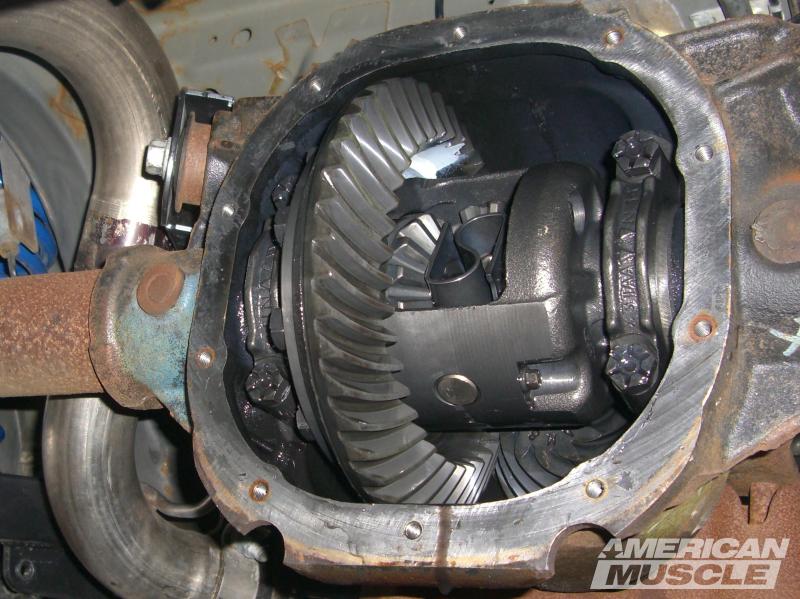
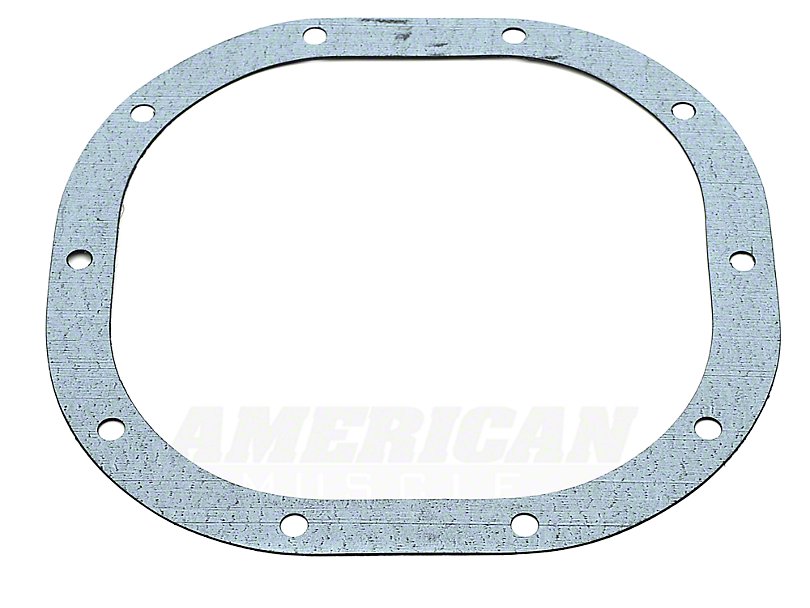 The easiest way to tell the difference between a 7.5-inch and an 8.8-inch rear is by looking at the differential cover gasket shape. The 7.5-inch cover is roughly oval with a pointed top. The 8.8-inch cover has a more rectangular shape with rounded corners. You can also count the pinion splines — the 7.5-inch uses 28 splines while the 8.8-inch uses 28 or 31 splines depending on the year.
The 7.5-inch rear end is the weak link in the Mustang drivetrain. It was designed for the lighter, lower-powered V6 and four-cylinder models and is not recommended for serious power upgrades. If your Mustang has a 7.5-inch, many owners upgrade to a complete 8.8-inch rear end assembly (which is a direct bolt-in swap for most Foxbody through S197 cars) before investing in gears.
For a more detailed breakdown, explore our guide to Mustang differential types and the available S550 differential options for the 2015+ models with the Super 8.8 IRS.
Mustang Gear Installation: What to Expect
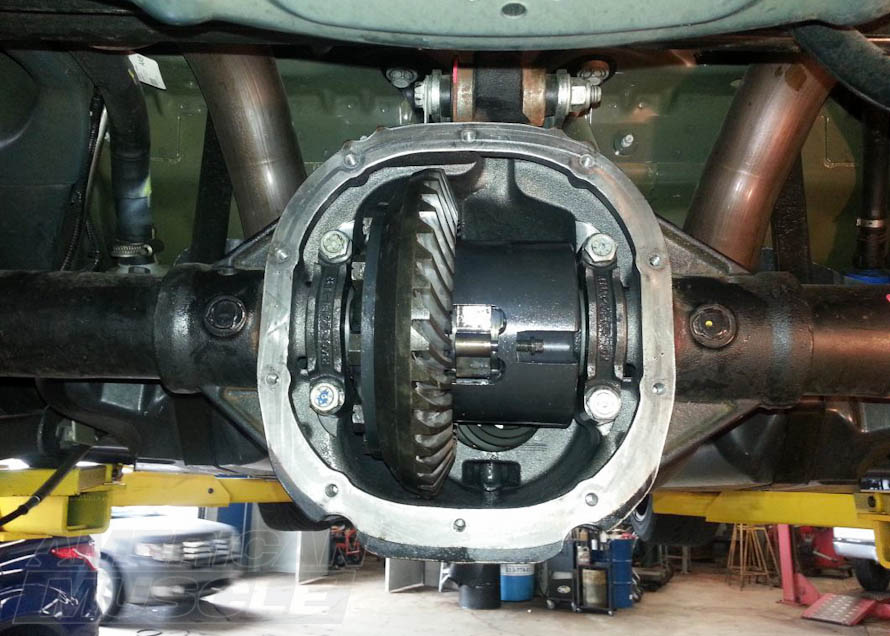
How much does a Mustang gear install cost? Professional installation typically runs $300–$500 in labor on top of the parts cost. This is one of the more precision-critical jobs on your Mustang — improper setup leads to gear whine, premature wear, and in worst cases, catastrophic failure. Understanding the process helps you decide whether to tackle it yourself or hand it to a professional.
Tools and Parts You Will Need
A ring and pinion swap requires more specialized tools than most bolt-on mods. At minimum, you will need:
- Dial indicator with magnetic base — for measuring backlash between the ring and pinion teeth
- Inch-pound torque wrench — for setting bearing preload precisely
- Bearing press or puller — to remove and install new bearings on the pinion and carrier
- Gear marking compound — to check tooth contact patterns
- Slide hammer — for removing the old pinion seal and bearing race
- Standard hand tools, a drain pan, and a new pinion seal
Beyond the ring and pinion set itself, you should strongly consider a complete gear install kit. These kits bundle new bearings, races, seals, shims, and marking compound — everything needed for a clean installation. If your rear end has over 30,000 miles, the old bearings have worn themselves to the old gear set. Reusing them with new gears often causes noise and accelerated wear.
Install Complexity: Professional vs. DIY
Here is the honest truth: installing ring and pinion gears is one of the most technically demanding jobs you can do on a Mustang. The critical measurement is backlash — the small gap between the ring and pinion teeth that allows for thermal expansion and proper lubrication. Too tight, and the gears bind and overheat. Too loose, and they whine and wear prematurely. The target is typically 0.006–0.010 inches, measured with a dial indicator.
You also need to set the correct pinion depth using shims, which determines where the pinion gear sits relative to the ring gear. Wrong pinion depth produces a bad contact pattern that loads the gear teeth unevenly and leads to failure.
If you have access to the right tools, patience for measuring and shimming repeatedly, and comfort working with precision fits, this is a doable DIY job. Budget a full day for your first install. If you want a detailed walkthrough, our step-by-step gear installation guide covers the complete process with photos.
If you are not confident in setting up the backlash and pinion depth, having a professional handle the install is money well spent. A botched gear setup can destroy an expensive gear set in a few thousand miles.
Bearings and Install Kits
Quality bearings are critical to a quiet, long-lasting gear installation. Most install kits include Timken or equivalent bearings, pinion seal, crush sleeve (or solid pinion spacer for racing applications), ring gear bolts, and marking compound. Using a complete kit ensures all the wear items are fresh and matched to your new gears.
Brands like Motive Gear, Richmond, and USA Standard Gear offer complete gear and install kit packages that bundle everything together. These packages simplify the ordering process and ensure you have every component before you start the job.
Speedometer Calibration After a Gear Swap
Do you need a tune after installing gears? Not always a full custom tune, but you absolutely need to recalibrate your speedometer. After a gear swap, your speedometer will read incorrectly because the signal from the transmission speed sensor is calibrated to your old gear ratio. The speedo will read faster than your actual speed with numerically higher gears.
This is not just an annoyance — on automatic transmission Mustangs, incorrect speed signals can cause the transmission to shift at the wrong points, leading to harsh shifts and reduced performance. Your odometer will also accumulate miles at the wrong rate. There are three main ways to correct your speedometer after a gear change:
Handheld Tuner or Custom Tune
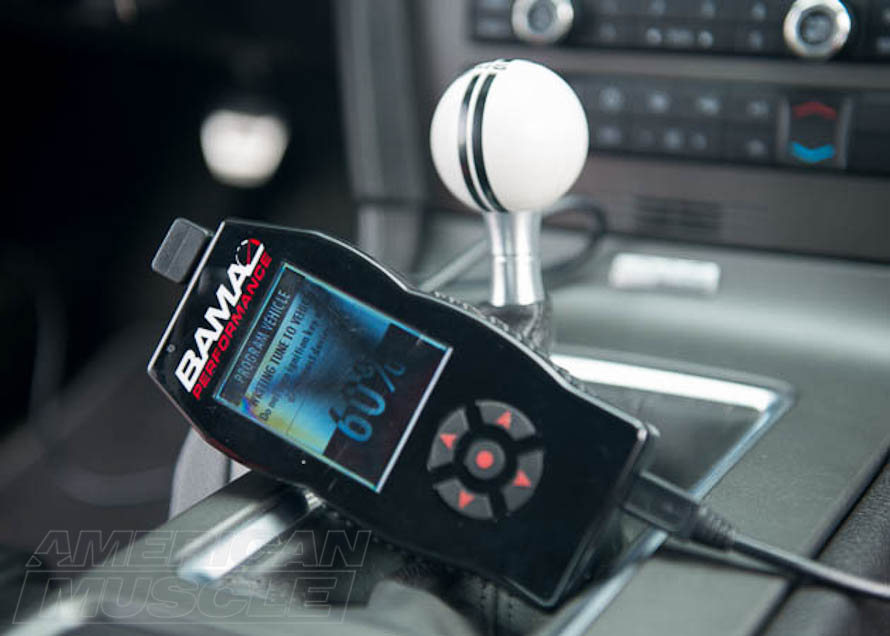
For 2005+ Mustangs, the easiest and most complete solution is using a handheld tuner. Devices like the SCT X4 or BDX allow you to input your new gear ratio and tire size directly into the PCM. The computer recalculates the speed signal, correcting your speedometer, odometer, and automatic transmission shift points in one step. If you are already running a custom tune (and many gear-swapping owners are), your tuner can simply update the ratio in your existing calibration.
SpeedCal Devices
For 1994–2004 Mustangs, a SpeedCal is an electronic module that intercepts the speed signal between the transmission and the PCM. You program it with your new gear ratio and tire size, and it adjusts the signal on the fly. This is a plug-and-play solution that does not require any PCM tuning and can be recalibrated easily if you change gears or tires again later.
Foxbody Speedometer Gears
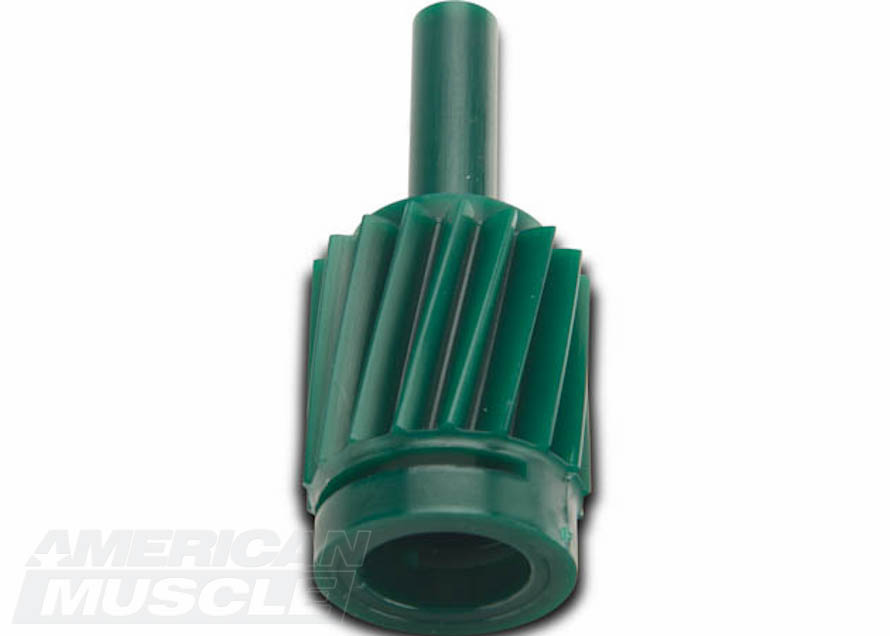
For 1979–1998 Mustangs with a cable-driven speedometer, you correct the reading by swapping the speedometer driven gear inside the transmission tailshaft housing. This small plastic gear comes in different tooth counts — changing the tooth count changes the speedometer reading to match your new rear gear ratio.
Here is a reference chart for common Foxbody speedometer gear pairings:
|
Axle Ratio
|
Tire Height
|
Drive Gear (Teeth)
|
Driven Gear (Teeth)
|
|
3.08
|
26"
|
7
|
21
|
|
3.27
|
26"
|
7
|
20
|
|
3.55
|
26"
|
7
|
19
|
|
3.73
|
26"
|
7
|
18
|
|
4.10
|
26"
|
7
|
17
|
|
3.73
|
26"
|
8
|
21
|
|
4.10
|
26"
|
8
|
19
|
Check your transmission type to determine whether you have a 7-tooth or 8-tooth drive gear. The T-5, T-45, and AOD transmissions typically use a 7-tooth drive gear. The T-56 and TR-3650 use an 8-tooth drive gear.
Gear Oil, Maintenance, and Differential Care
Fresh gear oil is not optional after a new ring and pinion install — it is required. New gears need clean, high-quality lubricant to break in properly and prevent premature wear. Here is what you need to know about differential fluid and ongoing maintenance.
Recommended Gear Oil
Use a synthetic gear oil rated 75W-140 for most Mustang applications. Synthetic oil handles heat better than conventional fluid, which matters because rear differentials generate significant heat under hard driving. If your Mustang has a limited-slip differential, you must add a friction modifier additive (sometimes sold separately, sometimes pre-blended). Without friction modifier, an LSD will chatter and shudder during low-speed turns. Some brands like Royal Purple offer gear oils with the friction modifier already included.
Gear Oil Capacity by Rear End Size
|
Rear End
|
Approximate Capacity
|
|
7.5-inch
|
~2.5 quarts
|
|
8.8-inch (solid axle)
|
~3.0 quarts
|
|
Super 8.8-inch IRS (2015+)
|
~1.6 quarts + 4 oz friction modifier
|
Break-In Procedure
After installing new gears, follow a proper break-in to seat the gear teeth and bearings correctly:
- Drive gently for the first 500 miles — avoid wide-open throttle launches, sustained high speeds, and towing.
- Vary your speed on the highway rather than holding a constant RPM. This helps the gear teeth wear evenly across their full contact surface.
- After 500 miles, drain the gear oil and replace it with fresh fluid. The break-in oil will contain fine metal particles from the gear teeth seating, and you want that out of the housing.
- After the first oil change, drive normally. Change gear oil again at your regular service interval (typically every 30,000–50,000 miles for street cars, or annually for track cars).
Limited-Slip Differentials and Traction Upgrades
Does your Mustang have a limited-slip differential? A limited-slip differential (LSD) sends power to both rear wheels instead of allowing one wheel to spin freely when traction is lost. An open differential, by contrast, always sends power to the wheel with the least resistance — which means one-wheel burnouts and poor launches. Understanding your differential type is critical when planning a gear swap, because it affects both traction and how much you will feel the benefit of new gears.
LSD by Model Year
Ford's factory LSD situation varies by generation:
- 1979–2010 V6 models: Open differential standard (no LSD).
- 1986–2014 V8 GT/Cobra/Mach 1 models: Ford Trac-Lok limited-slip differential standard. This is a clutch-type LSD that uses friction discs to limit wheel slip.
- 2011+ V6 models: LSD became standard on all models.
- 2015+ all S550/S650 models: Torsen-style limited-slip differential standard across the lineup.
How to Test Your LSD
Not sure if your differential is working properly? There is a simple test. Jack up the rear end so both rear tires are off the ground (use jack stands on the rear axle tubes). With the car in neutral, spin one rear wheel by hand. On an open differential, the opposite wheel will spin in the opposite direction. On a working LSD, both wheels will spin in the same direction, and you will feel resistance as the clutch packs engage.
The burnout test works, too: do a short burnout on clean pavement. If only one tire leaves a mark, your LSD is either open or worn out. Two equal marks mean the LSD is doing its job.
Trac-Lok Rebuild and Replacement
If your Trac-Lok LSD is worn (one-wheel burnouts, poor launches), you have two options. A Trac-Lok rebuild kit replaces the internal clutch packs and springs, restoring the differential to full function. This is the budget-friendly route and makes sense if the carrier gears and housing are still in good shape. A worn Trac-Lok will not damage anything else in the differential — it simply loses its ability to lock both wheels, which means lost grip off the line.
The other option is a complete limited-slip differential upgrade. Ford Performance, Motive Gear, and Richmond all offer aftermarket LSD units for the 8.8-inch housing. If you are already pulling the differential apart for a gear swap, adding an LSD rebuild or upgrade at the same time saves labor costs since the differential is already disassembled. 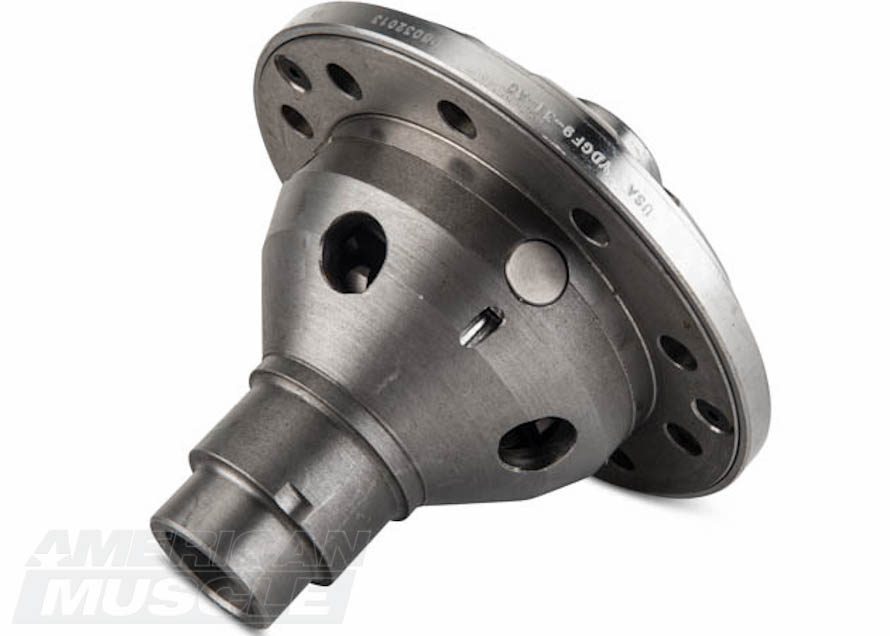 A properly functioning LSD paired with the right gear ratio is the foundation of a Mustang that hooks hard off the line. Without a working LSD, even the steepest gear ratio will just spin one tire and leave the other sitting still.
Practical Takeaways
- Daily drivers: Start with 3.55 or 3.73 gears for a noticeable improvement in acceleration without sacrificing highway comfort.
- Automatic Mustangs: Go one step steeper than you would with a manual — 3.73 or 4.10 gears compensate for torque converter slip.
- Drag and track cars: 4.10 gears are the go-to for street/strip builds; dedicated drag setups may benefit from 4.30 or 4.56.
- Know your rear end size: Confirm whether you have a 7.5-inch, 8.8-inch, or Super 8.8 IRS before ordering gears — they are not interchangeable.
- Budget for the full job: Include a complete install kit with new bearings, and factor in $300–$500 for professional installation unless you own precision measuring tools.
- Recalibrate your speedometer: Use a handheld tuner (2005+), SpeedCal (1994–2004), or speedometer gear swap (Foxbody) after every gear change.
- Check your LSD: If only one tire spins during a burnout, rebuild or upgrade your limited-slip differential when you swap gears — the diff is already apart.
- Break in properly: Drive gently for 500 miles, then drain and replace gear oil to flush break-in metal particles.
Choose the Right Gears for Your Build
![]() Your Mustang's rear differential gears are the unsung heroes of your drivetrain — they quietly determine how your car accelerates, how it feels at highway speed, and how effectively your engine's power reaches the pavement. Whether you are looking for a sharper daily driver, shaving tenths at the strip, or building the perfect road course setup, the right ring and pinion set matched to your transmission, tire size, and driving style makes all the difference. Ready to find the right gear set for your build? Browse the full selection of Mustang rear gears and drivetrain upgrades to get started.
Your Mustang's rear differential gears are the unsung heroes of your drivetrain — they quietly determine how your car accelerates, how it feels at highway speed, and how effectively your engine's power reaches the pavement. Whether you are looking for a sharper daily driver, shaving tenths at the strip, or building the perfect road course setup, the right ring and pinion set matched to your transmission, tire size, and driving style makes all the difference. Ready to find the right gear set for your build? Browse the full selection of Mustang rear gears and drivetrain upgrades to get started.