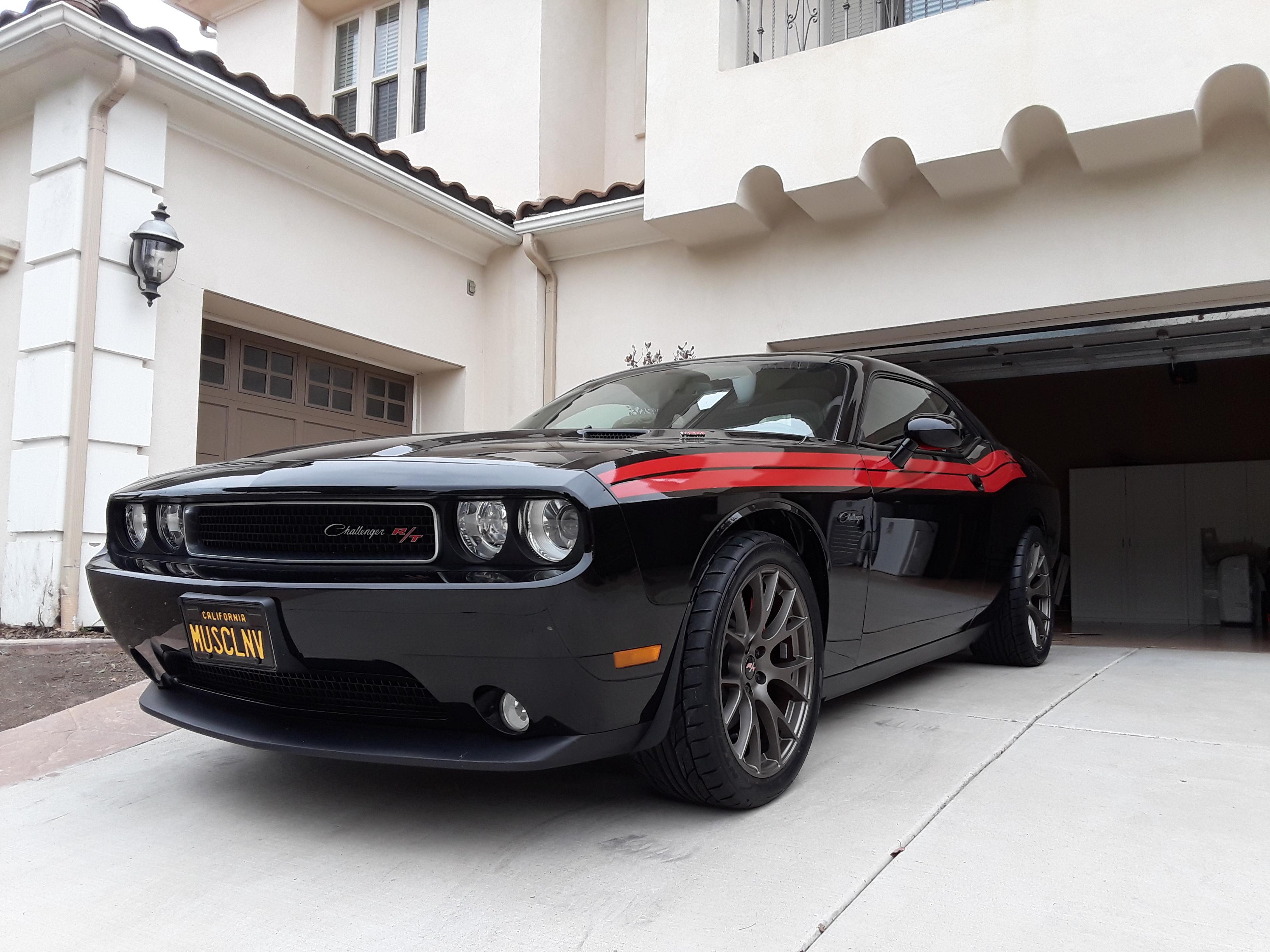
Does your Hellcat spin through first and second gear every time you step on it? Are you leaving grip on the table at the drag strip or feeling the rear end slide mid-corner? The stock Pirelli P Zeros are solid OEM rubber, but they were designed to balance comfort, noise, and cost across a wide range of conditions. They were not engineered to extract every bit of performance from a 717-horsepower supercharged V8.
That is where purpose-built performance tires come in. Whether you are looking for stickier street rubber for weekend canyon runs, maximum lateral grip for track days, or drag radials that hook hard on the launch pad, the right tire upgrade transforms how your Hellcat puts power to the ground. In this guide, you will find our top picks for every use case along with the specs, sizing, and fitment details you need to order with confidence.
What Tires Come Stock on a Hellcat?
The standard Dodge Challenger SRT Hellcat comes equipped with Pirelli P Zero tires in a 275/40ZR20 size on all four corners. Widebody models use wider 305/35ZR20 tires mounted on 20x11-inch wheels to match their extended fender flares and deliver a larger contact patch for improved traction off the line.
How to Choose Performance Tires for Your Hellcat
Not sure where to start when shopping for Hellcat tires? The sheer number of options can feel overwhelming, but narrowing your search comes down to answering one question: how do you actually drive your car?
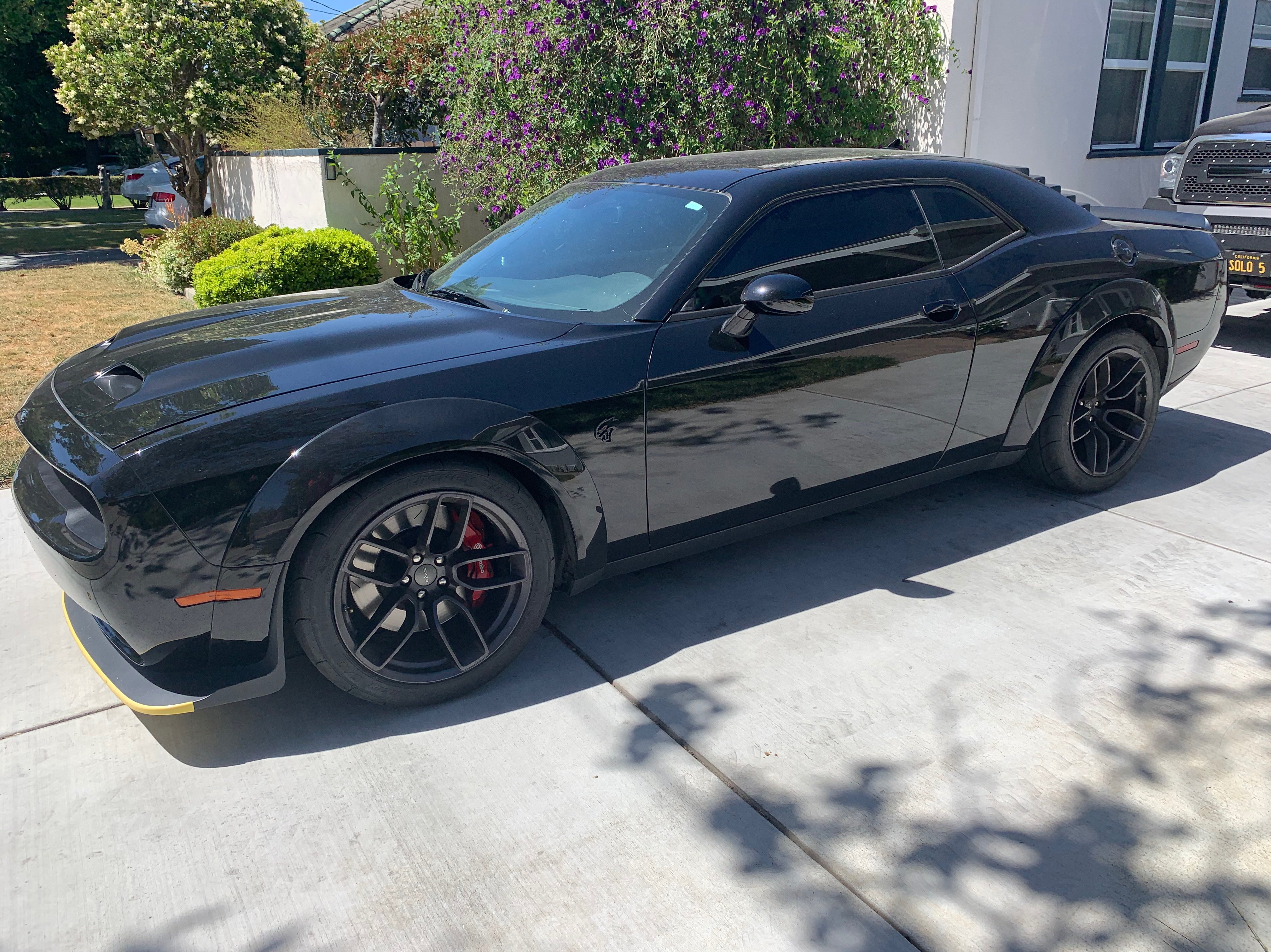
Here are the key factors that separate one performance tire from another and determine which one belongs on your Hellcat.
Tire Compound: Soft vs. Hard
The tire compound – the specific rubber mixture a tire is made from – is the single biggest factor in grip. Softer compounds deliver more traction but wear faster, while harder compounds last longer at the expense of peak grip. Street tires sit in the middle of this spectrum, drag radials use extremely soft compounds for maximum launch traction, and track tires lean toward the soft side for sustained cornering grip across multiple laps.
Treadwear Rating
The treadwear rating – a standardized number indicating how fast a tire wears relative to a government reference tire – gives you a quick way to compare longevity. A tire rated 200 wears twice as fast as one rated 400 under the same conditions. Street performance tires typically fall between 200 and 400, track tires between 60 and 200, and drag radials are often unrated or below 100.
Speed Rating
Your Hellcat is capable of 199 mph from the factory. The speed rating – a letter code stamped on the sidewall indicating the maximum safe sustained speed – needs to match or exceed your driving conditions. Look for W-rated (168 mph) or Y-rated (186 mph) tires for street and track use.
Wet vs. Dry Grip
If you daily-drive your Hellcat, wet grip matters. Ultra-high-performance summer tires use silica-infused compounds and wide circumferential grooves to channel water and resist hydroplaning – the loss of traction that occurs when a layer of water builds between the tire and the road surface. Drag radials and extreme track tires sacrifice wet performance almost entirely in favor of dry traction, so plan on a spare set of wheels if you need both.
Tire Width and Contact Patch
Wider tires put more rubber on the road, which translates directly to more grip. The stock Hellcat runs a 275mm-wide tire, while the Widebody jumps to 305mm. If you are running aftermarket Challenger wheels, you can push rear tire width up to 315mm on a Widebody without fender modifications, giving you an even larger contact patch – the area of tire tread that is physically touching the pavement at any given moment.
Rotating Mass and Wheel Weight
The weight of your wheel-and-tire combination matters more than most owners realize. Rotating mass — the total weight of all components that spin with the drivetrain, including wheels, tires, and brake rotors — directly affects how quickly your Hellcat accelerates and stops. A lighter aftermarket wheel paired with the right performance tire reduces rotating mass, which translates to quicker throttle response, shorter braking distances, and less strain on your drivetrain. When evaluating tire and wheel upgrades, factor in the weight savings alongside grip and treadwear.
Use Case: Street, Track, or Drag
There is no single tire that does everything perfectly. Street tires balance grip, wear, and wet performance for daily driving and spirited weekend runs. Track tires maximize lateral grip and heat resistance for sustained lapping. Drag tires prioritize straight-line launch traction above all else. Choosing the right category first narrows your search from dozens of options to a handful of strong contenders.
Best Street Tires for the Dodge Hellcat
The best street tire for the Dodge Hellcat is the Michelin Pilot Sport 4S. It delivers a 1.01g lateral grip rating with outstanding wet braking and a 180 treadwear rating, making it the strongest all-around performer for daily-driven Hellcats that see weekend spirited driving and occasional track days.
Street tires need to do it all on a Hellcat: hook on aggressive launches, hold their line through corners, maintain grip in the rain, and last more than a single season. These five options represent the strongest performers available in Hellcat-compatible sizes, ranging from premium flagship rubber to solid budget-friendly alternatives. Browse the full selection of Challenger tires to see every option in your size.
Michelin Pilot Sport 4S (Top Pick)
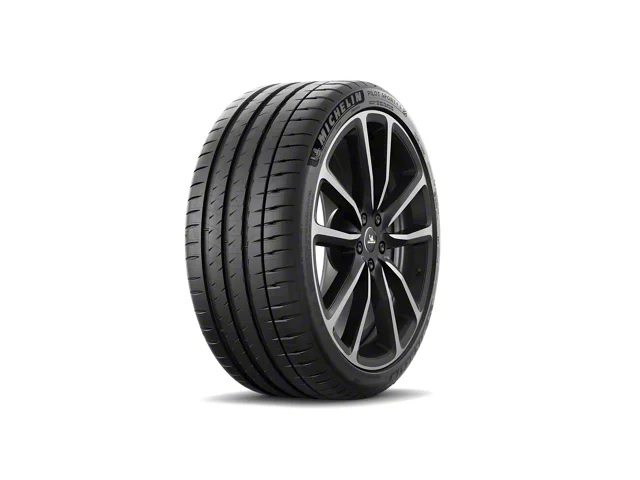
The Michelin Pilot Sport 4S is the benchmark ultra-high-performance summer tire and our top recommendation for street-driven Hellcats. Its hybrid compound combines an outboard side optimized for dry grip with an inboard side formulated for wet traction. The result is a tire that delivers supercar-level cornering grip without leaving you stranded in a rain shower. Available in both 275/40R20 and 305/35R20, it fits standard and Widebody Hellcats without modification.
Pirelli P Zero PZ4
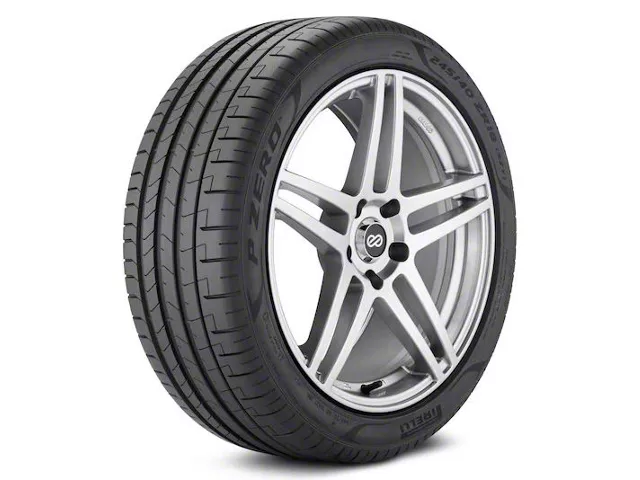
The Pirelli P Zero PZ4 is the natural upgrade path if you want to stick with the OEM brand. The PZ4 generation uses a noise-canceling foam liner and an adaptive compound that provides noticeably more grip than the factory-spec P Zeros while maintaining a comfortable, quiet ride. It is an excellent choice for Hellcat owners who want better performance without changing the character of the car.
Continental ExtremeContact Sport 02
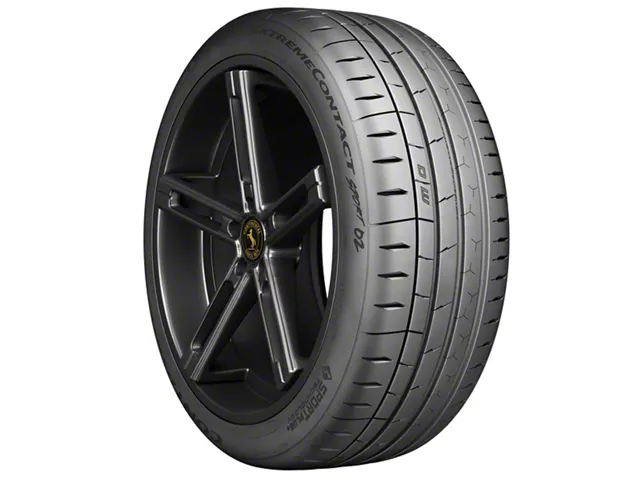
The Continental ExtremeContact Sport 02 punches well above its price point. It uses a SportPlus compound with high silica content for strong wet and dry grip and carries a 340 treadwear rating, which is among the highest in the ultra-high-performance category. If you put serious miles on your Hellcat and want a tire that lasts without giving up meaningful grip, this is the value pick.
Nitto NT555 G2
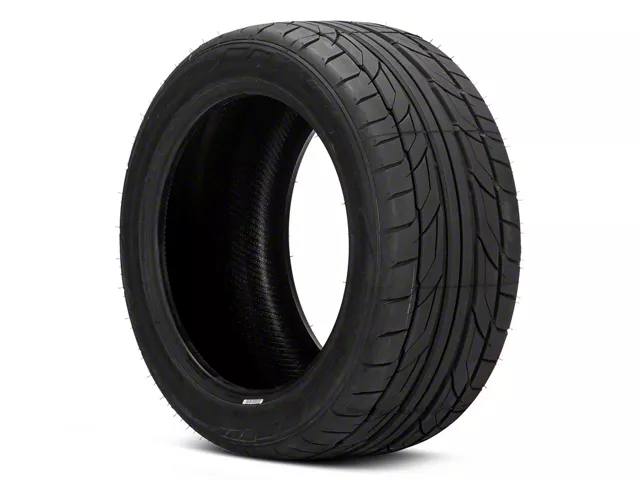
The Nitto NT555 G2 is a proven performer in the Challenger community. Its directional tread pattern features twin center ribs for high-speed stability and tapered tread blocks that maintain a full contact patch through hard cornering. A high-silica compound adapts to different temperatures, keeping the tire consistent whether you are cruising on a cool morning or pushing hard on a hot afternoon. It hits a strong balance between grip, wear life, and price.
Atturo AZ850
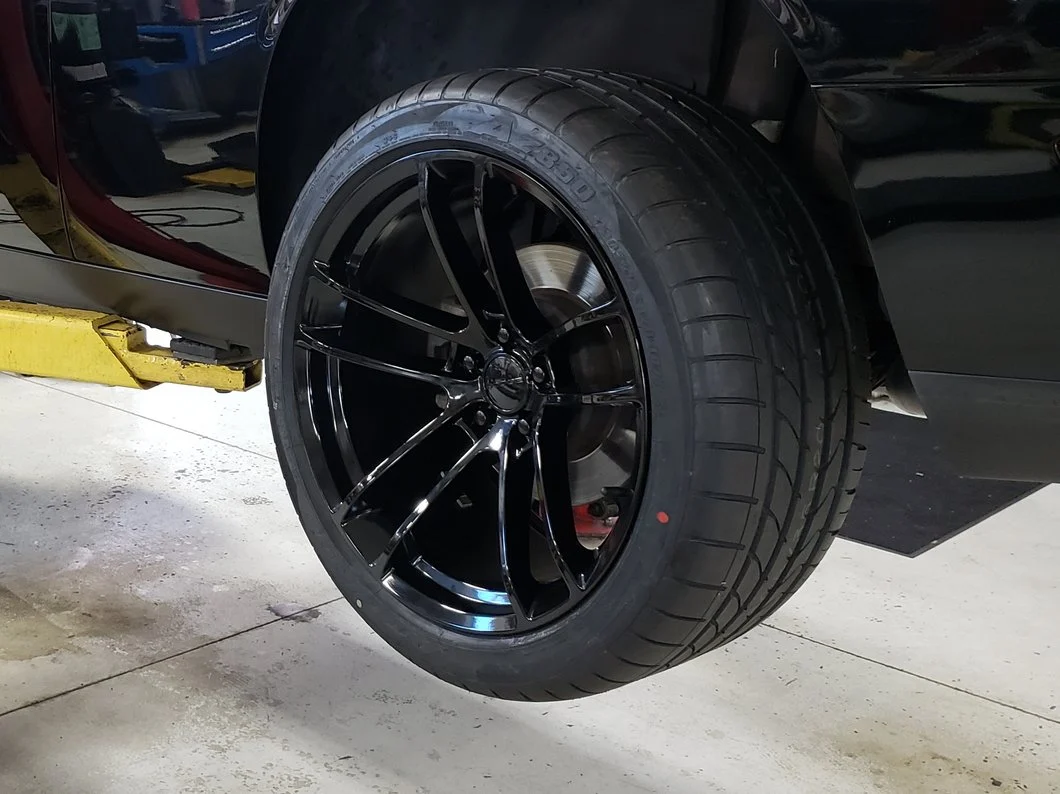
The Atturo AZ850 offers solid ultra-high-performance capability at a budget-friendly price. Its asymmetrical tread pattern separates inside and outside contours for balanced wet and dry grip, and a heat-resistant compound helps prevent premature wear during extended spirited driving. High-tensile steel belts deliver excellent stability at high speeds. If you are looking for a meaningful upgrade over stock tires without a flagship price tag, the AZ850 is worth considering.
Street Tire Comparison
| Tire |
Available Sizes |
Treadwear |
Speed Rating |
Wet Grip |
Price Range (Each) |
| Michelin Pilot Sport 4S |
275/40R20, 305/35R20 |
180 |
Y (186 mph) |
Excellent |
$290 - $370 |
| Pirelli P Zero PZ4 |
275/40R20, 305/35R20 |
220 |
Y (186 mph) |
Excellent |
$270 - $350 |
| Continental ExtremeContact Sport 02 |
275/40R20, 305/35R20 |
340 |
W (168 mph) |
Very Good |
$220 - $290 |
| Nitto NT555 G2 |
275/40R20, 305/35R20 |
340 |
W (168 mph) |
Good |
$200 - $260 |
| Atturo AZ850 |
275/40R20, 305/35R20 |
280 |
W (168 mph) |
Good |
$150 - $200 |
Best Track Tires for the Dodge Hellcat
The best track tire for the Dodge Hellcat is the Michelin Pilot Sport Cup 2. It combines a street-legal tread design with a racing-derived compound that delivers up to 1.10g of lateral grip, giving Hellcat owners the confidence to push hard through corners lap after lap at road courses and autocross events.
Track tires are purpose-built for sustained high-speed cornering, aggressive braking zones, and repeated heat cycles. They sacrifice tread life and wet performance for maximum dry grip and thermal stability. If you are serious about track days, these tires will transform your Hellcat from a straight-line brute into a corner-carving machine. Pair them with upgraded big brake kits and suspension handling kits to get the most out of every session.
Michelin Pilot Sport Cup 2 (Top Pick)
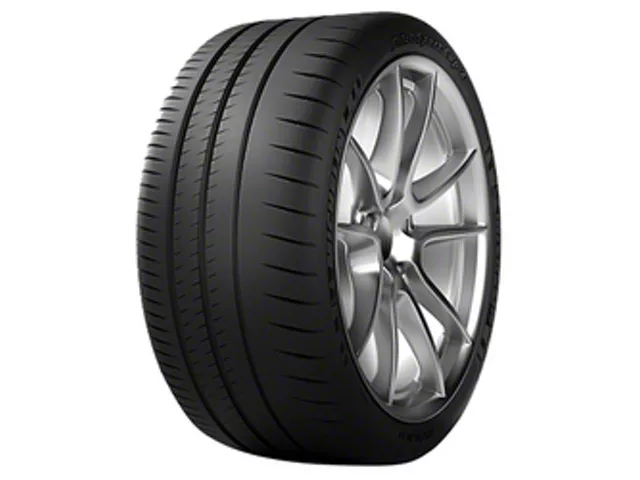
The Pilot Sport Cup 2 is a semi-slick street-legal tire that bridges the gap between high-performance street rubber and full racing slicks. Its outboard shoulder uses a track compound for maximum cornering grip while the inboard side provides enough tread depth for street driving to and from the track. The Cup 2 is the tire of choice for Hellcat owners who want to set personal bests at road courses without trailering a set of dedicated race tires.
Bridgestone Potenza RE-71RS
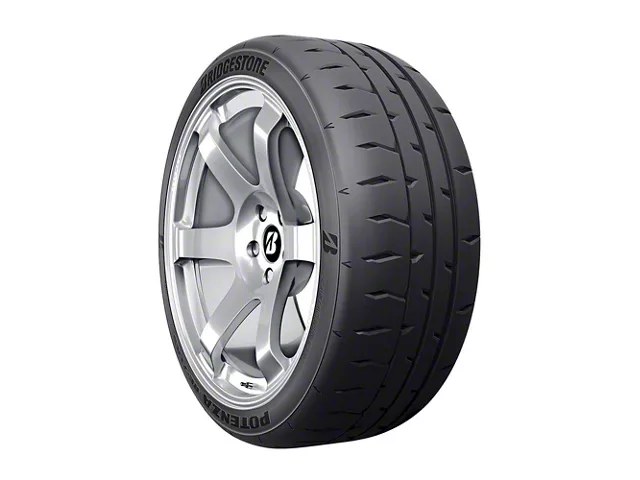
The Potenza RE-71RS is a favorite in the autocross and time-attack community for its immediate turn-in response and progressive breakaway at the limit. Its high-grip compound comes up to temperature quickly, which is a significant advantage in short autocross runs where other tires need a full warm-up lap. The RE-71RS also delivers surprisingly linear wear, giving you consistent lap times throughout a session.
BFGoodrich g-Force Rival S 1.5
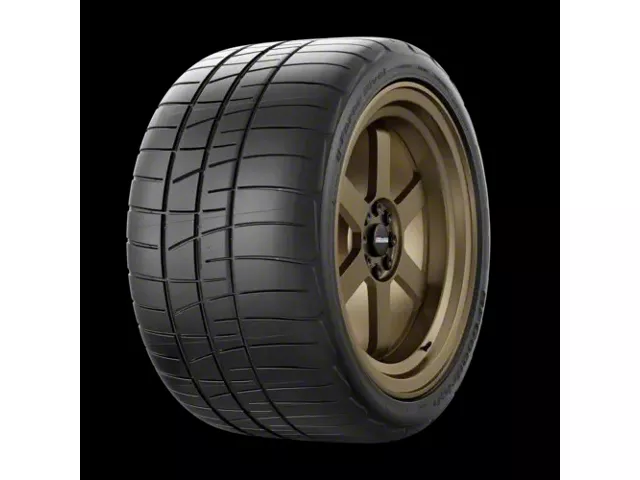
The g-Force Rival S 1.5 is designed specifically for competition use and carries an extremely low treadwear rating that reflects its soft, grippy compound. It excels in hot conditions where other tires start to overheat and lose grip, making it an excellent choice for summer track days. The Rival S 1.5 also sheds water reasonably well for a track-focused tire, giving you a margin of safety if conditions change mid-session.
Track Tire Comparison
| Tire |
Available Sizes |
Treadwear |
Speed Rating |
Lateral Grip |
Price Range (Each) |
| Michelin Pilot Sport Cup 2 |
275/35R20, 305/30R20 |
180 |
Y (186 mph) |
Up to 1.10g |
$350 - $430 |
| Bridgestone Potenza RE-71RS |
275/40R20 |
200 |
W (168 mph) |
Up to 1.05g |
$280 - $340 |
| BFGoodrich g-Force Rival S 1.5 |
275/40R20 |
60 |
W (168 mph) |
Up to 1.08g |
$260 - $320 |
Best Drag Tires for the Dodge Hellcat
The best drag tire for the Dodge Hellcat is the Mickey Thompson ET Street S/S. It is a DOT-legal radial drag tire with an R2 compound that delivers maximum launch traction, helping Hellcat owners cut 60-foot times and run consistent passes at the strip without needing a dedicated race tire.
If your Hellcat lives for the quarter mile, drag-specific tires are non-negotiable. No amount of horsepower matters if you cannot get it to the ground, and a proper set of drag radials can cut a full second or more off your elapsed time compared to street tires. These options range from street-drivable drag radials to full competition rubber. Combine them with upgraded clutch kits and limited-slip differentials to maximize every pass.
Mickey Thompson ET Street S/S (Top Pick)
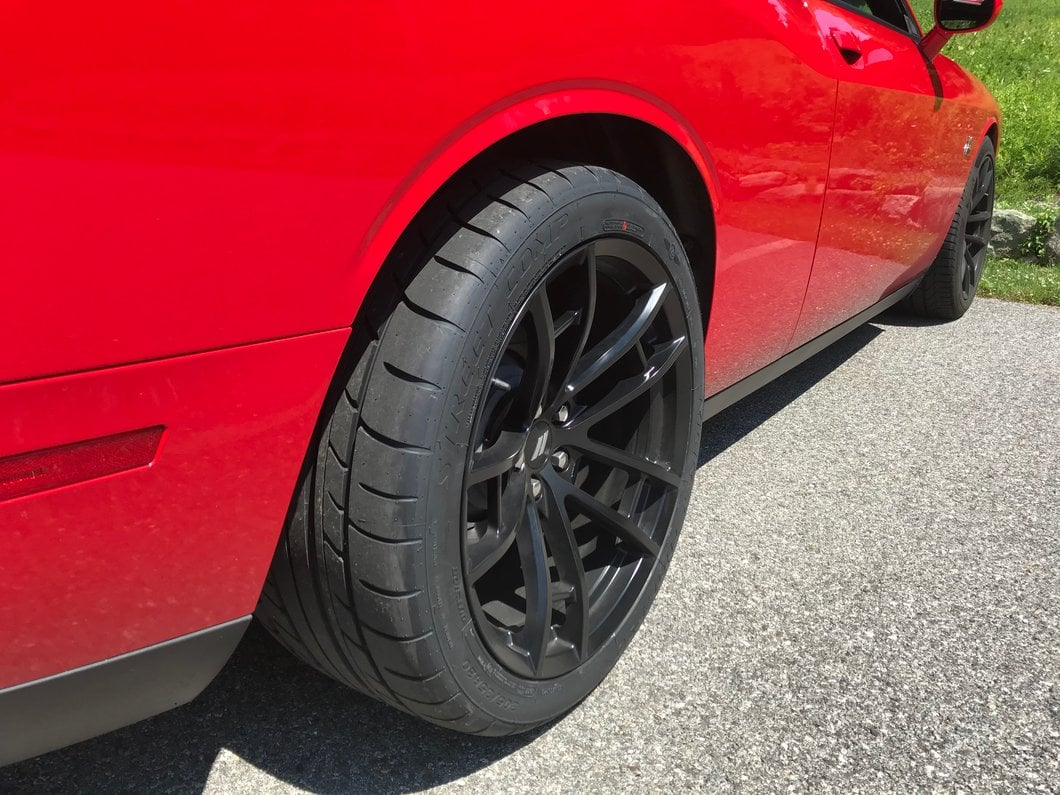
The Mickey Thompson ET Street S/S is the go-to drag radial for modern muscle car owners and the most popular choice in the Hellcat community. Its R2 compound is engineered specifically for maximum traction off the line, and the bias-look radial construction provides a predictable, progressive hookup that works well with both manual and automatic Hellcat transmissions. It is DOT-legal, so you can technically drive it on the street to and from the track, though most owners keep a dedicated set on spare wheels.
Nitto NT555 RII
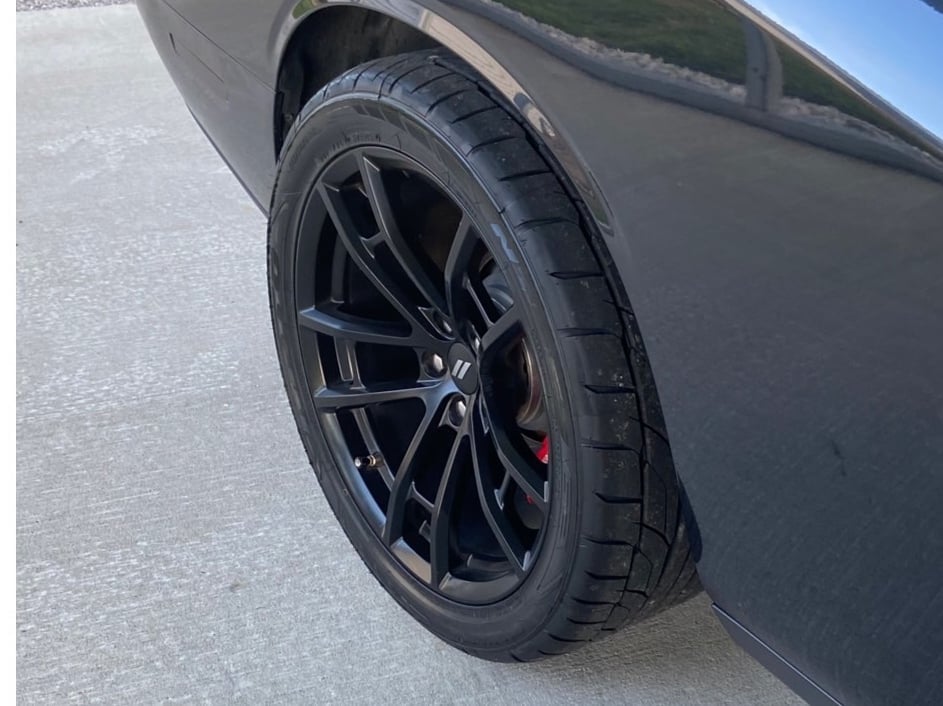
The Nitto NT555 RII is a DOT-compliant drag radial that provides strong launch traction with a slightly longer tread life than the Mickey Thompson. Its symmetric tread pattern provides even wear, and the compound is formulated to come up to operating temperature quickly, which is an advantage when you are limited to a few warm-up passes. The NT555 RII is a strong choice for Hellcat owners who want drag strip performance with a bit more street usability than a full competition tire.
Mickey Thompson ET Street R
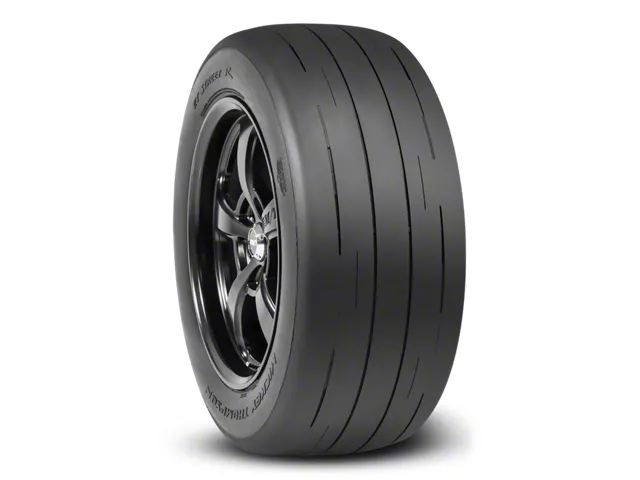
The ET Street R is the competition-grade step up from the ET Street S/S. It uses a softer compound and a wider contact patch to deliver even more traction off the line, making it the choice for Hellcat builds pushing well beyond stock power levels. The trade-off is significantly shorter tread life and almost no wet grip, so this tire belongs on a dedicated set of drag wheels that come off between events.
Drag Tire Comparison
| Tire |
Available Sizes |
DOT Legal |
Construction |
Best For |
Price Range (Each) |
| Mickey Thompson ET Street S/S |
275/40R20, 305/35R20 |
Yes |
Radial |
All-around drag use |
$250 - $320 |
| Nitto NT555 RII |
305/35R20 |
Yes |
Radial |
Drag with street usability |
$240 - $300 |
| Mickey Thompson ET Street R |
305/35R20, 315/35R20 |
Yes |
Radial |
Competition/high-HP builds |
$280 - $350 |
Hellcat Tire Size and Fitment Guide
Ordering the wrong tire size for your Hellcat is an expensive mistake, and the differences between standard and Widebody models catch first-time buyers off guard. Here is a breakdown of factory tire and wheel specs across every Hellcat variant so you can confirm your fitment before you buy.
| Hellcat Variant |
Tire Size |
Wheel Size |
Bolt Pattern |
Notes |
| SRT Hellcat (Standard) |
275/40ZR20 |
20x9.5 |
5x115 |
Same size front and rear |
| SRT Hellcat Widebody |
305/35ZR20 |
20x11 |
5x115 |
Wider fender flares accommodate larger tire |
| SRT Hellcat Redeye |
305/35ZR20 |
20x11 |
5x115 |
Widebody only; 797 hp |
| SRT Super Stock |
305/35ZR20 |
20x11 |
5x115 |
807 hp; factory drag-oriented setup |
| SRT Demon / Demon 170 |
315/40R18 (front drag), rear varies |
18x11 |
5x115 |
Dedicated drag setup; skinny front tires |
Staggered Setups and Aftermarket Fitment
Many Hellcat owners run a staggered setup – a narrower tire on the front axle and a wider tire on the rear – to maximize rear traction without affecting front-end steering response. On Widebody models with aftermarket Challenger wheels, you can fit up to 315/35R20 on the rear without any fender modifications. Standard-body Hellcats are more limited and generally should not exceed 285mm rears on aftermarket wheels without fender rolling.
When shopping for wheel and tire packages, look for packages that include model-specific fitment with the correct offset – the distance between the wheel's mounting surface and its centerline, which determines how far the wheel sits inward or outward in the fender well. Incorrect offset causes rubbing, uneven tire wear, and in some cases suspension clearance issues. AmericanMuscle's pre-configured packages come with free mounting and balancing and are spec'd specifically for your Hellcat variant, which takes the guesswork out of fitment.
One more practical detail: if you are adding aftermarket wheels, confirm that they are compatible with your Hellcat's TPMS sensors – the tire pressure monitoring system sensors that bolt inside each wheel and communicate wirelessly with the dash. Most aftermarket wheels accommodate OEM TPMS sensors, but some require a different valve stem or sensor mounting style.
Frequently Asked Questions About Hellcat Performance Tires
See the FAQ section below for detailed answers to the most common Hellcat tire questions.
Practical Takeaways
Before you order, run through this checklist to make sure you get the right tires for your Hellcat on the first try.
- Confirm your variant first. Standard Hellcats use 275/40R20 tires and Widebody models use 305/35R20. Ordering the wrong size is the most common — and most expensive — mistake.
- Match the tire category to your primary use case. Street tires for daily driving and spirited weekends, track tires for road course and autocross, drag radials for quarter-mile passes. No single tire excels at everything.
- Budget for a second set of wheels if you drag race. Most Hellcat owners who hit the strip keep a dedicated set of drag radials on spare wheels and swap at the track rather than daily-driving competition rubber.
- Check TPMS sensor compatibility with aftermarket wheels. Most aftermarket wheels accept OEM sensors, but some require a different valve stem or mounting style — confirm before you buy.
- Consider pre-configured wheel and tire packages. AmericanMuscle's packages include free mounting and balancing with Hellcat-specific fitment, removing the guesswork from offset, backspacing, and tire sizing.
Conclusion
Performance tires are the single highest-impact upgrade you can make to your Dodge Hellcat. The right rubber turns 717-plus horsepower from a traction-management challenge into a driving advantage — whether you are hooking on the launch pad, carving through corners at a road course, or pushing through a canyon on a Saturday morning. Match the tire to the way you actually drive, confirm your sizing, and you will feel the difference the first time you step on the throttle.
Ready to upgrade your Hellcat's tires? Explore AmericanMuscle's full selection of Challenger wheels and tires to find the right fitment for your build. Every tire ships free on orders over $149, and our Sales Techs are available to help you confirm sizing and compatibility before you order.
Frequently Asked Questions About Hellcat Performance Tires
Choosing the right performance tires for your Dodge Hellcat depends on how you drive. Here are the most common questions Hellcat owners ask about tire upgrades.
What Are the Best Tires for a Hellcat?
The Michelin Pilot Sport 4S is widely considered the best all-around performance tire for the Dodge Hellcat, offering exceptional grip in wet and dry conditions with a 180 treadwear rating. For drag-focused builds, the Mickey Thompson ET Street S/S delivers maximum launch traction with a DOT-legal radial design.
What Tires Come Stock on a Hellcat?
The standard Dodge Challenger SRT Hellcat comes equipped with Pirelli P Zero 275/40ZR20 tires on all four corners. The Widebody models use wider 305/35ZR20 tires to match their extended fender flares and wider wheels, providing a larger contact patch for improved traction.
What Size Tires Fit a Dodge Hellcat?
The standard Hellcat uses 275/40R20 tires on 20x9.5-inch wheels. Widebody models require 305/35R20 tires on 20x11-inch wheels. Owners running aftermarket wheels can fit up to 315/35R20 rears on staggered setups for additional traction without fender modifications on Widebody models.
What Is the Best High-Performance Tire?
For muscle cars like the Hellcat, the Michelin Pilot Sport 4S consistently ranks as the top ultra-high-performance summer tire. It delivers a 1.01g lateral grip rating, outstanding wet braking, and responsive steering feel that complements the Hellcat's 717-horsepower supercharged V8.
What Are the Best Upgrades for the Hellcat?
Performance tires are the single most impactful upgrade for any Hellcat. Beyond tires, owners commonly upgrade to high-performance brake pads and rotors, adjustable coilover suspension kits, and limited-slip differentials to maximize the drivetrain's ability to put power to the ground.
Are Summer Tires or All-Season Tires Better for a Hellcat?
Summer performance tires are significantly better for Hellcat owners who prioritize grip and handling. Ultra-high-performance summer tires like the Pirelli P Zero provide up to 20% more lateral grip than all-season alternatives, which matters when managing 700-plus horsepower through corners and launches.
How Long Do Performance Tires Last on a Hellcat?
Most ultra-high-performance summer tires on a Hellcat last between 15,000 and 25,000 miles depending on driving style. Drag-oriented tires like the Mickey Thompson ET Street S/S may last under 10,000 miles with regular use, while street tires like the Continental ExtremeContact Sport 02 can reach 30,000 miles.
Can You Put Drag Radials on a Hellcat for Daily Driving?
DOT-legal drag radials like the Mickey Thompson ET Street S/S and Nitto NT555 RII can technically be driven on the street, but they wear quickly and perform poorly in wet conditions. Most Hellcat owners run a dedicated set of drag tires on spare wheels and swap them at the track.