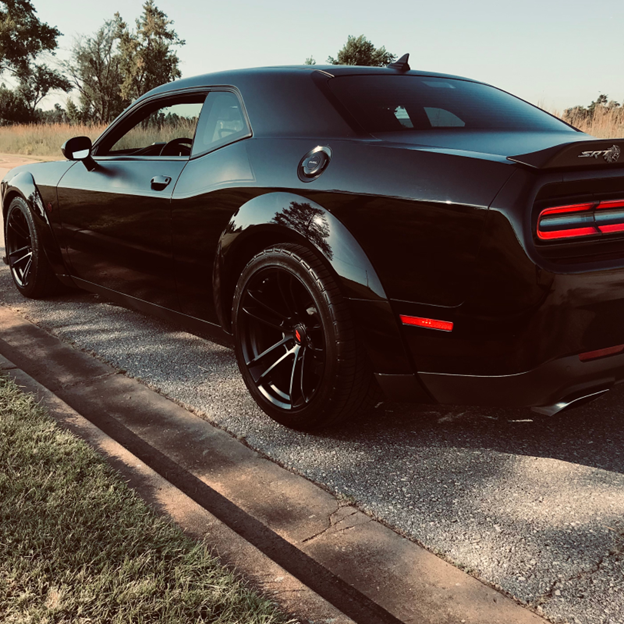
Trying to decide between the SRT (Street and Racing Technology) 392 and the Scat Pack? You are not alone. The 392 vs Scat Pack debate is one of the most common questions in the Dodge performance world, and for good reason — both trims pack the same 6.4-liter HEMI V8, so the differences are not immediately obvious on a spec sheet. The real gap comes down to suspension tuning, brake hardware, tire width, transmission choices, and how much you plan to spend on mods. In this guide, you will get a detailed breakdown of every meaningful difference so you can pick the trim that fits your driving style and budget.
392 vs Scat Pack at a Glance
![]() Before diving into the details, here is a side-by-side comparison of the major specs and features that separate these two trims. Note that Bilstein (a German suspension specialist) supplies the shocks for both trims, and Brembo provides the brake calipers.
Before diving into the details, here is a side-by-side comparison of the major specs and features that separate these two trims. Note that Bilstein (a German suspension specialist) supplies the shocks for both trims, and Brembo provides the brake calipers.
|
Category
|
SRT 392
|
Scat Pack
|
|
Engine
|
6.4L HEMI V8 (392 ci)
|
6.4L HEMI V8 (392 ci)
|
|
Horsepower
|
485 HP @ 6,100 RPM
|
485 HP @ 6,100 RPM
|
|
Torque
|
475 lb-ft @ 4,100 RPM
|
475 lb-ft @ 4,100 RPM
|
|
0-60 MPH
|
~4.2 seconds (automatic)
|
~4.3-4.4 seconds (automatic)
|
|
Quarter Mile
|
Low 12s
|
Low 12s
|
|
Transmission
|
8-speed automatic only
|
8-speed automatic or 6-speed manual
|
|
Brakes
|
6-piston Brembo (front), 4-piston (rear)
|
4-piston Brembo (front), 2-piston (rear)
|
|
Suspension
|
Adaptive Bilstein damping
|
Sport-tuned Bilstein
|
|
Tire Size
|
275/40ZR-20
|
245/45ZR-20
|
|
Interior
|
Leather and Alcantara standard
|
Cloth standard, leather optional
|
|
Approximate MSRP Premium
|
~$5,000-$8,000 more than Scat Pack
|
Base 6.4L HEMI trim
|
The SRT 392 and Scat Pack both use the same 6.4-liter HEMI V8 producing 485 horsepower, but the SRT 392 gains a slight edge in acceleration thanks to wider 275mm tires, adaptive suspension, and larger six-piston Brembo brakes. The Scat Pack counters with a lower starting price and an available six-speed manual transmission that the SRT 392 does not offer.
Do the 392 and Scat Pack Have the Same Engine?
![]() Yes — and this is the single most important thing to understand about the 392 vs Scat Pack comparison. Both trims run the exact same 6.4-liter HEMI V8, which produces 485 horsepower at 6,100 RPM and 475 lb-ft of torque at 4,100 RPM. There is no hidden ECU tune or different cam profile separating them. The powerplant is identical down to the intake manifold.
Yes — and this is the single most important thing to understand about the 392 vs Scat Pack comparison. Both trims run the exact same 6.4-liter HEMI V8, which produces 485 horsepower at 6,100 RPM and 475 lb-ft of torque at 4,100 RPM. There is no hidden ECU tune or different cam profile separating them. The powerplant is identical down to the intake manifold.
So where do the names come from? The "392" refers to the engine's displacement in cubic inches — 6.4 liters converts to approximately 392 cubic inches, a nod to the legendary 392 HEMI engines Chrysler built in the late 1950s. The "HEMI" designation describes the engine's hemispherical combustion chambers, a design where the dome-shaped cylinder head allows larger valves and more efficient airflow compared to flat-head or wedge designs. This architecture is a core reason the 6.4L makes strong power without forced induction.
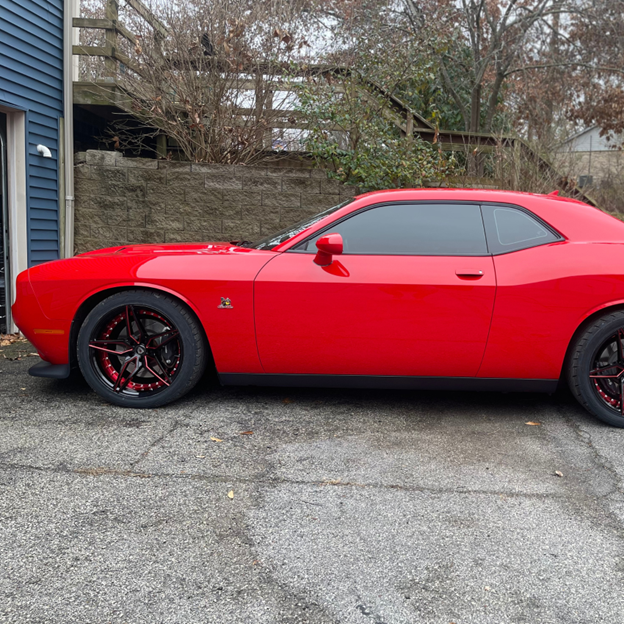
The "Scat Pack" name traces back to Dodge's 1960s performance branding — the Scat Pack club was a group of factory-built muscle cars that could run the quarter mile in under 14 seconds. Today it signals the entry point into 6.4L HEMI territory, giving you the full 485 HP for less money than the SRT badge.
Is a 392 Faster Than a Scat Pack?
![]() Yes, but only slightly. When both cars are equipped with the eight-speed automatic, the SRT 392 typically hits 60 mph in approximately 4.2 seconds, while the Scat Pack comes in around 4.3 to 4.4 seconds. Quarter-mile times for both land in the low 12-second range, with the 392 generally shaving a tenth or two off the Scat Pack's elapsed time.
Yes, but only slightly. When both cars are equipped with the eight-speed automatic, the SRT 392 typically hits 60 mph in approximately 4.2 seconds, while the Scat Pack comes in around 4.3 to 4.4 seconds. Quarter-mile times for both land in the low 12-second range, with the 392 generally shaving a tenth or two off the Scat Pack's elapsed time.
Why the difference if the engine is identical? Three hardware upgrades work together to give the SRT 392 better launch traction and mid-corner confidence.
First, tire width. The SRT 392 wears 275/40ZR-20 tires compared to the Scat Pack's 245/45ZR-20 rubber. That extra 30 millimeters of contact patch translates directly into more grip off the line and through corners. Less wheel spin at launch means more of those 485 horses reach the pavement.
Second, adaptive suspension. The SRT 392's Bilstein adaptive dampers adjust in real time based on road conditions and driving mode. This keeps the rear tires planted under hard acceleration, reducing weight transfer that would otherwise unsettle the car.
Third, braking hardware. Bigger six-piston Brembo (a high-performance Italian brake manufacturer) calipers up front give the SRT 392 shorter stopping distances, which translates into later braking points on track and more confidence when you are pushing hard on a back road.
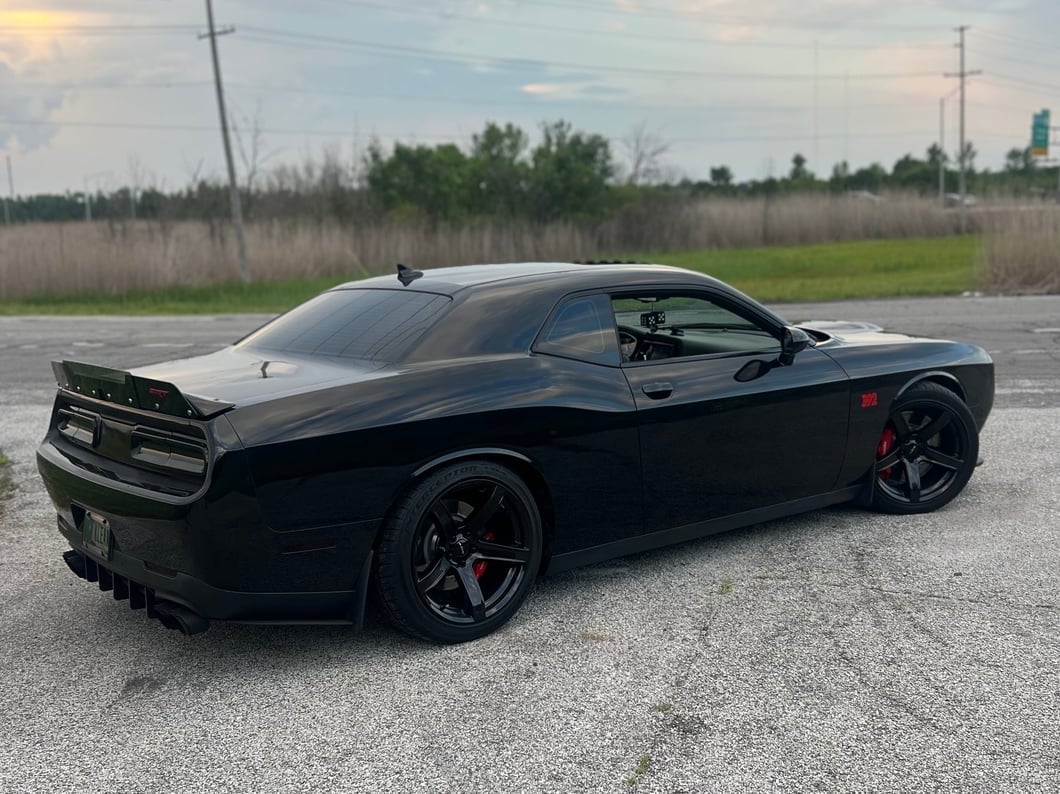
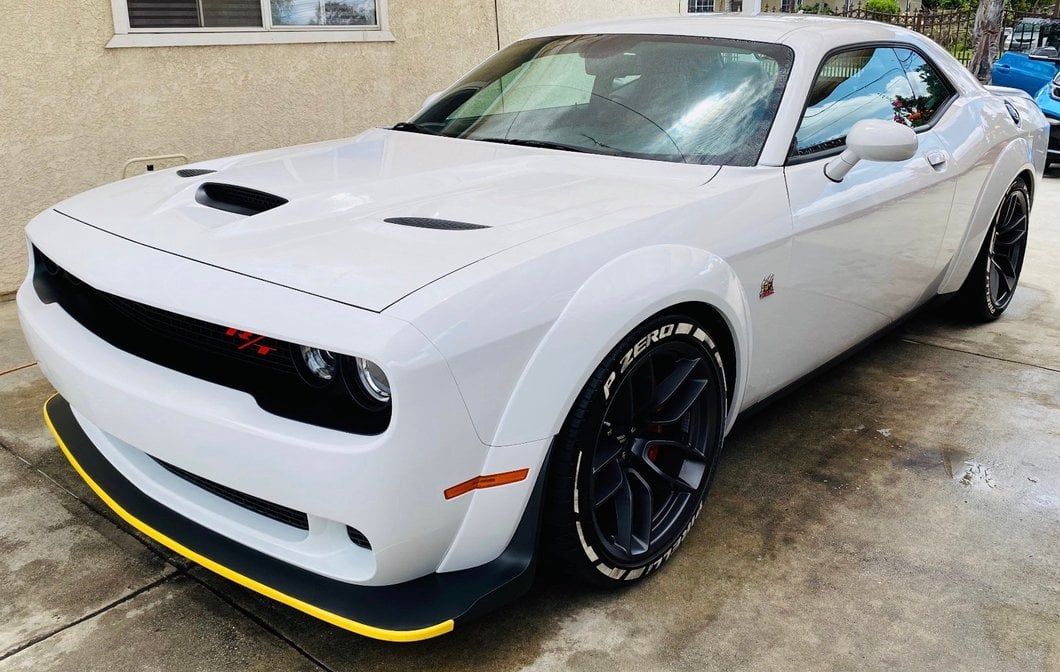
The SRT 392 also features a functional hood scoop that feeds cooler air to the engine bay. While the performance gain from the scoop alone is modest, it complements the overall cooling package and looks aggressive doing it.
Suspension, Brakes, and Handling
![]() The chassis and braking differences between these two trims are where your money goes — and where you feel the gap most clearly on a winding road or at a track day.
The chassis and braking differences between these two trims are where your money goes — and where you feel the gap most clearly on a winding road or at a track day.
Suspension
The SRT 392 comes standard with Bilstein adaptive damping — shock absorbers from the German suspension specialist Bilstein that continuously adjust their firmness based on inputs from sensors monitoring body roll, pitch, and road surface. In Street mode, the ride stays compliant enough for daily driving. Switch to Track mode and the dampers stiffen significantly, reducing body roll through corners and keeping the chassis flat under hard braking.
The Scat Pack uses sport-tuned Bilstein shocks with a fixed damping rate. They are firmer than a base-model Challenger or Charger, but they do not adapt on the fly. You get one setup that splits the difference between comfort and performance. It works well for spirited street driving, but you will notice more body roll than the 392 when pushing hard through a set of S-curves.
Brakes
Up front, the SRT 392 runs six-piston Brembo calipers clamping 15.4-inch rotors. The Scat Pack uses four-piston Brembo calipers on 14.2-inch rotors. Out back, the SRT 392 gets four-piston calipers while the Scat Pack uses two-piston units. In real-world terms, the 392's larger brakes provide noticeably shorter stopping distances and resist fade better during repeated hard stops — the kind of thing that matters on a road course or a long mountain descent.
Tires
As covered in the speed section, the SRT 392's 275/40ZR-20 tires are 30 millimeters wider than the Scat Pack's 245/45ZR-20 tires. Wider rubber means a larger contact patch, which improves lateral grip in corners and longitudinal grip under braking and acceleration. If you plan to autocross or run track days on the stock setup, the 392's tire advantage is significant.
Interior and Exterior Differences
![]() The SRT 392 and Scat Pack do not just differ under the skin. There are visible changes inside and out that separate the two trims at a glance.
The SRT 392 and Scat Pack do not just differ under the skin. There are visible changes inside and out that separate the two trims at a glance.
Exterior
The most obvious exterior difference is the SRT 392's functional hood scoop, which feeds ambient air into the engine bay. The Scat Pack's hood is either flat or features a non-functional scoop depending on the model year. The 392 also wears SRT badging on the grille, fenders, and decklid, along with wider 20-inch wheels to accommodate those bigger 275mm tires. Body-color mirrors, a unique front fascia, and SRT-specific exhaust tips round out the look.
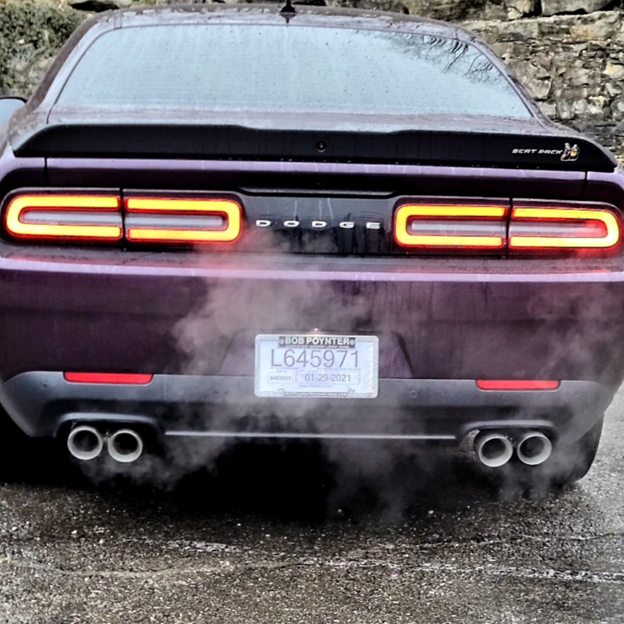
The Scat Pack keeps things a bit more understated with its iconic Scat Pack bee badge, 20-inch wheels sized for 245mm tires, and a sportier-than-base but less aggressive overall appearance. Many owners prefer this cleaner look, especially if they plan to add their own aftermarket wheels and aero.
Interior
Inside, the SRT 392 comes standard with leather and Alcantara-trimmed seats, along with SRT-branded gauges, flat-bottom steering wheel, and upgraded materials on the dash and door panels. You also get the full SRT Performance Pages suite in the Uconnect system, which displays 0-60 times, g-force readings, and other performance telemetry.
The Scat Pack starts with cloth seats as standard, though leather is available as an option. You still get the performance-oriented gauge cluster and Uconnect infotainment, but the base materials are a step below what the SRT badge delivers. For some buyers, that is a feature rather than a drawback — cloth seats grip better during spirited driving, and you are not paying for leather you might cover with aftermarket racing seats anyway.
Scat Pack vs 392 Pricing
![]() The price gap between the Scat Pack and SRT 392 typically lands in the $5,000 to $8,000 range, depending on the model year, body style, and option packages selected. That premium buys you the adaptive suspension, larger brakes, wider tires, leather interior, functional hood scoop, and SRT badging discussed above.
The price gap between the Scat Pack and SRT 392 typically lands in the $5,000 to $8,000 range, depending on the model year, body style, and option packages selected. That premium buys you the adaptive suspension, larger brakes, wider tires, leather interior, functional hood scoop, and SRT badging discussed above.
Is it worth it? That depends on how you plan to use the car.
If you want a turnkey performance machine that is ready for weekend track days out of the box, the SRT 392's suspension and brake upgrades justify the extra cost. Buying those components aftermarket would easily exceed the price difference, and you would lose the factory integration and warranty coverage.
If you are primarily a street driver who plans to modify the car extensively, the Scat Pack is the smarter buy. You get the same 485 HP engine at a lower entry price, leaving more room in your budget for aftermarket upgrades tailored to your specific goals. Many Scat Pack owners end up surpassing the SRT 392's handling capabilities with carefully chosen suspension and brake mods for less than the factory price gap.
On the used market, the price difference narrows further. Depreciation tends to hit both trims similarly, so a used Scat Pack can be a particularly strong value if you are shopping pre-owned.
Challenger vs Charger: Does the Trim Matter?
Both the Challenger and Charger were available in Scat Pack and SRT 392 trims, and the mechanical differences remain consistent regardless of body style. The Charger is roughly 100 to 200 pounds heavier, which means slightly slower acceleration, but it offers rear-seat legroom and trunk space the Challenger cannot match. For both body styles, the trim decision follows the same logic: SRT 392 for the best factory handling package, Scat Pack for the same engine at a lower price with a manual option.
The Scat Pack's Manual Transmission Advantage
![]() This is one of the clearest differentiators in the entire comparison. The Scat Pack offers an available Tremec TR-6060 six-speed manual transmission, while the SRT 392 is exclusively paired with the ZF 8HP75 eight-speed automatic (also known as the TorqueFlite, built by German transmission maker ZF).
This is one of the clearest differentiators in the entire comparison. The Scat Pack offers an available Tremec TR-6060 six-speed manual transmission, while the SRT 392 is exclusively paired with the ZF 8HP75 eight-speed automatic (also known as the TorqueFlite, built by German transmission maker ZF).
For driving purists, the manual option is a major selling point — and for some buyers, it is the entire reason they choose the Scat Pack over the 392. The Tremec unit is a proven, heavy-duty gearbox capable of handling well over 500 lb-ft of torque, which means it has plenty of headroom for bolt-on modifications. Short, precise throws and a well-weighted clutch pedal make it genuinely enjoyable to row through the gears.
From a performance standpoint, the eight-speed automatic is faster in straight-line acceleration. Modern torque-converter automatics shift quicker than any human can, and the ZF unit in the 392 is particularly well-calibrated. But performance is not always measured in tenths of a second. The engagement, control, and mechanical connection of a manual transmission are things a computer-shifted automatic cannot replicate.
If having a third pedal is non-negotiable for you, the Scat Pack is your only path to a new 6.4L HEMI with a stick shift. That alone makes it the right choice for a significant portion of muscle car buyers.
Popular Modifications to Maximize Power
![]() Since both trims share the same 6.4L HEMI V8, the aftermarket modification path is nearly identical. Whether you own a Scat Pack or an SRT 392, here are the most popular upgrades to unlock more performance.
Since both trims share the same 6.4L HEMI V8, the aftermarket modification path is nearly identical. Whether you own a Scat Pack or an SRT 392, here are the most popular upgrades to unlock more performance.
Intake and Exhaust
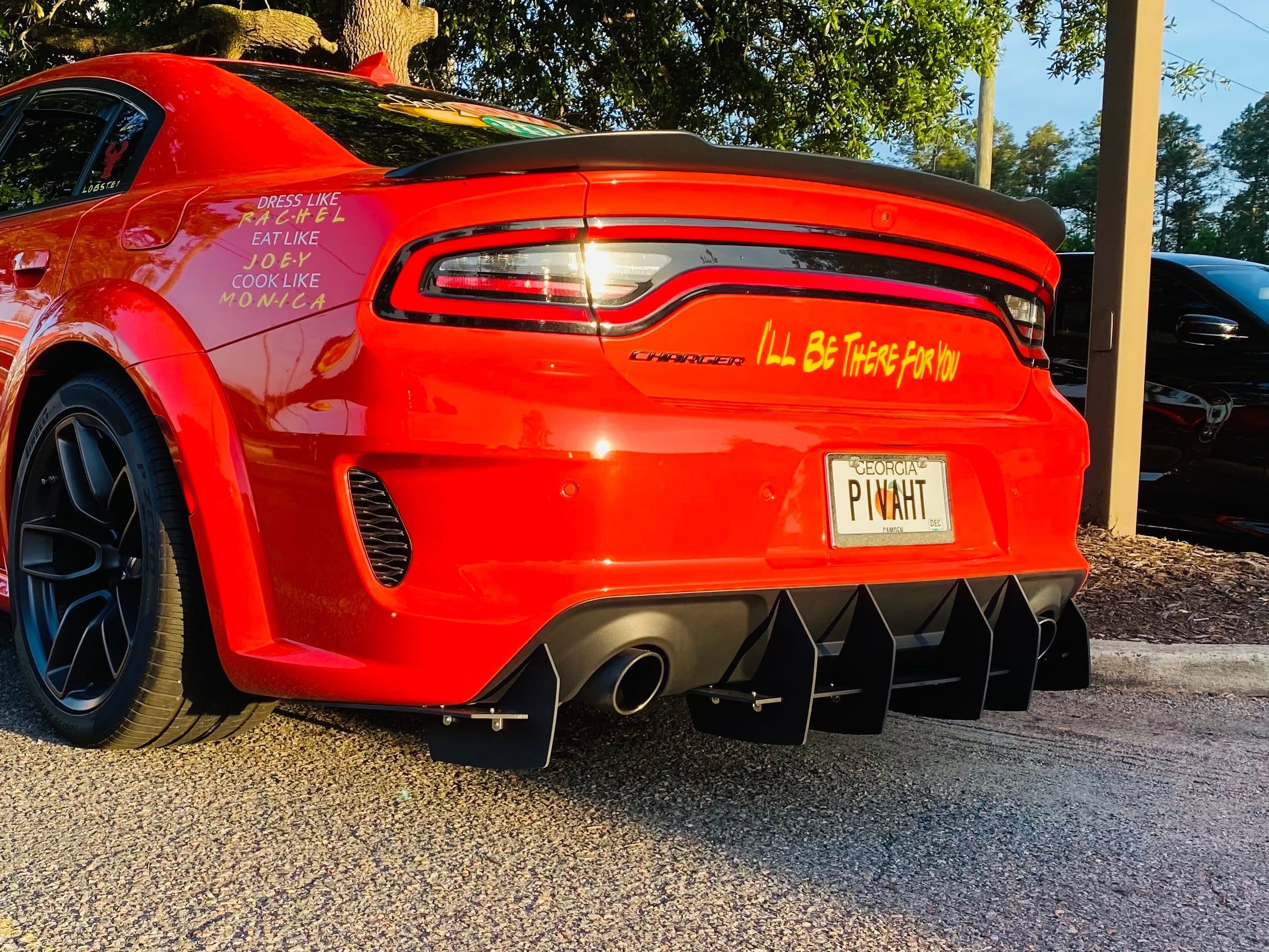
A cold air intake is often the first mod owners install. By routing cooler, denser air to the throttle body, a quality intake can pick up 10 to 20 horsepower while adding an aggressive induction sound. Pair it with an aftermarket exhaust system — whether a cat-back, axle-back, or full header-back setup — and you can see gains of 20 to 40 horsepower while dramatically improving the exhaust note. Check out our Challenger exhaust system guide for a detailed breakdown of options and sound clips.
Tuning
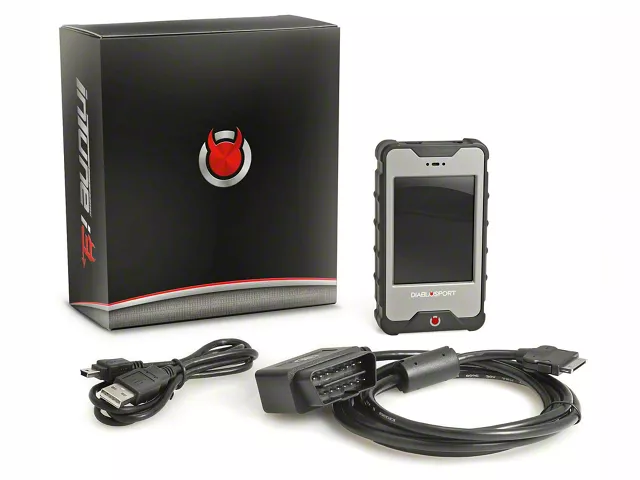
A performance tuner unlocks some of the biggest gains per dollar on the 6.4L platform. A custom or canned tune optimizes fuel and ignition maps, shift points on the automatic, and throttle response. On a stock engine with intake and exhaust mods, a good tune can add another 20 to 30 horsepower at the wheels.
Suspension and Handling
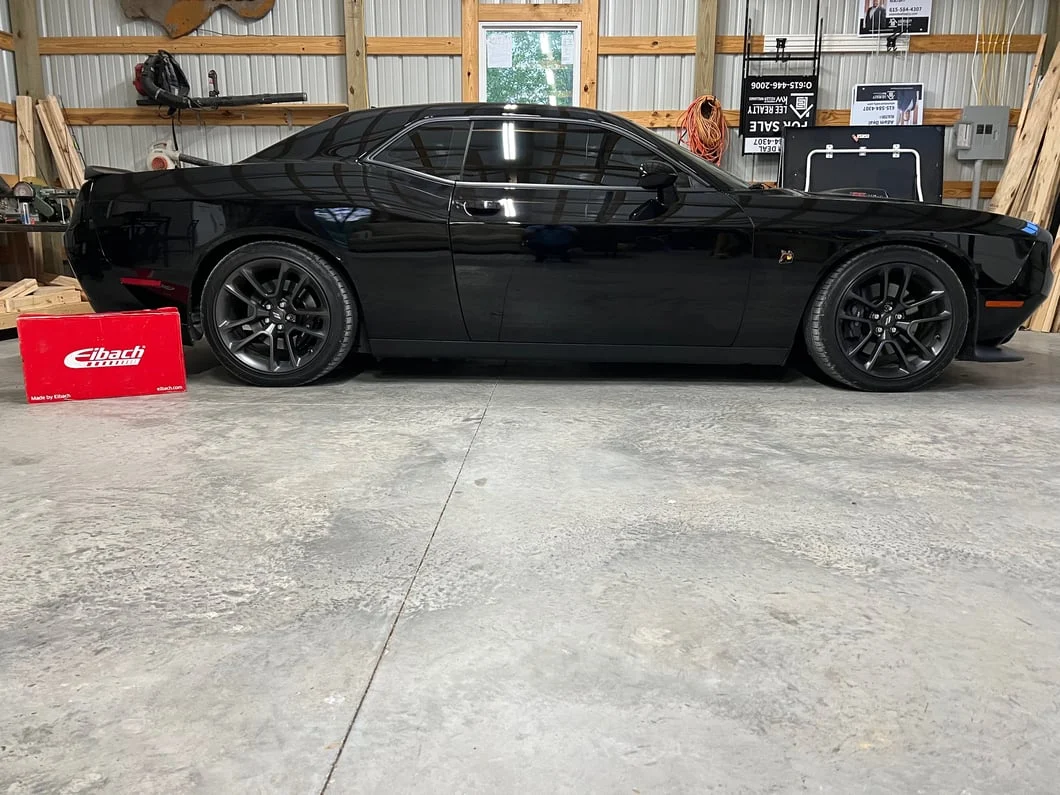
For Scat Pack owners especially, upgrading the suspension closes the gap with the SRT 392 and then some. Lowering springs drop the ride height by 1 to 1.5 inches, lowering the center of gravity and reducing body roll. Adjustable coilovers give you even more control over ride height and damping, letting you dial in the car for your specific driving style. Pairing a suspension upgrade with a set of wider wheels and stickier tires — check out our guide to the best tires for your Charger — transforms the car's handling character.
Brakes
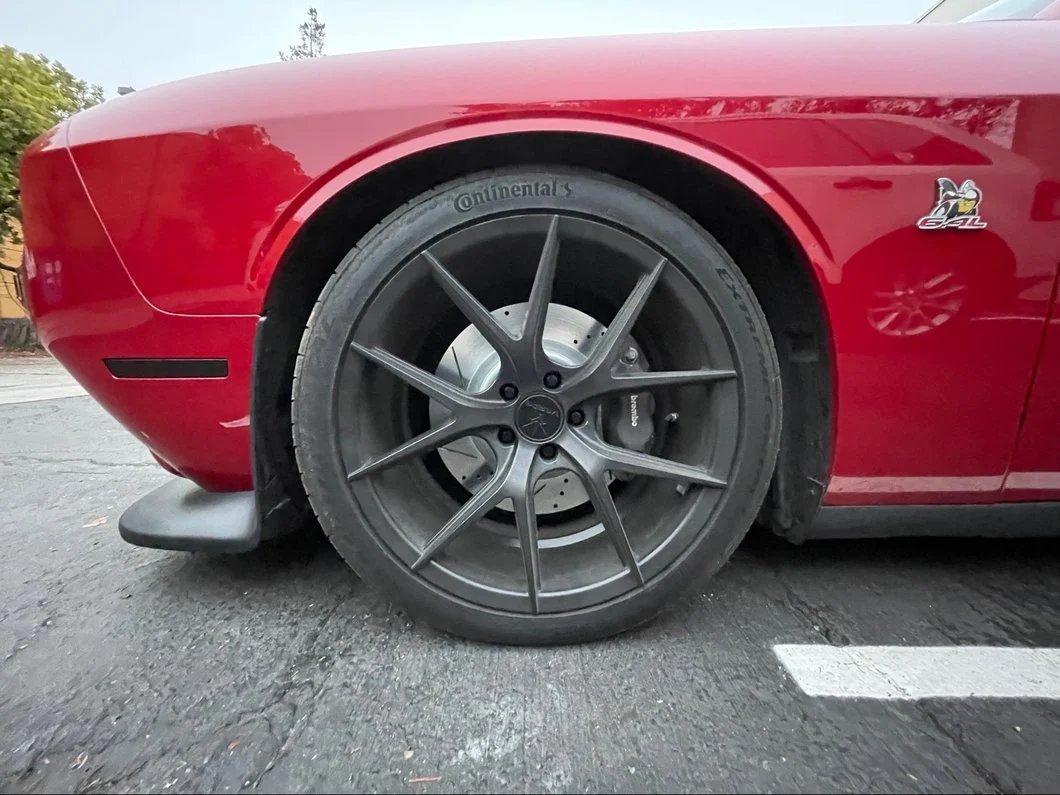
If you are running track days or autocross events, upgraded brake rotor and pad kits are essential. Slotted or drilled rotors paired with high-temperature pads reduce fade and improve pedal feel during repeated hard stops. Scat Pack owners can also upgrade to larger calipers to match or exceed the SRT 392's braking performance.
Drivetrain
For serious drag strip performance, differential upgrades make a meaningful difference. Swapping to a shorter gear ratio improves acceleration, while a limited-slip differential upgrade ensures both rear wheels put power down evenly. This is particularly valuable on the Scat Pack with its narrower stock tires. For a complete rundown of the best bolt-ons and their expected gains, explore our guides to the best upgrades for the Dodge Challenger and Charger performance mods.
Which Should You Buy?
![]() After comparing every angle, here is a straightforward decision framework to help you pick the right trim.
After comparing every angle, here is a straightforward decision framework to help you pick the right trim.
Choose the SRT 392 if you want the best factory-built handling and braking package without spending time and money on aftermarket upgrades. The adaptive suspension, six-piston Brembos, and wider tires make it the stronger choice for track days, road courses, and spirited canyon driving right off the dealer lot. If you value a premium interior with leather and Alcantara as standard, the SRT badge delivers that too.
Choose the Scat Pack if you want the same 485 HP engine at a lower price and plan to modify the car to match or exceed the SRT 392's capabilities. The Scat Pack is also the only option if you want a manual transmission — full stop. The money you save on the purchase price goes directly toward bolt-on upgrades that can be tailored to your exact goals, whether that is drag racing, autocross, or simply building the loudest, best-looking Mopar on your block. For daily driving, either trim works beautifully. Both deliver the same V8 soundtrack, the same visceral acceleration, and the same head-turning presence. The SRT 392 offers a slightly more refined ride thanks to adaptive damping, while the Scat Pack keeps more cash in your pocket for fuel, insurance, and the inevitable parts wishlist.
Final Thoughts
![]() No matter which trim you land on, you are getting one of the most powerful naturally aspirated V8 muscle cars ever built. The 6.4L HEMI is a proven, reliable platform with massive aftermarket support, and both the Scat Pack and SRT 392 deliver the kind of raw, unfiltered driving experience that modern performance cars are moving away from. Ready to make your Challenger or Charger faster, louder, and better looking? Browse our full lineup of Dodge Challenger performance parts and Dodge Charger performance mods to find the upgrades that match your build goals.
No matter which trim you land on, you are getting one of the most powerful naturally aspirated V8 muscle cars ever built. The 6.4L HEMI is a proven, reliable platform with massive aftermarket support, and both the Scat Pack and SRT 392 deliver the kind of raw, unfiltered driving experience that modern performance cars are moving away from. Ready to make your Challenger or Charger faster, louder, and better looking? Browse our full lineup of Dodge Challenger performance parts and Dodge Charger performance mods to find the upgrades that match your build goals.